Updated: May 6, 2025
Home › Budgeting & Savings › Savings Strategy & Wealth Growth › Is Inflation Eating Your Money? How to Fight Back
TL;DR
-- Inflation erodes the purchasing power of every dollar you hold -- including your savings -- whether you notice it or not.
-- Savings sitting in low-yield accounts lose real value every year when interest earned falls below the inflation rate.
-- The most effective responses are structural: move savings to higher-yield accounts, increase your savings rate, reduce variable expenses, and grow income where possible.
-- Budgets built on static numbers break down under inflation -- they need to be reviewed and adjusted as prices shift.
-- A complete savings strategy and wealth growth framework is what turns inflation defense into long-term financial momentum.
If your paycheck has not changed but your budget feels tighter every month, inflation is likely the reason. It is not something you mismanage into -- it happens to every household regardless of financial discipline. Prices rise, purchasing power falls, and the same income buys measurably less than it did 12 or 24 months ago.
The Federal Reserve tracks inflation through the Consumer Price Index, and the Bureau of Labor Statistics releases monthly updates. Even at relatively moderate levels, sustained inflation compounds meaningfully over time. A dollar worth $1.00 today is worth $0.77 after 10 years of 2.5% annual inflation. For savings sitting in accounts earning less than inflation, the decline is both real and ongoing.
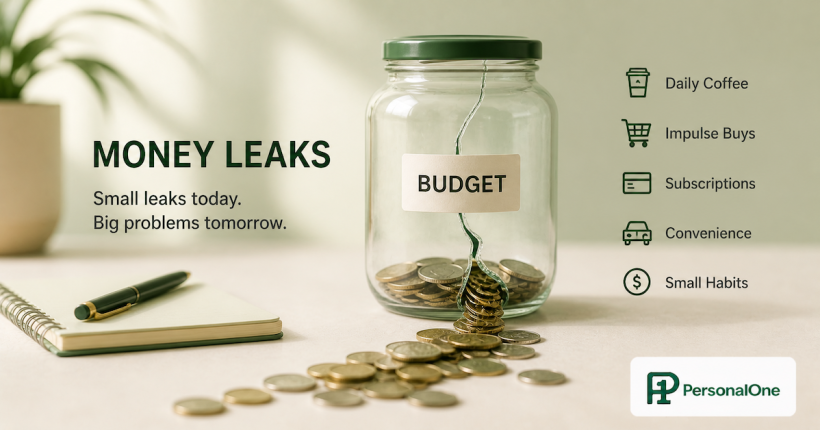
The good news is that inflation is manageable with the right structural responses. This article covers what inflation actually does to your money and the specific steps that protect your financial position from it. Controlling unnecessary spending is the entry point for most of those responses -- not by restricting what you value, but by identifying where money leaves without returning anything meaningful.
What Inflation Actually Does to Your Money
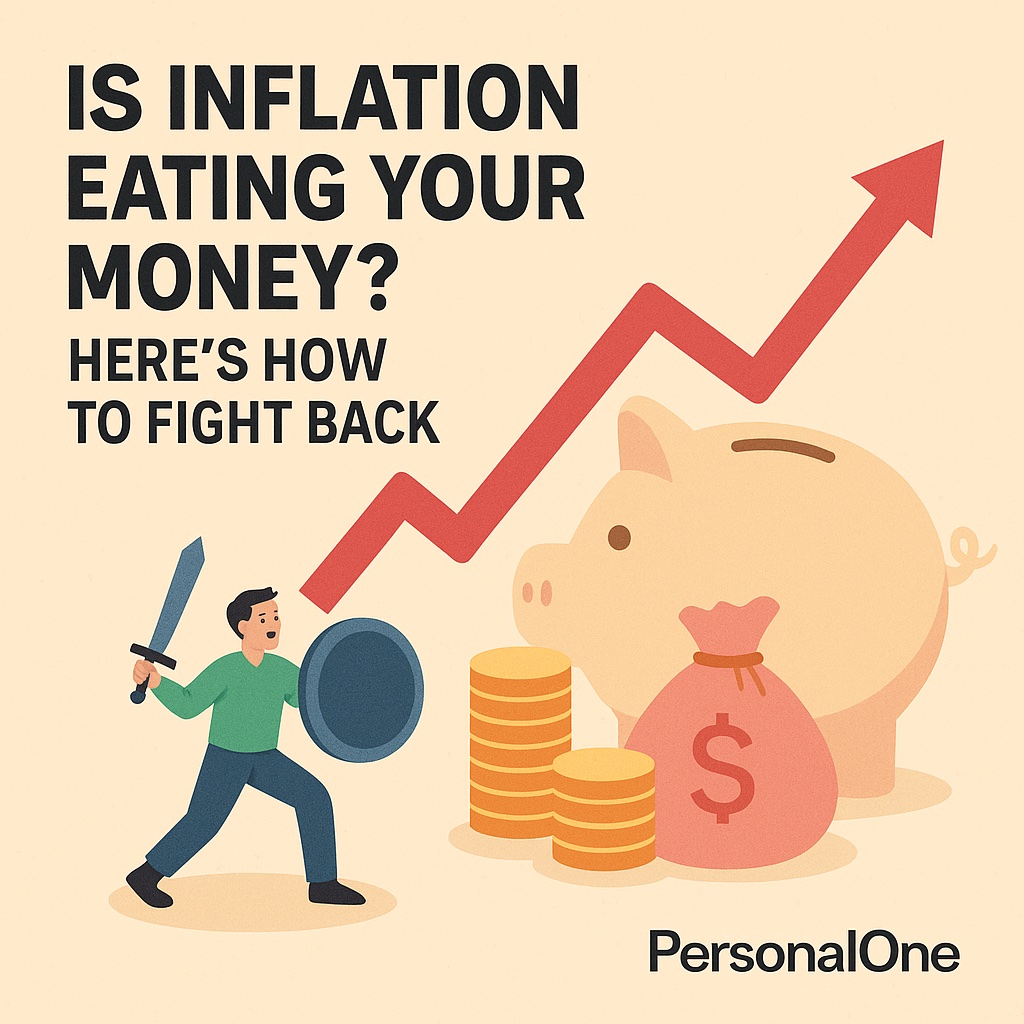
Inflation is a general increase in prices across the economy over time. When prices rise faster than your income or savings growth, your real purchasing power declines. You are not spending more carelessly -- the same purchases simply cost more.
The impact shows up in three primary places for most households. Savings lose real value when the interest earned on a savings account is lower than the inflation rate. A savings account paying 0.5% APY during a period of 3% inflation is effectively losing 2.5% of its purchasing power per year. Fixed budgets become inaccurate as the cost of recurring expenses -- groceries, utilities, rent, insurance -- rises while income and budget targets stay the same. Variable-rate debt becomes more expensive during inflationary periods when central banks raise interest rates to slow price growth, which directly increases the cost of carrying credit card balances and adjustable-rate loans.
Understanding which of these three pressure points is hitting hardest is the starting point for a targeted response.
How to Fight Back: Three Structural Responses
1. Move Savings to Accounts That Earn More
The simplest inflation defense for savings is moving them to accounts with higher yields. Traditional savings accounts at large banks have historically paid near-zero interest -- a meaningful gap when inflation runs at 2% to 4%. The FDIC regularly publishes national average savings account rates that illustrate this gap clearly.
High-yield savings accounts at FDIC-insured institutions close some of that gap without adding risk. The money remains liquid, insured up to $250,000 per depositor, and accessible -- the only difference is the interest rate. For savings goals with longer time horizons, Treasury Inflation-Protected Securities (TIPS), issued directly by the U.S. Treasury, are designed specifically to keep pace with inflation by adjusting their principal value with the Consumer Price Index.
Neither of these moves requires significant financial sophistication. Moving an emergency fund from a 0.1% APY account to a 4% APY account on the same money, over 12 months, produces materially different outcomes. The first action most households should take is simply confirming what rate their current savings accounts are paying and whether better-yielding FDIC-insured options are available.
Once the account yields are optimized, the next step is turning those savings into an emergency fund -- a dedicated, protected buffer that keeps inflation-driven unexpected expenses from generating credit card debt. Without that foundation, higher yields alone cannot prevent one unexpected bill from undoing months of savings progress.
2. Rebuild Your Budget Around Current Prices
A budget built on last year’s grocery costs, utility rates, and insurance premiums is not an accurate picture of your current cash flow. Inflation changes the numbers, and budgets that are not updated to reflect those changes create gaps between planned and actual spending that accumulate silently month to month.
A quarterly budget review -- not just annual -- catches these gaps before they compound. The review process is straightforward: compare each recurring expense category against what you actually spent in the last 30 days, identify which categories have drifted upward, and adjust either the budget target or the spending behavior in that category. The CFPB recommends this kind of periodic review as a core financial maintenance practice.
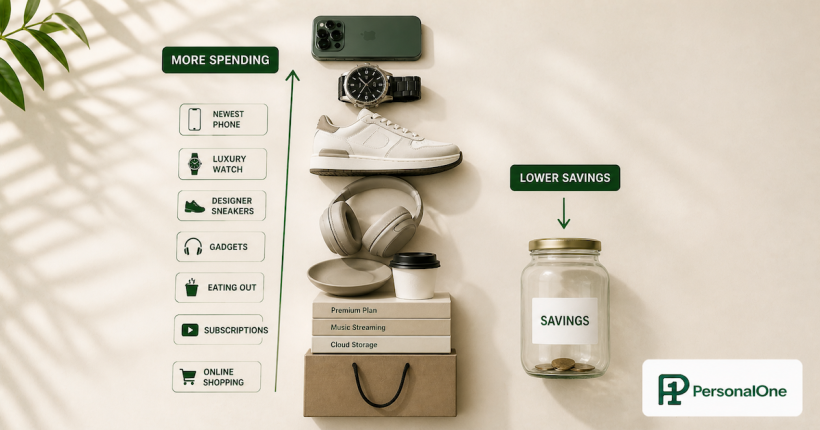
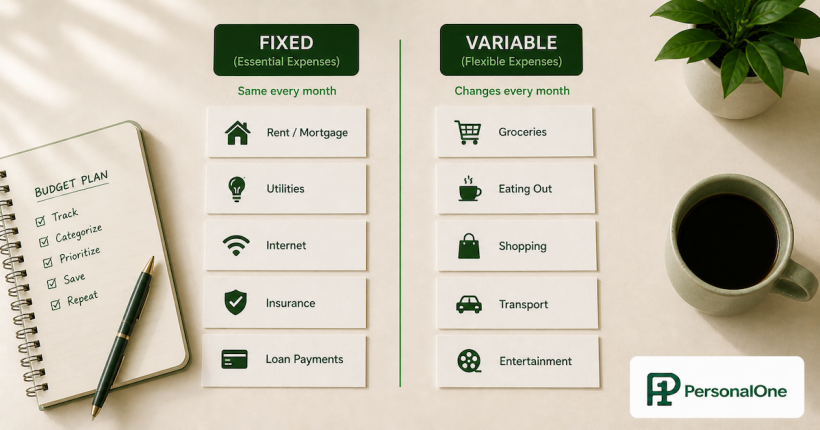
The inflation-specific budget tactic that produces the most consistent results is identifying your two or three largest variable expenses -- typically food, transportation, and discretionary spending -- and addressing those specifically. Fixed expenses like rent and loan payments are harder to reduce quickly. Variable expenses respond to behavioral changes immediately.
For groceries specifically -- one of the categories most visibly affected by inflation -- the approach to cutting grocery costs effectively through sale cycles, loyalty programs, and strategic bulk buying consistently produces 15 to 30 percent reductions on one of the largest variable expense lines in most household budgets.
3. Grow Income to Outpace Rising Costs
Expense reduction has a floor: there is only so much that can be cut before quality of life is meaningfully affected. Income growth has no ceiling, which makes it the more powerful long-term inflation defense even if it is slower to implement.
The most direct path for most people is negotiating a raise or salary increase at their primary job. The Bureau of Labor Statistics Employment Cost Index tracks wage growth against inflation -- in periods where wage growth lags inflation, purchasing power declines even for employed workers whose income appears stable. Requesting a raise calibrated to inflation is not aggressive; it is the appropriate response to documented price increases.
Secondary income through freelancing, part-time work, or selling skills you already have is the other lever. Even $200 to $400 per month in additional income directed entirely toward savings significantly changes the math of an inflation-stressed budget over 12 to 24 months. The goal is not a full second career -- it is closing the gap between rising costs and a static paycheck through targeted, sustainable additional income.
Defending against inflation is step one. Building wealth despite it is the goal.
Moving savings to higher-yield accounts and adjusting your budget protects your position. A complete savings and wealth growth framework -- covering savings rate targets, surplus allocation, and long-term momentum -- is what converts that protection into real financial progress.
Explore the Budgeting & Savings SystemWhy Younger Households Feel Inflation More Acutely
Inflation affects all households, but its impact is not uniform. Younger households tend to experience it more acutely for structural reasons that have nothing to do with financial behavior.
Renters are more exposed to housing inflation than homeowners with fixed-rate mortgages because rents adjust to market conditions annually while fixed mortgage payments do not. Households with smaller emergency funds have less buffer between an income disruption and financial distress, meaning inflationary pressure on groceries and utilities hits harder with less cushion to absorb it. Workers earlier in their careers typically have less negotiating leverage for wage increases, making it harder to keep income pace with rising prices.
These are structural conditions, not personal failures. The Federal Reserve’s Survey of Consumer Finances documents the wealth and savings gaps across age cohorts that explain much of this differential exposure. Recognizing the structural nature of the challenge is useful because it clarifies which responses are within individual control -- savings rate, account selection, expense management, income growth -- and which require systemic or policy-level change.
Your Inflation Action Plan
The following sequence addresses inflation in order of implementation speed and impact. Each step builds on the one before it.
Step 1: Confirm your savings account yield. Log in to every savings account and record the current APY. Compare it against the current inflation rate published monthly by the Bureau of Labor Statistics. If the gap is significant, identify a higher-yield FDIC-insured alternative.
Step 2: Run a 30-day spending audit. Pull three months of bank and credit card statements. Identify which recurring expense categories have increased since your last budget review. Update your budget targets to reflect current actual costs, not last year’s numbers.
Step 3: Find one variable expense to reduce. Pick the largest variable category that has room to move -- food, entertainment, transportation, or discretionary purchases -- and set a specific monthly target for it. Redirect the difference to savings automatically. The approach to saving money without sacrificing what you enjoy -- through subscription audits, bill renegotiations, and windfall redirection -- is where most households find the most accessible margin without touching anything they actually value.
Step 4: Identify one income growth opportunity. This could be a conversation with your employer about a cost-of-living adjustment, a freelance project, or a skill you can monetize on a small scale. The goal is any additional income stream that can be directed toward savings rather than absorbed by rising costs.
The System That Outlasts Any Inflation Cycle
Inflation is not a temporary problem that resolves and then stops mattering. Prices that rise during inflationary periods do not fall back to their previous levels when inflation moderates -- they stabilize at the new higher level. That means the financial habits built in response to inflation -- higher savings rates, better account selection, regular budget reviews, income diversification -- are not temporary adjustments. They are the foundation of a financial system that functions reliably across economic conditions.
Start with the savings account yield. Run the budget audit. Reduce one variable expense category and redirect the savings automatically. Those three moves, done in sequence and maintained consistently, produce compounding results that no single month of inflation can undo.
When those moves are in place, the next layer is connecting them to a complete savings system that works long term -- with rate targets, account structure, and automated surplus allocation that convert inflation defense into lasting financial momentum. That is also the foundation of a broader budgeting and savings system for long-term wealth growth -- where inflation-proofing is one layer of a complete financial architecture.
Official Resources
Bureau of Labor Statistics -- Consumer Price Index (CPI) -- Monthly inflation data tracking price changes across consumer goods and services categories.
Federal Reserve -- Survey of Consumer Finances -- National data on household savings rates, wealth distribution, and financial resilience across income and age cohorts.
CFPB -- Save for Your Goals & Financial Wellness -- Tools and guidance for building savings goals and maintaining budgets through periods of rising prices.
U.S. Treasury -- Treasury Inflation-Protected Securities (TIPS) -- Official information on TIPS, which adjust principal with inflation to preserve purchasing power over time.
Continue Learning About Budgeting & Savings
Inflation defense is one layer of a complete financial system. The full framework for building savings that grow regardless of economic conditions is in the Budgeting & Savings guide.
Frequently Asked Questions
Is it bad to keep savings in a regular bank account during inflation?
It depends on the yield. If the account is earning less than the current inflation rate, the purchasing power of that savings is declining in real terms every month. The appropriate response is not to pull savings out of the bank -- FDIC-insured savings accounts are safe and liquid -- but to confirm the APY and move to a higher-yield FDIC-insured account if a meaningful gap exists. The FDIC publishes national average savings rates that make this comparison straightforward.
Does inflation affect everyone the same way?
No. Renters are more exposed to housing inflation than fixed-rate homeowners. Households with variable-rate debt face higher interest costs when rates rise. People with larger cash savings lose more purchasing power in absolute terms. And households with lower income buffers have less capacity to absorb price increases without going into debt. The structural exposure differs significantly based on housing situation, debt type, income stability, and savings levels.
What if I cannot afford to increase my savings rate right now?
Start with account selection rather than savings rate. Moving existing savings to a higher-yield account costs nothing and produces better returns on money you already have. Then run the spending audit to identify categories where costs have risen -- those categories are often where the most accessible cuts live. The savings rate increase can come from freed-up spending rather than requiring additional income.
Are TIPS a good alternative to a savings account?
TIPS are U.S. Treasury securities whose principal adjusts with the Consumer Price Index, making them specifically designed to preserve purchasing power during inflation. They are appropriate for money with a longer time horizon -- at least one to five years -- where the goal is inflation protection rather than short-term liquidity. They are not a replacement for an emergency fund, which needs to be immediately accessible. The U.S. Treasury sells TIPS directly through TreasuryDirect.gov without requiring a brokerage account.
How often should I review my budget for inflation-related drift?
Quarterly reviews catch inflation-related drift before it compounds significantly. A monthly check-in on two or three high-variable categories -- groceries, gas, and utilities -- takes 10 minutes and surfaces cost increases early. Annual budget rebuilds are not sufficient during periods of sustained inflation because 12 months of undetected drift is harder to correct than one or two months.
This content is for educational purposes only and does not constitute financial advice. PersonalOne is not a licensed financial advisor, broker, or investment professional. Individual financial situations vary -- consult a qualified financial professional for personalized guidance.