October, 2026
Home › Budgeting for Wealth Growth › Spending Control & Expense Management › Daily Spending Habits That Actually Change Your Finances
Daily Spending Habits That Change Your Financial Outcome
TL;DR
— Most financial improvement comes not from dramatic one-time decisions but from the cumulative effect of small daily behaviors repeated consistently over months and years.
— The highest-impact daily habits are the ones that reduce friction for good financial behavior and increase friction for bad — making the right choice the easier choice rather than the harder one.
— Habits that work with the grain of how decisions are actually made produce durable change; habits that require constant willpower against the current do not.
— The balance check habit — spending account once per day, 30 seconds — provides the real-time visibility that prevents end-of-month surprises without requiring any logging or tracking effort.
— Meal planning and the shop-once habit reduces food spending by 20 to 35 percent for most households without any meaningful change to food quality or enjoyment.
— Habit stacking — attaching new financial behaviors to existing daily routines — dramatically increases the probability that new habits persist beyond the first 30 days.
The financial outcomes that matter most — debt eliminated, savings built, wealth compounded — are rarely produced by a single significant decision. They are the accumulated result of hundreds of small choices repeated daily over months and years. The daily spending habits that determine those outcomes are almost never the ones people associate with financial discipline. They are not about deprivation or restriction. They are about designing a daily environment where good financial behavior is the path of least resistance.
The framework for understanding which habits actually move financial outcomes is simple: a habit that reduces friction for good behavior (automatically saves on payday, makes balance visible without effort, removes temptation from the environment) will be maintained indefinitely. A habit that requires willpower to maintain against friction (tracking every purchase, resisting impulse through force of will, manually calculating category budgets) will fail when life gets complicated, which happens regularly. Daily habits that last work with how decisions actually get made, not against it.
The goal of building better daily financial habits is to control your spending at the environmental and structural level — so the spending you want to reduce becomes harder and the financial behaviors you want to sustain become automatic.
The Habits That Actually Move the Needle
Not all habits are equally valuable. Some feel productive and disciplined but have minimal impact on actual financial outcomes. Others seem minor but compound into significant results over time. Here is the distinction: high-impact habits change the structural conditions under which spending decisions are made. Low-impact habits add effort without changing the underlying dynamics.
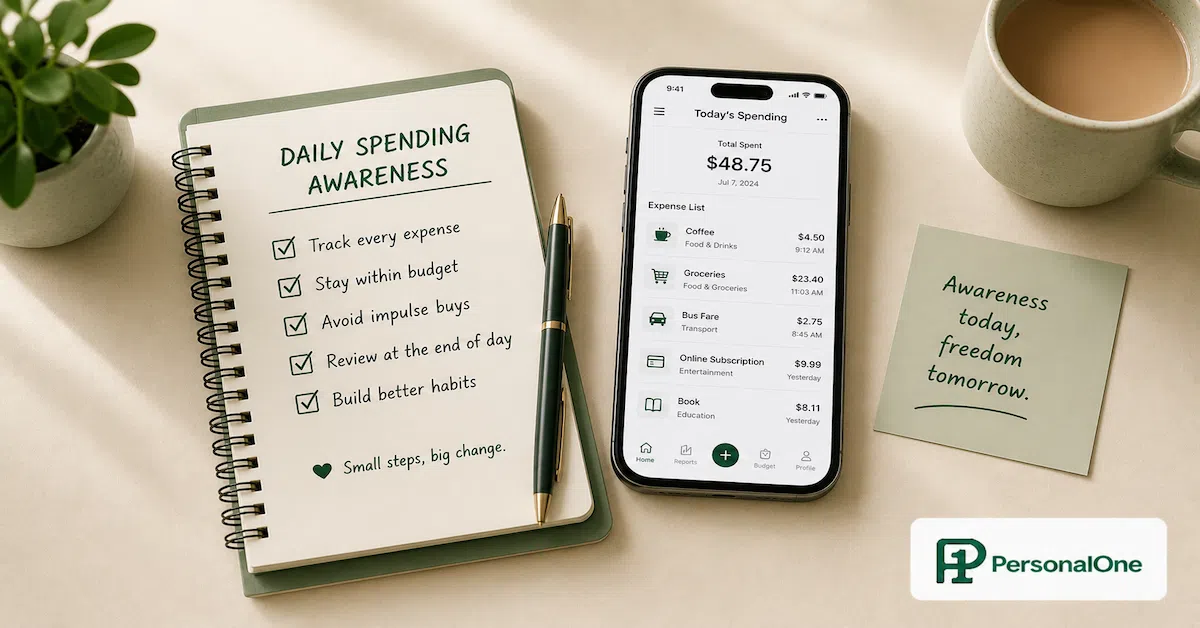
Daily balance check (30 seconds). Open your spending account once per day — first thing in the morning works well — and note the balance. Nothing else. No logging, no categorizing, no analysis. The sole purpose is awareness: you know, at the start of every day, approximately where you stand in the current pay period. This awareness changes behavior in the moment in ways that reviewing a budget spreadsheet weekly does not. When you know you have $140 left for six days, a $45 restaurant lunch gets evaluated differently than when you have no idea where you stand. The habit takes 30 seconds and provides real-time behavioral guidance that no other system delivers as simply.
The one-pause rule before unplanned purchases. Any unplanned purchase above a personal threshold — typically $25 to $50 — gets a 10-second mental review before the transaction completes: Is this on my list? Do I need this today? Will I want this next week? This is not a veto on all unplanned spending. It is a brief interruption that allows deliberate thinking to engage before a purchase that was initiated by impulse or habit. Most purchases that pass this review genuinely deserve to be made. Many that do not would have been made automatically without it. The habit costs 10 seconds per applicable transaction and filters a meaningful percentage of spending that would not have been made if the choice had been more deliberate.
Meal planning on Sunday (20 minutes). Planning meals for the week — deciding what you will cook, listing needed ingredients, and grocery shopping once — is consistently the single highest-impact food habit available to most people. It eliminates the "nothing to eat" scenario that drives expensive delivery orders, reduces food waste by buying with intent rather than optimism, and makes the grocery shop faster and cheaper because you are buying a list rather than browsing. Most households that implement weekly meal planning reduce their total food spending by 20 to 35 percent without any change to food quality. The 20-minute Sunday planning session pays returns that compound every week.
The shop-once grocery habit. Making one weekly grocery trip rather than multiple short trips reduces the number of times you are exposed to the purchase environment, which directly reduces impulse purchases. Every trip to a grocery store, convenience store, or wholesale club generates purchases beyond what was on the list — this is universal and not a discipline failure. Fewer trips means fewer exposures means fewer unplanned purchases. The shop-once habit works in concert with meal planning: when you have a list and a weekly shop, the need for mid-week emergency trips drops sharply.
The automated savings transfer habit (set once, maintains forever). The single most impactful financial habit is ensuring that savings transfers happen automatically before you have an opportunity to spend the money. This is not a daily habit in the traditional sense — it requires one decision and one setup action — but it produces a daily financial outcome (money accumulates in savings regardless of what happens in any given day's decisions) that no daily tracking habit can match. The habit to build is reviewing and increasing the automated transfer amount any time income increases, rather than letting the transfer amount stay fixed while spending gradually absorbs the income gains.
Environmental Habits That Remove Decision Points
Some of the most powerful daily financial habits are not about what you do but about what you have set up so that you do not have to decide. These environmental habits change the default option — making the financially sound choice what happens automatically when you do nothing, rather than requiring active effort to achieve.
Remove shopping apps from your phone home screen. Apps on your home screen get used significantly more than apps buried in folders. Moving shopping and delivery apps off the home screen does not prevent you from using them — it adds a few seconds of friction that intercept a meaningful share of impulse browsing sessions that otherwise convert to purchases. The habit is a one-time environmental change that produces a permanent reduction in trigger-to-purchase conversions.
Unsubscribe from promotional emails in one session. Promotional emails from retailers you like are not neutral information — they are specifically timed purchase stimuli designed to produce a visit and a sale. Spending 30 to 60 minutes unsubscribing from all promotional email lists removes a high-frequency purchase trigger from your daily environment permanently. You can still buy from any of these retailers whenever you choose to. You are simply removing the mechanism that was initiating shopping sessions you did not choose to have.
Remove saved payment information from browsers. One-click purchasing eliminates the friction moment that allows deliberate thinking to engage before a purchase completes. Requiring manual card entry restores that moment. The habit is removing saved cards from all browsers and shopping accounts, then not re-saving them. You can still buy anything you want; the process simply requires the card to be present and a number to be entered, which takes 30 seconds and reliably intercepts a percentage of purchases that impulse alone would have completed instantly.
Set a weekly grocery budget before each shop. Knowing your target before you enter the store changes how you evaluate individual items in the moment. Without a pre-set number, every purchase is evaluated independently against an undefined available amount. With a pre-set budget, each item is evaluated against a remaining total that changes as the trip progresses. This simple pre-commitment produces an average reduction of 10 to 20 percent in grocery spending compared to unbudgeted shops at the same store.
Building Habits That Last: The Stacking Method
New habits fail most often not from lack of motivation but from lack of a reliable trigger. A habit that depends on remembering to do it competes against every other demand on your attention. A habit attached to an existing routine — something you already do reliably every day — inherits that routine's reliability as a trigger. This is called habit stacking, and it is one of the most well-documented techniques for making new behaviors durable.
The structure is: after [existing habit], I will [new financial habit]. Existing habits that work as reliable anchors include morning coffee preparation, opening your phone after waking, commute start, lunch break start, and evening wind-down. Attaching a new financial habit to any of these gives it a trigger that fires without effort on your part.
Habit Stack Examples
After I pour my morning coffee → I check my spending account balance. Creates the daily balance awareness habit with a morning trigger that already fires reliably.
After I start my commute on Monday → I think through dinner plans for the week. Seeds the meal planning habit without requiring a dedicated 20-minute planning session to be scheduled and remembered.
After I receive any payment or deposit notification → I check whether my savings transfer is calibrated to the new amount. Creates the income-allocation review habit triggered by the income event itself.
After I open my banking app for any reason → I check my spending account balance before closing. Adds the balance awareness behavior to an existing banking interaction without requiring a separate session.
After I add something to an online cart → I wait 24 hours before checking out. Attaches the 24-hour pause to the cart-add behavior that immediately precedes the impulse purchase moment.
The Habits That Feel Productive But Do Not Move Outcomes
Not every habit that feels financially responsible produces meaningful results. Understanding which habits have low impact prevents you from investing time in the appearance of financial discipline while neglecting the behaviors that actually produce change.
Daily transaction logging. Manually recording every transaction feels like control but typically produces documentation rather than behavior change. The log tells you what happened; it does not prevent what happens. For most people, the weekly balance check produces equivalent behavioral guidance at 5 percent of the daily time investment. The right approach to expense tracking spends minimal time capturing data that your bank already captures automatically and more time reviewing what that data reveals.
Reading personal finance content without implementation. Consuming financial advice regularly produces the feeling of progress without the outcomes. The habit worth building is not reading about financial improvement — it is implementing one specific change each month. Reading produces knowledge. Implementation produces results. One implemented habit per month produces twelve meaningful changes per year.
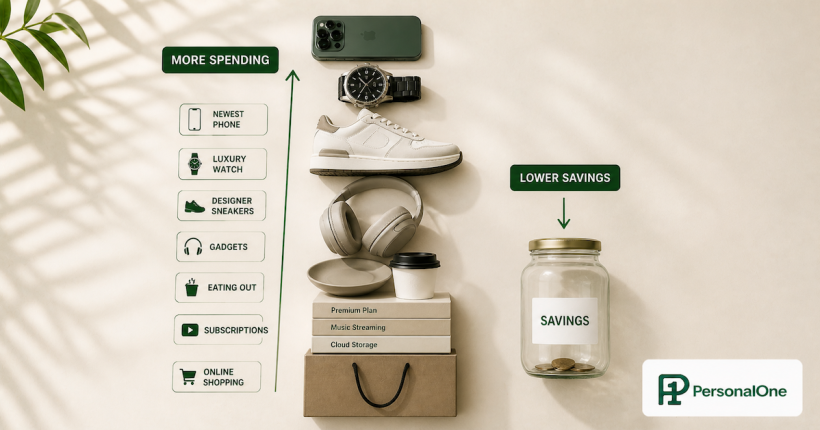
Extreme penny-pinching on small purchases while ignoring large structural costs. Optimizing coffee spending while paying an above-market insurance premium, an unused gym membership, and a high-interest credit card balance is a classic high-effort, low-return pattern. The habit worth building is periodic structural review of large fixed costs rather than daily vigilance over small discretionary purchases.
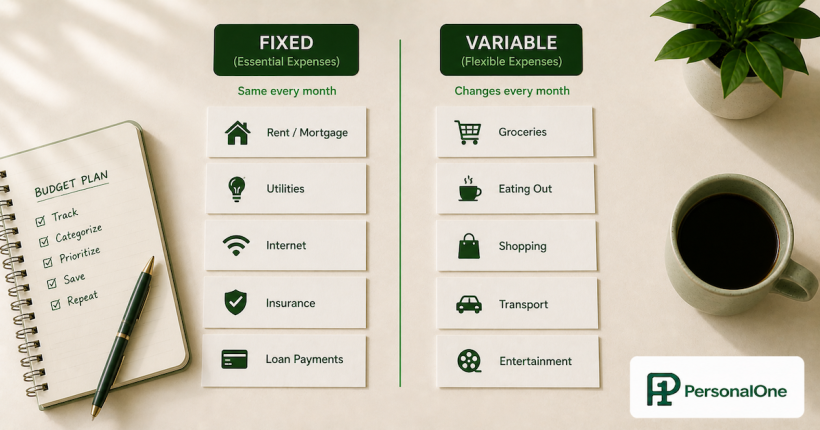
Setting a budget without automation. A budget that specifies where money should go but relies entirely on willpower and manual decisions to get it there produces limited results. The habit worth building is not maintaining a budget — it is automating the transfers that execute the budget without requiring any decision in the moment.
The Compounding Effect of Daily Habits
Small daily habits compound in the same way money does: the effect is invisible in any given week but becomes dramatically visible over months and years. A household that implements weekly meal planning, the daily balance check, and removes shopping apps from their home screen will not notice a dramatic change in spending in week one. By month three, food spending has declined, impulse purchases have dropped, and the checking account balance is higher at the end of each pay period. By month twelve, the cumulative effect is equivalent to a meaningful income increase in terms of available financial capacity.
This compounding effect is why starting with one or two habits is more effective than attempting ten simultaneously. A single habit implemented and maintained produces compounding results indefinitely. Ten habits attempted simultaneously produce ten new failure points that typically result in all of them being abandoned within sixty days. The habit portfolio expands as each new habit stabilizes, not as a single simultaneous overhaul.
The starting point matters less than the starting. Choose one habit from this article — the daily balance check, the meal planning session, the shopping app relocation — and implement it this week. Run it for thirty days without evaluating whether it is "working." By day thirty, it has become automatic enough to add a second. The accumulation of automated habits over twelve months produces outcomes that feel disproportionate to the individual effort each habit required.
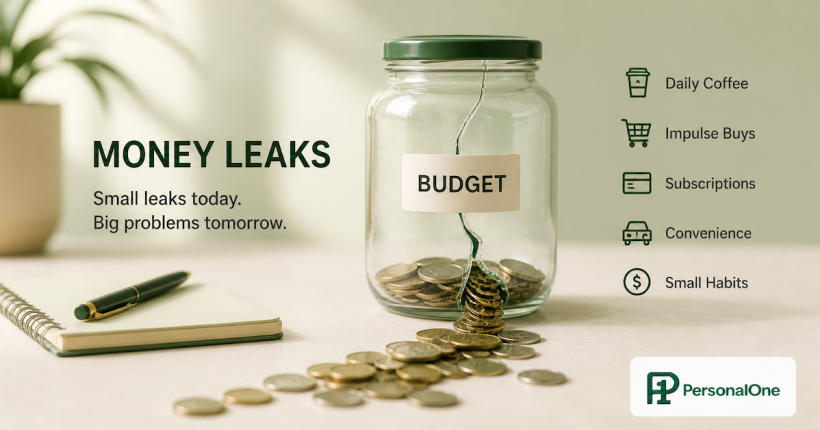
Understanding your spending patterns is the diagnostic layer that tells you which habits to prioritize. If your statement audit shows that delivery apps account for $300 per month, the meal planning habit is the highest-leverage starting point. If impulse purchases are the primary leak, the environmental changes — removing apps, deleting saved cards — produce the most return. Match the habit to the problem your spending patterns reveal.
The Connection Between Daily Habits and Structural Systems
Daily habits work best when they operate inside a structural system that reinforces them. A daily balance check is more powerful when the account being checked is a dedicated spending account funded by an automated transfer on payday — because the balance reflects only actual available spending money, not a number confused with bill obligations and savings allocations. A meal planning habit is more effective when the grocery budget is funded from the spending account and the spending account balance is visible — because the balance creates a natural ceiling that the meal plan helps achieve.
The relationship is bidirectional: good daily habits make structural systems work better, and good structural systems make daily habits more meaningful. Neither alone produces the same results as both together. The structural system ensures money goes where it should automatically. The daily habits ensure behavior within each pay period aligns with the allocations the structure has put in place.
The environmental and behavioral interventions that reduce unplanned spending are the daily-habits layer of a spending control system. The account structure, automated transfers, and low-balance alerts are the structural layer. Both layers working together produce outcomes that neither produces alone: a system where good financial behavior happens by default and is reinforced by the awareness that daily habits provide.
Frequently Asked Questions
How many habits should I try to build at once?
One. Research on habit formation consistently shows that attempting multiple new habits simultaneously reduces the success rate for each individual habit. Start with the one habit most likely to produce the highest return given your current spending patterns. Run it for thirty days until it feels automatic. Add a second only after the first has stabilized. The apparent slowness of this approach produces more total implemented habits over a twelve-month period than the faster-feeling approach of attempting everything at once.
How do I maintain habits when I travel or my routine disrupts?
Design the habit to be location-independent and minimal enough to survive disruption. A daily balance check requires only a phone and thirty seconds — both available during travel. A meal planning habit can be simplified to "plan for the next three days" during travel rather than the full week. The goal during disruption is maintenance at minimum viable level rather than full execution, with the understanding that the full habit resumes when the routine returns. A habit maintained at reduced intensity during disruption is far easier to resume than one abandoned entirely.
I have tried these habits before and they did not stick. What makes this time different?
Two things most commonly cause habit attempts to fail: starting too many simultaneously, and relying on motivation rather than systems. Motivation is high at the start and reliably declines over two to four weeks. The habit needs to become automatic before motivation fades — which requires anchoring it to an existing routine (habit stacking) rather than remembering to do it through intention alone. If a previous attempt relied on remembering, the next attempt should attach the same habit to a reliable daily trigger. That single change significantly increases the probability of success.
Habits shape spending. Structure captures the savings.
The Budgeting for Wealth Growth hub covers both layers — the daily habits that reduce unnecessary spending and the structural systems that ensure every dollar saved actually builds toward your goals rather than being quietly reabsorbed.
Explore the Budgeting Hub →Resources
CFPB — Spending Tracker and Budget Tools
FDIC — Money Smart Financial Education
CFPB — Setting and Tracking Financial Goals
This article is part of the Budgeting for Wealth Growth hub on PersonalOne — a complete framework for building spending awareness and structural control that makes financial progress automatic.
Disclaimer: This content is for educational purposes only and does not constitute financial advice. Spending habits and their financial impact vary significantly based on individual circumstances, income, and goals. Adjust the habits described here to reflect your specific situation.