

December 31, 2025
December 31, 2025
PersonalOne Financial Team
12 min read
TL;DR - Quick Summary
- December is credit cleanup time — lenders tighten approvals in Q4 and errors cost you money in interest rates
- Check all three bureaus: 1 in 5 credit reports contain errors, often appearing on only one or two reports
- Lower utilization fast: Paying down cards below 30% (ideally 10%) can boost scores within weeks
- Dispute errors now: Bureaus must respond within 30 days, giving you results before 2026
- Real benefit: A stronger credit profile means lower interest rates on everything from credit cards to mortgages
A strong credit profile isn't built in one sprint—but a smart year-end checkup can create a significant lift before 2026 even starts. Lenders tighten approvals in Q4, holiday spending spikes utilization, and mistakes on your credit report often go unnoticed until they start costing you real money in higher interest rates and declined applications. If you want the bigger picture before making changes, it helps to understand how credit repair and debt strategy actually work together in our credit and debt repair guide.
This guide from PersonalOne gives you the simplest, most effective steps to clean up your credit profile in December and set yourself up for lower interest rates and stronger approvals next year. You don't need a credit guru or expensive repair service. You just need the right moves at the right time.
If you’re looking for a bigger-picture explanation of how credit works, how to build it safely, and how to protect your score long term, start with our Credit Guide: How to Build, Protect, and Use Your Credit Score.
Why December Is the Perfect Time for Credit Cleanup
End-of-year credit work creates momentum that compounds into 2026. Here's why timing matters:
- Reporting cycles align: Changes made in December often appear on January reports
- Lower balances post-holidays: Once holiday spending settles, strategic payments have maximum impact
- 30-day dispute window: Filing disputes now means resolutions by late January
- New year applications: Many people apply for mortgages, auto loans, and credit cards in Q1
- Rate shopping season: January is prime time for refinancing and consolidation
Every point of credit score improvement translates directly into money saved through lower interest rates over the life of loans.
💳
Need Professional Credit Repair Help?
If you're dealing with multiple errors, collections, or complex credit issues, professional assistance can accelerate your progress and save you time.
Explore Best Credit Repair Services for 2025 →Step 1: Pull All Three Credit Reports (Not Just One)
1Get Your Complete Credit Picture
The problem: Most people only check one bureau—usually Experian—but lenders check different bureaus depending on their preferences and the type of loan. An error on TransUnion won't show up if you only check Equifax.
Pull all three credit bureaus:
- Equifax - Often used for mortgage lending
- Experian - Commonly used for auto loans and credit cards
- TransUnion - Frequently checked for personal loans
Official Free Credit Report Access
You can get all three reports free once per year at the only government-authorized site:
Important: This is the ONLY truly free, government-authorized site. Avoid impostor sites that charge fees or require credit card information.
Why all three matter: The Consumer Financial Protection Bureau confirms you should check all three reports because errors often appear in only one or two bureaus. A perfect Experian report doesn't mean your TransUnion report is clean.
What you'll see:
- Personal information (name, addresses, employers)
- Credit accounts and payment history
- Credit inquiries (hard and soft)
- Public records (bankruptcies, tax liens, judgments)
- Collections accounts
Pro tip: Download and save PDF copies of all three reports. You'll need them for comparison when disputing errors.
Step 2: Identify Errors, Inaccuracies, and Outdated Information
2Spot Credit Report Mistakes
The scale of the problem: According to the Federal Trade Commission, one in five credit reports contain errors significant enough to impact your credit score and lending decisions.
Common errors to look for:
- Accounts with incorrect balances: Old debts showing higher amounts than actually owed
- Closed accounts listed as open: Makes your utilization appear worse than reality
- Wrong personal information: Incorrect addresses, misspelled names, wrong Social Security numbers
- Duplicate accounts: Same account listed multiple times
- Incorrect late payments: Payments marked late when you paid on time
- Accounts that aren't yours: Sign of identity theft or mixed credit files
- Outdated negative items: Delinquencies older than 7 years (10 for bankruptcies)
- Incorrect credit limits: Lower limits artificially inflate utilization percentages
Why this matters: Even a single incorrect late payment can drop your score by 60-100 points depending on your credit history. A wrong credit limit can make your utilization appear dangerously high when it's actually fine.
How to review systematically:
- Print all three reports or view them side-by-side on screen
- Check personal information section first—errors here can indicate mixed files
- Review each account individually against your records
- Compare the three reports—discrepancies between bureaus are red flags
- Verify all inquiries—you should recognize every hard inquiry
- Check dates—negative items should fall off after 7 years (most) or 10 years (bankruptcies)
Document everything: Take notes on every error you find, including which bureau(s) show the mistake. You'll need this information for disputes.
Step 3: Dispute Errors Directly With the Credit Bureaus
3File Formal Disputes
Your legal rights: The FTC requires credit bureaus to investigate and respond to disputes within 30 days for most claims. This deadline works in your favor for year-end cleanup.
Official Bureau Dispute Portals
Equifax Disputes:
Equifax.com/personal/credit-report-services/credit-dispute
Experian Disputes:
Experian.com/disputes/main.html
TransUnion Disputes:
TransUnion.com/credit-disputes/dispute-your-credit
How to maximize dispute success:
- Be specific: Clearly identify the account, error type, and correct information
- Provide documentation: Bank statements, payment confirmations, account closure letters
- Include dates: Exact dates of payments or account activity
- Attach proof: Screenshots, letters from creditors, receipts
- Request method of verification: Ask how the information was verified if dispute is denied
Dispute methods ranked by effectiveness:
- Online portal + mailed documentation: Fast processing with paper trail
- Certified mail with return receipt: Legal proof of delivery and response deadline
- Online portal only: Convenient but harder to prove submission
- Phone disputes: Least effective, no documentation trail
What happens next:
- Bureau investigates by contacting the creditor
- Creditor must verify the information or remove it
- Bureau sends results within 30 days
- If error is confirmed, all three bureaus should be notified (though you may need to dispute with each separately)
- Corrected reports are sent to you free of charge
If your dispute is denied: Request the method of verification, gather additional proof, and dispute again. You can also add a 100-word statement to your credit file explaining your side.
Step 4: Lower Your Credit Utilization Before December 31
4Strategic Utilization Reduction
Why this matters most: Credit utilization makes up 30% of your FICO score—the second-largest factor after payment history. The Federal Reserve confirms that credit utilization is heavily weighted in lending risk models.
The utilization targets:
- Under 30%: Minimum target to avoid score penalties
- Under 10%: Optimal range for best scores
- Under 1%: Elite status (but 0% can sometimes hurt—show some usage)
How utilization is calculated:
- Per-card utilization: Balance ÷ Credit Limit on each individual card
- Overall utilization: Total balances ÷ Total credit limits across all cards
- Both matter: A maxed-out card hurts even if overall utilization is low
Strategic paydown priorities:
- First priority: Any card over 50% utilization
- Second priority: Cards between 30-50%
- Third priority: Bring all cards under 10% if possible
Quick-win tactics for December:
- Make mid-cycle payments: Pay before the statement closes to lower reported balance
- Request credit limit increases: Lowers utilization without paying down balances (use sparingly)
- Spread balances strategically: Better to have three cards at 15% than one at 45%
- Ask about reporting dates: Time large payments right before your creditor reports to bureaus
The timing advantage: Utilization changes can appear on your credit report within a few weeks—potentially before major January applications. Unlike payment history errors that require disputes, utilization improves immediately when you pay down balances.
Calculate your current utilization:
- Add up all credit card balances: $________
- Add up all credit limits: $________
- Divide balances by limits: ________%
- Target amount to pay: (Current Balance) - (Credit Limit × 0.10) = $________
For strategic credit card usage that maximizes rewards while maintaining low utilization, check out our guide on cash-back credit cards for holiday shopping.
Step 5: Handle Delinquent or Problem Accounts Strategically
5Address Negative Accounts
If you have any of these situations:
- Missed or late payments within the past year
- Accounts in collections
- Charge-offs (debts written off as uncollectible)
- Accounts in default status
- Settled accounts still showing balances
...December is the time to address them strategically before 2026 begins.
Your strategic options ranked:
Option 1: Pay in Full (Best for Credit Score)
If financially possible, paying the full amount owed shows future lenders you honor obligations. While the negative mark may remain, "paid" status is significantly better than "unpaid."
Option 2: Request Goodwill Adjustment (Best for One-Time Mistakes)
If you have a generally good payment history but one or two late payments, write a goodwill letter to the creditor explaining the situation and requesting removal. Success rate: 30-40% for legitimate one-time circumstances.
Option 3: Pay-for-Delete Negotiation (Works with Collections)
The CFPB confirms that consumers can negotiate pay-for-delete arrangements with collection agencies, though creditors aren't legally required to agree. Offer to pay in exchange for complete removal from credit reports.
Pay-for-delete negotiation tips:
- Get the agreement in writing before paying anything
- Negotiate down from the full amount if possible
- Start at 30-40% of balance, work up to 50-70%
- Never give direct bank account access—use certified check or money order
- Keep all documentation forever
Option 4: Set Up Payment Plan (Stops Further Damage)
If you can't pay in full, negotiate a payment plan that brings the account current. This stops additional late payments from accumulating and may prevent charge-off status.
Option 5: Settle for Less (Last Resort)
Settling for less than owed will show as "settled" rather than "paid in full," which is less favorable but better than an ongoing unpaid debt. Use this only when necessary.
Critical timing note: Collection accounts older than 2-3 years may be approaching the statute of limitations in your state. Consult credit repair professionals before making any payments on very old debts, as payment can restart the clock.
Step 6: Avoid Opening New Credit Accounts in December
6Freeze New Account Applications
Why December isn't the time for new credit:
Opening new accounts in December can harm three important credit factors:
1. Average Age of Credit (15% of Score)
New accounts lower your average account age. If you're planning major applications in January or February, this decrease could hurt you at exactly the wrong time.
2. Hard Inquiry Impact (10% of Score)
Each application creates a hard inquiry that stays on your report for 2 years (though impact fades after 12 months). Multiple inquiries in a short period signal risk to lenders.
3. January/February Approval Odds
If you apply for a mortgage, auto loan, or major credit line in Q1 2026, recent December applications may trigger additional scrutiny or denials.
The exception: If you're applying for a specific card with a strong approval probability (pre-qualified offers, existing relationship bonuses), and you don't plan major applications in Q1 2026, December applications may be fine. Otherwise, wait until February or later.
Alternative strategy: Request credit limit increases on existing accounts instead of opening new ones. This improves utilization without the negative impacts of new accounts.
Step 7: Build Your 2026 Credit Management System
7Automate Your Credit Success
The truth about credit building: A good credit plan isn't complicated—it's automated. Manual management requires ongoing decisions and discipline that eventually fail. Automation makes excellent credit behavior the default.
Build your 2026 credit system with these automated elements:
1. Automatic Payments for Every Credit Account
- Set up autopay for at least the minimum payment on every credit card
- Schedule payments 2-3 days before due dates to account for processing time
- Maintain a buffer in your checking account to prevent overdrafts
- Still review statements monthly, but never risk a missed payment
2. Utilization Target System
- Set a personal spending limit on each card (e.g., never exceed 30% of limit)
- Enable balance alerts when you approach these thresholds
- Schedule mid-month payments if you approach limits before statement close
- Track overall utilization monthly, not just per-card
3. Credit Monitoring Calendar
- Monthly: Check credit card statements for errors or fraud
- Quarterly: Pull at least one credit report (rotate through bureaus)
- Semi-annually: Review full credit profile and dispute any new errors
- Annually: Pull all three reports for comprehensive review
4. Sinking Fund for Annual Credit-Related Bills
Avoid late payments on infrequent bills by saving monthly:
- Annual credit card fees divided by 12
- Insurance premiums (if not monthly)
- Membership fees and subscriptions
- Any other predictable annual expenses
5. Credit Improvement Goals and Tracking
- Set specific score targets (e.g., "reach 720 by June 2026")
- Track progress monthly with free credit monitoring services
- Celebrate milestones (hitting 700, paying off a card, removing an error)
- Adjust strategies quarterly based on what's working
For comprehensive guidance on building automated financial systems that support excellent credit, explore our complete 2026 financial game plan.
Understanding Credit Score Ranges and What They Mean
Before implementing these strategies, understanding where you stand and where you're headed provides crucial context:
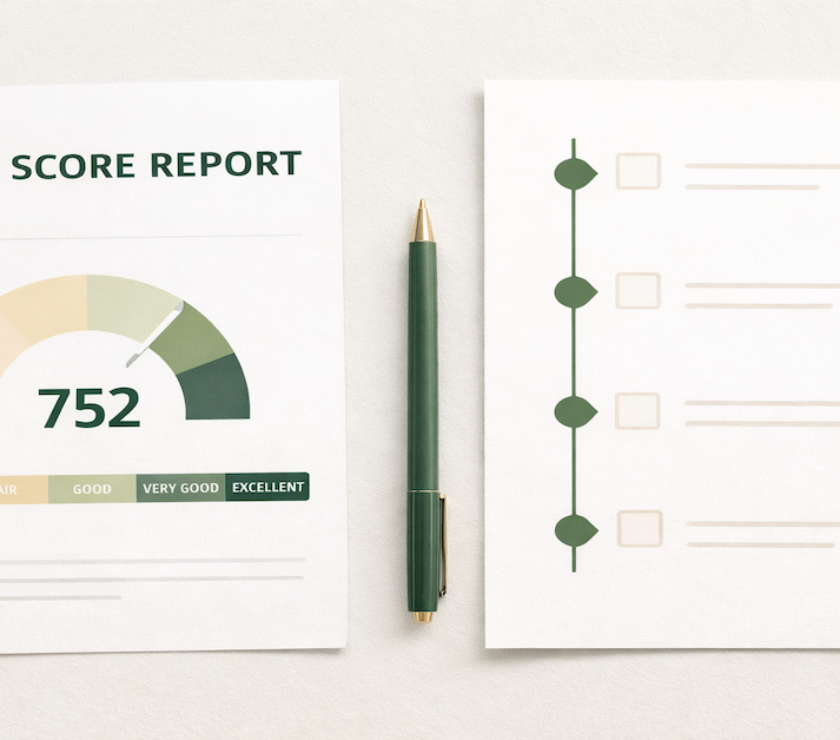
FICO Score Ranges and Real-World Impact
Exceptional Credit: 800-850
- What you get: Best possible rates on everything, instant approvals, premium card offers
- Interest rate example: Mortgage rates 0.5-0.75% lower than average
- Percentage of population: ~20% of consumers
Very Good Credit: 740-799
- What you get: Excellent rates, easy approvals, access to rewards cards
- Interest rate example: Mortgage rates 0.25-0.5% lower than average
- Percentage of population: ~25% of consumers
Good Credit: 670-739
- What you get: Competitive rates, most approvals, standard card offers
- Interest rate example: Average market rates
- Percentage of population: ~21% of consumers
Fair Credit: 580-669
- What you get: Higher rates, conditional approvals, limited card options
- Interest rate example: Mortgage rates 1-2% above average
- Percentage of population: ~17% of consumers
Poor Credit: 300-579
- What you get: Very high rates, frequent denials, secured cards only
- Interest rate example: Mortgage rates 2-4% above average (if approved)
- Percentage of population: ~17% of consumers
Real cost example: On a $300,000 30-year mortgage, the difference between 6% (excellent credit) and 8% (fair credit) is $179,674 in additional interest paid over the loan's life.
When to Consider Professional Credit Repair Services
While these DIY steps work for most people, certain situations benefit from professional assistance:
- Multiple complex errors: If you have 5+ disputed items across bureaus
- Identity theft: Someone opened accounts in your name
- Mixed credit files: Your report contains another person's information
- Time constraints: You need results quickly for an upcoming major purchase
- Persistent denials: Your disputes keep getting rejected despite valid proof
- Collections negotiation: Multiple accounts need pay-for-delete arrangements
- Legal issues: Creditors aren't following FCRA regulations
- Overwhelming debt: Credit issues are tied to unmanageable debt loads requiring comprehensive solutions
If you're dealing with any of these situations, explore our comprehensive guide to the best credit repair services for 2026 that actually deliver results. For situations where credit problems stem from overwhelming debt, our guide to best debt relief services can help you address the root cause while rebuilding your credit profile.
Take Control of Your Credit Before 2026
Your credit score is a financial lever that affects the cost of everything from mortgages to insurance. A December checkup helps you identify errors, lower utilization, and build a strategy for a stronger 2026. PersonalOne provides the tools and guidance you need to maximize your credit profile.
🔧 Explore Professional Credit Repair Options
📋 Get Your Complete 2026 Financial Plan
💬 Schedule a Credit Strategy Consultation
Join thousands who are ending 2025 with cleaner credit reports and starting 2026 with better rates and stronger approval odds.
Your Credit Score: The Financial Lever That Keeps Working
Your credit score isn't just a number—it's a financial lever that affects the cost of everything you borrow for years to come. When your credit is strong, everything costs less: mortgages, auto loans, credit cards, and sometimes even insurance and rental applications.
A December credit checkup helps you identify errors that have been quietly costing you money, lower utilization that's dragging down your score, clean up problem accounts before they cause 2026 denials, and build an automated system that maintains excellent credit without requiring ongoing effort.
At PersonalOne, we've guided thousands of clients through credit improvement journeys. The pattern is always the same: small, strategic actions taken consistently create dramatic long-term results. You don't fix credit overnight, but you can absolutely improve your trajectory in the last month of the year.
Start with Step 1 today. Pull all three credit reports. The information you discover in the next hour could save you thousands of dollars in interest over the next decade. That's not hyperbole—that's the mathematical reality of how credit scores affect lending rates.
Your 2026 financial success starts with the credit work you do in December 2025. Make it count.
Frequently Asked Questions
Q: How fast can my credit score improve?
Changes like lowering utilization can show up on your credit report and impact your score within a few weeks—sometimes as quickly as when your next statement closes. Credit report disputes take up to 30 days for bureaus to investigate and respond. Payment history improvements take longer, as you need to establish a consistent pattern of on-time payments over 3-6 months for significant impact.
Q: Does checking my own credit hurt my score?
No. Pulling your own credit report is classified as a "soft inquiry" and has zero impact on your credit score. You can check your reports as often as you want without any negative effects. Only "hard inquiries" from lender applications affect your score, and even those have minimal impact (typically 5-10 points that recover within months).
Q: Should I use a credit repair service or do it myself?
DIY credit repair works well if you have 1-3 simple errors, time to manage the dispute process, and straightforward situations. Consider professional services if you're dealing with multiple complex errors across all three bureaus, identity theft or mixed credit files, collections requiring skilled negotiation, or time-sensitive situations where you need results quickly for a major purchase. Professional services can save time and potentially achieve better results in complex cases.
Q: Will paying off collections improve my credit score immediately?
Not necessarily. Paying a collection changes its status from "unpaid" to "paid," which is better, but the collection itself may remain on your report for up to 7 years from the original delinquency date. However, newer credit scoring models (FICO 9, VantageScore 3.0 and 4.0) ignore paid collections entirely, so the impact depends on which scoring model your lender uses. Negotiate "pay-for-delete" when possible to remove the collection completely.
Q: How long do negative items stay on my credit report?
Most negative items remain for 7 years from the date of first delinquency: late payments, charge-offs, collections, and Chapter 13 bankruptcy. Chapter 7 bankruptcy remains for 10 years. Hard inquiries stay for 2 years but only impact your score for about 12 months. Positive information (on-time payments, accounts in good standing) can remain indefinitely, which is why keeping old accounts open benefits your credit history length.
Financial Disclaimer: This article is for educational and informational purposes only and does not constitute financial, legal, or credit repair advice. Individual credit situations vary significantly based on credit history, account types, and specific circumstances. Credit score improvement timelines and results will differ based on your unique situation. The strategies discussed are general guidance and may not be appropriate for every person. Disputing accurate information on credit reports is illegal. Always verify the accuracy of information before disputing. Credit repair services vary in quality and results—research thoroughly before hiring any service. PersonalOne recommends consulting with qualified financial advisors and credit professionals for personalized guidance on your specific credit situation.
References & Resources
- Consumer Financial Protection Bureau (CFPB) - Credit Reports and Scores - ConsumerFinance.gov
- Federal Trade Commission (FTC) - Credit Report Accuracy Studies - FTC.gov
- Federal Reserve - Credit Utilization and Lending Risk Models - FederalReserve.gov
- Annual Credit Report - Official Free Credit Reports - AnnualCreditReport.com
- Fair Credit Reporting Act (FCRA) - Consumer Rights and Protections
- myFICO - Credit Scoring Models and Impact Factors