Updated: May 11, 2026
Home › Debt Relief & Credit Repair › Charge-Offs, Collections & Late Payments › How to Repair Holiday Credit Damage and Prevent It Next Year
This article is part of the Charge-Offs, Collections & Late Payments cluster — your complete guide to understanding negative credit events and building a structured recovery from them.
About the Author
Don Briscoe is a financial systems strategist with 12+ years of experience helping Millennials and Gen Z build income and financial stability. He founded PersonalOne to provide the financial education he wished existed — structured, honest, and free.
What You Need to Know
— Holiday spending damages credit in three predictable ways: utilization spikes from high balances, hard inquiries from new store cards, and missed payments from seasonal disruption.
— Recovery is faster than most people expect — utilization damage can reverse in a single billing cycle once balances come down.
— The recovery sequence: pull your reports, pay down high-utilization cards before their statement closes, automate minimum payments on everything, and leave new store cards open.
— Prevention for next year starts now with a dedicated savings account and a firm no-new-credit policy from November through January.
Holiday credit repair is not as complicated as it feels in January. The damage from a heavy spending season follows a predictable pattern, and so does the recovery. Knowing which lever moves fastest — and in what order to pull them — is what separates a score that rebounds in 30 to 60 days from one that stalls for months because the wrong things were prioritized first.
This guide covers why holiday spending damages credit scores, the five-step recovery plan, and the structural prevention system that removes the cycle entirely for next year.
Why Holiday Spending Damages Credit Scores
The credit damage from a heavy holiday season is not random. It follows a consistent pattern tied directly to how FICO scoring works, and understanding each mechanism makes the recovery path clear. The Charge-offs, Collections & Late Payments framework covers all five FICO factors, but during the holiday season three of them take the biggest hits simultaneously.
Spiking Credit Utilization
Credit utilization — the percentage of available credit being reported as used — accounts for 30% of your FICO score. During the holidays, it is common for utilization to jump from a healthy 15 to 20% into the 60 to 80% range as gift purchases, travel, and entertainment charges accumulate across one or two billing cycles.
Moving from 20% to 70% utilization can drop a score by 30 to 50 points, even if every payment is made on time and the balances are paid off within the next cycle. The damage occurs when the statement closes with the high balance — that is the number reported to the bureaus, regardless of what happens after. On a $10,000 total credit limit, carrying $7,000 in balances reports 70% utilization even if you bring it to zero two weeks later.
Opening Multiple Store Cards
Store card offers at checkout look like a simple discount — 20% off today's purchase. What they actually represent is a hard inquiry (typically 5 to 10 points each) plus a reduction in average account age. Opening three store cards in November and December can produce a combined score drop of 20 to 40 points from applications alone, before accounting for any balances carried on the new accounts.
The compounding effect is that new accounts also immediately increase total credit utilization if you use them at or near their limit. A new store card with a $500 limit charged to $450 is reporting 90% utilization on that individual account — which FICO scores separately from overall utilization.
Missed Payments During a High-Activity Period
Payment history accounts for 35% of your FICO score — the single largest factor. During the holidays, the combination of travel, hosting, and general disruption to routine creates conditions where due dates are easy to miss. A payment that goes 30 or more days past due gets reported to the bureaus and can drop a score by 60 to 110 points depending on the starting score and prior history.
The 30-day threshold is the key number. A payment that is 5 to 10 days late and caught immediately will typically result in a late fee but no credit report entry. Once the 30-day mark passes, the entry stays on the report for seven years — though its impact on score diminishes significantly as time passes and positive history accumulates.
Maxing Out Individual Cards
FICO calculates utilization both in aggregate across all accounts and on each individual card. A single card at 95 to 100% utilization creates a per-card penalty even when overall utilization is moderate. This happens frequently when someone dedicates one card to holiday shopping or uses an entire store card limit on a single purchase.
Post-Holiday Credit Recovery Plan
Step 1: Pull Your Credit Reports
Start by pulling your current reports from all three bureaus — Equifax, Experian, and TransUnion — through AnnualCreditReport.com. Weekly free reports are available. Pull all three separately because the same account can be reported differently across bureaus, and a correction at one does not automatically carry to the others.
Identity theft increases during the holidays — verify that every account listed is one you actually opened. Look specifically for accounts that are not yours, incorrectly reported late payment marks, duplicate entries, wrong credit limits, and negative items that should have aged off the report (seven years for most derogatory marks, ten years for bankruptcies).
If you find errors, dispute them directly through each bureau's online portal. Under the Fair Credit Reporting Act, bureaus must investigate within 30 days and correct or remove items that cannot be verified. A single legitimate error — particularly a late payment mark that was applied incorrectly — can suppress a score by 60 to 110 points. Removing it produces an immediate score recovery within the next reporting cycle.
Step 2: Pay Down High Utilization Before Statements Close
Utilization is the fastest lever in credit score recovery because it resets every month with no historical component. Whatever your reported balance is right now will not be what is reported next cycle if you reduce it before your next statement closes. This is where the most significant and fastest score gains come from for most people dealing with holiday credit damage. Understanding how payment timing can quickly reverse high utilization is the key to making this work in a single billing cycle.
Priority order: target any individual card above 30% first. Getting a card from 70% down to below 30% creates an immediate per-card penalty removal. Then work toward getting overall utilization below 10% if resources allow. The math on a full cycle recovery is compelling — moving from 70% to 25% across your accounts can produce a 40 to 60 point score increase within two billing cycles. Use the Credit Score Impact Calculator to model what specific paydowns would do to your profile before your next statement closes.
The timing is critical: your card issuer reports your balance on the statement closing date, not the payment due date. A large payment made after the statement closes does not lower the reported balance for that cycle — it affects next month's report. To get credit for the paydown in the current cycle, the payment must post three to five days before your closing date to allow for processing.
If you cannot pay everything down immediately, distributing balances across multiple cards to keep each one below 30% provides better immediate score improvement than paying one card to zero while leaving others above the threshold. Use the Debt Paydown Calculator to map out the fastest sequence for clearing holiday balances. This is a temporary tactic — the financial priority remains paying all balances off completely to stop interest accumulation.
Where This Usually Fails
One of the most common mistakes I see after the holidays is people focusing on paying everything off — but doing it in the wrong order.
In one case, someone came out of December with about $6,000 spread across three cards. They immediately paid one card down to $0 and felt like they had made a big dent. But the other two cards were still sitting at 65% to 80% utilization.
Their score barely moved. The reason wasn't effort — it was allocation. From a scoring perspective, having two cards above 60% still triggers significant penalties, even if one card is completely paid off.
The adjustment was simple: instead of zeroing out one account, the balances were redistributed so all three cards dropped below 30% before their next statement closing dates. No additional money — just a different strategy.
The result: within one billing cycle, the score increased by over 40 points. Recovery isn't just about paying balances down — it's about controlling how those balances are reported across all accounts at the same time.
Step 3: Automate Minimum Payments on Every Account
If the holiday season produced a missed payment, the first structural fix is ensuring it cannot happen again. Set minimum payment autopay on every credit account. Log into each issuer's portal and activate autopay for the minimum amount due. This does not prevent interest accumulation or manage utilization — those require additional manual payments — but it permanently eliminates the risk of a late payment being reported due to an overlooked bill.
If a late payment was already reported, call the creditor immediately and request a goodwill adjustment. Explain that the missed payment was a one-time oversight during a high-activity period and that you have an otherwise consistent payment history. Many issuers will remove a single first-time late payment mark as a courtesy for long-standing customers with clean prior history. This is not guaranteed, but it costs nothing to ask and the payoff if successful is significant. If the damage is deeper than one missed payment, the full sequence in how to fix your credit after missed payments or damage covers the structured 90-day recovery path.
Step 4: Do Not Close New Store Cards
The instinct to immediately close store cards opened during the holidays is understandable but counterproductive. Closing a card reduces your total available credit, which raises overall utilization on remaining accounts. For someone already dealing with high balances, removing available credit makes the utilization problem worse.
Pay the store card balances to zero, then keep the accounts open for at least six to twelve months. Make a small purchase on each every six months to prevent the issuer from closing them due to inactivity — an issuer-initiated closure also reduces available credit and can affect average account age. After your score has recovered and you have held the accounts for a year, reassess whether keeping them open serves any purpose.
The one exception is a store card with a meaningful annual fee and no useful benefits. If keeping it open costs you money and the credit limit is small enough that closing it has minimal utilization impact, the fee calculation may favor closure. Run the numbers on the utilization change before deciding.
Step 5: Consider Becoming an Authorized User
If the score drop was severe and a faster recovery is needed — for example, ahead of a mortgage application or lease renewal — ask a family member or trusted contact with excellent credit to add you as an authorized user on one of their older accounts. The account's payment history and credit age transfer to your profile, which can produce a 20 to 40 point improvement within a few weeks of the account appearing on your report. The account should have a long clean payment history, low utilization, and ideally five or more years of age. You do not need or use the physical card — the benefit comes entirely from the account appearing on your credit file.
Preventing Holiday Credit Damage Next Year
Recovery addresses the damage already done. Prevention eliminates the cycle entirely. The structural fix is straightforward: remove the conditions that allow holiday spending to spike utilization and trigger new credit applications in the first place. The overspending patterns that make the holidays damaging to credit rarely start in November — understanding where overspending patterns actually start is the foundation for building prevention that holds.
Build a Holiday Savings Fund Starting Now
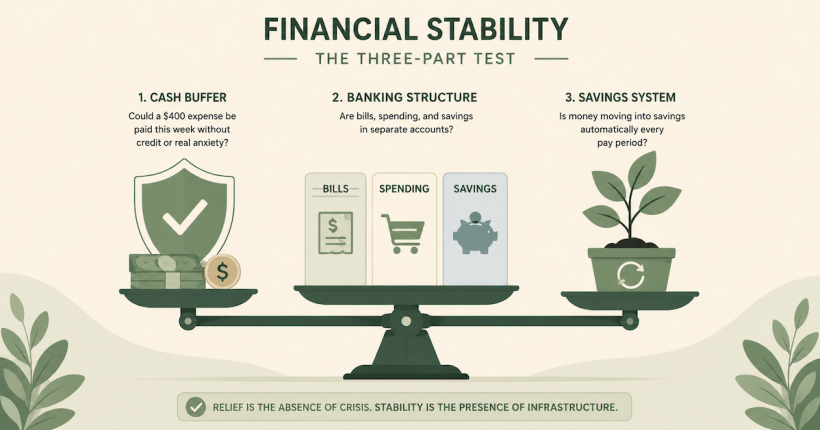
The most effective prevention strategy is funding holiday spending with cash rather than charging everything in November and December. Calculate your total holiday spend from last season — gifts, travel, entertaining, decorations, and charitable giving. Add 15 to 20% as a buffer. Divide by the number of months between now and October, and set up an automatic monthly transfer from checking to a dedicated high-yield savings account. A structured savings system is the infrastructure that makes this automatic rather than a decision you have to make every month.
When the holidays arrive, you use credit cards for purchase protection and rewards benefits, then pay the balances immediately from the holiday fund rather than carrying them. Utilization never spikes because the money to clear the balance is already sitting in savings. Interest is never incurred. The credit score is unaffected by the season entirely.
No New Credit Applications From November Through January
Store card offers at checkout are not worth the credit score cost. A 20% discount on a $200 purchase saves $40. The hard inquiry and account age reduction from opening the card typically drops a score 10 to 20 points — damage that takes three to six months to fully recover from. If a mortgage, auto loan, or apartment application is planned within the following year, those 10 to 20 points can translate directly into a higher rate or a failed application threshold.
A firm policy of no new credit applications between November 1 and January 1 eliminates this category of damage entirely. Use a rewards card you already hold, pay it from the holiday fund, and decline every store card offer at checkout regardless of the stated discount.
Set Balance Alerts on Every Card
Most card issuers offer text or email alerts when balances reach a percentage of the credit limit. Set an alert at 25% of the limit on every card. During heavy spending months, these alerts provide real-time visibility into utilization before it crosses into score-damaging territory — giving you the opportunity to make a mid-cycle payment before the statement closes with a high balance.
Make Mid-Cycle Payments During November and December
During high-spending months, shift from one monthly payment to weekly or biweekly payments. Each payment keeps the running balance lower, which means the balance on the statement closing date stays within an acceptable utilization range even during periods of high spending. This is the same multiple-payments strategy that works throughout the year — it is simply more important to apply it consistently during the two months of heaviest credit card activity.
Run an Annual Credit Review Every January
Build a standing January task to pull all three credit reports, review utilization across every account, confirm all payments posted correctly, and check for any new accounts or inquiries you do not recognize. Small issues caught in January — a slightly elevated balance on one card, a payment that appears late when it was not — are resolved quickly at this stage. The same issues left unaddressed can compound over the following months and become harder to untangle.
Recovery Timeline: What to Expect
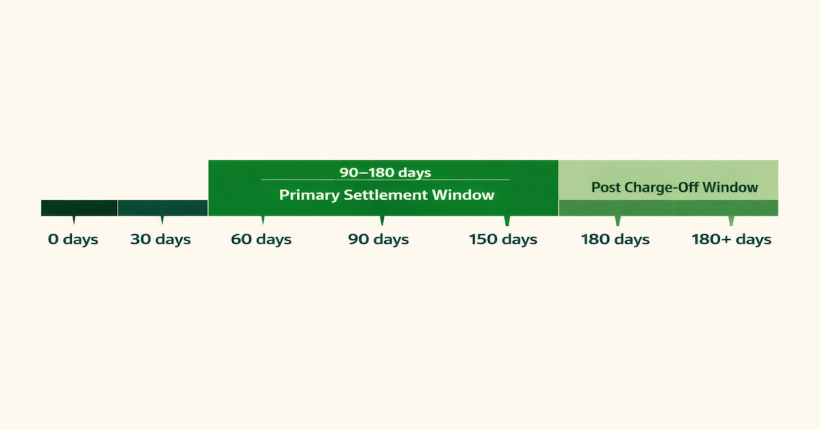
In the first 30 to 60 days, score improvements come from paying down utilization and resolving any error disputes. Most people see 20 to 40 point increases from aggressive balance paydowns within two billing cycles. The strategies for increasing your credit score quickly after seasonal damage run in parallel with the recovery steps above and can compress that timeline further.
Between three and six months, hard inquiry impact fades substantially and new accounts begin aging. Inquiries affect your score most in the first few months and become increasingly negligible after that. Fully paying off credit cards after overspending periods during this window eliminates the interest drag and accelerates the recovery by keeping utilization consistently low each reporting cycle.
Between six and twelve months, most people with no additional negative items and consistent positive behavior return to their pre-holiday score levels. The exception is a reported late payment — that entry stays on the report for seven years, but its practical impact on score diminishes considerably after 12 to 24 months of clean payment history have been added on top of it.
See the Full Debt Relief & Credit Repair System
Credit repair timelines are one piece of a larger recovery system. The PersonalOne Debt Relief & Credit Repair hub covers debt settlement, professional services, DIY strategies, and everything that comes after the damage.
Explore the Complete Credit Repair System →Resources
AnnualCreditReport.com — Official site for free weekly credit reports from all three bureaus. Start here to assess post-holiday damage.
CFPB: How to Dispute a Credit Report Error — Step-by-step federal guidance on the dispute process, your rights, and bureau response timelines.
For the complete framework covering all five FICO factors, visit the Credit Building & Protection authority hub.
Frequently Asked Questions
How much can holiday shopping realistically drop my credit score?
It depends on what combination of factors is at play. High utilization alone — moving from 20% to 70% — can drop a score 30 to 50 points. Opening two or three store cards adds another 10 to 20 points of inquiry and age damage. A single reported late payment can drop a score 60 to 110 points depending on the starting score. In a worst-case scenario where all three occur in the same season, total damage can exceed 100 points. Most people see drops in the 30 to 60 point range from a combination of higher balances and one or two new store cards. The utilization component reverses quickly once balances come down; inquiry and late payment impacts fade more gradually.
Should I pay cards to zero or just get below 30% utilization?
From a credit score perspective, getting below 30% provides most of the immediate benefit, with additional score gains as you push into the below-10% range. From a financial perspective, paying in full is always preferable because carrying balances month-to-month incurs interest without any additional credit benefit — the idea that carrying a balance helps your credit score is a persistent myth. If resources are limited and you must choose between paying one card to zero or spreading payments to get multiple cards below 30%, the latter produces better immediate score results. Treat that as a temporary tactic while working toward full payoff on all accounts.
Is a store card ever worth opening for the holiday discount?
Rarely. The hard inquiry and average account age reduction from a new store card typically drops a score 10 to 20 points and takes three to six months to fully recover. For purchases in the $200 to $500 range, the discount savings are far outweighed by the score cost, particularly if any major credit application is coming in the following year. The one scenario where the math might work is a very large purchase of $1,000 or more, combined with excellent credit that can absorb the temporary hit and no planned credit applications for at least twelve months.
Can I recover from a holiday late payment if the creditor will not remove it?
Yes, though it takes longer than recovering from utilization damage. A late payment stays on the report for seven years, but its influence on your score diminishes substantially over time. After 12 months of clean on-time payments, you will have recovered roughly 40 to 50% of the initial score damage. After 24 months, the impact is further reduced. Building an unbroken positive streak from this point forward is the most direct path to recovery. Set up minimum payment autopay on every account immediately to prevent any additional late payments from compounding the problem.
Should I close store cards I opened during the holidays?
Not immediately. Closing cards reduces total available credit and raises overall utilization, which makes an existing utilization problem worse. Keep them open, pay the balances to zero, and use them for a small purchase every six months to maintain activity. After twelve months you can reassess. The main exception is a card with a meaningful annual fee providing no useful benefit — weigh the fee against the credit limit's contribution to your available credit before deciding.
How quickly will my score recover after I pay down holiday balances?
The improvement appears within one to two weeks of your next statement closing with the lower balance, which then takes a few days to propagate across bureau records. The full cycle from payment to visible score change is typically 30 to 45 days. The key is timing — a payment made three to five days before your statement closing date reduces what gets reported in the current cycle. A payment made after the statement closes affects the following month's report.
What is the best way to budget for next year's holidays to avoid credit damage?
A dedicated holiday savings account funded monthly throughout the year eliminates the root cause of holiday credit damage. Calculate your total holiday spend from last season, add 15 to 20% as a buffer, divide by the months between now and October, and automate a monthly transfer to a separate high-yield savings account. When the season arrives, use credit cards for purchase protection and rewards, then immediately clear the balances from the holiday fund. On a $3,000 holiday budget, $275 per month from January through October fully funds the season without any credit card carry-over.
This content is for educational purposes only and does not constitute financial advice. PersonalOne is not a licensed financial advisor, broker, or investment professional. Individual financial situations vary — consult a qualified financial professional for personalized guidance. Credit scores vary by individual profile, scoring model, and creditor reporting practices. Results from the strategies described here will vary. PersonalOne is not a credit repair organization and does not provide credit repair services.