Updated: March, 2026
Home › FinTech & Modern Money Tools › Neobanks & Digital Banking Platforms › Top Digital Banking Trends in 2026
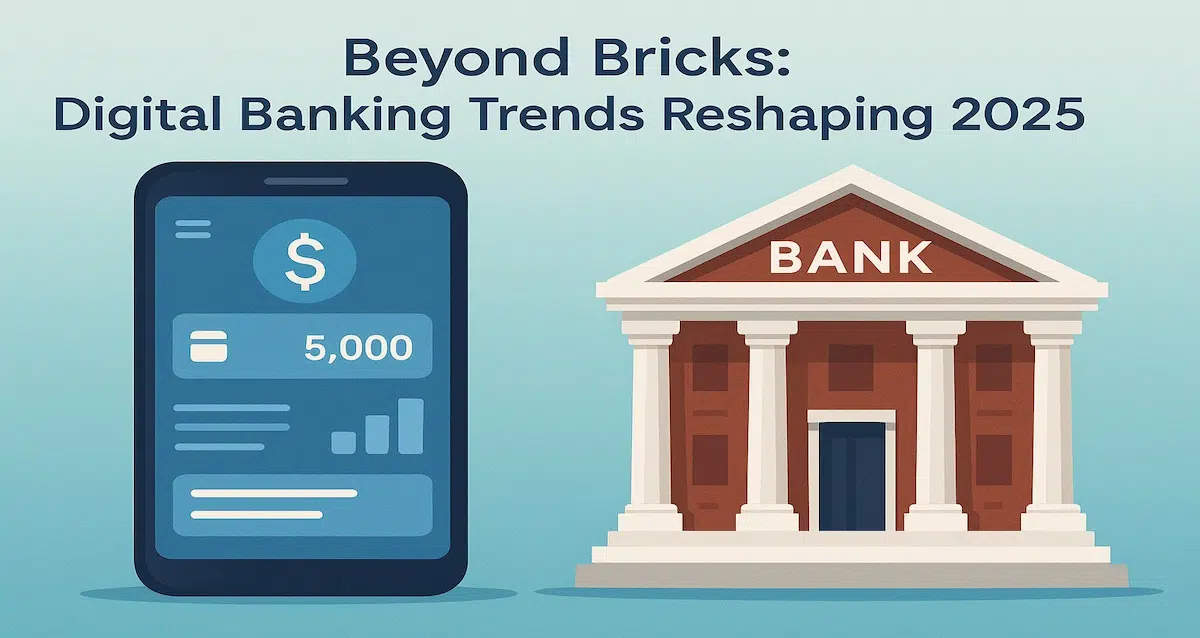
Beyond Bricks: Digital Banking Trends Reshaping Traditional Lenders
What You Need to Know
— The top digital banking trends in 2026 are not incremental improvements — they represent structural changes to how accounts work, how money moves, and who controls the experience
— Traditional banks are no longer simply responding to neobanks — they are partnering with them, acquiring them, and integrating their infrastructure directly
— AI-powered financial management, real-time payment rails, and embedded banking are the three trends with the most direct impact on everyday account holders
— Not every neobank is profitable or permanent — understanding the business model and FDIC structure of any platform you use matters more in 2026 than it did two years ago
— The right response to these trends is not to chase them — it is to build a banking structure that benefits from them without depending on any single platform's survival
Why Digital Banking Trends Matter More Than Ever in 2026
The digital banking trends shaping 2026 are not cosmetic updates to existing products. They reflect structural changes to how financial institutions compete, how payment infrastructure works, and what account holders can realistically expect from their banking experience. For anyone making decisions about where to keep money, which platforms to use, and how to structure their financial accounts, understanding these trends produces better decisions than reacting to them after the fact.
The backdrop is a market that has moved decisively past the "neobanks vs traditional banks" framing that defined the previous five years. The competitive pressure that neobanks created has already produced its most visible results — fee eliminations, mobile redesigns, early deposit features at legacy institutions. The current phase is integration and consolidation: traditional banks acquiring FinTech infrastructure, neobanks pursuing banking charters, and a new generation of embedded banking products that blur the line between financial institutions and the platforms customers already use daily. The full context for evaluating where specific products fit within this landscape is in the neobanks and digital banking platforms guide.
The Top 8 Digital Banking Trends in 2026
1. AI-Powered Personal Financial Management
AI tools built directly into banking apps are moving from novelty features to core account management infrastructure in 2026. Platforms are deploying AI that proactively surfaces spending patterns, flags upcoming cash flow gaps before they become overdrafts, identifies recurring charges users may have forgotten, and suggests savings moves based on real account behavior rather than generic rules. The technology is not about replacing human judgment — it is about delivering the kind of personalized financial analysis that previously required a financial advisor, built into an app most people check daily.
What this means for you: If your current bank’s app does not surface actionable insights based on your actual account behavior, this gap will become more visible as competitor platforms continue improving. The most immediate upgrade is pairing a neobank with a budgeting tool that aggregates all accounts — this delivers the visibility layer that AI banking features are building toward.
2. Real-Time Payment Rails Going Mainstream
The Federal Reserve’s FedNow Service launched in 2023 and has steadily expanded participation among U.S. financial institutions. RTP (The Clearing House’s Real-Time Payments network) has been operating since 2017. In 2026, real-time payment infrastructure is moving from an early-adopter feature to a baseline expectation across consumer and business banking. Account-to-account transfers that previously took one to three business days are settling in seconds on institutions connected to these networks.
What this means for you: Check whether your primary financial institutions participate in FedNow or RTP. If not, this is a concrete reason to consider a neobank or digital bank that does for time-sensitive transfers. The practical impact is most significant for rent payments, business payments, and urgent transfers where a three-day delay carries real cost.
3. Embedded Banking in Non-Financial Platforms
Embedded banking refers to financial services delivered inside non-financial platforms — a payroll app that offers an account where wages are deposited, a gig economy platform that provides instant earnings access, a retail platform that offers credit at checkout without redirecting to a separate lender. Banking functionality is being built into the products people use for other purposes, bypassing the traditional account-opening relationship entirely.
What this means for you: More of your financial interactions will happen inside platforms you already use, without you making a deliberate decision to open a banking product. The relevant question is always the same: who holds the deposits, is the account FDIC-insured, and what are the terms? Embedded banking convenience does not reduce the responsibility to verify these things.
4. Traditional Banks Acquiring and Partnering with FinTech
The competitive phase of neobank vs traditional bank is giving way to a consolidation phase. Major banks are acquiring FinTech companies to integrate their technology rather than build it internally. Regional banks are white-labeling neobank infrastructure for their own customer bases. The distinction between a "traditional bank with a good app" and a "neobank with a banking charter" is collapsing as both sides move toward the same model from different directions.
What this means for you: The platform you use matters less than the specific features, fees, and FDIC structure it offers. A traditional bank that has integrated FinTech infrastructure can match or exceed a neobank’s digital experience while adding the lending products neobanks lack. Evaluate accounts on their actual features rather than their institutional category.
5. High-Yield Savings Rates Normalizing at Digital Banks
Digital banks and high-yield savings accounts at online institutions continue to offer meaningfully higher interest rates than branch-based banks, driven by lower overhead costs. While the rate environment fluctuates with Federal Reserve policy, the structural rate gap between branch-based and digital savings accounts persists. The CFPB has documented this gap consistently in consumer financial product research, and the spread has become a standard consumer finance recommendation in financial planning contexts.
What this means for you: Keeping your emergency fund or short-term savings at a branch-based bank with near-zero interest is a measurable cost. A high-yield savings account at a digital bank or credit union typically requires no minimum balance and provides the same FDIC coverage. The time required to move this money is 15 minutes; the ongoing return difference compounds monthly.
6. Regulatory Oversight of Neobanks Tightening
The CFPB and banking regulators have increased scrutiny of neobank business models, particularly around FDIC pass-through insurance disclosures, account closure practices, and customer dispute resolution. Several high-profile neobank failures and frozen account situations in 2023–2024 accelerated regulatory attention. The Federal Reserve’s financial stability monitoring now explicitly includes FinTech-bank partnerships as a risk factor.
What this means for you: Greater regulatory oversight benefits consumers on balance — it forces clearer disclosures and stronger consumer protections. The practical implication is that established, well-capitalized neobanks with transparent FDIC disclosures and clear business models are meaningfully different from smaller or newer platforms. Platform stability matters when choosing where to keep primary operating funds.
7. Open Banking Expanding Consumer Data Control
Open banking refers to systems that allow consumers to securely share their financial data across institutions and apps — enabling budgeting tools, loan applications, and financial management platforms to access account information with user permission. The CFPB’s Personal Financial Data Rights rule, finalized in 2024, established consumer rights to access and share financial data held by banks and credit card companies. Implementation is rolling out through 2026.
What this means for you: Open banking infrastructure makes it easier to connect budgeting and financial management tools to all of your accounts simultaneously, and easier to switch financial institutions without losing financial history. The practical near-term benefit is stronger account aggregation in budgeting platforms like Monarch Money and improved loan application processes that use your actual financial history rather than just a credit score.
8. Credit Building Tools Becoming Standard at Neobanks
Credit building features — secured cards, rent and utility payment reporting to credit bureaus, credit builder loan products — are becoming standard offerings at neobanks rather than specialized products available only at credit unions or dedicated credit-building platforms. For users with thin credit files or recovering from past credit events, the ability to build credit through normal banking activity without a traditional credit card is a meaningful structural change in product availability.
What this means for you: If building or rebuilding credit is a current priority, check whether your neobank offers rent reporting or a secured card product. These features vary significantly by platform and the reporting terms matter — confirm which credit bureaus the platform reports to and at what frequency before relying on it as a credit-building tool.
How to Position Yourself for These Changes
The right response to a changing digital banking landscape is not to chase every new feature or switch platforms every time a competitor launches something new. It is to build a banking structure that is stable, well-understood, and positioned to absorb improvements as they become available without depending on any single platform’s continued existence.
That structure looks the same in 2026 as it has throughout the neobank era: a neobank or digital bank for daily operations and high-yield savings, a traditional bank or credit union for lending relationships, and a budgeting or aggregation tool that connects the full picture. What changes as digital banking trends evolve is which specific platform best fills each role — not the role itself.
The two most actionable steps for most people reading this in 2026 are confirming that the neobank holding your operating funds has clear FDIC disclosure and a transparent business model, and verifying that your emergency fund is earning a competitive rate at a digital savings account rather than sitting in a branch-based account earning near-zero interest. Those two changes take less than an hour and produce measurable financial improvements without requiring any additional complexity in your financial setup.
Trends change. A solid banking structure holds up through all of them.
The complete framework for evaluating, choosing, and integrating neobanks into a multi-account money system is in the Neobanks & Digital Banking Platforms guide.
Explore Neobanks & Digital Banking Platforms →Resources
Official Sources
CFPB — Research Reports on Digital Banking — Consumer Financial Protection Bureau research on digital banking adoption, open banking implementation, and consumer financial product trends.
Federal Reserve — Financial Stability Report — The Fed’s semi-annual assessment of financial system stability, including coverage of FinTech-bank partnerships and neobank regulatory risk.
Federal Reserve — FedNow Service — Official information on the Federal Reserve’s real-time payment rail, including participating institutions and implementation timeline.
Continue Building Your Banking System
Understanding digital banking trends is context. Building a banking structure that benefits from them is the work. The complete framework lives in the FinTech & Modern Money Tools guide.
Frequently Asked Questions
What is the biggest digital banking trend in 2026?
AI-powered personal financial management built into banking apps is the trend with the broadest impact on everyday account holders — it is changing what people expect their bank to do for them proactively, not just reactively. Real-time payment rails going mainstream and open banking data rights are close behind in terms of structural impact on how money moves and how financial accounts connect to each other.
Are digital-only banks safe to use in 2026?
Yes, with the same caveat that has always applied: verify which FDIC-insured institution holds your deposits before transferring significant funds. Regulatory oversight of neobanks has increased, which improves consumer protections and disclosure standards. Established platforms with clear FDIC disclosure and transparent business models carry significantly less risk than newer or smaller operations. Always verify at FDIC.gov before depositing.
What is open banking and how does it affect me?
Open banking refers to consumer rights to share financial data across institutions with permission. Under CFPB rules finalized in 2024, you have the right to access and share the financial data held by your bank — which powers better account aggregation in budgeting tools and makes it easier to switch banks without losing financial history. The practical benefit in 2026 is stronger connectivity between your banking accounts and financial management apps.
Should I switch to a neobank because of these trends?
The trends do not require switching — they inform how to evaluate your current setup. The most useful questions are: Is my emergency fund earning a competitive rate? Does my primary account have clear FDIC disclosure? Can I receive transfers in real time when I need to? If the answers to those questions are no, no, and no, then a neobank for daily banking and high-yield savings is likely an improvement worth making. If your current setup already handles these well, the trends are useful to monitor rather than react to immediately.
What is FedNow and do I need to care about it?
FedNow is the Federal Reserve’s real-time payment infrastructure, allowing participating banks to settle account-to-account transfers in seconds rather than days. You benefit from it automatically when both the sending and receiving institution participate — no action required on your part. If your primary bank does not participate, transfers to institutions that do will still take standard ACH time. The list of participating institutions is available on the Federal Reserve’s FedNow page and grows monthly.
Disclaimer: This article is for informational and educational purposes only and does not constitute financial advice. PersonalOne is not affiliated with any financial institution mentioned. Digital banking products, interest rates, regulatory requirements, and FDIC arrangements change — always verify current terms directly with any platform before opening an account. Consult a certified financial professional before making significant financial decisions.