Don Briscoe is a personal finance coach with over 12 years of experience helping people take control of their money. As the founder of PersonalOne.org, Don specializes in making complex financial concepts accessible and actionable for everyday Americans.
TL;DR - Quick Summary
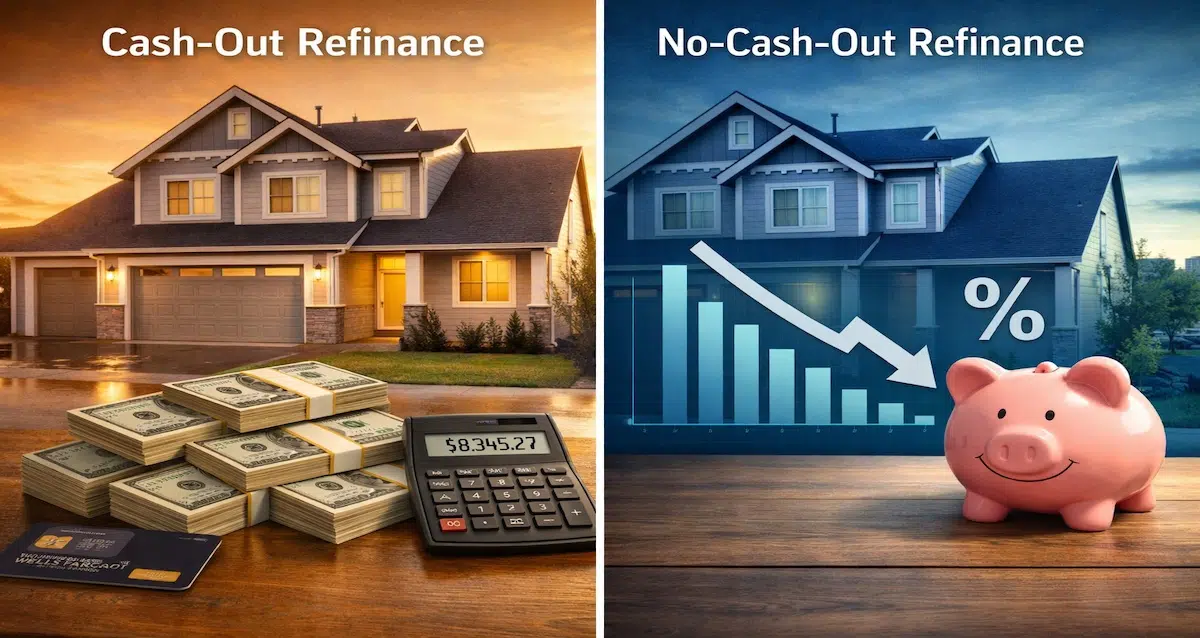
- Cash-out refinance: Replaces your mortgage with a bigger one, gives you cash from your equity
- No-cash-out refinance: Replaces your mortgage to get better terms—no cash, just savings
- Cash-out = higher rates, more debt, more risk (but access to funds)
- No-cash-out = lower rates, less risk, long-term savings (but no spending money)
- Choose cash-out for strategic debt payoff or major investments. Choose no-cash-out for better loan terms and stability.
Refinancing isn't just a rate play anymore—it's a strategy decision. And if you're staring at two options that sound nearly identical (cash-out vs. no-cash-out), you're not alone. One can unlock money for big goals. The other quietly saves you thousands over time.
Same house. Same loan process. Very different outcomes.
Let's break it down so you don't refinance today and regret it six months from now.
What Is a Cash-Out Refinance?
A cash-out refinance replaces your existing mortgage with a new, larger one—and hands you the difference in cash.
You're borrowing against your home equity.
Example:
- Home value: $400,000
- Current mortgage balance: $250,000
- New loan: $300,000
- Cash to you: ~$50,000 (minus closing costs)
Why People Choose a Cash-Out Refinance
- Pay off high-interest credit card debt
- Fund home renovations
- Cover major expenses (education, medical, business startup)
- Consolidate multiple loans into one payment
The Trade-Off:
You're increasing your loan balance and often your interest rate. You're also putting your home on the line for whatever you spend that cash on.
High upside. Real risk.
What Is a No-Cash-Out Refinance?
A no-cash-out refinance (also called a rate-and-term refinance) replaces your mortgage without pulling money from your equity.
The goal is optimization—not access to cash.
Why People Choose No-Cash-Out Refinancing
- Lower interest rate
- Reduced monthly payment
- Shorter loan term (30 → 15 years)
- Switch from adjustable to fixed rate
The Trade-Off:
You don't get spending money—but you also don't increase your debt.
It's the "quietly smart" option.
Cash-Out vs. No-Cash-Out: Key Differences
1. Loan Balance Impact
Cash-out: Increases your mortgage balance
No-cash-out: Balance stays close to the same
2. Interest Rates
Cash-out: Usually higher rates
No-cash-out: Lower, more favorable rates
3. Risk Level
Cash-out: Higher risk (more debt secured by your home)
No-cash-out: Lower risk
4. Best Use Case
Cash-out: Strategic debt payoff or investment
No-cash-out: Long-term savings and stability
When a Cash-Out Refinance Makes Sense
A cash-out refinance mortgage can be smart if the math works and the purpose is solid.
Good scenarios:
- Paying off 20%+ APR credit cards
- Renovations that increase home value
- Replacing toxic debt with lower-interest debt
- One-time, intentional expenses (not lifestyle inflation)
Red flag: Using home equity to fund vacations, impulse spending, or recurring expenses.
That's how people refinance themselves into stress.
When No-Cash-Out Is the Better Move
Choose no-cash-out refinancing if your goal is:
- Lower monthly payments
- Faster payoff
- Predictable budgeting
- Less financial risk
This option is ideal for:
- First-time refinancers
- Conservative borrowers
- Anyone prioritizing long-term wealth over short-term cash
Boring? Maybe. Profitable? Absolutely.
Credit, Equity, and Qualification Rules
Both options require:
- Solid credit (typically 620+ minimum, higher is better)
- Enough home equity
- Stable income and debt-to-income ratio
But cash-out refinances usually:
- Cap borrowing at ~80% loan-to-value
- Require stronger credit
- Come with stricter underwriting
Translation: cash-out is harder to qualify for—and more expensive.
Which Refinance Is Right for You?
Ask yourself:
- Do I need cash—or just better terms?
- Will this move reduce financial stress or increase it?
- Am I solving a problem or creating one?
If refinancing helps you sleep better, it's probably the right move.
If it helps you spend more… pause.
Final Verdict
Cash-out refinance: Powerful tool when used strategically
No-cash-out refinance: Safer, cleaner, long-term win
There's no universal answer—only the right decision for your financial situation.
FAQs
Is a cash-out refinance taxable?
No. The cash you receive is a loan, not income.
Can I refinance again later?
Yes, but lenders often require a waiting period.
Does refinancing hurt my credit?
There may be a small, temporary dip from credit inquiries.
Which refinance saves more money long-term?
Usually no-cash-out—unless cash-out replaces very high-interest debt.
Ready to Explore Your Options?
Before committing, compare lenders, rates, and scenarios side-by-side. Having a solid budgeting strategy helps you understand what refinance option fits your financial goals.
Need to track your finances better? Try an all-in-one budgeting tool to see exactly where your money goes each month.
More Resources
Want more real estate and money tips? Subscribe to PersonalOne and make smarter financial decisions.
Financial Disclaimer: This article is for educational purposes only and does not constitute financial or legal advice. Mortgage terms, rates, and eligibility vary by lender and borrower profile. Always consult a licensed mortgage professional before making refinancing decisions. Some links may be affiliate or partner links that help support this site.
You May Also Like

-
Sep 22, 2026

-
Sep 22, 2026

-
Sep 21, 2026

-
Apr 2, 2026