March 2026 • 8 min read
Home › Debt Relief & Credit Repair › Charge-Offs, Collections & Late Payments
Charge-Offs, Collections & Late Payments
What each type of negative credit event actually means, how long it damages your score, and how to respond in ways that help your recovery rather than extend the damage.
TL;DR — What This Cluster Covers
- A charge-off does not mean the debt is forgiven — the creditor wrote it off their books as a loss, but you still legally owe it
- Collections are separate negative events from the original delinquency — both can appear on your report, compounding the damage
- Paying a collection does not automatically remove it — but “pay for delete” agreements sometimes will
- Late payments fall off after 7 years — and their impact diminishes over time even before they age off
- How you respond matters more than the fact that it happened — wrong responses can restart the clock on older debts
Negative credit events are confusing by design. The terminology — charge-offs, collections, derogatory marks, hard inquiries — was not developed to be consumer-friendly. Most people with credit damage don’t fully understand what the marks on their report actually mean, which leads to responses that either don’t help or actively make things worse.
This cluster demystifies the major types of credit damage: what each means, how it affects your score, how long it stays, and what your options are for each. Knowledge about the specific events on your report is the prerequisite for taking effective action.
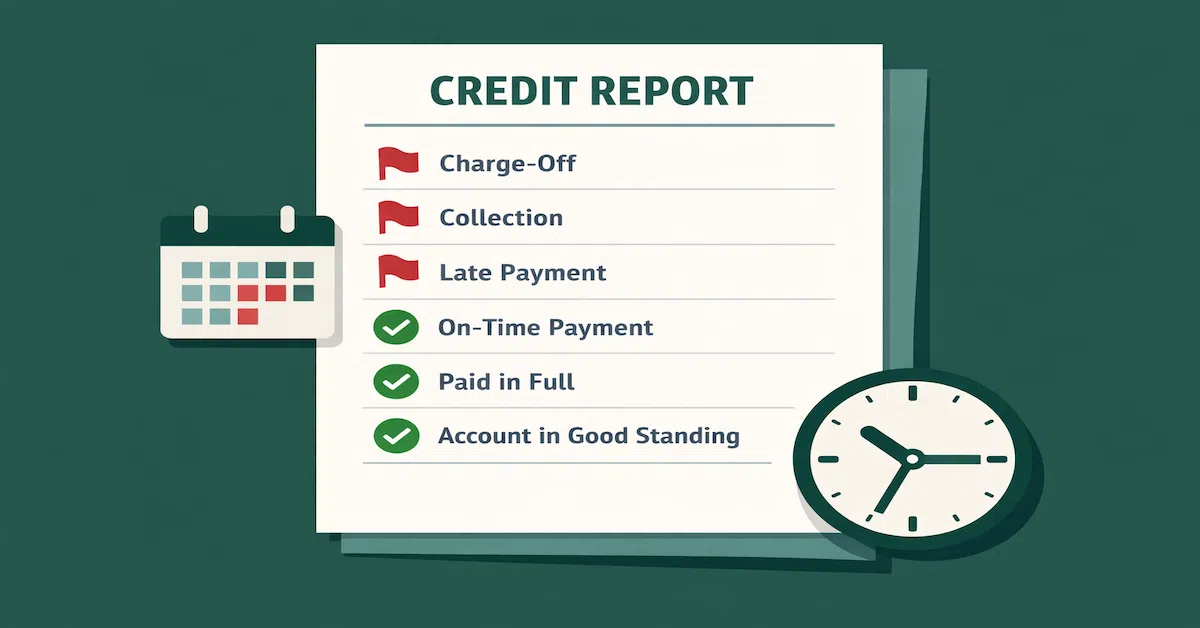
Negative Credit Events at a Glance
Late Payment
Stays on report 7 years from the date of first delinquency. Impact decreases over time. A single 30-day late mark on an otherwise clean file is meaningful but survivable.
Charge-Off
Stays 7 years from original delinquency date. Does not mean debt is erased. Paying or settling a charge-off does not remove it but may update the status, which can help slightly.
Collection Account
Stays 7 years from original delinquency date (not from when it was sold to collections). Paying or settling doesn’t automatically remove it — negotiate pay-for-delete when possible.
Bankruptcy
Chapter 7 stays 10 years. Chapter 13 stays 7 years. Among the most damaging single events but its impact diminishes substantially after year 2–3 of positive rebuilding behavior.
Important: Making a payment on an old collection account can restart the statute of limitations on the debt for collections purposes in some states. Before paying or acknowledging a very old debt, confirm whether it is past the statute of limitations in your state and understand the implications. Consult a consumer law attorney for high-balance situations.
Know the Damage. Then Fix It.
Once you understand what each mark on your report means, the next step is a systematic repair plan. The DIY Credit Recovery cluster covers the full process, or the full debt relief and credit repair guide shows how this fits into the larger recovery sequence.
Back to the debt relief guide →Frequently Asked Questions
If I pay off a collection, will it be removed from my report?
Not automatically. Paying a collection updates the status to “paid” but the entry remains on your report for the full 7-year period from original delinquency. The exception is a “pay for delete” agreement — where the collector agrees in writing to remove the entry in exchange for payment. Get any such agreement in writing before paying.
Does a charge-off mean I don’t owe the debt anymore?
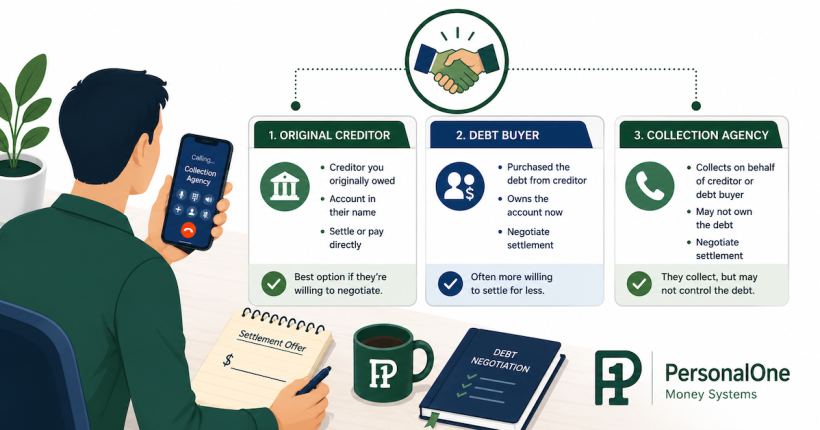
No. A charge-off is an accounting action by the creditor — they wrote the debt off their books as a loss, which may qualify them for a tax deduction. The debt is still legally owed. The creditor may continue collection efforts or sell the debt to a collections agency, which then has its own right to pursue you.
What is the “statute of limitations” on debt, and does it affect my credit report?
The statute of limitations on debt is a state law limit on how long a creditor can sue you to collect. It is separate from how long a debt appears on your credit report. A debt can be past the statute of limitations (meaning they can’t sue you) but still appear on your credit report. A debt can also still be within the statute of limitations but have aged off your report. These are two separate legal timelines.
Disclaimer: The information provided on PersonalOne is for educational purposes only and does not constitute legal or financial advice. Credit reporting rules, statutes of limitations, and consumer rights vary by state and individual situation. Consult a qualified consumer law attorney or credit counselor for guidance on specific negative credit events. Do not make payments on old debts without first understanding the legal implications in your state.