May, 2026
Home › Fixing Money Mistakes › Financial Recovery & Reset
Financial Recovery & Reset: The Complete Framework for Starting Again Without Shame
What You Need to Know
— A financial setback does not mean your future is permanently broken — it usually means your current system failed and needs to be rebuilt
— Financial recovery is rarely one dramatic fix — it is a sequence: stabilize, assess, reset, and rebuild
— People often feel stuck because they treat recovery as a motivation problem when it is really a structure problem
— Restarting finances from zero or near-zero requires triage first, not perfection — you protect the basics before chasing long-term optimization
— This cluster covers the realistic reset process for recovering from money mistakes, setbacks, and complete system breakdowns without shame-driven panic
Why Financial Recovery Needs a Framework
When money goes off the rails, most people do not need inspiration first. They need order. A job loss, debt spiral, missed bills, drained savings account, or complete breakdown in financial control creates emotional chaos fast. In that state, generic advice like “just budget better” or “stay disciplined” is almost useless. Recovery only starts to feel possible when the path becomes specific.
That is what this cluster hub is for. Financial recovery and reset is the part of PersonalOne that helps people stop spiraling and start rebuilding. The point is not to pretend the setback did not happen. The point is to create a realistic path back from it. For the larger recovery framework that connects this process to the rest of the system, start with the Fixing Money Mistakes guide.
This cluster covers the complete reset layer behind financial recovery: how to restart your finances from zero, how to recover from a money mistake without letting it define you, why paycheck size is not always the core issue, and how to rebuild the structure underneath stability. The supporting articles below go deeper into each stage so readers can stop guessing and start moving.
The First Step in Recovery Is Stabilization, Not Optimization
When a money system breaks down, the first goal is not to optimize returns, improve credit scores, or build the perfect budget. The first goal is stabilization. That means protecting housing, food, utilities, transportation, and basic account control. If someone is trying to solve everything at once, recovery usually stalls because the plan becomes too emotionally and financially heavy to sustain.
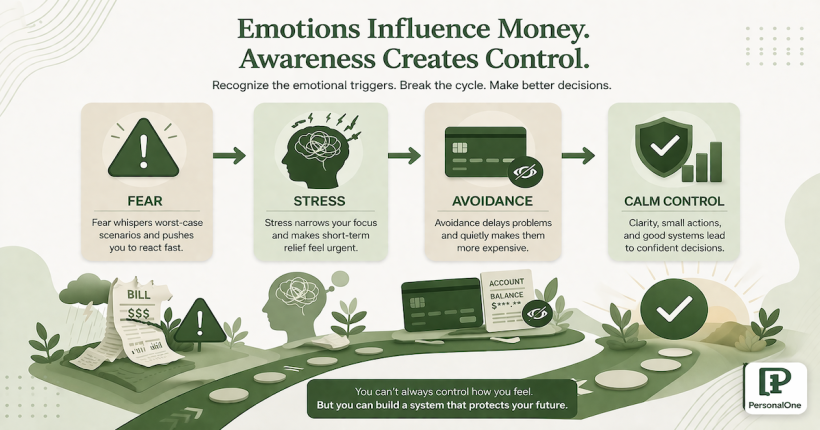
This is also where shame causes damage. People often feel pressure to immediately “catch up” on everything. But recovery works better when it follows order. Stabilize the essentials. Stop active damage. Get visibility. Then begin rebuilding. That sequence matters because chaos hates sequence. Sequence is how you get your footing back.
What Financial Reset Actually Means
A financial reset is not wiping the slate clean like the last six months never happened. It is the deliberate process of creating a new operating structure after the old one failed. Sometimes that means downsizing costs. Sometimes it means negotiating bills, rebuilding a starter buffer, separating accounts, or pausing certain goals to regain control. The reset is less about starting over emotionally and more about starting over operationally.
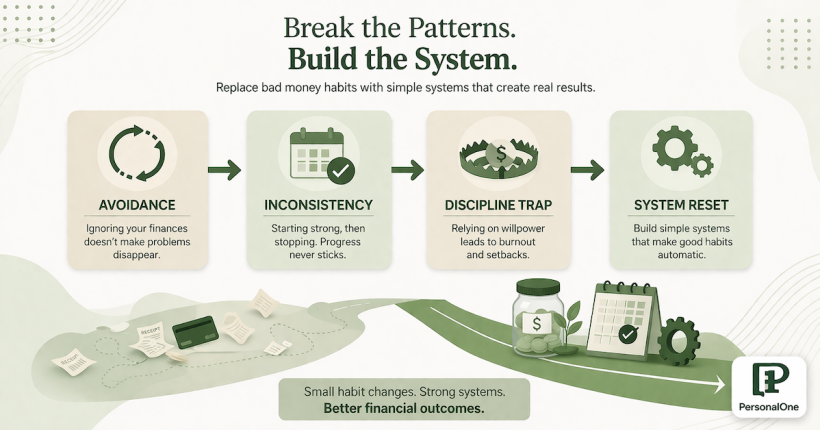
That distinction matters. Many people stay stuck because they wait to “feel ready” before changing the system. In reality, the reset itself is what starts producing the readiness. Small visible wins restore trust faster than self-criticism ever will.
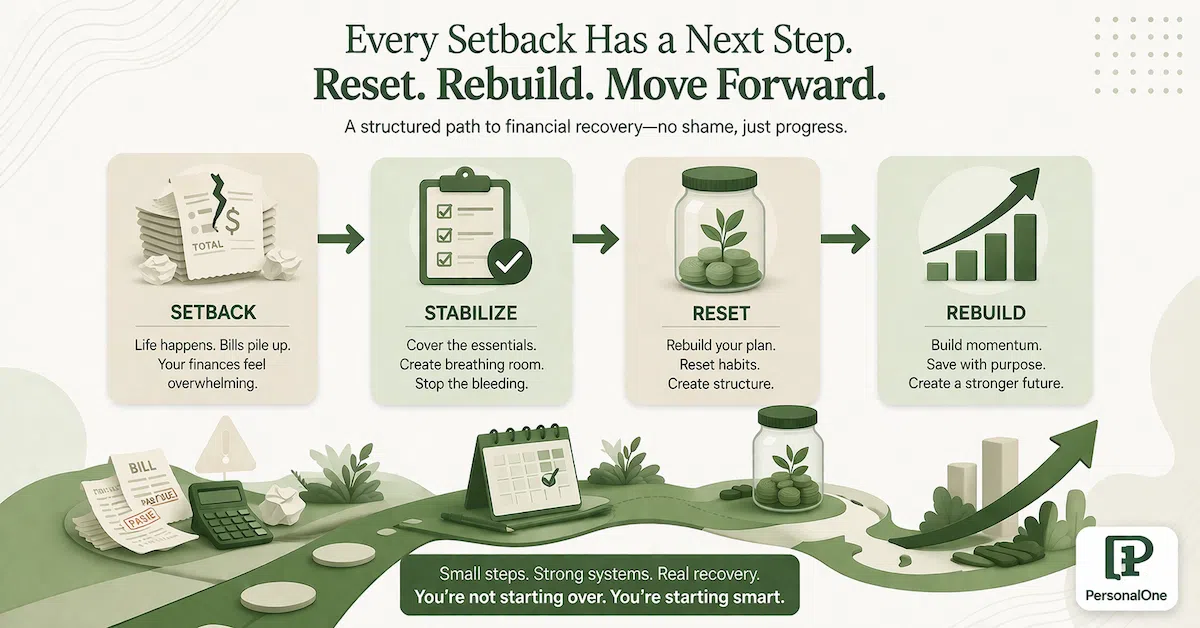
The Four-Part Recovery Sequence
Financial Recovery Sequence
Stabilize: Protect the essentials first and stop the situation from getting worse.
Assess: Get honest visibility into balances, bills, income, and damage without hiding from the numbers.
Reset: Rebuild the structure with new priorities, simplified systems, and realistic short-term rules.
Rebuild: Start restoring buffers, habits, and consistency so the next setback does not hit the same way.
This sequence works because it respects how people actually recover. You do not jump from crisis to polished financial optimization in one move. You move from disorder to traction. Then from traction to stability. Then from stability to strength.
Your Paycheck Is Not Always the Core Problem
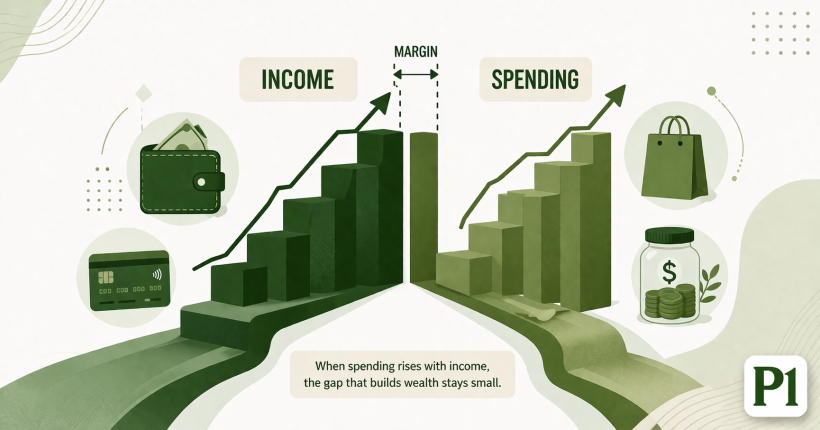
Sometimes income really is the problem. But often the paycheck is not the first failure point people think it is. Money systems break down because of timing gaps, invisible spending, weak account structure, no emergency layer, repeated avoidance, or trying to support too much complexity with too little control. In those cases, simply making more money does not fully solve the issue. It may delay the pressure, but it does not fix the underlying leak.
This is why financial reset work belongs inside Fixing Money Mistakes. Recovery means learning what actually broke. If the same collapse would happen again at a slightly higher income, then the problem is structural, not just numerical.
How to Rebuild Without Making Recovery Overwhelming
Reset Framework
Shrink the plan: Focus on the next 30 to 90 days, not your entire financial future in one sitting.
Protect one win at a time: Housing, bills, account control, and a starter savings layer come before complex goals.
Build visibility fast: A simple review routine lowers fear because unknown problems usually feel bigger than known ones.
Use structure aggressively: Separate accounts, automation, due-date management, and spending boundaries reduce recovery friction.
Do not confuse a setback with identity: A failed system can be rebuilt. A shame story just slows the rebuild down.
The goal of reset work is not to make everything look perfect. It is to make the next month safer than the last one. That is enough to start changing the direction of the system.
Why This Cluster Belongs Under Fixing Money Mistakes
This cluster belongs under Fixing Money Mistakes because recovery is what people need after a pattern has already caused damage. They are not looking for vague encouragement. They are looking for a path back. This cluster gives that path shape by focusing on stabilization, reset, and step-by-step rebuilding instead of generic motivational noise.
It also creates a bridge to the rest of the PersonalOne system. Once readers recover baseline control, they can move into stability, budgeting, automation, and account structure with much better odds of lasting progress. Recovery is not the end of the system. It is the re-entry point.
A Setback Does Not Get the Final Word
Financial recovery works best when it follows a system, not panic. See how PersonalOne connects reset, rebuilding, and long-term control in the full Fixing Money Mistakes guide.
Explore the Fixing Money Mistakes Guide →Frequently Asked Questions
How do I restart my finances from zero?
Start by protecting the essentials, getting visibility into your current numbers, and simplifying the system. Financial restart works best when it begins with stabilization, not long-term optimization.
What is a financial reset?
A financial reset is the deliberate process of rebuilding your money structure after a setback or breakdown. It often includes reassessing priorities, simplifying costs, reworking accounts, and restoring basic control.
How do I recover from a financial mistake?
First stop the damage from spreading, then identify what caused it, and rebuild the system around that lesson. Recovery works faster when you treat the mistake as information instead of identity.
Can I recover financially without making more money first?
In many cases, yes. If the main problem is structural rather than income-related, better visibility, spending control, bill timing, account separation, and automation can improve recovery even before income rises.
How long does a financial reset take?
Initial stabilization can begin within days, but meaningful reset usually happens over 30 to 90 days. Long-term rebuilding takes longer, but the system often starts feeling calmer well before everything is fully repaired.
What if my paycheck really is too small?
Then income needs to be part of the solution. But it is still worth fixing structure at the same time, because weak systems can waste even improved income. Recovery works best when both the income layer and the system layer are addressed honestly.
Resources
Official Sources
CFPB — Start Recovering and Rebuilding Your Financial Life — Current Consumer Financial Protection Bureau guidance on contacting lenders, asking for relief, and recovering after a financial emergency or major disruption. ([consumerfinance.gov](https://www.consumerfinance.gov/consumer-tools/disasters-and-emergencies/start-recovering-and-rebuilding-your-financial-life/?utm_source=chatgpt.com))
CFPB — An Essential Guide to Building an Emergency Fund — CFPB guidance explaining why savings matter for absorbing shocks and reducing the long-term damage of financial setbacks. ([consumerfinance.gov](https://www.consumerfinance.gov/an-essential-guide-to-building-an-emergency-fund/?utm_source=chatgpt.com))
Federal Reserve — Economic Well-Being of U.S. Households — Recent national data showing how many adults report financial strain and why recovery frameworks still matter for a large share of households. ([federalreserve.gov](https://www.federalreserve.gov/publications/2025-economic-well-being-of-us-households-in-2024-overall-financial-well-being.htm?utm_source=chatgpt.com))
Related PersonalOne Guides
Fixing Money Mistakes — The full recovery framework for correcting damage, identifying what broke, and rebuilding your money system with more stability and less shame.
Financial Stability Guide — Once you regain control, this is the next layer for building buffers, protection, and a system that can handle future shocks better.
Budgeting & Savings Guide — Use this when you are ready to turn financial reset work into stronger monthly control, better cash flow visibility, and consistent saving behavior.
Continue Learning: Financial Recovery & Reset
Each article in this cluster focuses on one stage of rebuilding after a financial setback — from restarting from zero to correcting a mistake without letting it define your future.
How to Restart Your Finances From ZeroComing Soon
A practical starting point for readers whose finances feel stripped down, disorganized, or fully reset by circumstance.
The 90-Day Financial Reset PlanComing Soon
A short-term reset framework for stabilizing, simplifying, and restoring control over money in the next three months.
How to Recover From a Financial MistakeComing Soon
How to respond after a costly error without spiraling, hiding, or letting the mistake keep doing damage.
Your Paycheck Is Not the ProblemComing Soon
A structural look at why some financial breakdowns persist even when income improves, and what actually needs to be repaired.
PersonalOne Money System
This content is researched, written, and owned by PersonalOne — a free financial education platform built to help Millennials and Gen Z build real financial systems.
Disclaimer: This content is for informational and educational purposes only and does not constitute financial advice. Financial setbacks, recovery timelines, and rebuilding strategies vary by household. Consult qualified financial professionals before making major financial decisions. PersonalOne is not responsible for decisions made based on this content.