May, 2026
Home › Fixing Money Mistakes › Emotional Money Decisions
What You Need to Know
— Fear, stress, and avoidance are financial decisions too — they just happen automatically before logic has much of a chance to speak up
— Emotional money decisions often show up as panic spending, freezing up, ignoring account balances, delaying bills, or making urgent choices that damage long-term stability
— Financial anxiety is not always about being irresponsible — it is often the result of uncertainty, pressure, low visibility, or repeated financial pain
— People make calmer money decisions when the system lowers emotional intensity — visibility, routines, automation, and simpler account structure reduce the chance of reactive behavior
— This cluster covers the emotional layer underneath money mistakes so readers can understand what stress is doing to their decisions and build more stable patterns
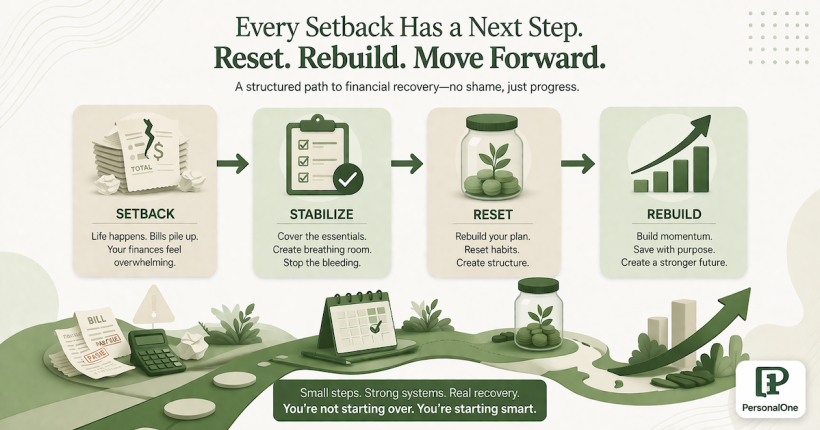
A lot of financial decisions are not made in calm, rational conditions. They are made while someone is tired, stressed, embarrassed, behind, anxious, or trying to get immediate relief. That matters because money advice often assumes people are making decisions from a neutral emotional baseline. In real life, plenty of the most expensive choices happen when someone is trying to reduce discomfort right now, even if the choice makes tomorrow harder.
This cluster exists to deal with that layer directly. Emotional money decisions are not side issues on PersonalOne. They are often the missing explanation for why someone knows better and still acts against their own goals. For the full recovery framework that puts these reactions into a larger system, start with the Fixing Money Mistakes guide.
This cluster covers the complete emotional behavior layer behind financial mistakes: why fear drives decisions, why money stress can feel overwhelming, how panic spending works, and why some people would rather do almost anything than open their banking app. The supporting articles below break down each response pattern so readers can understand what is happening and create a steadier system around it.
Fear Changes the Way Money Looks
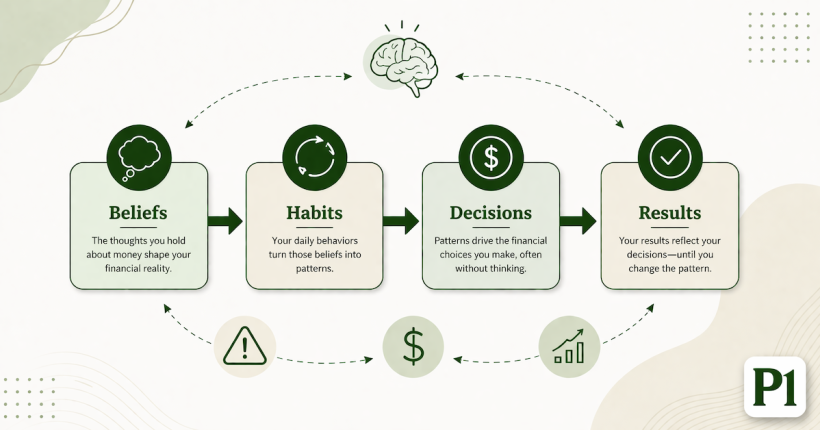
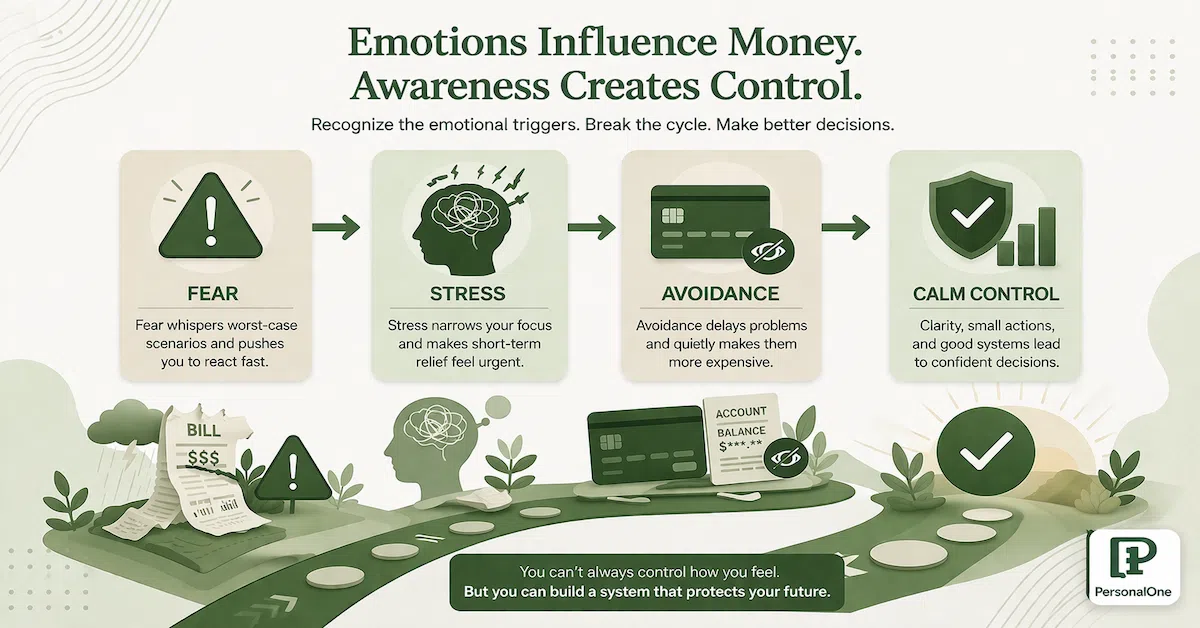
When someone is afraid, their decision-making narrows. They focus on what feels urgent, immediate, and emotionally loud. In money terms, that can mean pulling cash from savings too fast, avoiding a bill because it feels too painful to face, making a purchase for emotional relief, or choosing the short-term option that reduces pressure today even if it creates a worse outcome next month.
This is why fear-driven money behavior can feel irrational from the outside but completely understandable from the inside. The person is not necessarily choosing the best financial outcome. They are choosing the fastest emotional relief. If that pattern repeats, it becomes one of the main ways long-term stability gets undermined.
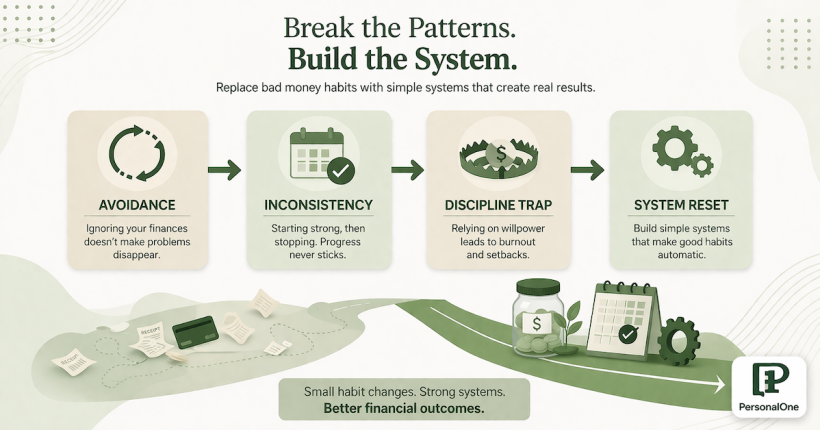
The Four Emotional Money Patterns That Quietly Cause Damage
Common Emotional Decision Patterns
Panic spending: Buying for relief, comfort, or control when stress spikes.
Account avoidance: Delaying bank balance checks, bill reviews, or debt visibility because the numbers feel threatening.
Fear-driven urgency: Making short-term financial choices too quickly because waiting feels emotionally unsafe.
Stress paralysis: Knowing action is needed but freezing because the problem feels too heavy or too layered.
These patterns are costly because they do not always look dramatic. Sometimes the damage is invisible at first. A delayed review becomes a missed payment. A stress purchase becomes a recurring habit. A skipped account check becomes a larger surprise later. Emotional decisions create financial drag slowly, then all at once.
Why Financial Anxiety Feels Overwhelming
Financial anxiety feels overwhelming because money touches survival, identity, freedom, and future plans all at once. When someone feels uncertain about rent, debt, bills, or whether they are falling behind, the pressure does not stay neatly contained inside a budget category. It spills into sleep, concentration, relationships, and confidence. That is one reason money stress often feels bigger than the raw number itself.
Research and consumer guidance around financial well-being consistently point to the role of control and predictability. When people have more visibility into their numbers and more confidence that the system can absorb pressure, anxiety often eases. That does not mean the problem was imaginary. It means the structure became strong enough to reduce uncertainty.
Why People Avoid Looking at Their Bank Account
Avoidance is one of the most common emotional money behaviors because it gives immediate relief. Looking feels bad. Not looking feels better for a moment. The problem is that avoidance charges interest. It delays action, hides drift, and lets small issues grow into larger ones. What begins as emotional protection turns into financial exposure.
That is why the fix is not just “be more responsible.” The better move is to lower the emotional temperature of review. Make check-ins short. Make them routine. Make them less dramatic. When a person knows exactly when they will look, what they are looking for, and what action follows, the account becomes data again instead of a threat signal.
How to Build Calmer Financial Decision-Making
Calm Control Framework
Increase visibility: Fewer surprises usually means less panic, so regular check-ins matter more than heroic monthly resets.
Reduce decision load: Use autopay, account separation, and recurring routines so fewer choices have to be made while stressed.
Add interruption points: A pause before a stress-driven purchase can stop a feeling from turning into a transaction.
Create response rules: Decide in advance what happens when anxiety spikes, instead of inventing the plan mid-panic.
Treat emotion as data: Stress is information, not a command. It may explain the urge, but it should not automatically control the move.
The goal is not emotionless money management. The goal is stable decision-making even when emotion is present. Readers do not need to become robots. They need a structure strong enough that fear does not run the whole system.
Why This Cluster Belongs Under Fixing Money Mistakes
This cluster belongs under Fixing Money Mistakes because emotional behavior often sits underneath repeated financial damage. People usually search for help after they have panic-spent, frozen up, avoided the numbers, or made choices they knew were not helping. This cluster explains those reactions without pretending they are harmless.
It also creates a bridge into stronger systems. Once readers understand how fear and stress distort decisions, they can move toward budgeting, automation, account structure, or financial stability work with more self-awareness and less shame. That is the point: not blaming emotion, but preventing it from steering everything unchecked.
Stress Should Not Run Your Money System
Emotional money decisions make more sense once you see the pattern. Explore the full Fixing Money Mistakes guide to connect stress, behavior, and recovery into one system.
Explore the Fixing Money Mistakes Guide →Frequently Asked Questions
What are emotional money decisions?
Emotional money decisions are choices influenced primarily by fear, stress, embarrassment, urgency, or the need for immediate relief instead of calm long-term thinking. They often happen automatically under pressure.
Why does money stress feel so overwhelming?
Money stress affects more than spending. It touches survival, security, freedom, and future plans. That is why financial pressure can feel bigger than the immediate bill or account balance in front of you.
What is panic spending?
Panic spending is spending driven by stress, anxiety, or the need for emotional relief. It is less about the item itself and more about what the purchase temporarily helps someone feel.
Why do people avoid looking at their bank account?
People often avoid checking their account because the numbers feel emotionally threatening. Avoidance can provide short-term relief, but it usually increases long-term financial damage by delaying action.
Can emotional spending be stopped?
Yes, but usually not through guilt alone. It improves when triggers are identified, interruption points are built in, and the money system reduces stress and temptation at the same time.
How do I make calmer financial decisions?
Start by increasing visibility, simplifying routines, reducing decision fatigue, and creating pre-planned response rules. Calm decisions usually come from stronger systems, not from waiting until stress disappears completely.
Resources
Official Sources
CFPB — Why Financial Well-Being? — Consumer Financial Protection Bureau overview explaining financial well-being in terms of security, control, and freedom of choice, which helps frame why money stress can feel so heavy.
CFPB — A Guide to Using the CFPB Financial Well-Being Scale — Research-backed tool and framework for understanding how people experience control, confidence, and strain in their financial lives.
Federal Reserve — Economic Well-Being of U.S. Households — Federal Reserve reporting on financial strain, savings pressure, and household well-being that gives broader context for why financial anxiety and money stress are so common.
Related PersonalOne Guides
Fixing Money Mistakes — The full framework for understanding money patterns, correcting damage, and rebuilding financial control with stronger systems.
Money Mindset & Financial Psychology — Use this when you want to understand the deeper belief and behavior patterns that shape emotional money reactions over time.
Financial Stability Guide — Financial stress eases when the system can absorb pressure better, so this is the next step for readers who need stronger buffers and more control.
Continue Learning: Emotional Money Decisions
Each article in this cluster focuses on one fear-driven or stress-driven behavior pattern that can quietly destabilize money decisions and long-term progress.
Why Fear Drives Most Financial DecisionsComing Soon
A closer look at how financial fear narrows thinking, increases urgency, and pushes people toward short-term relief over long-term control.
Financial Anxiety: Why Money Stress Feels OverwhelmingComing Soon
Why money stress hits so hard emotionally, how uncertainty amplifies it, and what helps reduce the pressure without pretending it is not real.
Panic Spending and How to Stop ItComing Soon
A practical guide to understanding panic spending triggers, building interruption points, and replacing emotional purchases with calmer responses.
Why People Avoid Looking at Their Bank AccountComing Soon
The psychology of account avoidance, why it feels protective in the moment, and how to create low-drama financial review habits that actually stick.
PersonalOne Money System
This content is researched, written, and owned by PersonalOne — a free financial education platform built to help Millennials and Gen Z build real financial systems.
Disclaimer: This content is for informational and educational purposes only and does not constitute financial advice. Financial stress, behavioral patterns, and emotional decision-making vary by person and household. Consult qualified financial or mental health professionals when needed before making major financial decisions. PersonalOne is not responsible for decisions made based on this content.