April, 2026
Home › Fixing Money Mistakes › Overspending & Lifestyle Inflation
What You Need to Know
— Earning more does not automatically create wealth if your spending quietly rises every time your income does
— Lifestyle inflation is not always obvious luxury spending — it often shows up as upgraded convenience, subscriptions, food costs, delivery habits, and everyday comfort creep
— Overspending is usually a pattern problem, not a math problem — stress, reward-seeking, poor visibility, and weak spending boundaries do most of the damage
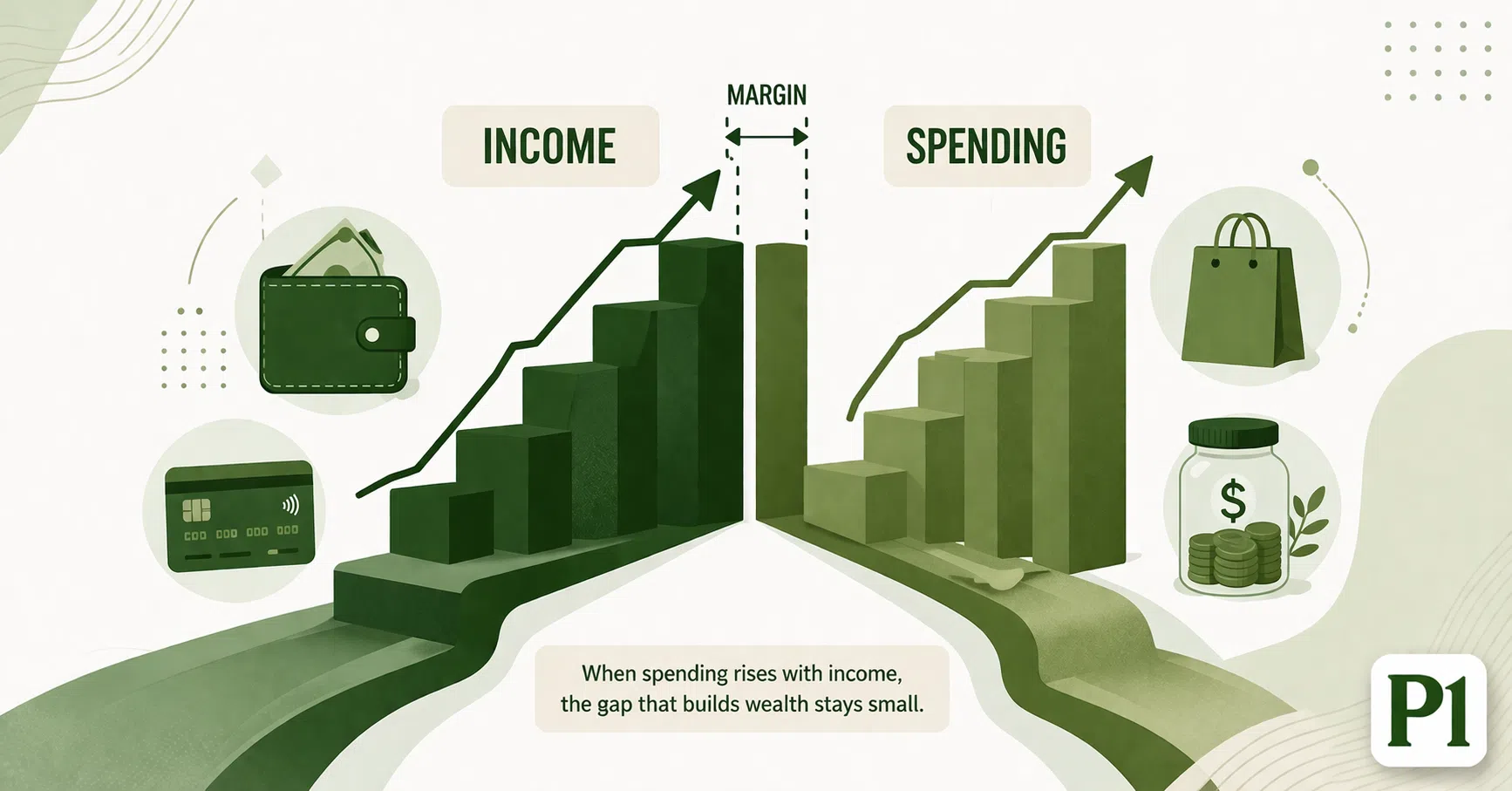
— Many people feel broke on a decent income because their financial margin never grows — every raise gets absorbed before it can strengthen savings, debt payoff, or long-term goals
— This cluster covers the behavioral and structural reasons income disappears so readers can stop leaking money and actually feel the benefit of earning more
One of the most frustrating money experiences is earning more and still feeling broke. You get the raise, the better contract, the stronger commission month, or the side hustle income bump — and somehow the pressure does not actually leave. The account is not collapsing, but it is not building anything either. That usually points to one of two problems: overspending patterns or lifestyle inflation. In many cases, it is both.
This cluster hub exists to explain that gap. More income should create more margin. If it does not, the issue is not just what you earn. It is what your behavior, habits, and environment do with the increase. For the full recovery framework that helps readers correct these patterns at the system level, start with the Fixing Money Mistakes guide.
This cluster covers the complete overspending and lifestyle inflation layer behind chronic financial frustration: why income disappears, how convenience creep replaces intentional spending, why budgeting often fails to stop the leak, and what practical controls actually create breathing room. The supporting articles below each tackle one version of the problem so readers can identify what is keeping them stuck and start rebuilding margin on purpose.
Lifestyle Inflation Is Quiet, Which Is Why It Wins
Lifestyle inflation sounds dramatic, but it usually shows up in boring ways. It is not always luxury. It is the nicer apartment because you can afford it now. The default delivery habit because time feels tight. The extra subscriptions because each one seems small. The upgraded car payment justified by a better paycheck. The more expensive groceries because convenience feels earned. None of these choices look reckless on their own. Together, they can erase the financial benefit of income growth.
That is why this pattern is so dangerous. People often notice the income increase clearly, but do not notice the spending increase with the same intensity. The raise feels visible. The leak feels normal. And once a higher lifestyle becomes routine, it starts feeling like the baseline instead of an upgrade.
The Four Ways Overspending Usually Hides
Common Hidden Spending Patterns
Convenience creep: Paying extra for speed, delivery, automation, and ease without realizing how often those choices repeat.
Reward spending: Using purchases as a celebration for working hard, surviving stress, or hitting income milestones.
Subscription drift: Letting recurring charges pile up because each one feels too small to matter on its own.
Identity spending: Buying to match a new self-image, income level, or peer group instead of actual priorities.
These patterns matter because they are emotionally reasonable in the moment. That is what makes them sticky. The spending feels earned, justified, affordable, or socially normal. But if the result is that savings never grows and debt never shrinks, the pattern is still costing you progress.
Why Budgeting Fails for So Many People Here
Budgeting often fails against overspending and lifestyle inflation because many people try to use it as a reaction tool instead of a design tool. They notice the damage after the month is already messy, then attempt to cut back through guilt. That approach rarely sticks. The issue is not that budgeting never works. It is that a budget without visibility, boundaries, and account structure becomes a wish list with math attached.
People are also more likely to fail when they budget based on fantasy behavior instead of actual patterns. Official budgeting guidance consistently starts with tracking what you really spend, not what you hope to spend, because financial clarity is what exposes the leak first. Without that visibility, overspending stays vague and lifestyle inflation keeps winning quietly.
How to Create Margin Again
Margin Recovery Framework
Track first: Audit spending for a full month so you can see where raises and extra income are actually going.
Freeze lifestyle upgrades: Hold major upgrades for 60 to 90 days after an income increase so the new cash flow becomes visible before it gets claimed.
Pre-assign the raise: Route extra income toward savings, debt payoff, or investing before it blends into everyday spending.
Reduce friction around good behavior: Use separate accounts and automation so financial progress does not depend on daily restraint.
Review recurring costs: Small recurring charges rarely look dangerous alone, but together they can flatten your margin fast.
The main goal is not deprivation. It is keeping income growth from disappearing without permission. When more money actually reaches savings, debt reduction, or long-term assets, people finally feel what higher income was supposed to feel like in the first place: relief, control, and options.
Why This Cluster Belongs Under Fixing Money Mistakes
This cluster belongs under Fixing Money Mistakes because overspending and lifestyle inflation are rarely just spending category problems. They are pattern problems. People often land here after doing the “right” things on paper — earning more, trying to budget, cutting back temporarily — and still feeling no traction. The cluster helps explain why progress has been disappearing and what needs to change underneath the surface.
It also creates a practical bridge into stronger systems. Once readers understand where the leak is coming from, they can move toward budgeting, automation, account structure, or debt recovery with more accuracy. In other words, this cluster helps readers stop mistaking higher income for higher control.
More Income Should Create More Relief
Overspending and lifestyle inflation are recovery issues as much as budgeting issues. To see how PersonalOne fixes the full pattern, start with the complete Fixing Money Mistakes guide.
Explore the Fixing Money Mistakes Guide →Frequently Asked Questions
Why am I always broke even with a good income?
Usually because your financial margin is too small, not necessarily because your income is too low. Rising costs, hidden spending habits, convenience creep, recurring subscriptions, and lifestyle inflation can absorb raises before they improve your long-term position.
What is lifestyle inflation?
Lifestyle inflation happens when spending rises as income rises. Instead of new income strengthening savings or debt payoff, it gets absorbed into a more expensive baseline lifestyle.
Is overspending always about impulse control?
No. Overspending can come from poor visibility, weak systems, social pressure, emotional relief spending, recurring charges, or convenience habits. Impulse control matters, but structure matters too.
Why does budgeting fail for most people?
Budgeting usually fails when it is based on guesswork, unrealistic restraint, or after-the-fact guilt. It works better when it starts with real spending data and is backed by account structure, automation, and clear boundaries.
How do I stop lifestyle inflation when my income increases?
Pause major upgrades, track actual spending, and pre-assign the raise before it hits your normal spending flow. Routing extra income automatically toward savings, investing, or debt payoff is one of the strongest ways to protect margin.
Can small purchases really keep me broke?
Yes, especially when they repeat. Small recurring decisions often do more damage than occasional big purchases because they become part of the permanent spending baseline and rarely get reviewed carefully.
Resources
Official Sources
CFPB — Track Your Spending With This Easy Tool — Guidance from the Consumer Financial Protection Bureau on why spending visibility matters before trying to change behavior or build a realistic budget.
CFPB — Financial Habits and Norms — A practical framework for understanding how routine behaviors and social patterns shape money decisions over time.
Federal Reserve — Economic Well-Being of U.S. Households — National data on savings, emergency resilience, and household financial pressure that helps explain why higher income does not always translate into stronger stability.
Related PersonalOne Guides
Fixing Money Mistakes — The full recovery framework for identifying money leaks, correcting behavioral patterns, and rebuilding control with better systems.
Budgeting & Savings Guide — Use this when you are ready to turn overspending awareness into stronger cash flow decisions and clearer monthly boundaries.
Financial Automation Guide — One of the best ways to stop raises from disappearing is to route extra money automatically before spending expands to meet it.
Continue Learning: Overspending & Lifestyle Inflation
Each article in this cluster covers one way income disappears quietly — from lifestyle creep to hidden spending habits to why traditional budgeting often misses the real problem.
Why You Always Feel Broke (Even With a Good Income)Coming Soon
A breakdown of why decent earnings can still feel financially tight when fixed costs, convenience spending, and weak margin absorb every raise.
Lifestyle Inflation: The Silent Wealth KillerComing Soon
How rising lifestyle expectations quietly cancel out income growth and keep long-term financial progress from taking hold.
The Hidden Spending Habits Keeping You PoorComing Soon
A closer look at recurring micro-spending, emotional spending, and convenience habits that flatten your financial breathing room over time.
Why Budgeting Fails for Most PeopleComing Soon
Why most budgets fail on contact with real life, and what structural fixes make spending control more realistic and more durable.
PersonalOne Money System
This content is researched, written, and owned by PersonalOne — a free financial education platform built to help Millennials and Gen Z build real financial systems.
Disclaimer: This content is for informational and educational purposes only and does not constitute financial advice. Spending patterns, lifestyle choices, and financial stress vary by household. Consult qualified financial professionals before making major financial decisions. PersonalOne is not responsible for decisions made based on this content.