August 2026
Home › Credit Building & Protection › Authorized User Credit Strategy › How to Remove Yourself as an Authorized User
What You Need to Know
— Either the authorized user or the primary cardholder can request removal. You do not need the primary cardholder's cooperation to remove yourself — you can call the issuer directly or, if necessary, contact the credit bureaus directly.
— The account disappears from your credit report within one to two billing cycles after removal. Any score improvement from the account reverses — plan your timing around this.
— Do not remove yourself within 90 days of a major credit application. The score drop from removal at the wrong moment can move you out of a favorable rate tier.
— Before removing yourself, open at least one independent credit account so your score has somewhere to land. AU status was a bridge — the bridge needs a destination before you cross it.
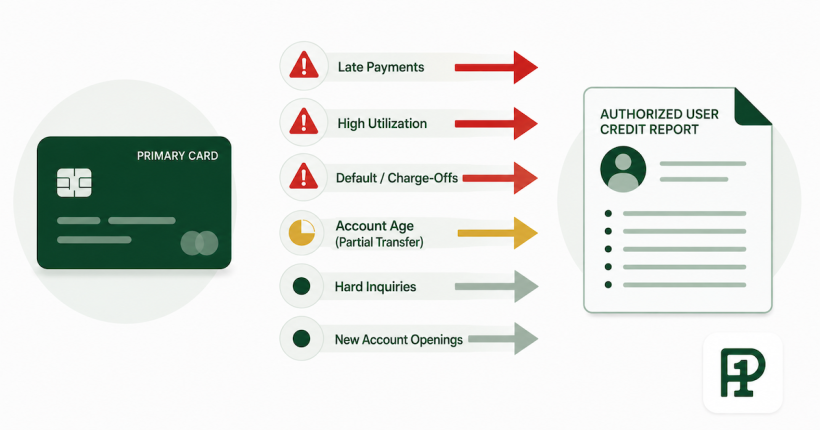
— If the primary account has negative history, removing yourself may actually improve your score rather than drop it — the negative payment history and high utilization disappear along with the account.
Removing yourself as an authorized user is a straightforward process — but the decision of when to do it and how to protect your credit during the transition is where most guides stop short. The how to remove yourself as authorized user question has a simple answer: call the issuer or go online. What that answer doesn't cover is the timing calculation that determines whether removal helps or hurts your score, what to do if the primary cardholder won't cooperate, and how to make sure you don't exit an authorized user arrangement with a score that collapses back to where it started.
This guide covers the complete removal process — including the bureau dispute route most people don't know exists — the timing framework for protecting your score through the transition, and the step-by-step plan for building independent credit before AU status ends so the improvement holds.
The Removal Process: Three Ways to Remove Yourself
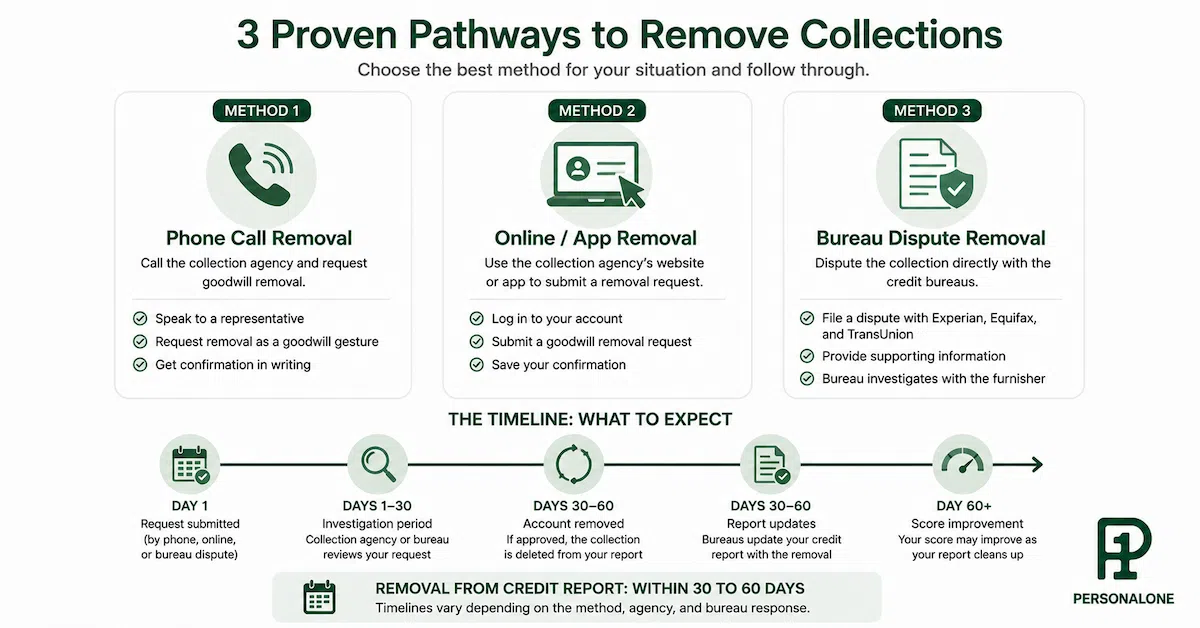
Most major issuers allow either the primary cardholder or the authorized user to request removal independently. You don't need permission. You don't need to coordinate with the primary cardholder first. You can initiate removal yourself through any of three methods — and in most cases the removal takes effect within one to two business days of the request.
Method 1 — Phone
Call the number on the back of the credit card you were issued as an authorized user. Identify yourself, provide your name and the last four digits of the account number, and request to be removed as an authorized user. The representative will verify your identity and process the removal. Ask for a confirmation number and note the date and time of the call. Some issuers process the removal immediately on the call — others flag it for processing within one to two business days. Either way, request written or email confirmation that the removal has been completed.
Method 2 — Online or App
Many major issuers allow authorized user removal through the online account portal or mobile app. The authorized user typically cannot access the primary cardholder's full account — but some issuers provide a limited portal where authorized users can view their account status and request removal. Log into whatever account access you have and look for account management, authorized user settings, or a service request option. If online removal isn't available for authorized users at your specific issuer, phone is the reliable fallback.
Method 3 — Bureau Dispute (When the Primary Won't Cooperate)
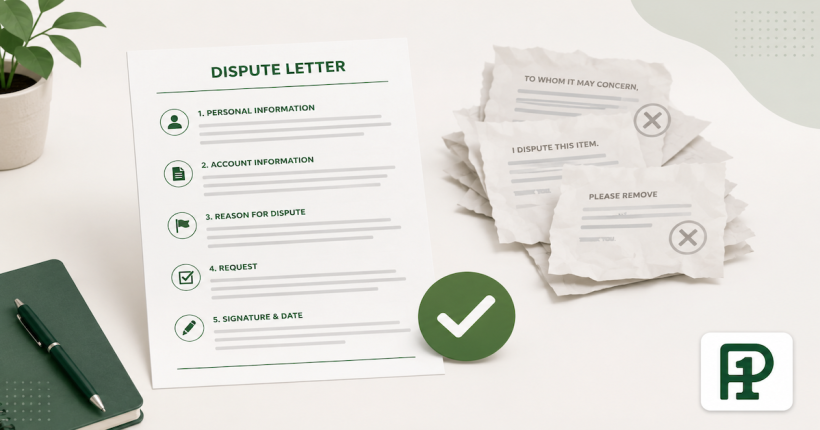
If the primary cardholder won't contact the issuer on your behalf — or if the issuer requires the primary cardholder's authorization to complete removal and the primary is unresponsive or uncooperative — you have a second path that most guides don't cover. You can contact the credit bureaus directly and request that the account be removed from your credit file. This is not a standard dispute — you're not claiming the account is inaccurate. You're requesting that a legitimate account be removed from your report because you no longer wish to be associated with it. Equifax, Experian, and TransUnion each have a process for this. The request goes through the bureau's dispute or account management portal. The bureau contacts the issuer to confirm your authorized user status and, once confirmed, removes the account from your file. This method is slower than issuer removal — typically 30 to 45 days — but it works when direct issuer removal isn't accessible. The full picture of how account information appears and is removed from your credit file at each bureau is covered in the article on what happens to your credit when you're added to someone else's card.
What I've Seen
The situation I see most often where the bureau dispute route becomes necessary is when a romantic relationship ends and one person was added to the other's card to help build credit. The primary cardholder — now an ex — either won't respond to requests or deliberately refuses to cooperate as a form of financial control. The authorized user has no legal obligation to remain on the account and no legal barrier to removing themselves — but they don't know the bureau dispute option exists. They assume they need the primary's cooperation and feel stuck. They don't. Filing directly with each bureau takes about 20 minutes and resolves the situation within a billing cycle or two without requiring any contact with the primary cardholder. Knowing this option exists changes the entire dynamic of the situation.
What Happens to Your Credit Score After Removal
The account disappears from your credit report within one to two billing cycles after removal is processed — typically 30 to 60 days. Once it disappears, every contribution that account was making to your score disappears with it. The score impact depends entirely on what the account was contributing.
When Removal Drops Your Score
If the AU account was a positive contributor — high limit, low utilization, long payment history, old account age — removing it reduces your available credit, raises your utilization ratio, shortens your average account age, and removes positive payment history from your file. Each of these changes produces a downward scoring pressure. The combined effect can be significant: someone whose score improved 40 to 60 points from being added to a strong primary account can see their score return close to its original level within two billing cycles of removal. This is not a permanent damage scenario — the score reflects your current credit profile accurately — but it's a real and predictable outcome that needs to be planned for.
When Removal Improves Your Score
If the AU account was a negative contributor — high utilization, late payment history, or derogatory marks — removing it can produce a score improvement rather than a drop. When a card reporting 80% utilization disappears from your file, your overall utilization ratio drops. When a late payment notation from the primary's account disappears, your payment history record improves. If you've been held back by the negative characteristics of an AU account without realizing it, removal may be the fastest available score improvement action. The specific ways AU accounts can harm rather than help your credit — including the bureau-by-bureau asymmetry on negative payment history — is covered in the article on can being an authorized user hurt your credit score.
When Removal Has Minimal Impact
If your credit profile has matured significantly since the AU account was added — you've opened your own cards, built your own payment history, and your independent accounts are now carrying the scoring load — the removal of the AU account produces minimal impact. The account was one contributor among many rather than the primary driver of your score. This is the ideal outcome and the reason building independent credit during the AU period is the most important strategic action available. How long authorized user status takes to affect your score in the first place — and what the score impact ranges look like based on your starting profile — is covered in the article on how long authorized user status takes to affect your credit score.
The Timing Framework: When to Remove Yourself
The question of when to remove yourself matters as much as how. The score impact of removal is predictable — which means it's plannable. Removing yourself at the right moment minimizes damage. Removing yourself at the wrong moment can cost you a rate tier on a loan application or delay an approval you were counting on.
Do Not Remove Within 90 Days of a Major Application
If you are planning to apply for a mortgage, auto loan, apartment lease, or any other credit product within the next 90 days, do not remove yourself from the AU account until after the application closes. The score drop from removal — if the account was a positive contributor — can move you out of a favorable rate tier or below an approval threshold. A mortgage rate tier difference of 0.25% on a $300,000 loan represents thousands of dollars in additional interest. The removal can wait until after the loan closes. After funding, the account's contribution to your score is irrelevant to that transaction.
Remove After Opening Independent Accounts
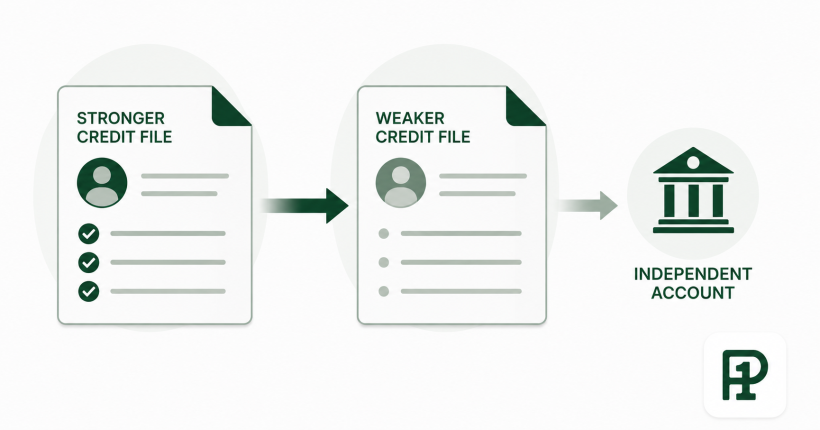
The optimal removal timing is after you've opened at least one independent credit account in your own name — a credit card, a secured card, or a credit-builder loan — that has been open long enough to report positive payment history. This gives your score a foundation that persists after the AU account disappears. A score that drops 30 points after AU removal but lands at 680 because of your independent accounts is a completely different outcome than a score that drops 30 points and lands at 590 because the AU account was the only thing holding it up. The goal of the AU period is to use the improved score to open independent accounts. Removal before that's done undoes the strategy.
Remove When the Relationship No Longer Serves You
If the primary cardholder's behavior is creating credit risk — increasing balances, missing payments, or approaching the credit limit — the timing calculus changes. Staying on a deteriorating account to preserve an aging account's benefit while its utilization climbs toward 80% is a losing trade. The negative scoring impact of high utilization and potential late payments outweighs the benefit of the account's age and history. In this scenario, remove sooner rather than later regardless of where you are in the independent account building timeline. The specific risks that deteriorating primary accounts create for authorized users — including the bureau asymmetry on negative history — are covered in the article on being an authorized user when the primary cardholder has bad credit.
The Transition Plan: Protecting Your Score Before and After Removal
A well-executed removal is a three-step process: prepare your independent credit foundation before removing, time the removal correctly, and monitor your credit report after removal to verify the account has been removed cleanly and no unexpected changes have occurred.
Step 1 — Build Your Independent Foundation First
Before removing yourself from any AU account that has been contributing positively to your score, verify that you have at least one independent revolving account open and reporting positive payment history. If you don't have one, open one before initiating removal. A secured card with a modest deposit, a credit-builder loan from a credit union, or a student card if you qualify — any of these establishes an independent account that ages, reports payment history, and contributes available credit to your score independently of the AU relationship. The complete framework for building credit from scratch using AU status as the starting point — including when to make the transition to independent accounts — is covered in the article on how being an authorized user actually builds credit.
Step 2 — Update Recurring Charges Before Removal
If you have any recurring charges, subscriptions, or automatic payments set up on the authorized user card, update those payment methods before the removal is processed. Once removal takes effect, the card is deactivated — any charges to the old card number will be declined. Make a list of every recurring charge on the card, update each one to a different payment method, and confirm the updates have processed before initiating removal. Missing a subscription update isn't a credit issue — it's a service interruption issue — but it's a practical step that's easy to miss in the focus on the credit mechanics.
Step 3 — Monitor Your Credit Report After Removal
Pull your credit reports from all three bureaus at AnnualCreditReport.com approximately 60 days after the removal was processed. Verify that the account no longer appears as an active authorized user account. In most cases the account disappears completely. In some cases it may remain as a closed account with its payment history intact — which is neutral to slightly positive. What you're looking for is confirmation that the account's utilization and any negative history are no longer being calculated into your score. If the account is still showing as open and active after 60 days, contact the issuer to confirm the removal was fully processed and request written confirmation.
Issuer-Specific Removal Processes for Major Cards
The basic process is the same across issuers — phone or online — but the specific steps vary. Here is the removal process for the most common card issuers an authorized user might need to contact directly.
American Express
American Express allows authorized user removal by phone at 1-800-528-4800. As an authorized user you can call and request removal directly — primary cardholder authorization is not required. American Express also allows removal through the online account portal if you have login access. American Express reports authorized user accounts to all three bureaus and typically processes credit report updates within one to two billing cycles of removal.
Chase
Chase processes authorized user removal by phone at 1-800-432-3117. Online removal through the Chase portal is available to primary cardholders but authorized users typically need to call. Chase reports to all three bureaus and removal typically reflects on credit reports within one to two billing cycles.
Capital One
Capital One allows authorized user removal through the online account portal under account management settings. Phone removal is also available at 1-800-227-4825. Capital One is one of the more user-friendly issuers for online self-service removal and typically processes removals quickly. Reports to all three bureaus.
Discover and Citi
Both Discover and Citi process authorized user removals by phone — Discover at 1-800-347-2683 and Citi at 1-800-950-5114. Both report to all three bureaus and both typically require the call to be made by either the primary cardholder or the authorized user requesting removal. Confirm with the representative that removal has been fully processed and request email confirmation.
For issuers not listed — regional banks, credit unions, store cards — call the number on the back of the card you were issued as an authorized user. The representative can confirm the removal process and whether primary cardholder authorization is required. If the issuer requires primary cardholder authorization and the primary is uncooperative, the bureau dispute route described in Section 1 is the available alternative.
After Removal: What to Do Next
Removing yourself from an authorized user account is the end of one phase of a credit-building strategy and the beginning of the independent phase. The transition is only as effective as what you build from it.
If Your Score Dropped After Removal
A score drop after AU removal is expected and temporary if you've built independent accounts. Give the scoring model one to two billing cycles to stabilize around your independent credit profile. If the drop is larger than expected — more than 40 to 50 points — pull your full three-bureau reports and verify that the AU account has been fully removed and that no other changes occurred simultaneously. A score drop combined with a utilization spike on your own cards, a new hard inquiry, or an account aging change can compound the impact. Address each factor separately. The complete framework for rapid score recovery — including which actions produce the fastest improvements from a depressed score — is covered in the article on how to increase your credit score quickly.
If Your Score Improved After Removal
If the AU account was dragging your score — through high utilization, late payment history, or both — its removal may have improved your score. Use that improvement immediately. Apply for your own credit card, secured card, or credit-builder loan while the score is at its new higher baseline. Opening an independent account now gives you the starting point for building genuine long-term credit history that doesn't depend on anyone else's account management behavior.
Consider Whether You Need AU Status Again
For some people — particularly those still in the early stages of credit building — removing from one AU account while seeking a better one is a legitimate strategy. If the account you removed from had high utilization or poor payment history, finding a new AU arrangement on a well-managed account with a different primary cardholder can restart the score-building process on a cleaner foundation. The full evaluation framework for identifying which accounts are worth being added to — and which create more risk than benefit — is covered in the article on can being an authorized user hurt your credit score.
Navigate the Full Authorized User System
Removal is one decision point. The Authorized User Credit Strategy cluster covers the complete system — when to get added, how to evaluate accounts, how to time removal, and how to build independent credit that sustains the improvement.
Explore the Full StrategyGovernment Resources
CFPB — Credit Reports and Scores — Your rights as a consumer regarding account removal, credit report disputes, and authorized user status.
AnnualCreditReport.com — Free weekly reports from all three bureaus — use this to verify the AU account has been removed after processing.
FTC — Understanding Your Credit — Federal overview of credit reporting, dispute rights, and how account changes affect your credit file.
Return to the full credit building and protection guide for a complete overview of every credit strategy covered on PersonalOne.
Frequently Asked Questions
Can I remove myself as an authorized user without the primary cardholder's permission?
Yes. Most major issuers allow either the primary cardholder or the authorized user to initiate removal independently. Call the number on the back of your card and request removal directly — you don't need the primary cardholder's involvement in most cases. If the issuer requires primary cardholder authorization and the primary won't cooperate, you can contact each credit bureau directly and request that the account be removed from your credit file. This bureau dispute route is slower — 30 to 45 days — but works without primary cardholder involvement.
How long does it take for the account to disappear from my credit report after removal?
Typically one to two billing cycles — 30 to 60 days from when the removal is processed. The issuer reports the account change at the next billing cycle, the bureau updates your file within a few days of receiving the data, and the account stops appearing in your active accounts. Pull your three-bureau reports at AnnualCreditReport.com approximately 60 days after removal to confirm the account has been fully removed from all three bureaus.
Will my credit score drop after I remove myself as an authorized user?
It depends on what the account was contributing. If the account had a high limit, long history, and clean payment record — and it was a meaningful contributor to your score — removing it will produce a score drop as the available credit, account age, and payment history disappear from your file. If the account had high utilization or negative payment history, removing it may actually improve your score. If you've built substantial independent credit during the AU period, the removal produces minimal impact because the AU account was one contributor among many rather than the primary driver.
What happens to my authorized user card after removal?
The card is deactivated immediately — any charges to the card number after removal will be declined. Before initiating removal, update any recurring charges or automatic payments linked to the card to a different payment method. Physically destroy the card after removal. If you have any rewards points or cashback earned on the card, check whether they're forfeited or transferable — most issuers do not allow authorized users to redeem rewards after removal, though the policy varies by issuer.
Can I be added back as an authorized user after removing myself?
Yes — the primary cardholder can add you back at any time if both parties agree. Being re-added follows the same process as the original addition and produces the same credit effects — the account reappears on your credit report and its history begins contributing to your score again. However, the account age calculation picks up where the original account age left off — if the account is seven years old when you're re-added, it contributes seven years of age to your profile, not zero. Re-adding is relatively rare but available if circumstances change.
This article is for educational purposes only and does not constitute financial or credit advice. Issuer policies on authorized user removal vary and may change — verify current procedures directly with your card issuer. Bureau dispute processes and timelines vary. PersonalOne is a free financial education platform.