Updated: August 18, 2026
Home › Credit Building & Protection › Authorized User Credit Strategy
Part of Credit Building & Protection — the complete system for score building, monitoring, utilization, and approval readiness.
What You Need to Know
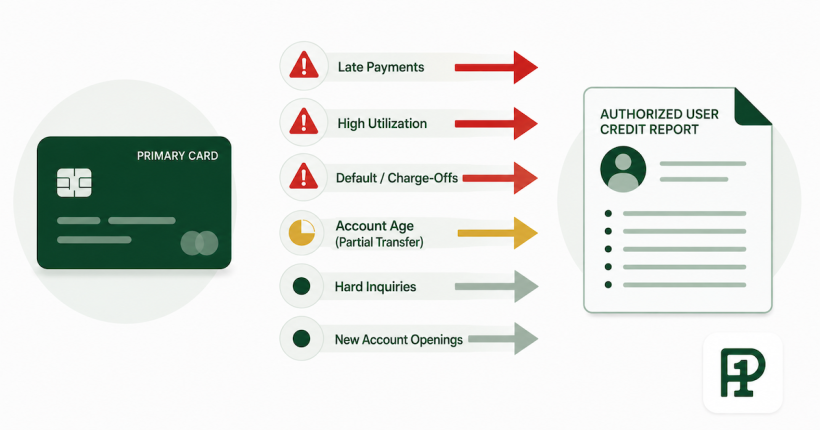
— An authorized user credit strategy lets the primary cardholder's payment history, account age, and utilization transfer to your credit report, for better or worse.
— You do not need to use the card, or even receive it, to benefit. The reporting itself is what builds the credit history.
— If the primary cardholder misses payments or runs high balances, it damages your score just as much as if it were your own account.
— You can remove yourself at any time. The account history typically disappears from your report within 30 to 60 days.
An authorized user credit strategy is one of the most underused and misunderstood tools in credit building. Used correctly, it can add years of positive account history to a thin credit file in a single move. Used carelessly, added to the wrong account or the wrong person, it can introduce damage you did not create and had no control over.
This cluster hub covers the complete strategy: how it works mechanically, when it builds credit effectively, the risks that make it go wrong, and the specific situations where it is and is not the right tool. It's part of the broader Credit Building & Protection system, which maps score fundamentals, monitoring, utilization tactics, and approval optimization.
How Authorized User Credit Strategy Actually Works
When you are added as an authorized user to someone else's credit card account, the card issuer reports that account to the credit bureaus, and your name gets attached to it. Depending on the issuer and the bureau, the account's full history may appear on your credit report: opening date, credit limit, payment history, and current balance.
This means a person with no credit history who is added to a 10-year-old card with a perfect payment record and low utilization can suddenly have a decade of positive history on their report. That history contributes to account age, payment history, and utilization, three of the five FICO factors.
The authorized user does not need to use the card. Many families add children to accounts and never give them the physical card; the reporting alone is what builds the credit history. The primary cardholder retains full control of the account and full financial responsibility for any charges made.
The Credit Building Conditions That Make This Work
The Characteristics of a Strong Authorized User Account
Long account history: The older the account, the more it improves the authorized user's average account age. A 2-year-old card helps. A 12-year-old card helps significantly more.
Clean payment history: Every on-time payment on the account contributes to your record. Any late payments transfer too. Verify the primary cardholder's payment history before accepting authorized user status.
Low utilization: The account's utilization ratio affects your credit just as it affects the primary cardholder's. An account at 80% utilization adds a negative signal even if you never charge a dollar to it.
High credit limit: A high limit with low utilization adds available credit to your profile, improving your overall utilization ratio across all accounts.
The ideal account for this credit building strategy: old, clean payment history, low balance, high limit. If the account being offered does not meet these criteria, it may help less than expected, or actively introduce damage.
How Parents Can Use This for Their Child's Credit Score
Adding a child as an authorized user to a parent's long-standing credit card is one of the most effective ways to give them a head start on their credit score. Many issuers allow authorized users as young as 13; some have no minimum age at all. The account begins building history for the child immediately.
By the time the child turns 18 and needs their own credit, for a student card, a car loan, or an apartment application, they already have years of history rather than starting from scratch. That can mean the difference between being credit invisible at 18 and having a 680 to 700 score before their first independent application.
Parent Strategy: What to Use and What to Protect Against
Use your oldest, lowest-utilization card for the addition. This maximizes the account age benefit transferred to the child's report.
Skip giving the child the physical card if this is purely a credit-building move. The reporting happens regardless of whether the card is used.
If you miss a payment on the account, for any reason, it appears on the child's report too. This strategy requires your own account management to stay clean the entire time.
The Risks That Turn This Into a Credit Score Problem
Authorized user status transfers account history in both directions. A late payment on the primary account is a late payment on your report. A maxed-out card is a high-utilization account on your report. If the relationship changes and the primary cardholder stops managing the account well, your credit takes the damage.
This makes the choice of whose account you join as critical as the decision to join at all. Never accept authorized user status on an account without first verifying the primary cardholder's payment history and current utilization.
Financial responsibility matters too. If the primary cardholder defaults, it does not become your legal debt; you are an authorized user, not a joint account holder. But the derogatory marks still appear on your credit report and damage your score, even though you owe nothing legally.
How to Remove Yourself as an Authorized User
You can remove yourself from any account at any time by calling the card issuer directly. The issuer is required to comply with your request; you do not need the primary cardholder's permission.
Once removed, the account typically disappears from your credit report within 30 to 60 days. Your score will adjust, upward if the account was hurting you, downward if it was helping. Before removing yourself from a positive account, weigh the impact on your average account age and utilization ratio. If the account is old and clean, removal can cost more points than it saves.
Build Your Full Credit Authority System
Authorized user strategy is one piece of the credit authority framework. The Credit Building and Protection hub covers score building from zero, monitoring and protection, utilization and payment strategy, and optimization for mortgage and loan approvals.
More From This Cluster
Return to Credit Building & Protection for the complete system — score fundamentals, monitoring, utilization strategy, and approval optimization.
Go Deeper: Authorized User Strategy Guides
This hub covers the framework. For specific scenarios and step-by-step guidance, these guides go deeper:
Can Being an Authorized User Hurt Your Credit?
The conditions under which authorized user status introduces risk instead of benefit, and how to evaluate an account before accepting.
When You Should Never Add Someone to Your Credit Card
The specific situations where adding an authorized user is a mistake for the primary cardholder, and the warning signs worth taking seriously first.
How Being an Authorized User Actually Builds Credit
The mechanics behind why this works, which parts of the primary account's history actually transfer, and what doesn't.
Being an Authorized User When the Primary Cardholder Has Bad Credit
What it means for you if the account you were added to gets mismanaged after the fact, and what to do if you're already on one.
Authorized User Strategy for Couples
How partners can use authorized user status to close a credit gap between them, and the conversations worth having first.
How to Remove Yourself as an Authorized User
The process, timing, and score impact of removing authorized user accounts, and when removal costs more than it saves.
How to Remove an Authorized User From Your Credit Card
The flip side of removal: what to know as the primary cardholder before taking someone off your account.
Frequently Asked Questions
Does every card issuer report authorized users to the credit bureaus?
Most major issuers do, but not all, and not always to all three bureaus. American Express, Chase, Citi, Capital One, and Discover all report authorized user accounts. Some smaller issuers and store card brands do not. Confirm with the issuer before relying on this as a strategy.
Is there a difference between an authorized user and a joint account holder?
Yes, significantly. An authorized user can use the account but bears no legal responsibility for the debt. A joint account holder is equally liable for the entire balance. Most issuers no longer offer new joint accounts, so authorized user status is typically the only option for sharing account access.
Will being added as an authorized user show a hard inquiry on my report?
No. There is no credit application involved; the issuer is simply adding a name to an existing account. This is part of what makes it a useful credit building tool, with no inquiry cost.
Can a stranger pay me to be added as an authorized user on their card?
This practice, called tradeline renting, is not technically illegal, but it violates the terms of service of virtually every major issuer and can constitute misrepresentation. Lenders are aware of it, and newer scoring models are built to discount unrelated authorized user accounts. The risk isn't worth the benefit.
How long does it take for authorized user status to appear on my credit report?
Typically 30 to 60 days after the primary cardholder adds you, depending on the issuer's reporting cycle. Some issuers report within a single billing cycle; others take two. If it hasn't appeared after 60 days, confirm with the issuer that they report authorized users to your bureau.
PersonalOne Money System
This content is researched, written, and owned by PersonalOne — a free financial education platform built to help Millennials and Gen Z build real financial systems.
This content is for educational purposes only and does not constitute financial advice. PersonalOne is not a licensed financial advisor, broker, or investment professional. Individual financial situations vary — consult a qualified financial professional for personalized guidance.