May 8, 2026
Home › Financial Stability › Buffer Account Systems › What Happens If a Bill Hits Before Your Paycheck?
What You Need to Know
— When a bill hits before your paycheck, you have three immediate options: overdraft (expensive), defer (damages credit or triggers fees), or cover from a cash reserve
— The paycheck gap problem is a timing problem, not an income problem — the same income distributed differently eliminates it entirely
— Short-term fixes (rescheduling due dates, paycheck advance apps) treat the symptom. The permanent fix is a one-month buffer that always funds bills before they are due
— The buffer account system is the only structural solution — everything else is damage control that repeats every month
— Most people experiencing recurring bill timing gaps are one structural shift away from eliminating the problem permanently
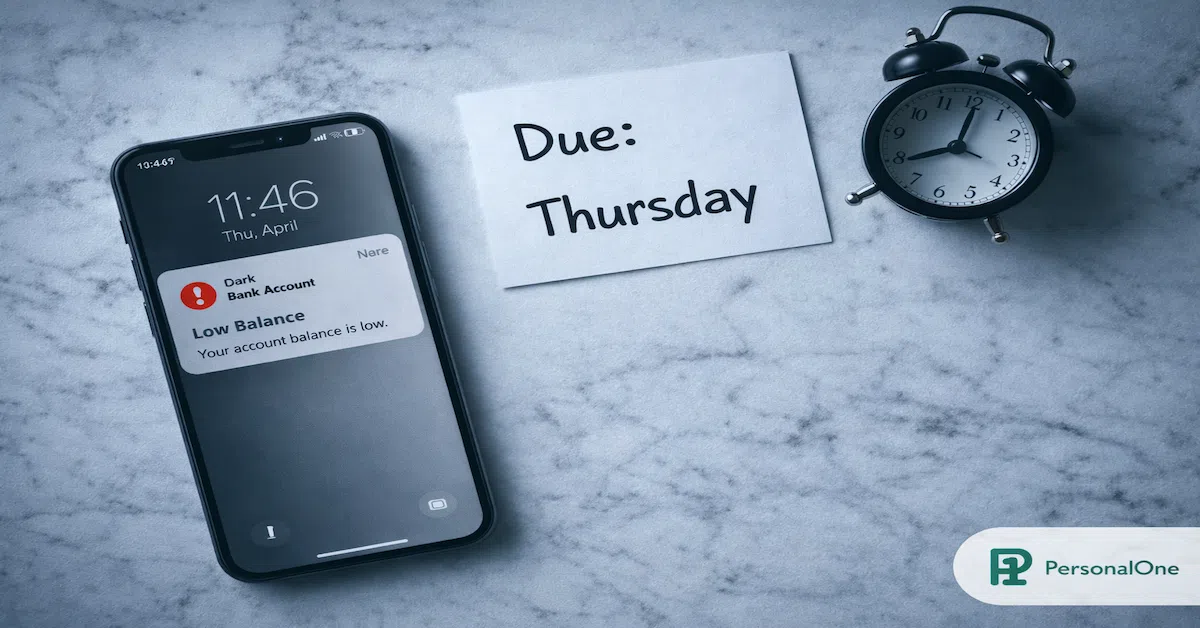
The bill timing gap problem — when a bill hits before your paycheck arrives to cover it — is one of the most common and most expensive cash flow problems Millennials and Gen Z experience. When a bill is due Thursday and the paycheck does not arrive until Friday, the paycheck gap creates three possible outcomes, none of them free. The buffer account system is the only permanent solution to this problem, and understanding why requires first understanding exactly what each of the three outcomes costs. The complete framework for eliminating paycheck timing gaps is in the Buffer Account Systems guide.
Outcome 1: Overdraft. If you have overdraft protection, your bank covers the bill and charges an overdraft fee — typically $25–$35 per occurrence, sometimes per transaction. Multiple bills hitting in a single low-balance period can trigger multiple fees. Overdraft lines of credit charge interest that can annualize to 20–30%+. The bill gets paid, the paycheck gap problem repeats next month, and the cost compounds over time. This is the most common default outcome and the most quietly expensive. The financial stability guide covers the full cost of these recurring fees over time.
Outcome 2: Deferred payment. You miss the payment or pay it a few days late. For a credit card, this can trigger a late fee ($25–$40) and potentially damage your credit score if the payment is reported as 30+ days late. For utilities, late fees apply. For rent, most leases have a 3–5 day grace period, but persistent late payments can trigger lease issues. The immediate cost is lower than overdraft in some cases, but the credit score damage compounds into higher interest rates on future borrowing.
Outcome 3: Emergency borrowing. Paycheck advance apps (Earnin, Dave, MoneyLion) offer early access to earned wages, typically $100–$750, with fees or optional tips that can equate to high effective interest rates on a short loan. A $100 advance with a $4 fee repaid in 7 days annualizes to approximately 209% APR. These tools are genuinely useful in an acute pinch but they solve the symptom without addressing the paycheck gap problem that keeps recurring.
Why This Is a Timing Problem, Not an Income Problem
The most important thing to understand about bills hitting before payday is that this is almost always a timing problem rather than an income insufficiency. The same person with the same income, paid on a different schedule or with a one-month buffer in place, would not experience the problem. A person paid biweekly who has bills clustered around the first of the month faces a recurring gap because income and due dates do not align. A person with one month of expenses sitting in a buffer account always has the money available — the bills hit, the buffer covers them, and the arriving paycheck refills the buffer for next month. Income unchanged. Problem eliminated.
This distinction matters because most solutions people reach for — budgeting apps, spending trackers, income increases — do not address the timing problem. A higher income still arrives on payday. A detailed budget still does not change when bills are due. The only solution that addresses the timing gap at the structural level is having money already in the account when bills arrive, regardless of when the paycheck comes. That is what the buffer account system does.
Short-Term Fixes That Help Right Now
While building the buffer is the permanent solution, there are legitimate short-term tactics for managing the paycheck gap problem in the immediate term.
Reschedule bill due dates. Most billers — utilities, credit cards, phone companies, insurance companies — will move your payment due date to a date of your choosing if you call and ask. Shifting bills from the 1st to the 15th, or clustering all bills around the 5th (2–3 days after a typical first-of-month paycheck) eliminates most timing gaps without changing income or spending. This is the fastest no-cost fix and worth doing regardless of whether you are building a buffer.
Split bills across pay periods. If you are paid biweekly, align half your fixed bills to the 1st paycheck and half to the 15th paycheck. Most credit card companies allow bi-monthly payment scheduling. Some utilities allow split payment arrangements. This reduces the concentration of bills in a single period that can trigger gaps.
Pause autopay during the build period. If autopay is causing overdrafts because the timing is misaligned, temporarily switch to manual payments during the period you are building the buffer. Pay each bill manually on the day funds are confirmed available. This is administratively burdensome but prevents overdraft fees during the buffer-building sprint.
The Permanent Fix: Build the Buffer
Every short-term fix for the paycheck gap problem requires ongoing management. The buffer account system eliminates the problem structurally so it does not require management. When one month of essential expenses is sitting in a dedicated account before your bills are due, timing becomes irrelevant. Bills hit on the 1st: the buffer covers them from last month’s income. Paycheck arrives on the 3rd: it goes into the buffer to fund next month. Nothing is late. No overdraft triggers. No countdown anxiety. The gap that previously required active management simply stops existing.
Stop managing the gap. Eliminate it.
The complete Buffer Account Systems framework shows exactly how to build the one-month buffer that ends the paycheck timing problem permanently.
Explore Buffer Account Systems →Resources
Official Sources
CFPB — What Is Overdraft Protection? — Consumer Financial Protection Bureau explanation of how overdraft fees work, how to opt out, and what consumer rights apply to overdraft practices.
CFPB — Savings Tools and Resources — Guidance on building short-term cash reserves to eliminate the paycheck gap problem at the structural level.
Return to the financial stability guide for the complete system this buffer is part of.
Frequently Asked Questions
Is it bad to use overdraft protection occasionally?
Occasional overdraft use is not catastrophic, but the fee structure makes it expensive on an annualized basis. A single $35 overdraft fee on a $200 charge represents a 17.5% instant fee. If it happens monthly, the annual cost is $420 in overdraft fees alone. Banks are required by the CFPB to allow you to opt out of overdraft protection entirely — which means declined transactions instead of fees. Declining is often less costly than overdraft for people with recurring timing gaps.
Can I reschedule my rent payment due date?
Rent due dates are typically less flexible than credit cards or utilities because they are set by the lease agreement. However, many landlords will negotiate due date changes, especially at lease renewal, if you have a reliable payment history. It is always worth asking. If you are in a property management company building, there is often a formal process for requesting due date changes. Frame the request around autopay setup and reliability rather than inability to pay.
Are paycheck advance apps safe to use?
Legitimate paycheck advance apps from established providers (Earnin, Dave, MoneyLion, Chime SpotMe) are safe in the sense that they do not damage credit and are not predatory lenders. The risk is that they normalize borrowing against future income, which does not address the timing gap — it just moves it forward. Use them as a genuine emergency bridge, not as a recurring monthly workaround. The goal is to build the buffer so you never need them.
Disclaimer: This article is for informational and educational purposes only and does not constitute financial advice. Fee structures and product terms change — verify directly with providers.