Updated: January 27, 2026 | 10 min read
By Don Briscoe, a personal finance educator with over 12 years of experience guiding everyday people through smarter banking, credit, and money decisions.
TL;DR — Interest Rates and Your Money
- Falling rates create winners and losers: Bonds and stocks typically rise, but savings account yields drop—understanding who benefits helps you position your portfolio.
- Bonds gain value when rates fall: Existing bonds paying higher rates become more valuable, but new bonds pay less—timing matters for bond investors.
- Stocks often rally on rate cuts: Lower borrowing costs boost corporate profits and make stocks more attractive than bonds, but this isn't guaranteed.
- Your savings account will pay less: High-yield savings dropping from 5% to 3.5% means $1,500 less annual interest on $100K—lock in rates before cuts if possible.
- Real estate becomes more accessible: Lower mortgage rates increase buying power, but also drive up home prices as more buyers enter the market.
- Don't panic-shift your entire portfolio: Rate changes happen gradually—strategic adjustments beat reactionary overhauls.
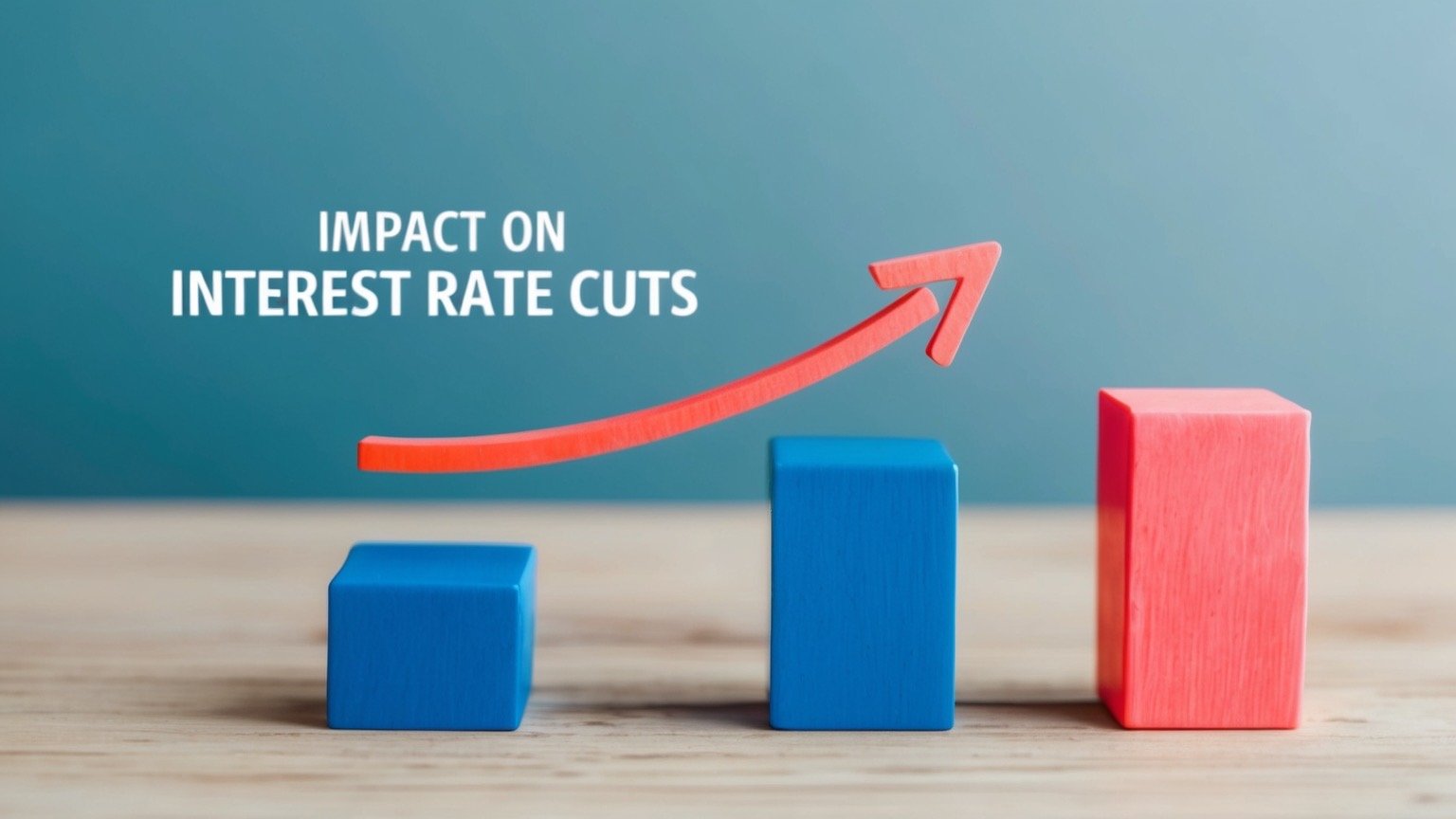
When the Federal Reserve cuts interest rates, it sets off a chain reaction across every corner of your financial life. Your savings account pays less. Your credit card debt costs less to carry. Bonds you own become more valuable. Stocks might rally. Mortgage rates drop. It's a complete reshuffling of the investment landscape, and knowing how to position yourself makes the difference between benefiting from the change and watching opportunities pass by.
Here's what most people miss: falling interest rates aren't universally good or bad. They create specific winners and losers depending on where your money is positioned. If you're heavily in cash savings earning 5% APY and rates drop to 3%, you just lost $2,000/year in interest on every $100,000 saved. If you own bonds that were issued when rates were higher, those bonds just became more valuable. If you're considering buying a home, lower mortgage rates increase your buying power—but also increase competition from other buyers.
This guide breaks down exactly how falling interest rates affect each major investment category, what risks emerge, what opportunities open up, and how to adjust your strategy without panic-selling or making reactive moves you'll regret. We're not talking about day-trading based on Fed announcements—we're talking about strategic positioning that works whether rates drop 0.5% or 2% over the next year.
How Interest Rates Actually Work (The Foundation)
Before diving into investment impacts, here's the mechanism: The Federal Reserve sets the federal funds rate, which is the interest rate banks charge each other for overnight loans. When the Fed lowers this rate, it becomes cheaper for banks to borrow money, which cascades through the entire economy.
The Cascade Effect
Fed cuts rates → Banks lower their rates → Everything else adjusts:
- Savings accounts pay less (bad for savers)
- Mortgage rates drop (good for home buyers/refinancers)
- Credit card APRs decrease (good for people carrying balances)
- Corporate borrowing costs fall (good for business expansion)
- Bond yields decline (existing bonds become more valuable)
- Stock valuations often rise (lower discount rates, cheaper corporate debt)
The lag time matters: changes don't happen instantly. Mortgage rates typically move within days to weeks. Savings account rates drop within weeks to months. Stock market reactions can be immediate or take months depending on broader economic conditions.
Impact on Bonds: Existing Bonds Gain Value, New Bonds Pay Less
Bonds have an inverse relationship with interest rates: when rates fall, existing bond prices rise. Here's why this matters and how to think about it.
The Mechanism
Let's say you bought a 10-year Treasury bond in 2024 when rates were 4.5%. Your bond pays $4,500/year in interest on a $100,000 bond. Now the Fed cuts rates and new 10-year Treasuries only pay 3.5%. Your bond paying $4,500/year is suddenly more valuable than new bonds paying $3,500/year, so its market price increases.
Example with actual numbers:
- You bought: $100,000 bond at 4.5% in 2024 → pays $4,500/year
- Rates drop: New bonds now only pay 3.5% → new buyers get $3,500/year
- Your bond value: Now worth ~$108,000 because it pays more than new bonds
- If you sell: You pocket the $8,000 capital gain plus whatever interest you collected
- If you hold: You keep collecting the higher $4,500/year until maturity
Strategic Implications
If you already own bonds: Congratulations, you're winning. Your bonds just increased in value. You can sell them for a gain or hold them and keep collecting the higher interest rate.
If you're buying new bonds: You're getting lower yields. A $100,000 bond that would have paid 4.5% ($4,500/year) now only pays 3.5% ($3,500/year). That's $1,000 less annual income. Forever.
The timing dilemma: Do you buy bonds now at lower rates, or wait hoping rates will rise again? Nobody knows for sure. If rates continue falling, today's 3.5% bonds will look generous compared to future 2.5% bonds. If rates reverse and climb back to 5%, you're locked into lower yields.
Bond Duration Matters
Longer-term bonds (10-30 years) see bigger price swings when rates change. Shorter-term bonds (1-5 years) are less volatile. If you expect rates to keep falling, longer-term bonds benefit more. If you're uncertain, shorter-term bonds give you more flexibility to reinvest at different rates sooner.
Impact on Stocks: Lower Rates Often Mean Higher Valuations
Stocks typically rally when the Fed cuts rates, but it's not automatic or guaranteed. Here's the logic and the risks.
Why Stocks Often Rise
Reason 1: Companies borrow cheaper
Corporations borrow billions to expand, buy equipment, develop products, acquire competitors. When interest rates fall from 6% to 4%, their borrowing costs drop 33%. That extra $2 billion saved on interest can go straight to profits or growth initiatives, making the company more valuable.
Reason 2: Future earnings become more valuable
Stock valuations use "discount rates" to calculate present value of future earnings. Lower interest rates = lower discount rates = future earnings worth more today. This is finance math, but the practical effect is: same company, same earnings, but lower rates mean higher stock price.
Reason 3: Stocks become more attractive vs. bonds
When bonds pay 5%, stocks need to offer better returns to justify their higher risk. When bonds only pay 3%, stocks don't need to work as hard to look attractive. Money flows from bonds to stocks seeking higher returns.
Why This Isn't Guaranteed
The recession risk: The Fed usually cuts rates because the economy is weakening or heading toward recession. Lower rates help, but if corporate earnings collapse anyway, stocks fall despite rate cuts.
Historical context: In 2008, the Fed slashed rates to near zero and stocks still crashed 50% because the financial crisis was so severe. In 2019-2020, rate cuts initially boosted stocks but couldn't prevent the COVID crash. Rate cuts help, but they're not magic.
Which Sectors Benefit Most
- Real estate (REITs): Lower mortgage rates boost property values, higher demand for rentals
- Utilities: Dividend yields become more attractive when bonds pay less
- Growth stocks (tech): Future earnings discounted at lower rates = higher valuations
- Financials (banks): Mixed bag—lower rates can squeeze lending margins
Don't Time the Market
Trying to predict whether stocks will rally or crash based on rate cuts is speculation, not investing. Stay diversified, maintain your long-term allocation, and make strategic adjustments—not reactionary shifts. Learn foundational investing principles in our investing for beginners guide.
Impact on Your Savings: The Painful Part
This is where falling rates hurt most people directly: your high-yield savings account that's been paying 4.5-5% APY will drop to 3.5% or lower.
The Math on Lost Interest
Example: $50,000 emergency fund
- At 5% APY: Earns $2,500/year ($208/month)
- At 3.5% APY: Earns $1,750/year ($146/month)
- Loss: $750/year in passive income
For someone with $100,000 saved, the difference between 5% and 3% rates is $2,000/year. That's real money you're no longer earning through no fault of your own.
What to Do About It
Strategy 1: Lock in rates before cuts (if possible)
If you see rate cuts coming, consider CDs (certificates of deposit) that lock in current higher rates for 1-5 years. A 5-year CD at 4.5% means you keep earning that rate even when savings accounts drop to 3%.
Trade-off: Your money is locked up. Early withdrawal penalties can wipe out interest gains. Only do this with money you won't need for the CD term.
Strategy 2: Shift some cash to bonds or dividend stocks
If you have cash beyond your emergency fund (6 months of expenses), consider moving some to bonds or dividend-paying stocks that offer higher yields than savings accounts will after rate cuts.
Warning: Bonds and stocks fluctuate in value. Only move money you won't need for 3-5+ years.
Strategy 3: Accept lower rates on emergency funds
Your emergency fund should stay in savings regardless of rates. Safety and liquidity matter more than maximizing yield. If rates drop to 3%, that's still better than 0.01% checking accounts or keeping cash under your mattress.
Impact on Real Estate: Lower Rates, Higher Competition
Falling interest rates make mortgages cheaper, which sounds great until you realize everyone else gets the same benefit. Lower rates increase buying power but also increase competition.
The Buying Power Boost
Example: $400,000 home purchase
- At 7% mortgage: Monthly payment = $2,394 (P&I only)
- At 5.5% mortgage: Monthly payment = $2,042 (P&I only)
- Savings: $352/month ($4,224/year)
Over 30 years, that 1.5% rate difference saves you $126,000+ in interest. Massive impact.
The Competition Problem
When mortgage rates drop, more buyers can afford to enter the market. That $400,000 home suddenly has 15 offers instead of 3. Sellers raise prices because they can. The lower mortgage rate gets partially or fully offset by higher purchase prices.
Historical pattern: When rates dropped in 2020-2021, home prices surged 20-40% in many markets, completely negating the savings from lower rates for many buyers.
Refinancing Opportunities
If you already own a home with a 7% mortgage and rates drop to 5.5%, refinancing saves you hundreds per month. This is pure savings with no competition factor—you're just lowering your existing payment.
When to refinance: Generally worth it if you can drop your rate by 0.75-1% or more and you plan to stay in the home for 3+ years (to recoup closing costs).
Strategic Moves When Rates Are Falling
Do This: Rebalance Strategically
- Review your asset allocation—does it still match your goals?
- Consider increasing bond allocation if you're conservative (existing bonds gaining value)
- Consider refinancing mortgage or other loans to lock in lower rates
- Lock in CD rates before they drop further (for money you won't need)
- Review dividend stocks as bond alternatives for income
Don't Do This: Panic Moves
- Don't dump all cash into stocks just because rates are falling
- Don't abandon emergency fund to chase higher yields in risky assets
- Don't try to time perfect bottom of rates—it's impossible
- Don't refinance if closing costs exceed 2-3 years of savings
- Don't buy investment property just because rates are lower (competition drives prices up)
The Bottom Line: Rate Changes Are Gradual
The Fed doesn't slash rates from 5% to 0% overnight. Changes happen in 0.25-0.5% increments over months or years. That gives you time to adjust strategically without panic.
Your action plan:
- Keep emergency fund in high-yield savings regardless of rate drops (safety trumps yield)
- Consider locking in CD rates if you have excess cash beyond emergency fund
- Review refinancing opportunities for mortgage and other loans
- Don't abandon your long-term investment strategy based on rate movements
- Understand that falling rates create both opportunities and trade-offs
Rate changes are part of normal economic cycles. They're not emergencies requiring complete portfolio overhauls. Strategic adjustments within your existing plan beat reactive scrambling every time.
Build Your Investment Knowledge
Ready to understand investing fundamentals? Explore our complete guides on building wealth for the long term.
Start Investing SmartFrequently Asked Questions
Should I sell my bonds before interest rates fall?
No, this is backwards—you want to own bonds BEFORE rates fall because falling rates make existing bonds more valuable. If you sell bonds before a rate cut, you miss out on the price appreciation. The strategy is: buy bonds when rates are high (locking in good yields), then enjoy the value increase when rates fall. If you already own bonds and rates are about to drop, hold them—they're about to gain value. The only reason to sell would be if you need the cash for something else or you're rebalancing your portfolio for non-rate-related reasons. Timing this perfectly is nearly impossible anyway since rate changes are gradual and partially priced in by the time they're announced. If you're in a bond fund rather than individual bonds, the same logic applies—the fund's value increases when rates fall.
How fast do savings account rates drop when the Fed cuts rates?
Savings account rates typically drop within 2-8 weeks after a Fed rate cut, but they fall faster and more aggressively than they rise. When the Fed raises rates, banks are slow to pass increases to savers—it might take 3-6 months to see full benefits. But when the Fed cuts rates, banks drop savings rates quickly, often within days for some banks. For example, if the Fed cuts by 0.5%, your high-yield savings account might drop from 5% to 4.6% within a month, and continue dropping to 4% over the next 3-4 months as the Fed makes additional cuts. The lag exists because banks don't want to pay more than necessary on deposits, so they rush to lower rates. This asymmetry is frustrating but predictable—banks prioritize profit margins, which means quick rate drops on savings but slow rate increases. If you see Fed cuts coming and have money in savings beyond your emergency fund that you won't need for 1-5 years, consider moving it to CDs to lock in current rates before they drop.
Are falling interest rates good or bad for my 401(k)?
It depends on your 401(k) allocation and your timeline. If you're heavily in stocks, falling rates typically boost stock valuations in the short term, which is good for your account balance. If you're heavily in bonds, existing bonds become more valuable when rates fall, which is also good. However, there's a complication: if rates are falling because the economy is heading into recession, stocks might decline anyway despite lower rates, and you'd be better off in bonds. For most people with a diversified 401(k) (60% stocks, 40% bonds is common), falling rates create a mixed bag—some positions benefit, some don't, and it roughly balances out over time. The real question is your timeline: if you're 30 and retirement is 35 years away, short-term rate fluctuations are noise. Continue dollar-cost averaging through your regular contributions and ignore the rate cycles. If you're 60 and planning to retire in 5 years, you should already be positioned more conservatively regardless of rates. Don't make drastic allocation changes based solely on rate movements—your age and risk tolerance matter more than trying to time rate cycles.
Should I refinance my mortgage as soon as rates drop?
Only if the rate drop is significant enough to justify closing costs and you plan to stay in the home long enough to break even. The general rule: refinancing makes sense if you can lower your rate by at least 0.75-1% and you'll stay in the home for 3+ years. Here's why: refinancing typically costs $3,000-6,000 in closing costs (appraisal, title insurance, lender fees, etc.). If you save $200/month from the lower rate, you break even in 15-30 months. After that, it's pure savings. But if rates drop from 7% to 6.75%, your monthly savings might only be $50-80, which means 3-6 years to break even—probably not worth it unless you're certain you'll stay that long. Also consider: are rates still falling? If the Fed just made the first cut of several expected cuts, waiting 6 months might get you an even better rate. Conversely, if rates dropped significantly already and more cuts seem unlikely, lock in now. Use mortgage calculators to run the actual numbers for your situation—don't refinance based on general advice, calculate your specific break-even point.
What should I do with my emergency fund when savings rates drop?
Keep it in a high-yield savings account even when rates drop. The entire purpose of an emergency fund is safety and immediate accessibility, not maximizing returns. Even if your savings account drops from 5% to 3%, that's still infinitely better than the 0.01% checking accounts pay and dramatically better than keeping cash at home earning 0%. Do not move your emergency fund into stocks, bonds, or any investment that fluctuates in value, no matter how frustrated you are about falling savings rates. The worst possible outcome is needing your emergency fund during a market downturn and having to sell investments at a loss. If you have cash beyond your emergency fund (you've already saved 6 months of expenses and have additional cash), then you can consider alternatives like short-term CDs, bond funds, or dividend stocks for that excess money. But the core 3-6 months of expenses should stay in savings accounts regardless of rates. The peace of mind from having liquid, guaranteed money available for emergencies is worth more than the extra 1-2% you might earn taking on risk.
Resources
Related PersonalOne Articles
- Investing for Beginners — Foundation for long-term wealth building
- Banking & Savings Strategies — Maximize returns on cash savings
External Resources
- Federal Reserve — Official Fed rate announcements and economic data
- TreasuryDirect.gov — Buy Treasury bonds directly from government
Important Disclaimer
This article is for informational and educational purposes only and does not constitute financial or investment advice. Interest rate movements are complex and affect different investments in different ways based on timing, duration, and broader economic conditions. Past performance of investments during rate changes does not guarantee future results. Investment decisions should be based on your individual financial situation, goals, risk tolerance, and timeline. For personalized investment advice, consult a qualified financial advisor or certified financial planner. PersonalOne.org provides educational content to help you understand financial concepts but cannot provide individualized investment recommendations.