Updated: April 25, 2026
Home › FinTech & Modern Money Tools › Budgeting Apps & Financial Automation › How to Save Money With Cashback Apps
TL;DR
— Cashback apps work best when they are treated as a system rather than a passive habit — the difference between $50 and $500 annually is almost entirely a stacking and routing decision.
— Rakuten, Ibotta, and Fetch Rewards each serve different spending categories — using the right app for the right purchase type is what produces meaningful annual returns.
— Stacking cashback apps with store sales and credit card rewards on the same purchase is the single highest-leverage savings tactic available without changing your spending behavior.
— Cashback earnings disappear into general spending without a budget system that assigns them intentionally — connecting rewards to a specific goal is what turns passive cashback into real savings.
— A realistic cashback system across grocery, online retail, and gas categories produces $400 to $600 annually for a household spending $3,000 to $4,000 per month on tracked categories.
Cashback apps generate real money back on purchases you are already making. The question is not whether they work — they do, and the mechanics are straightforward. The question is whether you are using them systematically enough to produce meaningful annual returns, or whether you are leaving the majority of available cashback unclaimed because the apps are installed but not actively managed.
Most people who use cashback apps earn $50 to $100 per year. People who treat cashback as a deliberate system — matching the right app to the right purchase category, stacking offers with store sales and credit card rewards, and routing earnings to a specific savings goal — consistently earn $400 to $600 on the same spending. The difference is not the apps. It is the approach. This article covers the exact mechanics of both the apps and the system that makes them produce real numbers rather than background noise.
This approach sits within the broader budgeting apps and financial automation framework — cashback is one input into a complete money system, not a standalone savings strategy.
How Cashback Apps Actually Work — And Why Most People Underuse Them
Cashback apps operate through retailer partnerships. Retailers pay the app platform a commission for driving purchases — the app shares a portion of that commission with the user as cashback. This is not a discount applied at checkout. It is a rebate paid after the purchase is verified, which is why most cashback earnings require a processing period of a few days to several weeks before they become withdrawable.
Understanding this mechanism matters because it explains why stacking works. The retailer commission is paid regardless of whether the user also used a store sale or a credit card rewards program on the same purchase. Those are separate systems with separate payment flows. Using all three simultaneously — cashback app, store promotion, and credit card rewards — on a single purchase does not reduce what any individual system pays. Each pays its full amount independently.
The underuse problem is behavioral, not structural. Cashback apps require an additional step before or during purchase — activating an offer, starting a shopping trip through the app, or scanning a receipt. That friction is small but consistent, and most people bypass it when they are shopping quickly or not thinking about it. Building a pre-purchase habit of checking active offers before completing any transaction is the single behavioral change that separates $100 annual earnings from $500.
The Three Primary Cashback Apps and What Each Does Best
Not all cashback apps cover the same spending categories at the same rates. Using the right app for the right type of purchase is where most of the optimization happens. Here is a detailed breakdown of each of the three primary apps and where they produce the most return.
Rakuten — Best for Online Retail and Travel
Rakuten operates primarily through a browser extension and a shopping portal. Before completing any online purchase, activating the Rakuten extension triggers the cashback tracking for that session. Cashback rates vary by retailer and are updated regularly — rates commonly range from 1% to 15% depending on the merchant and current promotions.
Highest-return categories: clothing retailers (4 to 12% commonly), travel booking platforms (2 to 8%), electronics (1 to 3%), and subscription services (up to 10% on first purchase).
Payment structure: Rakuten pays quarterly via PayPal or check. The quarterly payment structure means cashback accumulates before being distributed — useful for directing a lump sum to a specific savings goal at each payment cycle.
Real number example: A household spending $200 per month on online retail at an average 5% cashback rate generates $120 per year from Rakuten alone on that single spending category.
Ibotta — Best for Groceries and In-Store Retail
Ibotta is offer-based rather than percentage-based across all purchases. Before shopping, you browse available offers for specific products — a particular brand of yogurt, a specific cleaning product, a category like fresh produce — and activate the offers you intend to purchase. After shopping, you scan the receipt or link a loyalty card to verify purchases and trigger the cashback.
Highest-return categories: branded grocery items (commonly $0.25 to $2.00 per item), alcohol and beverage brands (frequently $1 to $5 per item), household products, and personal care items.
Payment structure: Ibotta pays via PayPal, Venmo, or gift card once earnings reach a $20 threshold. Gift card redemptions often carry bonus value — a $25 gift card sometimes costs only $22 in Ibotta earnings.
Real number example: A household spending $400 per month on groceries that activates 8 to 12 Ibotta offers per shopping trip at an average $0.75 per offer generates $72 to $108 per month — approximately $900 to $1,300 annually on grocery purchases alone, though this requires consistent offer activation before every shopping trip.
Fetch Rewards — Best for Passive Receipt Scanning Across All Categories
Fetch Rewards operates on a points system rather than direct cashback. Every receipt scanned earns points — the base rate is 25 points per receipt, with bonus points for purchasing specific featured brands. Points redeem for gift cards at a rate of approximately 1,000 points per $1 in gift card value.
Primary advantage: Fetch accepts receipts from virtually any retailer including gas stations, restaurants, and hardware stores — categories that Rakuten and Ibotta do not consistently cover. It functions as a catch-all layer that generates value from every purchase that produces a receipt.
Realistic earning expectation: Fetch is a supplementary earner rather than a primary cashback source. A household scanning every receipt consistently can expect $50 to $150 in annual gift card value depending on how frequently featured brands align with actual purchase behavior.
Where Fetch earns best: Households that buy frequently from featured partner brands — major consumer packaged goods companies are heavily represented — can earn significantly above the baseline through brand-specific bonus offers that stack on top of the standard receipt scan.
The Stacking Method: How to Triple the Return on Every Purchase
Stacking refers to using multiple independent savings systems simultaneously on the same purchase. Because each system operates through a separate payment flow, they do not interfere with each other. The practical implementation looks like this on a single grocery purchase.
Stacking Example — $120 Grocery Purchase
Layer 1 — Store sale: Items purchased on weekly promotion save $18 (15% off selected items)
Layer 2 — Ibotta offers activated before shopping: 6 offers at average $0.80 each = $4.80 cashback on the $120 purchase
Layer 3 — Fetch receipt scan: 25 base points + 200 bonus points for two featured brand purchases = 225 points ($0.23 gift card value)
Layer 4 — Credit card rewards: 3% cashback grocery card on $120 = $3.60
Total saved on a $120 purchase: $26.63 — effective rate of 22.2% when all layers are active
The store sale is the largest single layer. The cashback apps and credit card each add smaller but fully independent amounts on top of the already-discounted purchase price.
The stacking method requires a pre-purchase habit that adds approximately two to three minutes per shopping trip. The return on that time investment at typical grocery spending levels is substantial. A household running the full stack on $400 per month in grocery purchases consistently generates $60 to $90 per month in combined savings across all layers — $720 to $1,080 annually on a single spending category.
The same stacking principle applies to online retail purchases through Rakuten. Before completing any online order, the sequence is: check if the retailer has a current Rakuten cashback rate, activate the browser extension, apply any available promo code, and complete the purchase on a rewards credit card. That four-step pre-purchase sequence takes under 90 seconds and consistently adds 6 to 18% in combined returns on purchases that would have happened regardless.
The $500 Breakdown: What a Real Annual Cashback System Produces
The $500 annual figure is achievable but requires consistent execution across multiple spending categories. Here is a realistic monthly breakdown of what a household spending at moderate levels actually generates when the system is running correctly.
Monthly Cashback System — $3,200 Monthly Spending Household
Grocery Spending — $400/month
Ibotta offers activated (avg 8 offers at $0.75 each) — $6.00
Fetch receipt scan base + brand bonuses — $0.50 est.
Grocery rewards credit card at 3% — $12.00
Grocery monthly total: $18.50
Online Retail — $200/month
Rakuten at average 5% across retailers — $10.00
Credit card rewards at 1.5% base — $3.00
Online retail monthly total: $13.00
Gas — $120/month
Fetch receipt scan — $0.25 est.
Gas rewards credit card at 4% — $4.80
Gas monthly total: $5.05
Dining Out — $180/month
Dining rewards credit card at 3% — $5.40
Fetch restaurant receipts — $0.25 est.
Dining monthly total: $5.65
Combined Monthly Cashback: $42.20
Projected Annual Total: $506.40
This projection assumes consistent offer activation on every grocery trip, Rakuten activated on every online purchase, and a rewards credit card used across all categories and paid in full monthly. The credit card rewards component assumes no interest charges — carrying a balance eliminates the rewards value entirely and produces a net negative outcome.
The $506 annual projection is conservative at these spending levels. Households that include travel booking through Rakuten, that use Ibotta for household and personal care products beyond groceries, or that take advantage of seasonal Rakuten bonus events — where retailers temporarily increase cashback rates by 2 to 5 percentage points — consistently exceed the baseline projection.
Why Cashback Without a Budget System Produces Inconsistent Results
The behavioral pattern that limits most cashback users is not the apps themselves — it is the absence of a system that makes cashback earnings visible and directs them intentionally. Without that system, cashback earnings arrive in app accounts, get redeemed as gift cards or PayPal deposits, and flow into general spending where they produce no measurable impact on savings or financial goals.
The fix is simple but requires a deliberate decision. Every cashback payout — Rakuten quarterly payment, Ibotta redemption, Fetch gift card — gets assigned a specific destination before it is received. An emergency fund contribution. A debt payment above the minimum. A sinking fund category in the monthly budget. The assignment happens in advance, not reactively after the money arrives.
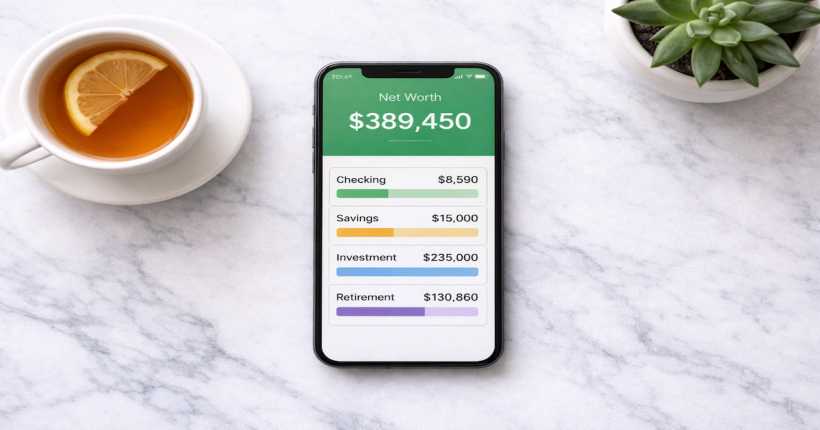
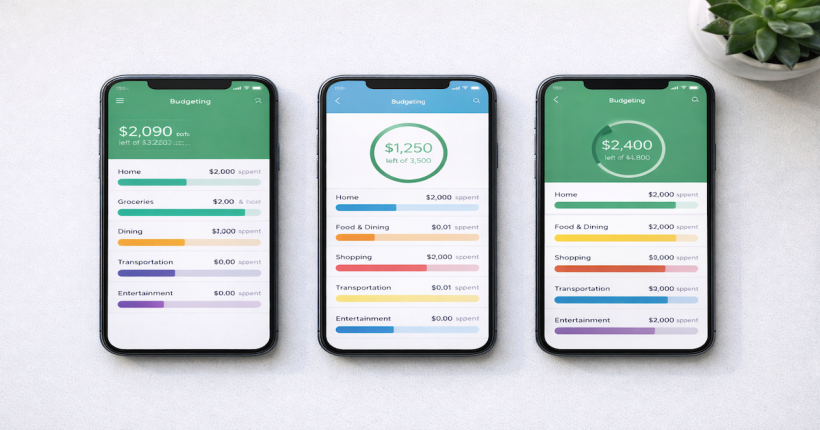
A budgeting app that shows all accounts and transactions in one dashboard makes this routing visible. When the Rakuten quarterly payment arrives and the budget system shows a current balance in the emergency fund savings account, the routing decision is automatic rather than a willpower exercise. The Monarch Money review covers how a centralized dashboard handles exactly this kind of multi-source cash flow management — making cashback earnings visible alongside regular income and spending rather than leaving them siloed in separate app accounts.
This connection between cashback earnings and a structured budget system is what separates a household that earns $500 in cashback and saves $500 from one that earns $500 in cashback and has nothing to show for it three months later. The budgeting apps and financial automation framework covers how to build the complete system that cashback plugs into.
Common Cashback Mistakes That Reduce Annual Returns
Not activating offers before shopping. Ibotta offers must be activated before the purchase to count. Scanning a receipt for a purchase made before offer activation produces no cashback on those items. The pre-shop habit of browsing and activating available offers takes two to three minutes and is the difference between earning and not earning on every grocery purchase.
Carrying a credit card balance to earn rewards. A 1.5% cashback reward on a $500 purchase generates $7.50. A 20% APR on that same $500 carried for one month generates $8.33 in interest. Carrying a balance to earn cashback is a net negative outcome every month the balance is not paid in full. Credit card rewards only produce positive returns when the statement balance is paid completely by the due date.
Using the wrong app for the wrong category. Rakuten produces minimal return on in-store grocery purchases. Ibotta produces no return on online retail purchases outside its partner network. Fetch produces modest returns across all categories but is not a substitute for category-specific apps. Matching the app to the purchase category is what produces the stacked returns shown in the breakdown above.
Letting cashback balances sit in app accounts. Money sitting in a Rakuten or Ibotta account is not earning anything and is not contributing to any financial goal. Redeeming earnings on a regular schedule and routing them to a specific destination is what converts passive cashback into real financial progress. Set a calendar reminder quarterly aligned with Rakuten payment cycles to redeem and route all accumulated balances.
Changing spending behavior to chase cashback. Cashback apps produce returns on spending that would have happened regardless. Purchasing something specifically because a cashback offer is available — and that purchase was not already in the budget — is net negative. The offer produces a partial rebate on a full unplanned expense. Budget discipline comes first. Cashback optimization works within the spending plan, not as a reason to expand it. The FinTech and modern money tools framework addresses how to evaluate digital financial tools against this standard.
Cashback is one input. The system is what makes it compound.
The complete Budgeting Apps & Financial Automation framework covers how cashback, budget tracking, automatic savings, and debt paydown connect into a single system that runs with minimal ongoing management.
Explore Budgeting Apps & Financial Automation →Affiliate Disclosures for Apps Referenced in This Article
Monarch Money is an affiliate partner of PersonalOne. Links to Monarch Money in this article are affiliate links — Monarch Money (affiliate). PersonalOne earns a commission if you subscribe through these links at no additional cost to you. Monarch Money was evaluated independently and is recommended based on its genuine utility for the budget-connected cashback system described in this article.
Rakuten, Ibotta, and Fetch Rewards are referenced for educational purposes. PersonalOne does not currently have affiliate arrangements with these three apps and earns no commission from sign-ups or purchases made through them.
Resources
Continue Learning About FinTech & Modern Money Tools
This article covers cashback apps as a savings tool within a budget system. The complete framework for evaluating and using modern financial technology is in the FinTech & Modern Money Tools authority hub.
Frequently Asked Questions
Are cashback apps safe to use?
Reputable cashback apps including Rakuten, Ibotta, and Fetch Rewards use encryption to protect account and transaction data. Rakuten and Ibotta connect to retailer systems to verify purchases — they do not require bank account access. Fetch Rewards operates entirely through receipt scanning with no account linking required. The standard precaution applies to any app: review the permissions requested during installation and avoid granting access beyond what the app's function requires.
Do I have to link my bank account to use these apps?
Rakuten and Ibotta offer loyalty card linking as an alternative to receipt scanning for in-store verification, but neither requires direct bank account access. Fetch Rewards requires no account linking at all — receipt scanning is the only verification method. A budgeting app used alongside cashback apps for routing and tracking purposes may request bank account read access for transaction syncing, which is separate from the cashback apps themselves.
Can I use multiple cashback apps on the same purchase?
Yes — and this is the stacking principle that produces the highest returns. Ibotta and Fetch can both be applied to the same grocery receipt simultaneously. Rakuten applies to online purchases where Ibotta and Fetch typically do not. The only limitation is that a single retailer's loyalty program usually cannot be combined with a competing loyalty program — but third-party cashback apps operate independently of retailer loyalty programs and can be stacked with them.
How long does it take to earn $500 in cashback?
At the spending levels and rates described in the monthly breakdown above — $3,200 monthly spending across grocery, online retail, gas, and dining categories with consistent offer activation and a rewards credit card — approximately 12 months of consistent execution. The timeline compresses for households with higher spending, more frequent online retail purchases, or travel booking through Rakuten. It extends for households with lower spending or inconsistent offer activation on grocery trips.
What is the best way to use cashback earnings once they arrive?
Assign a destination for cashback earnings before they arrive rather than deciding what to do with them after the fact. The most effective destinations in order of financial impact are: completing an emergency fund to three months of expenses if one does not exist, applying to the highest-interest debt above the minimum payment, and contributing to a sinking fund for a specific known upcoming expense. Cashback earnings that flow into general spending without a designated destination produce no measurable financial improvement despite being real money.
Should I get a rewards credit card specifically to stack with cashback apps?
Only if you already pay your full credit card statement balance every month without exception. A rewards credit card used this way adds 1.5 to 5 percentage points of return on every purchase across categories — the single highest-return layer in the stacking system. A rewards credit card where a balance is occasionally carried produces net negative returns because interest charges at 18 to 25% APR exceed any rewards earned on the same spending. The credit card layer is beneficial only when it costs nothing to use — meaning zero interest charges every billing cycle.
Disclaimer: This article is for educational purposes only and does not constitute financial advice. Cashback rates, app features, and terms are subject to change — verify current rates directly with each app before making purchase decisions based on expected cashback returns. Credit card rewards strategies described assume full monthly statement balance payment with no interest charges. Carrying a credit card balance eliminates rewards value and produces net negative financial outcomes. PersonalOne is not responsible for decisions made based on this content. Some links in this article are affiliate links labeled accordingly — see the affiliate disclosures section above.