
Updated: June 16, 2026
Home › Credit Building & Protection › Credit Card Selection & Strategy › Best Credit Cards for Building Credit
Part of the Credit Card Selection & Strategy cluster.
About the Author
Don Briscoe is a financial systems strategist with 12+ years of experience helping Millennials and Gen Z build income and financial stability. He founded PersonalOne to provide the financial education he wished existed — structured, honest, and free. Follow
Quick Answer: Best Credit Cards for Building Credit
— No credit history: Start with a secured card or student card. Deposit-backed approval is the lowest-barrier entry point.
— Fair credit (580–650): No-fee unsecured starter cards are available without a deposit and report to all three bureaus.
— Damaged credit: Secured cards with graduation paths outperform second-chance cards in long-term value — use second-chance only when secured cards are unavailable.
— Good habits but no file: Cash-flow-based credit products evaluate bank account behavior rather than credit history.
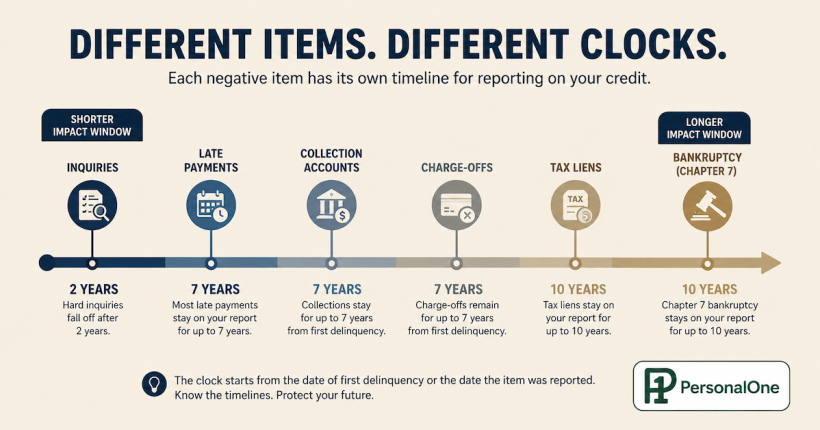
— Any stage: Always check soft-pull prequalification before applying. Hard inquiries cost 5–10 points and stay on your report for two years.
The best credit cards for building credit are not the ones with the most appealing rewards or the lowest advertised APR. They are the ones that match your current credit stage, report to all three bureaus, keep fees low enough to stay open for years, and offer a path to better terms once the history is established. Applying for the wrong product wastes a hard inquiry and produces a denial. Applying for the right one starts the clock on a credit file that opens financial doors for decades.
This guide covers the best credit-building card options across every credit stage — secured, unsecured starter, student, cash-flow-based, and second-chance — with the key attributes that determine whether each product is worth the application. For the complete credit card selection strategy including how to sequence card decisions over time, the cluster hub covers the full framework.
Best Credit Cards for Building Credit: Comparison
| Card | Best For | Credit Score Range | Annual Fee | Deposit Required | Graduation Path | Reports to All 3 Bureaus |
|---|---|---|---|---|---|---|
| Discover it® Secured Credit Card | No credit / rebuilding, want rewards | No minimum | $0 | Yes — $200, refundable | Automatic review starting at 7 months | Yes |
| Capital One Platinum Secured Credit Card | Limited cash for deposit | No minimum | $0 | Yes — $49, $99, or $200 | Automatic periodic review | Yes |
| OpenSky® Secured Visa® Credit Card | No credit check, recovering from bankruptcy | No minimum — no credit check | $35 | Yes — $200–$3,000 | Eligible for unsecured upgrade as early as 6 months | Yes |
| Petal® 1 "No Annual Fee" Visa® Credit Card | Fair credit, no deposit, high limit potential | Limited or fair credit | $0 | No | Automatic credit line reviews after 6 months | Yes |
| Capital One QuicksilverOne Cash Rewards Credit Card | Fair credit with income, wants rewards | Fair credit | $39 | No | Higher limits after 6 months of responsible use | Yes |
| Discover it® Student Chrome | Students, no credit history | No FICO history required | $0 | No | Keeps same account after graduation | Yes |
| Capital One Savor Student Cash Rewards Credit Card | Students with dining/grocery spending | Limited history accepted | $0 | No | No action needed after graduation | Yes |
| Chime Credit Builder Visa® Card | Good banking habits, no formal file | No minimum — no credit check | $0 | No deposit — funded by Chime account balance | N/A — standalone product | Yes |
| OneMain BrightWay® Card | Significant credit damage, no deposit available | Below 640, no official minimum | $0–$89 | No | Credit-limit increase or APR cut after 6 on-time payments | Yes |
| Self Credit Builder Account | No card, build installment history + savings | No minimum — no credit check | $9 one-time admin fee + interest | Funds held in CD until loan paid off | N/A — loan product; secured Self Visa available alongside it | Yes |
Best Secured Credit Cards for Building Credit
Secured cards are the most accessible credit-building product available. Approval is based on the deposit rather than credit history, which makes them viable for people with no file, thin files, or past damage from missed payments or collections. The deposit is refundable — it is returned when the account closes in good standing or graduates to unsecured. The complete breakdown of how secured and unsecured cards differ structurally is covered in the guide on secured vs. unsecured credit cards.
Discover it® Secured Credit Card — Best for No Credit or Rebuilding
Best For: People with no credit history or recovering from past damage who want a secured card that also earns rewards.
Credit Score Range: No minimum — approval based on deposit.
Annual Fee: $0
Deposit Required: Yes — refundable, minimum $200, becomes credit limit.
Graduation Path: Automatic account review starting at 7 months — deposit returned upon upgrade to an unsecured Discover card, same account number retained.
Reports to All 3 Bureaus: Yes — Equifax, Experian, TransUnion.
Capital One Platinum Secured Credit Card — Best for Limited Upfront Cash
Best For: People who qualify for a reduced deposit based on creditworthiness — as low as $49 for a $200 credit line.
Credit Score Range: No credit score required to apply.
Annual Fee: $0
Deposit Required: Yes — $49, $99, or $200 depending on approval tier, for a $200 starting limit. Refundable.
Graduation Path: Capital One periodically reviews accounts for graduation eligibility — on-time payments and utilization under 30% are the key factors. Deposit refunded as statement credit upon graduation.
Reports to All 3 Bureaus: Yes — monthly.
OpenSky® Secured Visa® Credit Card — Best for No Credit Check
Best For: People who have been denied elsewhere, are recovering from bankruptcy, or want approval with no credit pull at all.
Credit Score Range: No minimum — no credit check performed during application.
Annual Fee: $35
Deposit Required: Yes — $200 to $3,000, refundable, you choose the amount within that range.
Graduation Path: Eligible for the unsecured OpenSky Visa Gold Card in as little as 6 months with responsible use.
Reports to All 3 Bureaus: Yes.
Best Unsecured Starter Cards for Building Credit
No-fee unsecured starter cards are designed for people with fair credit who do not want to tie up cash in a deposit. They require a slightly stronger profile than secured cards but offer the same bureau reporting and a clear path to higher limits as the credit profile strengthens.
Petal® 1 "No Annual Fee" Visa® Credit Card — Best for Fair Credit Without a Deposit
Best For: People with limited credit history who want to avoid tying up cash in a deposit and access a higher starting limit.
Credit Score Range: Designed for less than 3 years of credit history — no hard minimum published.
Annual Fee: $0
Deposit Required: No.
Graduation Path: Automatic credit line increase reviews after 6 months — no additional deposit required for the increase.
Reports to All 3 Bureaus: Yes — monthly.
Capital One QuicksilverOne Cash Rewards Credit Card — Best for Fair Credit with Rewards
Best For: People with fair credit and steady income who want unlimited cash back while building credit.
Credit Score Range: Fair credit — less than 3 years of history or a default within the last 5 years.
Annual Fee: $39
Deposit Required: No.
Graduation Path: Eligible for higher credit limits after the first 6 months of responsible use.
Reports to All 3 Bureaus: Yes — earns unlimited 1.5% cash back on every purchase.
What I've Seen
One pattern I've seen consistently is people choosing a card based on what they want their credit profile to look like, not what it actually looks like right now. That gap — between the card they want and the card they qualify for — is where most credit-building attempts stall.
In one case, a reader spent nearly three months applying for unsecured rewards cards while their score sat in the low 600s. Each denial triggered a hard inquiry. The inquiries made the profile look riskier. The next approval became harder, not easier. The cards they were applying for weren't wrong products — they were right products for the wrong stage.
The fix was straightforward: soft-pull prequalification first to identify what was actually available, then a no-fee secured card with full bureau reporting, autopay set to minimum as a safety net, and utilization kept below 10%. Within six billing cycles the file looked materially different to lenders.
The takeaway: the best credit-building card is not the most attractive card. It is the card you can get approved for, keep open without fees creating pressure to close it, and use long enough to build the behavioral history that actually moves a score.
Best Student Credit Cards for Building Credit
Student cards are unsecured products with flexible approval criteria designed for people in school with limited income and minimal credit history. They do not require a deposit, often come with no annual fee, and include upgrade paths to standard cards once enrollment ends. For students with zero prior credit, these are frequently the most accessible unsecured starting point.
Discover it® Student Chrome — Best for Students Starting from Zero
Best For: College students with no prior credit history who want a simple rewards structure that doesn't require active category management.
Credit Score Range: No FICO history required to apply.
Annual Fee: $0
Deposit Required: No.
Graduation Path: Keeps the same account and account number after graduation — no new application needed, preserving credit history length.
Reports to All 3 Bureaus: Yes — earns 2% cash back at gas stations and restaurants (up to $1,000/quarter combined), 1% on everything else, with Cashback Match doubling first-year earnings.
Capital One Savor Student Cash Rewards Credit Card — Best for Students with Dining and Grocery Spending
Best For: Students who spend regularly on dining, groceries, and streaming services and want stronger rewards rates than a typical starter card.
Credit Score Range: Designed for students with limited or no prior credit history.
Annual Fee: $0
Deposit Required: No.
Graduation Path: No upgrading or action required after graduation — same card and terms continue.
Reports to All 3 Bureaus: Yes — earns 3% cash back on dining, groceries (excludes superstores), entertainment, and streaming; 1% on everything else.
Best Alternative Credit-Building Products
Three additional products serve people who fall outside the standard secured and unsecured tracks: a cash-flow-based card for people with good banking habits but no formal credit file, an unsecured second-chance card for people with significant damage who cannot qualify for standard secured products, and an installment loan that builds credit history without a card at all.
Chime Credit Builder Visa® Card — Best for Good Banking Habits, No File
Best For: People with consistent income who hold a Chime checking account and want a card with no credit check and no traditional deposit requirement.
Credit Score Range: No minimum — no credit check performed.
Annual Fee: $0
Deposit Required: No separate deposit — the card draws from funds already in a linked Chime account rather than extending traditional revolving credit.
Graduation Path: Not applicable — this is a standalone credit-building product rather than a step toward a separate unsecured card.
Reports to All 3 Bureaus: Yes — Chime reports payment activity to Experian, Equifax, and TransUnion.
OneMain BrightWay® Card — Best for Significant Credit Damage
Best For: People with bad credit (below 640) who cannot qualify for standard secured cards and want an unsecured option with no deposit.
Credit Score Range: No official minimum — approval depends on income and overall financial profile.
Annual Fee: $0–$89.
Deposit Required: No — unsecured card, by invitation or select partner access.
Graduation Path: After 6 consecutive on-time payments (a "Milestone Event"), cardholders can choose a credit-limit increase or an APR reduction. APR cannot drop below 19.99%.
Reports to All 3 Bureaus: Yes — earns 1% cash back on all purchases.
Self Credit Builder Account — Best for Building Installment History Without a Card
Best For: People who want to build installment payment history without a hard credit check — adds credit mix alongside a secured or student card, and can unlock a secured Self Visa card along the way.
Credit Score Range: No minimum — no credit check required to open an account.
Annual Fee: No annual fee — instead carries an APR of roughly 15.5–15.9% on the loan amount plus a one-time $9 administrative fee.
Deposit Required: No upfront deposit — monthly payments ($25, $35, $48, or $150) are held in a locked CD and returned (minus interest and fees) after the 24-month term completes.
Graduation Path: Not applicable — this is an installment loan product, not a card. After 3 on-time payments and $100+ in savings progress, funds can be used to open the secured Self Visa Credit Card alongside it.
Reports to All 3 Bureaus: Yes — reporting begins after the first successful payment.
Which Card Is Right for You: Decision Matrix
| Your Situation | Recommended Starting Point | Why |
|---|---|---|
| No credit history at all | Discover it Secured or Discover it Student Chrome | Lowest barrier to approval; deposit or enrollment replaces credit history as qualifier; both earn rewards while building |
| Fair credit, no missed payments | Petal 1 or Capital One QuicksilverOne | Avoid deposit; access higher limits; bureau reporting identical to secured |
| Past damage, limited deposit cash | Capital One Platinum Secured | Deposit as low as $49; deposit-backed approval; defined automatic graduation review |
| Denied elsewhere, want no credit check | OpenSky Secured Visa | No credit pull during application; eligible for unsecured upgrade in as little as 6 months |
| Significant credit damage, no deposit cash | OneMain BrightWay Card (temporary) | Unsecured with no deposit; emergency stepping stone — move to secured or starter card once eligible |
| Currently enrolled in college | Discover it Student Chrome or Capital One Savor Student | No deposit, flexible approval, retains account after graduation |
| Good cash flow, no formal credit file | Chime Credit Builder Visa | No credit check; draws from existing account balance rather than extending traditional credit |
| Want to add installment history | Self Credit Builder Account alongside a card | Adds credit mix factor; builds payment history on installment track simultaneously; can unlock a secured Self Visa |
How to Apply Without Hurting Your Score
Every formal credit card application triggers a hard inquiry that can lower your score by 5 to 10 points and stays on your report for two years. At the credit-building stage, those points matter. The solution is soft-pull prequalification — a tool offered by most major issuers that assesses your approval likelihood with zero scoring impact, so you know where you stand before committing to a formal application.
Use prequalification tools at each issuer's website before applying anywhere. Look for language like "Check if you pre-qualify" rather than "Apply now." Apply only where you have strong approval odds confirmed by the soft-pull result. The full guide on no-hard-pull credit cards covers which issuers offer soft-pull prequalification and how to use the process to protect your score during the card search.
What Actually Builds the Score Once the Card Is Open
The card does not build credit. The behavior attached to it does. Payment history is 35% of the FICO score — the single largest factor. Every on-time payment strengthens it. Every missed payment creates damage that stays on the report for seven years. Set autopay to the minimum as a permanent backstop, then make full payments manually on top. The autopay minimum prevents the worst outcome regardless of what else happens in a given month.
Credit utilization is 30% of the score. Keeping the reported balance below 10% of the credit limit — not the commonly cited 30% — produces the maximum scoring benefit. On a $500 limit, that means no more than $50 reporting as the outstanding balance when the statement closes. The full framework for managing all five FICO factors is covered in the credit building and protection authority hub.
Build the Complete Credit Profile
Choosing the right card is one decision. Managing all five FICO factors over time is the full system. The PersonalOne build and protect your credit profile guide covers payment history, utilization, credit age, credit mix, and new credit — and how to use each one deliberately. Free, no signup required.
Framework-first. Less willpower. More infrastructure.
Resources
CFPB: Credit Reports and Scores — Consumer Financial Protection Bureau guidance on credit inquiries, how scores are calculated, and consumer rights.
Federal Reserve: Credit Card Survey — Federal Reserve data on credit card terms, rates, and issuer practices across the market.
For the complete credit score management framework, visit the Credit Building & Protection authority hub.
Frequently Asked Questions
What is the best credit card for building credit with no credit history?
A secured card or student card is the most accessible starting point for someone with no prior credit file. Both require no minimum credit score, report to all three bureaus, and cost nothing in annual fees when the right product is selected. Use soft-pull prequalification at major issuers before applying to confirm approval odds without score impact.
Do secured cards actually build credit?
Yes. Secured cards report payment history to all three credit bureaus identically to unsecured cards. The only structural difference is the deposit requirement. Every on-time payment contributes to the payment history factor, which is 35% of the FICO score. A secured card used with consistent on-time payments and low utilization builds credit as effectively as any unsecured product.
How long does it take to build credit with a secured card?
Most people see a usable credit score within three to six months of the first account appearing on the report. Meaningful score improvement from consistent payment behavior and managed utilization typically appears within six to twelve months. Most people move from no usable score to the 650–700 range within twelve to eighteen months of disciplined use.
Should I carry a balance to build credit faster?
No. This is one of the most persistent credit myths. Carrying a balance costs interest and produces no additional scoring benefit compared to paying in full. What builds credit is using the card and paying it on time. The balance reported at statement close affects the utilization factor; what happens after the due date does not accelerate credit building.
What utilization percentage should I target?
Below 10%, not below 30%. The 30% threshold is where significant score penalties begin — it is a floor, not a target. The highest FICO scores carry utilization in the 1 to 10% range. On a $500 limit card, that means letting no more than $50 report as the outstanding balance at statement close. Pay most of the balance before the statement date each cycle.
How many credit cards should I have when building credit?
Start with one. Use it consistently for six to twelve months before considering a second card. Multiple new accounts in a short period lowers the average account age and signals credit-seeking behavior to lenders. Once the first card has a clean history and the score has improved meaningfully, a second card adds available credit that lowers utilization — but only if managed with the same discipline.
This content is for educational purposes only and does not constitute financial advice. PersonalOne is not a licensed financial advisor, broker, or investment professional. Individual financial situations vary — consult a qualified financial professional for personalized guidance. Card names, deposit amounts, annual fees, APRs, and graduation policies reflect publicly available issuer information as of June 2026 and are subject to change at any time. Always verify current rates, fees, and terms directly on the issuer's website before applying for any credit product.
2 Comments
Great roundup. The no hard pull options make this a lot less intimidating for people trying to build credit the smart way.
This is one of the clearer explanations I’ve seen for credit-building cards. Knowing which options won’t hurt your score upfront is huge.