
January 5, 2026
February 20, 2026
Home › Banking Systems › The 3-Account System Explained › Banks With No Monthly Fees: Top Options for 2026
About the Author: Don Briscoe is a financial systems coach with 12+ years helping Millennials and Gen Z escape paycheck-to-paycheck cycles. He founded PersonalOne to provide the financial education he wished existed — structured, honest, and free.
TL;DR — Quick Summary
— Monthly fees cost $180/year on average — completely avoidable by switching banks.
— 10 genuinely fee-free banks exist in 2026 — online and traditional options with zero monthly charges.
— Many offer cash back or high interest — Discover pays 1% back, NBKC pays 1.75% APY on checking.
— Traditional banks are reintroducing fees — $250–500 minimums now required at many legacy banks.
— Switching takes less than an hour — most accounts open online in minutes with no credit check.
Maya checked her bank statement on a Tuesday morning and felt that familiar sting — $15 gone. Not for coffee, not for gas, not for anything she'd actually bought. Just... gone. Monthly maintenance fee.
"That's $180 a year," she muttered, doing the math while her coffee went cold. "For what? The privilege of them holding my money?"
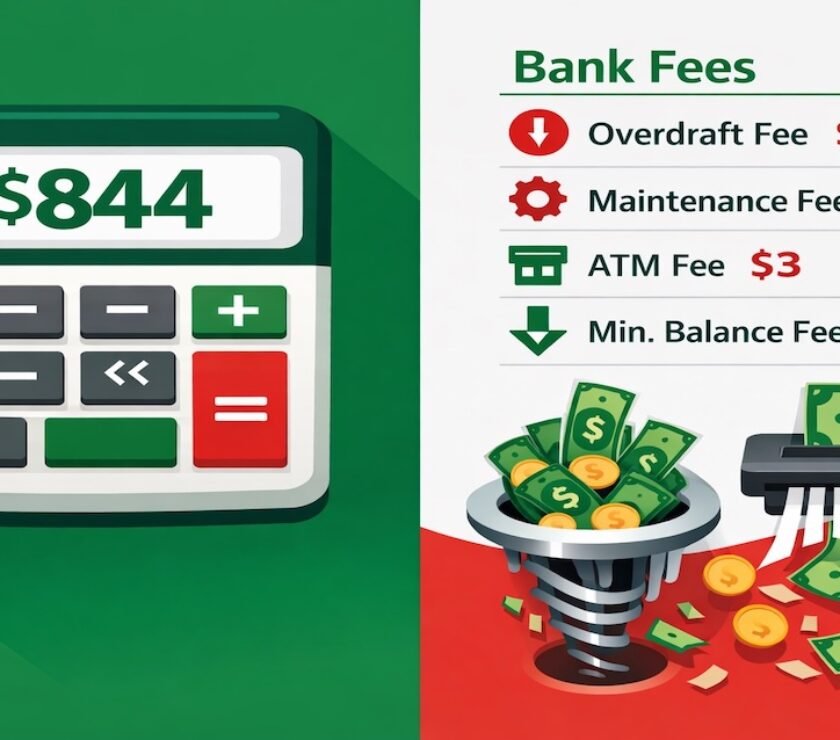
She wasn't wrong to be frustrated. In 2024, Americans paid nearly $82 billion in bank fees — about $311 per adult. And monthly maintenance fees are the quietest culprit, slipping out of accounts every 30 days whether you notice or not.
Part of the 3-Account System
Choosing a no-fee bank is one of the first steps in building a proper banking system. For the full framework on how checking, bills, and savings work together, see the PersonalOne guide to the simple 3-account banking setup. If you're ready to stop paying monthly fees right now, the top options for 2026 are below.
Why Banks Charge Monthly Fees (And Why You Shouldn't Pay Them)
Here's what banks will tell you: monthly fees cover the cost of maintaining your account, providing customer service, and keeping the lights on. Here's the reality: many banks — especially online-only ones — operate profitably without charging you a dime.
Traditional banks charge fees because they can. They have expensive branch networks, legacy systems, and shareholders expecting profits. But in 2026, you have options. Online-only banks have proven that free checking isn't just possible — it's sustainable. They operate without costly physical infrastructure and pass those savings to customers.
The difference between paying $15/month and $0/month is $180 annually — money that could go toward an emergency fund, debt payoff, or your first investment.
Maya's Breaking Point: Maya had banked with the same institution since college — 10 years of loyalty. But after calculating she'd paid over $1,500 in monthly fees during that decade, she was done. That afternoon, she researched fee-free alternatives. By Friday she'd opened a new account. By the following Tuesday her direct deposit was switched. Total time: 45 minutes. Annual savings: $180. "I kept waiting for the catch," she admitted months later. "But there wasn't one."
The 2026 Banking Landscape: Fees Are Back (But Avoidable)
There's an uncomfortable truth about 2026: traditional banks are quietly reintroducing and raising maintenance fees. Many now require $250–$500 minimum daily balances to avoid monthly charges. Miss that balance by even a dollar for one day? Fee applied.
But you don't have to accept this. Plenty of banks — online-only and some traditional — still offer genuinely free checking with no minimums, no hoops, and no hidden requirements.
Top 10 Banks With No Monthly Fees in 2026
These banks have been vetted for genuinely fee-free checking — no asterisks, no "if you maintain X balance" requirements.
1. Ally Bank — Spending Account
Best for: Simple, straightforward banking with strong ATM access
Pros
— Zero monthly fees, period
— No overdraft fees
— 75,000 fee-free ATMs
— Interest-earning checking
Cons
— No physical branches
— Cash deposits via Walmart only
Why it's great: Ally pioneered the no-fee banking model and has maintained it for years. No minimum balance, no direct deposit requirements — just free banking.
2. Discover Bank — Cashback Debit Checking
Best for: Earning rewards on everyday purchases
Pros
— 1% cash back on up to $3,000/month in debit purchases
— No monthly fees or minimums
— No overdraft fees
— 60,000 fee-free ATMs
Cons
— Only one physical branch
— Cash back capped at $30/month
Why it's great: One of the few checking accounts that actually pays you to use it — 1% back on eligible debit purchases up to $3,000 each month.
3. Capital One 360 Checking
Best for: Online banking with branch access
Pros
— No monthly fees or minimums
— Earns interest on all balances
— ~750 branches nationwide
— 70,000 fee-free ATMs
— No overdraft fees
Cons
— Interest rates are modest
— Branch access varies by region
Why it's great: A rare combination of online banking perks with physical branch access — no fees, no minimums, earns interest.
4. Charles Schwab Bank — Investor Checking
Best for: Frequent travelers and investors
Pros
— Unlimited ATM fee reimbursements worldwide
— No foreign transaction fees
— No monthly fees
— Earns interest on checking
Cons
— Requires brokerage account (no trading required)
— No cash deposit option
Why it's great: Unlimited ATM reimbursements globally with no foreign transaction fees. If you travel internationally, this is unbeatable.
5. Axos Bank — Essential Checking
Best for: Frequent out-of-network ATM users
Pros
— Unlimited domestic ATM reimbursements
— No monthly fees
— No overdraft or NSF fees
— No minimum balance
Cons
— Online-only
— Cash deposits cost up to $4.95
— $50 minimum to open
Why it's great: Unlimited domestic ATM fee reimbursements — perfect for people who can't always find in-network ATMs.
6. NBKC Bank — Everything Account
Best for: Earning high interest on checking
Pros
— 1.75% APY on all checking balances
— No monthly fees or minimums
— No overdraft fees
— 90,000+ fee-free ATMs globally
— Up to $12/month ATM reimbursements
Cons
— Online-only
— Transactions declined if funds insufficient
Why it's great: 1.75% APY on all balances with no requirements and 90,000+ fee-free ATMs globally. Most checking accounts pay nothing — this one pays you.
7. SoFi Checking and Savings
Best for: High savings rates alongside checking
Pros
— 3.30% APY on savings with direct deposit
— 0.50% APY on checking
— No monthly fees or minimums
— 55,000 fee-free ATMs
— Early direct deposit (up to 2 days)
Cons
— Best rates require direct deposit
— Online-only
— Cash deposits cost up to $4.95
Why it's great: The combined checking and savings approach with competitive APY makes this ideal for people actively building their emergency fund.
8. KeyBank — Key Smart Checking
Best for: Students and people who want traditional bank features
Pros
— No monthly fees
— No minimum balance
— 1,000+ physical branches
— 40,000+ fee-free ATMs
— Only $10 to open
Cons
— No interest on checking
— Other account types may have fees
Why it's great: Traditional bank access with no monthly fees and only $10 to open. Perfect for students or anyone who wants in-person banking without the fees.
9. BMO — Smart Advantage Checking
Best for: Paperless banking with traditional bank access
Pros
— No monthly fee with paperless statements
— No minimum balance
— Physical branch access
— Zelle integration
Cons
— Fee applies if you choose paper statements
— Non-BMO ATM fees apply
Why it's great: Effectively a free account with traditional bank perks — no maintenance fee and no minimum balance as long as you opt for paperless statements.
10. Fifth Third Bank — Momentum Checking
Best for: Early direct deposit and Zelle access
Pros
— No monthly fees
— Early direct deposit (up to 2 days)
— Zelle integration
— Nationwide fee-free ATM network
— Physical branch access
Cons
— Low interest rates
— Inactivity fee if balance under $100 for 3 months
— Not available nationwide
Why it's great: Early direct deposit access combined with Zelle makes managing bills and transfers easier — the early paycheck feature alone prevents overdrafts for many people.
How to Choose the Right Fee-Free Bank
With 10 solid options, the right choice depends on your situation:
Your Banking Needs Checklist
Need physical branches? → Capital One 360, KeyBank, BMO, or Fifth Third
Travel internationally? → Charles Schwab for fee-free global ATM access
Want to earn rewards? → Discover for cash back or NBKC for high interest
Use out-of-network ATMs often? → Axos or Schwab for unlimited reimbursements
Want high savings rates? → SoFi for combined checking/savings APY
Student or low-balance customer? → KeyBank or Ally for zero minimums
Making the Switch: Easier Than You Think
The biggest barrier to switching banks isn't the process — it's inertia. Switching takes less than an hour. Here's the five-step process:
The 5-Step Bank Switch
1. Open your new account online (10–15 minutes) — ID and Social Security number is all you need.
2. Fund the new account (5 minutes) — Transfer $25–50 from your old account to activate.
3. Update your direct deposit (5 minutes) — Log into your employer's payroll portal.
4. Move automatic payments (15–20 minutes) — Update bills and subscriptions to the new account.
5. Keep old account open for 1–2 months — After everything clears, close it.
Total active time: 45–60 minutes. Annual savings: $180 or more. Once you have your fee-free checking in place, the next step is understanding how it fits into a complete banking system.
Put Your Fee-Free Bank to Work in a Complete System
Choosing a no-fee bank is step one. For the complete framework on how to structure checking, bills, and savings so your money works on autopilot, see the PersonalOne bank account structure system.
Frequently Asked Questions
Are online-only banks safe?
Yes, as long as they're FDIC-insured — which all banks on this list are. FDIC insurance protects up to $250,000 per depositor per account type. Verify any bank's insured status at FDIC.gov before opening.
How do I deposit cash with an online bank?
Most online banks partner with retail networks. Ally, Discover, and SoFi allow cash deposits at Walmart. Some banks like Axos charge a small fee ($4.95) through Green Dot. If you deposit cash frequently, choose a bank with free deposit options or physical branches.
Will switching banks hurt my credit score?
No. Opening a checking account doesn't involve a hard credit inquiry. Checking accounts aren't credit products. You can switch banks as many times as you want without any credit consequences.
What happens to my automatic payments when I switch?
You update them manually — but it's simpler than it sounds. Log into each biller and update your payment method. Keep your old account open for 1–2 months to catch any stragglers, then close it once everything has transferred successfully.
Can I have accounts at multiple fee-free banks?
Absolutely. Many people keep checking at one bank and savings at a high-yield bank to maximize interest. There's no limit to how many bank accounts you can have — just make sure each one has a clear purpose so you're not creating confusion.
Resources
FDIC — Deposit Insurance Coverage
Federal Reserve — Consumer Information on Bank Accounts
Disclaimer: This article is for educational purposes only and does not constitute financial advice. Bank terms, fees, and APYs are subject to change — always verify current rates and terms directly with financial institutions before opening accounts. FDIC insurance limits are subject to change — verify current coverage at FDIC.gov.