Updated: June 16, 2026
Home › Credit Building & Protection › Credit Card Selection & Strategy › Credit Card Economy: How Does It Work?
Part of the Credit Card Selection & Strategy cluster.
About the Author
Don Briscoe is a financial systems strategist with 12+ years of experience helping Millennials and Gen Z build income and financial stability. He founded PersonalOne to provide the financial education he wished existed — structured, honest, and free. Follow
What You Need to Know
— The credit card economy is a trillion-dollar system built on four revenue streams: interchange fees, interest charges, annual fees, and penalty fees.
— Every swipe generates money for the card issuer. Merchants pay 1.5–3.5% per transaction — that fee funds your rewards program.
— Interest charges are the most profitable revenue stream. Average APRs of 20–24% generate billions from cardholders who carry balances.
— The 43% of cardholders who revolve balances fund the rewards programs for the 57% who pay in full. Understanding this changes how you use the system.
— One rule determines whether you profit from the credit card economy or feed it: pay the full balance every month, every time.
The credit card economy is not complicated once you see how it works — and understanding it changes every decision you make about how to use credit. Most people treat their card as a payment tool and stop there. But every swipe triggers a transaction involving banks, payment networks, merchants, and card issuers, all taking a cut before the money settles. The system is designed to generate profit, and it does, reliably, from the cardholders who never learned how it works.
This guide covers how credit cards make money, who pays for your rewards, and the single rule that determines whether you profit from the system or fund it. For the broader framework covering how to select the right card and use credit as a deliberate tool, the credit card selection strategy hub covers the complete picture.
How Credit Cards Actually Make Money
Credit card issuers generate revenue from four sources. Each one works differently, and each one has a different implication for how you should use your card.
Interchange Fees — The Hidden Revenue Engine
Every time you use a credit card, the merchant pays an interchange fee to your card issuer. This fee typically ranges from 1.5% to 3.5% of the transaction amount depending on the card type, the merchant category, and the payment network. On a $100 purchase, the merchant pays $1.50 to $3.50 to accept your card. The merchant receives approximately $97 to $98.50 after all fees clear.
Payment networks — Visa and Mastercard — set the interchange rates and collect a small assessment fee of roughly $0.10 to $0.15 per transaction for network access. The bulk of the interchange goes to the card issuer. Premium rewards cards carry higher interchange rates than basic cards, which is why your 2% cash back card costs the merchant more per swipe than a no-frills card does.
In 2024, U.S. merchants paid an estimated $137 billion in credit card processing fees. That figure represents the largest single revenue source in the credit card economy — and it flows whether you pay your balance in full or not. The interchange machine runs on every transaction regardless of your payment behavior.
Interest Charges — The Profit Maximizer
Interest charges are where the real money is made. When you carry a balance month to month, the card issuer earns interest on that debt at rates that average 20% to 24% APR — and can reach 29.99% as a penalty rate. Credit card interest compounds daily, not monthly. A $5,000 balance at 22% APR generates approximately $91 in interest charges in the first month alone.
The minimum payment trap amplifies this significantly. Paying the minimum on a $5,000 balance at 22% APR with $100 monthly payments takes 94 months to eliminate and costs $4,311 in interest — nearly doubling the original balance. Understanding what APR means and how it works is essential before carrying any balance, even temporarily.
Credit card companies collected approximately $130 billion in interest and fees from U.S. consumers in 2024. That revenue stream exists entirely because cardholders carry balances. It is the behavior that most directly destroys personal wealth — and the one the entire rewards system is quietly built around.
Annual Fees — The Premium Tier
Premium credit cards charge annual fees ranging from $95 to $695 or more for ultra-premium products. These fees fund enhanced benefits — airport lounge access, travel credits, concierge services, purchase protections — while providing immediate revenue to the issuer. The economics only work in your favor when the benefits you actually use exceed what you pay. A $550 annual fee card that generates $700 in travel credits and lounge value you would have purchased anyway is profitable. The same card sitting in a drawer is not.
For people building credit or using a first card, annual fees are a structural problem: they create an ongoing cost that pressures you to close the account, which shortens your credit history. No-fee cards are almost always the right starting point. The guide on why your first credit card matters more than your credit score covers why that first card selection has compounding consequences that last for decades.
Penalty and Convenience Fees — The Fourth Revenue Stream
Late payment fees run up to $41 per occurrence. Over-limit fees add $25 to $35. Cash advances carry 3% to 5% upfront plus immediate interest with no grace period. Balance transfer fees run 3% to 5% of the transferred amount. Foreign transaction fees add 1% to 3% on international purchases. Returned payment fees reach $25 to $40.
These fees collectively generated approximately $15 billion for card issuers in 2024. They disproportionately affect cardholders with limited financial literacy or those already under financial pressure — the same people least equipped to absorb them. Every one of these fees is avoidable with the right system in place.
What I've Seen
The pattern I see most consistently is people who believe they are winning with credit cards because they earn rewards — while quietly funding other people's rewards through the interest they pay. It is one of the most expensive blind spots in personal finance.
I have worked with readers who earned $300 or $400 a year in cash back while carrying an average balance of $3,000 at 22% APR. The math is straightforward: $660 in annual interest charges against $350 in rewards leaves them $310 in the red every year, believing the card is working for them. The rewards statement arrives quarterly with congratulations. The interest charges appear as a line item no one focuses on.
The industry designed it this way. The rewards program is the visible benefit. The interest charge is the invisible cost. When you understand how the credit card economy actually works, you realize the rewards are funded by people like who those readers were before they changed their behavior.
The takeaway: rewards are real, but they only produce net positive results for cardholders who never carry a balance. For everyone else, the rewards are a marketing feature attached to a debt product that costs more than it returns.
Who Actually Pays for Your Rewards
Credit card rewards are not free money. They are a redistribution of money that already exists in the system. Understanding where it comes from changes how you think about every rewards card you carry.
The Merchant Contribution
Interchange fees paid by merchants fund the majority of rewards programs. When you earn 2% cash back on a purchase, the merchant paid approximately 2.5% in processing fees on that same transaction. The card issuer keeps roughly 0.5% and returns 2% to you. The merchant, unable to charge card users more than cash users in most cases, absorbs this cost into their overall pricing. This means that in aggregate, all consumers — including cash payers — effectively subsidize the rewards that go to cardholders.
The Balance-Carrier Contribution
Interest charges from cardholders who carry balances subsidize rewards for those who pay in full. Approximately 43% of cardholders revolve balances month to month. The interest they generate funds the rewards that the remaining 57% collect without paying a cent in interest. The redistribution is real and significant: the rewards economy depends on a steady base of balance-carrying cardholders whose interest payments exceed the rewards value they receive.
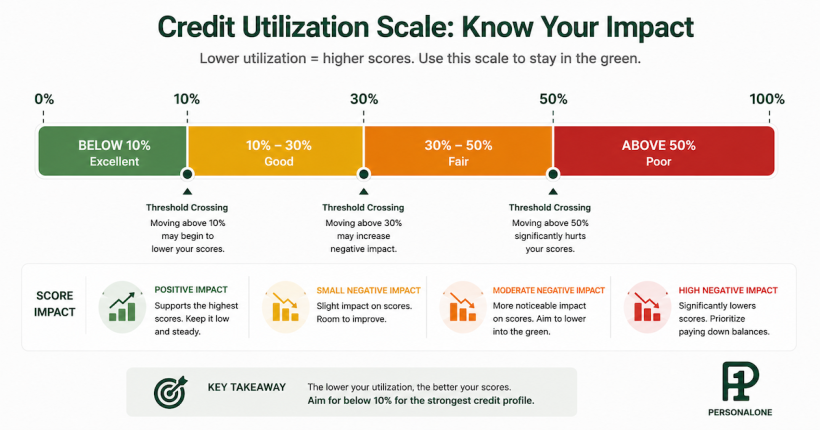
This is not a conspiracy. It is a business model. And it means that your position in the system is a choice: you are either collecting the redistribution or funding it. The determining factor is whether you carry a balance. How utilization ties into this dynamic — and why even paying in full can inadvertently suppress your score if the timing is wrong — is covered in the guide on what credit utilization actually means and why the 30% rule is a myth.
Why Merchants Accept Cards Despite the Fees
If credit card processing costs merchants 2% to 3% per transaction, the obvious question is why they accept cards at all. The answer is that the math works in their favor despite the fees. Studies consistently show that consumers spend 12% to 18% more when using credit cards versus cash, a differential that more than offsets the processing cost for most businesses. Consumers also buy more when not constrained by the cash in their wallet, and they complete purchases they might otherwise abandon if forced to pay cash.
For most merchants, accepting credit cards is a profitable necessity, not a concession. The processing fee is a cost of accessing a customer base that spends more, buys more often, and expects card acceptance as a baseline. Small merchants with thin margins sometimes add surcharges for credit card payments to pass this cost on — in those situations, the math shifts and cash or debit may be worth considering if the surcharge exceeds your rewards rate.
The One Rule That Determines Everything
Every strategy for using the credit card economy to your advantage collapses to a single rule: pay the full statement balance every month, every time, without exception. This rule is not a suggestion. It is the structural requirement for being on the profitable side of the system.
When you pay in full, you access fraud protection, purchase protections, rewards, and credit building at no cost. The card issuer earns interchange fees and hopes you eventually carry a balance. You earn rewards and never give them the interest revenue. The moment you carry a balance — even once, even a small amount — the interest cost begins eroding or eliminating the rewards value. At 22% APR, it takes very little carried balance to turn a profitable rewards card into a net cost.
The system that makes this sustainable is a cash flow structure, not willpower. Spending on credit while the money sits in checking, then paying the full balance on the due date, converts your credit card from a borrowing tool into a protected payment layer. How debit and credit cards each fit into that structure — and why debit forfeits the advantages of credit for everyday purchases — is covered in the guide on debit card vs. credit card.
Selecting Cards That Work Within the System
Once you understand how the credit card economy generates its profits, card selection becomes a straightforward decision: choose products that extract maximum value without creating conditions for carrying a balance.
For Credit Builders
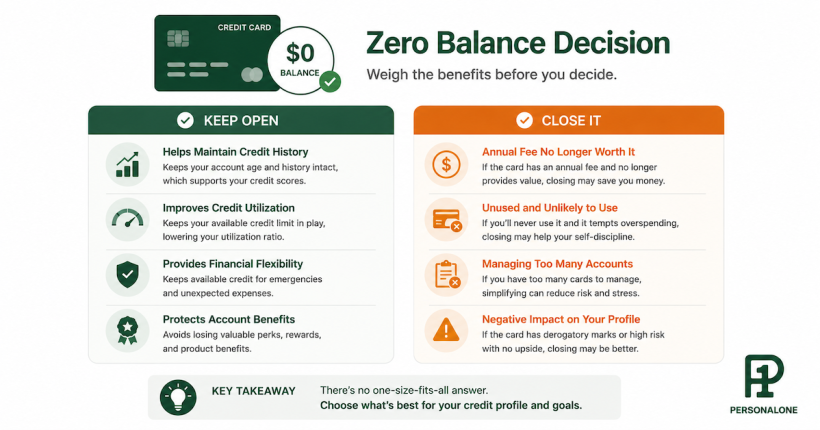
No annual fee, reports to all three bureaus, reasonable credit limit. Rewards are secondary. The objective is a card you can keep open indefinitely while building payment history and managing utilization. A no-fee card with clean terms serves this purpose better than a rewards card with an annual fee that creates pressure to close the account. The guide on credit cards for building credit covers which specific products meet these criteria without requiring a hard pull to check eligibility.
For Established Credit Users
A flat-rate 1.5% to 2% cash back card on everything is the simplest and most effective approach for most people. One card, one rewards rate, no category tracking required. If your spending is high enough and concentrated enough in specific categories — groceries, gas, dining, travel — multiple cards with category bonuses can outperform a flat-rate card. The math only holds if the administrative overhead of managing multiple cards does not introduce the risk of missed payments or confusion about which card carries a balance.
Annual Fee Cards
Premium cards with annual fees are worth the math only when the benefits you will actually use exceed the fee. The standard test: list the specific benefits you will use in a given year and assign honest dollar values. If the total exceeds the annual fee, the card earns its keep. If you are relying on credits you will not use or perks that require a spending level you do not maintain, the fee is a net cost. For the complete framework on which cards belong at each stage of credit development, the Credit Building & Protection hub covers how credit, card selection, and financial systems work together.
Use the System. Don't Fund It.
Understanding how the credit card economy works is the first step. Building the cash flow system that lets you use credit safely — and collect the rewards without carrying a balance — is what makes it sustainable. The PersonalOne Credit Building & Protection hub covers all five FICO factors and how to structure credit as a deliberate financial tool. Free, no signup required.
Framework-first. Less willpower. More infrastructure.
The Future of the Credit Card Economy
The mechanics of the credit card economy are evolving at the edges while the core economics remain unchanged. Digital wallets — Apple Pay, Google Pay, Samsung Pay — add a security layer to transactions but do not change the underlying flow. Each tap still generates interchange fees for the card issuer behind the wallet. The payment method changes. The revenue model does not.
Buy now, pay later services like Affirm, Klarna, and Afterpay have captured installment purchase volume from traditional credit cards, particularly among younger consumers. Their long-term profitability and impact on the credit card industry remain genuinely uncertain. What is clear is that these products introduce the same fundamental risk as credit cards — spending money before you have it — often without the same consumer protections or credit-building benefits.
Regulatory pressure on interchange fees and late fee caps continues. The Consumer Financial Protection Bureau's cap on late fees — challenged in courts — reflects ongoing tension between the industry's fee-based revenue model and consumer protection policy. Changes in this area could affect the economics of rewards programs over time. The core rule — pay in full, never carry a balance — remains the right strategy regardless of how these external factors evolve.
Resources
CFPB: Credit Card Market Reports — Consumer Financial Protection Bureau data on credit card terms, fees, rates, and industry practices.
Federal Reserve: Payments Study — Annual Federal Reserve data on payment card transaction volume, interchange economics, and consumer payment behavior.
FDIC: Understanding Credit Card Terms — Federal Deposit Insurance Corporation overview of credit card agreement terms, APR calculations, and fee structures.
For the complete framework covering credit building, card selection, and score protection, visit the Credit Building & Protection authority hub.
Frequently Asked Questions
Do credit card rewards actually cost me money through higher prices?
Partially. Merchants pay processing fees of 1.5% to 3.5% per transaction, which they generally incorporate into their overall pricing. This means all consumers — including cash payers — effectively subsidize rewards for cardholders. Since most businesses have already factored card processing into their pricing, using a rewards card captures value that is already built into prices you are paying regardless. You are not creating the cost — you are recouping part of it.
Why are credit card interest rates so much higher than other loans?
Credit card debt is unsecured — no collateral backs it — and revolving, meaning the borrower can draw repeatedly up to the limit. Both factors make it riskier for lenders than a mortgage or car loan secured by an asset. Additionally, the credit card market has historically low price sensitivity: most cardholders do not shop aggressively for lower APRs, which allows issuers to maintain high rates even when their own cost of funds is low.
Is it better to use a debit card to avoid the credit card system?
Not for most everyday purchases. Debit cards carry weaker fraud protections, generate no payment history or credit score benefit, and offer minimal rewards. If you have the cash flow discipline to pay in full monthly, a credit card provides superior fraud protection, purchase protections, and rewards at no cost. The key is treating it as a protected payment layer backed by money already in checking — not as a borrowing tool.
Can I actually come out ahead with credit card rewards?
Yes — but only if you never carry a balance. Earning 2% back on $10,000 in annual purchases yields $200 in rewards. Paying 22% interest on a $2,000 average balance costs $440 annually. The interest eliminates the rewards and then some. Rewards work for cardholders who pay in full every month. For everyone else, the rewards are a marketing feature attached to a product that costs more than it returns.
Why do some merchants charge extra for credit card use?
Legal settlements in recent years allow merchants in most states to pass processing fees to customers as surcharges, typically 2% to 4%. Small businesses with thin margins sometimes add these charges to avoid absorbing interchange costs. When a surcharge applies, compare it to your card's rewards rate. If the surcharge exceeds your rewards percentage, cash or debit is the better financial choice for that specific transaction.
This content is for educational purposes only and does not constitute financial advice. PersonalOne is not a licensed financial advisor, broker, or investment professional. Credit card terms, interest rates, fees, and rewards programs vary by issuer and change frequently. Always review card agreements carefully before applying. Carrying credit card balances can result in significant financial cost — consult a qualified financial professional for guidance specific to your situation.