


November 8, 2025
Updated: February 24, 2026 • 7 min read
About the Author
Don Briscoe is a financial systems coach with 12+ years helping Millennials and Gen Z escape paycheck-to-paycheck cycles. He’s worked with hundreds of people to build emergency funds, eliminate debt, and start investing using framework-first strategies that require less willpower and more infrastructure. He founded PersonalOne to provide the financial education he wished existed—structured, honest, and free.
TL;DR — Quick Summary
- ✓Digital wallets are not one category — payment wallets, P2P wallets, and crypto wallets work differently and serve different functions in a money system.
- ✓Tap-to-pay adoption is structural, not trend-driven — speed, security, and mobile-first design make contactless payments the default for everyday transactions.
- ✓Modern digital wallets are more secure than physical cards — tokenization means your actual card number never transmits during a transaction.
- ✓Crypto wallets operate on entirely different infrastructure — blockchain-based, no banking rails, you hold the private keys directly.
- ✓The wallet you use for coffee is not the wallet you use for Bitcoin — understanding the difference prevents both security mistakes and misplaced expectations.
What a Digital Wallet Actually Is
A digital wallet stores payment credentials electronically and allows transactions without a physical card or cash. The category includes Apple Pay, Google Pay, PayPal, Venmo, Cash App, and cryptocurrency wallets like Coinbase Wallet and MetaMask — but those names represent fundamentally different infrastructure, different ownership structures, and different risk profiles. Treating them as the same product because they all live on a phone is a mistake with real consequences.
The FINRA Foundation National Financial Capability Study documented that a majority of young adults now use mobile banking or payment apps as their primary financial tool. That shift has moved digital wallets from optional convenience to core infrastructure for how most people under 35 manage day-to-day money.
Three Types of Digital Wallets: What Each One Actually Does
The confusion about digital wallets comes from the word being applied to three distinct categories. Each has a different job, different ownership model, and different place in a money system.
| Type | What It Does | Examples | How Funds Are Held |
|---|---|---|---|
| Payment Wallets | Store credit/debit cards and IDs for contactless checkout via NFC | Apple Pay, Google Pay, Samsung Pay | Funds remain in your linked bank or card account; tokenized credentials transmit, not card numbers |
| P2P Wallets | Send and receive money directly between users; often hold a balance within the app | Venmo, Cash App, PayPal, Zelle | Linked to bank or debit card; app balance is not FDIC-insured unless transferred to a bank account |
| Crypto Wallets | Store private keys that give access to digital assets on a blockchain | Coinbase Wallet, MetaMask, Ledger | You hold assets directly via private key; no bank, no FDIC coverage, no intermediary |
Critical distinction for P2P wallets: Money sitting in your Venmo or Cash App balance is not automatically FDIC insured. It is a balance held by the app company. For deposit protection to apply, funds need to be transferred to a linked FDIC-insured bank account or held in an account that has specifically opted into FDIC pass-through coverage. Check the terms of any P2P platform before holding significant balances.
Why Tap-to-Pay Became the Default
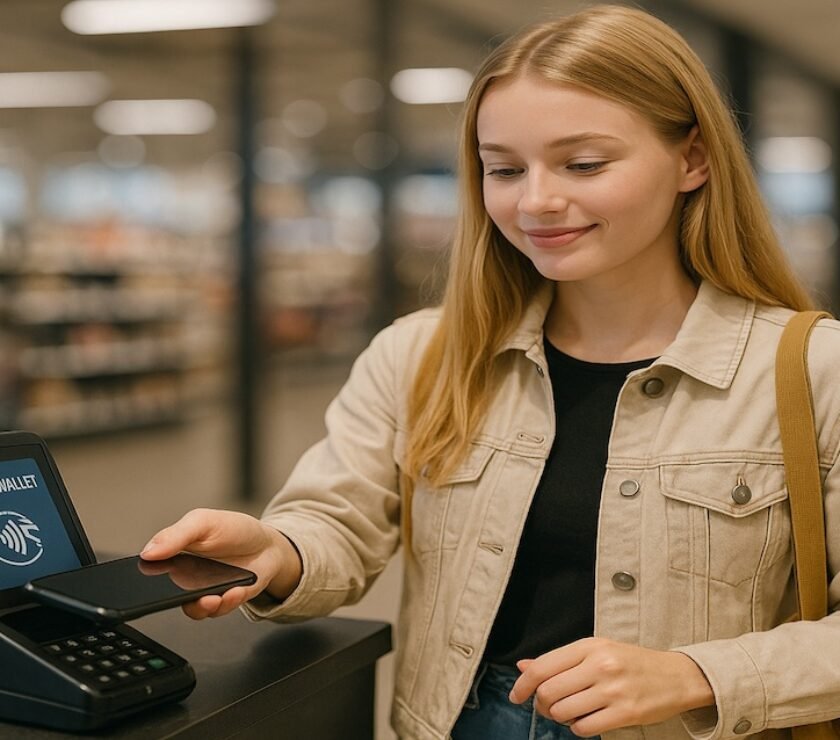
Contactless payment adoption accelerated during the COVID-19 period when avoiding shared surfaces became a practical concern. But the deeper reason tap-to-pay became permanent infrastructure rather than a temporary adjustment is that it is objectively faster and more secure than swiping a physical card.
The transaction process with a payment wallet like Apple Pay or Google Pay: unlock phone, hold near terminal, authenticate via Face ID or fingerprint, done. No PIN entry, no card handling, no signature. For high-frequency transactions like transit, coffee, and retail, the accumulated time savings are real. For merchants, lower fraud rates from tokenized transactions reduce processing losses.
The adoption pattern follows infrastructure availability. As NFC-enabled terminals became standard at point of sale, contactless payments shifted from a niche option to the fastest available checkout method. Gen Z and Millennials adopted at higher rates not because of generational affinity for technology but because these groups have higher purchase frequency at retailers that led NFC adoption.
Security: Why Digital Wallets Are More Secure Than Physical Cards
The security case for payment wallets rests on one mechanism: tokenization. When you add a card to Apple Pay or Google Pay, the actual card number is never stored on the device and never transmitted during a transaction. Instead, a device-specific token is generated. Even if that token were intercepted, it cannot be used to make purchases elsewhere — it only functions for that device in the context it was created.
This contrasts directly with a physical card swipe or chip transaction, where the card number, expiration date, and CVV are transmitted and can be captured by skimming equipment or compromised point-of-sale systems. Tokenization removes that attack vector entirely.
Additional security layers in modern payment wallets include biometric authentication (Face ID, fingerprint) required for each transaction, real-time fraud monitoring that flags unusual transaction patterns, and the ability to remotely lock or wipe payment credentials from a lost device — something impossible with a physical card.
Crypto wallets operate under a different security model. The security is only as strong as the private key management. If private keys are lost or compromised, the assets are gone with no recovery mechanism. This is both the strength of the model (no intermediary can freeze your assets) and its primary risk (no intermediary can help you recover them).
The FinTech Ecosystem Behind Every Transaction
A single tap-to-pay transaction involves more infrastructure than visible: the NFC chip in the phone, the payment network (Visa, Mastercard, or ACH), the card issuer, the acquiring bank processing the merchant’s transaction, and the fraud detection systems running across all of them simultaneously. That coordination happens in milliseconds.
The direction the category is moving is toward consolidation. Apps like Cash App and PayPal now support both fiat payment functions and cryptocurrency holdings within a single interface, blurring the previously clean distinction between payment wallets and crypto wallets. What began as single-function payment tools are evolving into broader financial platforms that handle spending visibility, peer transfers, investment access, and savings features in one place.
For budgeting that works alongside your payment apps and wallets, Monarch Money (affiliate) aggregates transactions across connected accounts and wallets into a unified spending view — useful when money moves across multiple platforms and you need one place to see the full picture.
Frequently Asked Questions
Is money in my Venmo or Cash App balance FDIC insured?
Not automatically. Balances held within P2P apps are not bank deposits by default and may not carry FDIC protection. Some platforms have introduced FDIC pass-through insurance on stored balances, but this varies by platform and account type. Check the platform’s terms directly — and when in doubt, transfer balances to a confirmed FDIC-insured bank account rather than holding significant amounts in an app balance.
What happens if I lose my phone — can someone use my Apple Pay?
No. Payment wallets require biometric authentication (Face ID or fingerprint) for every transaction. Without the biometric match, the wallet cannot be used. Additionally, you can remotely remove all payment cards from Apple Pay or Google Pay through iCloud or your Google account, immediately disabling the wallet on the lost device.
What’s the difference between a hot wallet and a cold wallet for crypto?
A hot wallet is connected to the internet (Coinbase Wallet, MetaMask) — convenient for frequent transactions but more exposed to online attacks. A cold wallet stores private keys offline on a physical device (Ledger, Trezor) — more secure for long-term storage but less convenient for active trading. The standard guidance for crypto holders is to keep only what you’re actively transacting in a hot wallet and store larger holdings in cold storage.
Do I need a crypto wallet to buy Bitcoin?
Not to purchase it — you can buy Bitcoin through an exchange like Coinbase and it will be held in a custodial account on the exchange. But the exchange holds the private keys, not you. If you want to hold Bitcoin directly, where you control the private keys and assets aren’t subject to exchange access risk, you need a non-custodial wallet. The distinction matters: "not your keys, not your coins" reflects the real ownership difference.
Explore the Full Payment Apps & Digital Wallets Hub
Understanding how digital wallets work is the foundation. The Payment Apps & Digital Wallets hub covers how to evaluate specific apps, how to structure your payment tools within a multi-account system, and how to use automation features to move money without manual management.
Explore Payment Apps & Digital Wallets →Resources
- Payment Apps & Digital Wallets Hub — evaluate and integrate payment tools into a complete money system
- Monarch Money Review (affiliate) — budgeting app that aggregates across wallets, banks, and investment accounts
- FINRA Foundation — National Financial Capability Study
- FDIC.gov — verify deposit insurance coverage for any financial platform
Disclaimer: This article is for educational purposes only and does not constitute financial advice. FDIC coverage terms vary by platform and account type — always verify directly with the institution. Cryptocurrency investments carry significant risk including total loss of principal. Consult a certified financial professional before making significant financial decisions. This article contains affiliate links marked as such; these do not influence editorial content.
Man, I haven’t touched my debit card in weeks. Didn’t realize digital wallets were doing this much behind the scenes.
Apple Pay was just the beginning… Now it feels like my entire wallet lives in the cloud. This article nails how fast it’s all evolving.
More of this, please. Gen Z needs content that doesn’t sound like a 2013 Bitcoin forum.