
May 14, 2025
Updated: March, 2026
Home › FinTech & Modern Money Tools › Neobanks & Digital Banking Platforms › How Gen Z Uses Banks, Apps, and FinTech
This article is part of the Neobanks & Digital Banking Platforms cluster on PersonalOne — how to evaluate, choose, and integrate digital banking platforms into a money system that runs automatically.
How Gen Z Uses Banks, Apps, and FinTech (Complete Guide)
Don Briscoe is a financial systems coach with 12+ years of experience helping Millennials and Gen Z build income and financial stability. He founded PersonalOne to provide the financial education he wished existed — structured, honest, and free.
What You Need to Know
— Gen Z does not use one bank for everything — they build a stack of specialized tools, each assigned the job it does best
— The four layers of the Gen Z money stack are: a neobank for daily banking, a payment app for transfers, a budgeting tool for full-picture visibility, and an investing app for wealth building
— Zero fees, real-time notifications, automation, and mobile-first design are baseline expectations — not differentiators
— Most neobanks are not banks — FDIC coverage runs through partner institutions, and verifying which one holds your deposits matters
— The entire approach works for any age — the structural advantages Gen Z defaults to improve any money system
The Gen Z Money Stack: Why No Single App Does It All
Gen Z is the first generation that never had a formative experience with a bank branch as the default. Their starting point was already an app with real-time notifications, instant transfers, and no monthly fee. That difference in baseline expectation drives every financial tool choice that follows — and the most important insight is this: Gen Z does not expect one institution to handle everything. They treat money management like a technology stack, assigning each platform the specific job it does best.
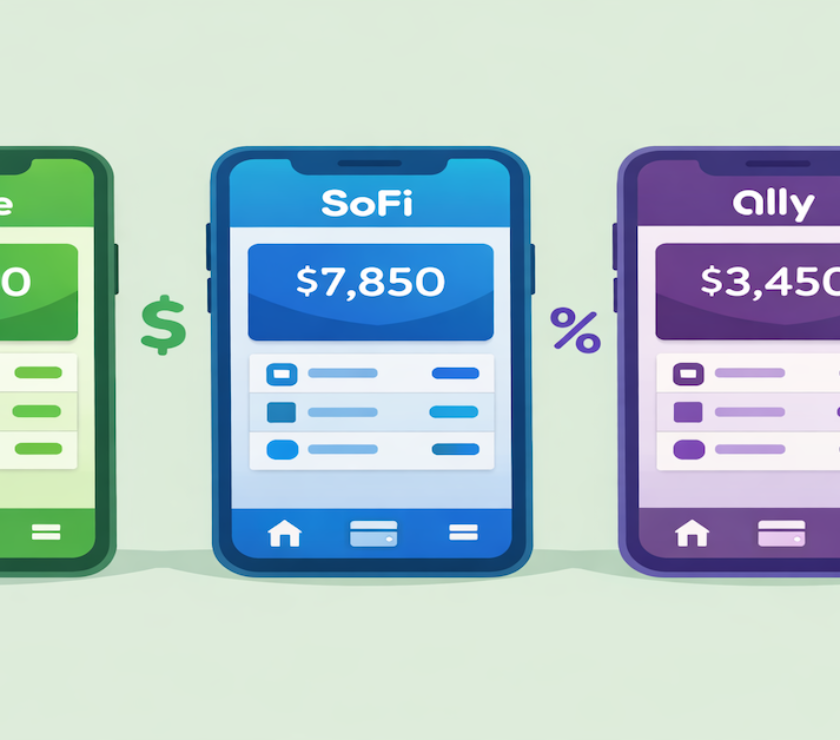
A typical Gen Z money setup has four layers: a neobank for daily spending and early paycheck access, a payment app for splitting costs and sending money instantly, a budgeting tool for tracking the full picture across all accounts, and an investing app for getting into the market without the friction of a traditional brokerage. Understanding how Gen Z uses banks, apps, and FinTech means understanding how these four layers connect — and why the combination consistently outperforms any single institution trying to do it all. The full framework for building this kind of multi-account system is in the neobanks and digital banking platforms guide.
Layer 1: Neobanks for Daily Banking
The neobank is the operational center of the Gen Z money stack — the account where the paycheck lands, daily spending happens, and automatic savings rules run. Neobanks win this role for four structural reasons that traditional banks have not fully replicated: zero fees, real-time transaction visibility, automation as a core feature, and mobile-first design that treats the phone as the primary interface.
Zero fees. No monthly maintenance charges, no overdraft fees, no minimum balance penalties. For a generation entering adulthood during economic uncertainty, fees that punish low balances are not just expensive — they are disqualifying. Neobanks eliminated these fees by eliminating the branch infrastructure that created them.
Real-time visibility. Every transaction triggers an instant notification. Balance is always current, not end-of-day. For a generation that grew up with real-time everything, waiting for a monthly statement to understand where money went is a broken feedback loop. Real-time visibility removes the information gap that allows overspending to go unnoticed until it becomes a problem.
Automation built in. Round-up savings, percentage-of-paycheck transfers, goal buckets — these are core neobank features, not third-party add-ons. The most durable financial systems run on automation that does not require ongoing willpower. Gen Z defaulted to this expectation from the start.
Mobile-first design. Purpose-built for a phone, with every function accessible in three taps or fewer — not a mobile version of a desktop platform built on decades-old legacy systems. The quality difference between a native mobile experience and a retrofitted one is not subtle, and for a generation managing nearly everything from a smartphone, that difference is decisive.
The neobanks leading Gen Z adoption each serve a distinct version of this core role. Chime (21M+ users) leads for early paycheck access and automatic round-up savings — best for set-it-and-forget-it daily banking. Varo holds a direct national bank charter and is FDIC-insured independently rather than through a partner — best for users who want direct deposit insurance. Current targets Gen Z with instant gas hold releases and debit card rewards — best for young adults who want rewards without a credit card. Step is designed for teens and young adults entering the system, with credit-building features and optional parental oversight — best for a first account.
FDIC Coverage and Neobanks: What You Need to Verify
Most neobanks are not banks — they are FinTech companies that partner with FDIC-insured institutions to hold customer deposits. Your $250,000 FDIC coverage still applies, but it runs through the partner bank, not the neobank app. Check your account agreement for which institution holds your deposits, then confirm that institution’s FDIC status at FDIC.gov. Varo is the primary exception — it holds its own national charter and is directly insured. Do not assume coverage — verify it.
Layer 2: Payment Apps for Instant Money Movement
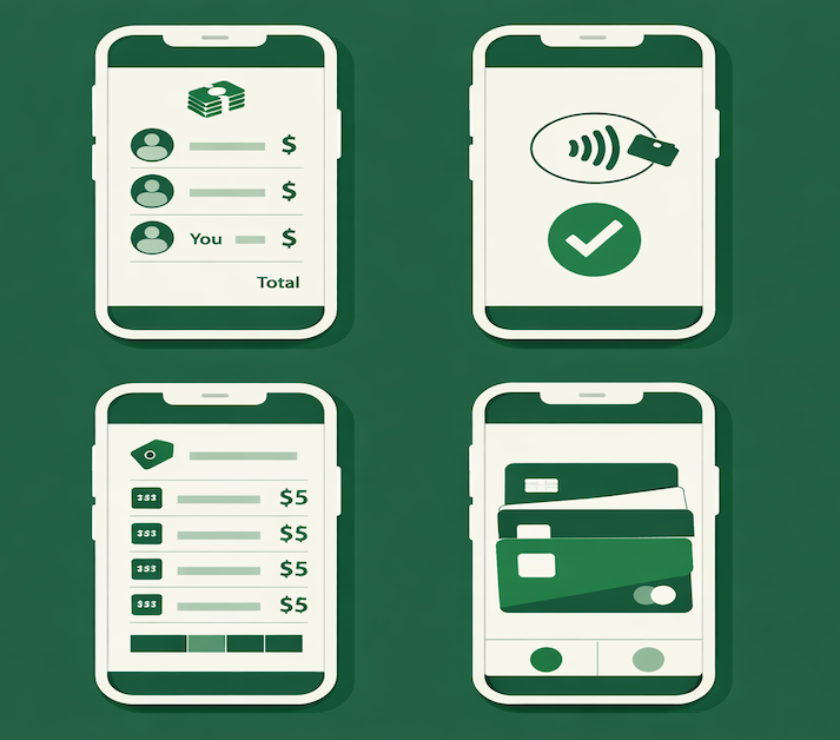
Payment apps handle the social and transactional layer of the stack — splitting dinner, paying back a roommate, sending money to a freelance client, or collecting payment from a customer. This is not banking. It is money movement, and Gen Z treats it as a completely separate function that deserves its own dedicated tool rather than routing everything through a bank transfer.
Venmo dominates peer-to-peer payments among Gen Z for its social feed and near-universal adoption. Paying someone on Venmo works because almost everyone already has it. It is owned by PayPal and carries FDIC pass-through insurance on balances if you opt into the Venmo Savings feature with a qualifying direct deposit — but standard Venmo balances are not bank accounts. Transfer funds to a bank account before treating any Venmo balance as savings.
Cash App goes further than peer payments — it includes a debit card, basic stock investing, and Bitcoin access in one interface. For Gen Z who want a single app handling peer payments, basic investing, and a spending card without opening multiple accounts, Cash App functions as a lightweight financial hub. The same caveat applies: Cash App balances are not FDIC-insured unless held in Cash App Savings with a qualifying direct deposit.
Zelle operates differently from Venmo and Cash App — it moves money directly between bank accounts rather than holding an in-app balance. Transfers are instant and irreversible, which makes it fast but also means there is no buffer if you send to the wrong person. Zelle is built into most major bank and credit union apps, requiring no separate account to use. It is the preferred option when the goal is a direct bank-to-bank transfer rather than an in-app transaction.
The practical framework: Venmo for social splits among friends, Cash App for flexibility and investing access in one place, Zelle for direct bank-to-bank transfers. Each has a specific job, and the right choice depends on which job the transaction requires.
Layer 3: Budgeting Tools for Full-Picture Visibility
A neobank shows you what is happening in one account. A payment app shows you what you sent and received through that app. Neither gives you a complete picture of your financial life across all accounts, cards, and balances simultaneously. That is what budgeting tools are for — and Gen Z increasingly treats a budgeting platform as an essential, separate layer of the money stack rather than an optional extra.
The most effective budgeting platforms combine account aggregation (connecting every bank, card, and investment account in one view) with spending categorization, budget tracking, and cash flow forecasting. The goal is not to restrict spending — it is to make the full financial picture visible in one place so every decision is made with accurate information rather than a rough mental estimate.
Monarch Money (affiliate) is the budgeting platform that best fits the multi-account structure Gen Z actually uses. It connects neobank accounts, traditional bank accounts, credit cards, investment accounts, and payment app balances in a single dashboard, with customizable budget categories, cash flow tracking, and financial goal tools that work across the entire picture — not just one account. For anyone managing money across multiple institutions and apps, Monarch provides the visibility layer that no individual app can replicate on its own.
Cleo takes a different approach — it uses AI-powered analysis to break down spending, send proactive spending alerts, and automate small savings transfers. The interface is conversational and designed for quick daily check-ins rather than deep monthly budget reviews. Best for users who want real-time spending nudges rather than a full financial dashboard.
The practical distinction: Monarch is the right tool when you want a connected view of your complete financial picture across all accounts. Cleo fits better when you want lightweight daily awareness with automated micro-savings. Many users start with Cleo for simplicity and move to Monarch once their financial picture becomes complex enough to warrant full aggregation.
Layer 4: Investing Apps for Building Wealth
The fourth layer is investing — and the barriers that kept previous generations out of the market for years no longer exist for Gen Z. Account minimums, trading commissions, and the intimidation of navigating a full brokerage interface have been replaced by apps that allow anyone to start with whatever amount they have available right now.
Fidelity and Schwab carry no account minimums and no trading commissions, with mobile apps that work well for investors at every level. For Gen Z who want the credibility and full product range of an established brokerage — including IRAs, taxable brokerage accounts, and a wide range of investment options — these are the default starting points. Both are SIPC-insured for brokerage accounts up to $500,000.
Public adds a community layer to investing — users can see what others are holding and discuss positions in real time. For Gen Z who approach investing as a social activity and want to learn from peer behavior rather than solo research, Public fills that role. It also offers access to bonds and alternative assets beyond standard stocks and ETFs.
Acorns automates micro-investing by rounding up purchases to the nearest dollar and investing the difference in diversified portfolios. The investment amounts are small, but the behavioral value is significant — it removes the decision friction of investing by making it happen automatically without requiring a deliberate action each time. For anyone who struggles to start investing because they feel they do not have enough yet, Acorns lowers the entry point to nearly zero.
The investing layer works best when connected to the budgeting layer. Knowing what you can actually invest each month requires visibility into your full cash flow picture — which is exactly what a budgeting platform provides. The four layers of the Gen Z money stack are designed to reinforce each other, not operate in isolation.
What This Approach Forced Traditional Banks to Do
Legacy banks did not eliminate overdraft fees, add early direct deposit, or rebuild their mobile apps because they wanted to. They did it because Chime, Varo, and Current made those friction points indefensible to an entire generation of potential customers. Every bank customer at every age benefits from those adaptations — the fee eliminations and app improvements driven by neobank competition apply to accounts held across all generations, not just Gen Z.
Why This Works Regardless of Your Age
The four-layer stack — zero fees, real-time visibility, automation, multi-tool separation — works for any money system regardless of when you were born. Gen Z never had to unlearn the old way first. If your current setup involves monthly maintenance fees, end-of-day balance updates, and manual transfers you keep meaning to automate, the Gen Z approach is not a generational thing to observe. It is a system upgrade available right now.
One important complement: FinTech apps are not always the best tool for lending. Traditional banks and credit unions remain the strongest option for mortgages, business loans, and secured credit products. A neobank for daily operations alongside a traditional institution for lending is a stronger complete structure than replacing one with the other — two complementary tools assigned to the jobs each does best.
Four layers. One money system that runs itself.
The complete FinTech and modern money tools framework covers every layer — neobanks, payment apps, budgeting tools, and investing platforms — as one integrated system.
Explore FinTech & Modern Money Tools →Resources
Official Sources
FDIC BankFind Suite — Verify FDIC insurance status for any bank or neobank partner institution before depositing.
CFPB: Bank Accounts and Services — Consumer Financial Protection Bureau guidance on bank account rights, fee protections, and how to file complaints about financial platforms.
Continue Building Your Banking System
Choosing the right tools is one piece of a complete banking structure. The full framework lives in the FinTech & Modern Money Tools guide.
Frequently Asked Questions
Do I need all four layers to get started?
No. Start with the layer that solves your biggest current problem. Paying monthly bank fees? Start with a neobank. No visibility into spending? Start with a budgeting tool. Never invested? Start with an investing app. Add layers as your financial picture grows. The four-layer structure is a destination, not a day-one requirement.
Is my money safe in these apps?
It depends on the app and how the money is held. Neobank deposits at FDIC-insured partner institutions are covered up to $250,000 per depositor — verify the partner institution at FDIC.gov. Standard payment app balances (Venmo, Cash App) are not FDIC-insured bank accounts unless held in a specific eligible savings feature. Investing accounts are SIPC-insured against brokerage failure up to $500,000 but not against market losses. Know which protection applies before depositing significant funds in any app.
What is the best budgeting app for someone using multiple banks and apps?
Monarch Money is the strongest option for anyone managing money across multiple institutions. It aggregates neobank accounts, traditional bank accounts, credit cards, and investment accounts in a single dashboard with customizable budgets and cash flow tracking. For lighter needs, Cleo provides AI-powered spending awareness without full aggregation.
Should I close my traditional bank account to switch to a neobank?
No. Traditional banks and credit unions remain the best option for mortgages, business loans, and secured lending. A neobank for daily operations plus a traditional institution for lending is a stronger complete structure than either alone. Assign each institution the job it does best.
What is the difference between Venmo, Cash App, and Zelle?
Venmo is best for social splits where everyone already has the app. Cash App adds a debit card, basic stock investing, and Bitcoin access in one place. Zelle moves money directly between bank accounts with no in-app balance — best for direct bank-to-bank transfers. Use the tool that matches the transaction type rather than routing everything through one app.
Can older generations use this same approach?
Completely. The four-layer stack works for any money system at any age. Gen Z started there by default. Everyone else can adopt it deliberately. Most people who make the switch find the friction of changing accounts worth it within the first 30 days.
Disclaimer: This article is for informational and educational purposes only and does not constitute financial advice. App features, fee structures, and FDIC or SIPC coverage arrangements change — always verify current terms directly with any platform before use. This article contains an affiliate link to Monarch Money, marked (affiliate). PersonalOne may earn a commission if you sign up through that link at no additional cost to you. Consult a certified financial professional for guidance specific to your situation.