Updated: April, 2026
Home › FinTech & Modern Money Tools › Payment Apps & Digital Wallets
Payment Apps & Digital Wallets: How to Use the Best Payment Apps and Money Transfer Tools Without Breaking Your Financial System
PersonalOne Money System
This resource is part of the PersonalOne framework for building financial systems that run automatically — covering the tools, strategies, and infrastructure that replace willpower with structure. PersonalOne provides free financial education for Millennials and Gen Z.
Why the Best Payment Apps and Money Transfer Tools Require a Strategy
The best payment apps and money transfer tools are the most widely used FinTech products most people have never thought about strategically. Venmo a friend for dinner. Tap Apple Pay at the register. Split a rideshare on Cash App. Click "Pay in 4" at checkout. None of those individual actions is a problem. The problem is that payment apps are so frictionless — so fast, so invisible, so deeply embedded in daily life — that most people have no real-time picture of how much money moves through them, where it goes, or what protections apply and do not apply to it.
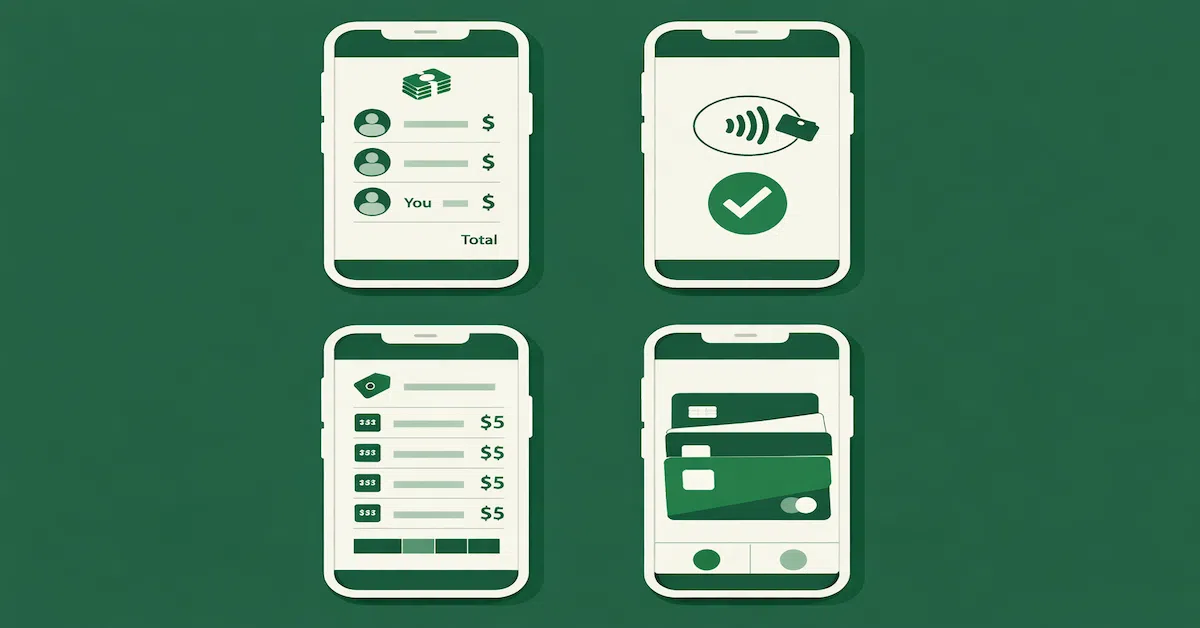
Payment apps fall into four distinct categories, each with different mechanics, different risks, and different roles in a complete financial system. Peer-to-peer transfer apps like Venmo, Cash App, and Zelle move money between people instantly but have meaningfully different fraud protection and reversal policies. Mobile wallets like Apple Pay and Google Pay store your cards digitally and use tokenization to make tap-to-pay more secure than swiping. Buy Now Pay Later tools like Affirm, Klarna, and Afterpay split purchases into installments that can be used strategically or accumulate into invisible debt. Embedded finance platforms like Uber Pay, DoorDash earnings, and gig economy payout tools are banking services embedded inside non-financial apps.
This cluster covers every category: what each tool actually does, where the risks are, how to use each platform safely, and how digital payments connect to the larger financial system they live inside.
The Most Important Rule for Every Payment App
Payment app balances are not bank balances. Money sitting in a Venmo balance, Cash App balance, or PayPal balance is not automatically FDIC-insured the way money in a bank account is. Some platforms have introduced optional FDIC pass-through programs under specific conditions, but the default for most users is that these balances carry meaningful risk that a bank account balance does not. Beyond the insurance gap, payment app balances earn zero interest. Every dollar sitting in a Venmo balance that could be in a 4%+ high-yield savings account is a dollar losing purchasing power every day it sits there.
The rule is simple and non-negotiable: use payment apps to move money, never to hold money. Receive a payment through any P2P app and transfer it to your FDIC-insured bank account the same day. The payment app is a pipe, not a vault. Treating it as a vault is one of the most common and most invisible financial risks in everyday digital banking.
Venmo vs Cash App vs Zelle: They Are Not Interchangeable
The three dominant peer-to-peer payment apps work differently in ways that matter for safety, fraud protection, and which transaction type each one is appropriate for. Using the wrong app for the wrong transaction can mean losing money with no recourse.
| Feature | Venmo | Cash App | Zelle |
|---|---|---|---|
| Transfer Speed | 1–3 days free / instant with fee | 1–3 days free / instant with fee | Instant — minutes |
| Reversible? | Limited dispute options | Generally no | No — treat like cash |
| FDIC Insurance | Optional opt-in only | Cash App Banking only | Funds remain at your bank |
| Best Use | Social splits, trusted friends | Gig work payouts, informal transfers | Trusted contacts, rent, recurring bills |
| Fraud Risk | Medium | Higher — most common scam target | Low — bank-to-bank, no app balance |
Zelle is the safest for sending money to people you trust because it transfers directly between bank accounts with no app balance involved — the money never sits in a payment app. Venmo is appropriate for social splits among people you know. Cash App carries the highest fraud risk and is the most common target of scams in the P2P category. Never use any of these apps to send money to strangers for purchases — use a credit card with buyer protection instead.
Mobile Wallets and Tap-to-Pay: Safer Than Your Physical Card
Apple Pay, Google Pay, and Samsung Pay store digital versions of your payment cards in your phone and use NFC technology to process tap-to-pay transactions at checkout. The security advantage over physical cards is structural, not marketing. Mobile wallets use tokenization: instead of transmitting your actual card number when you tap to pay, the system generates a unique one-time token for each transaction. The merchant’s payment system receives the token, not your real card number. Even if that merchant’s system is breached, there is no real card number to steal.
Physical card swipes, and even chip transactions to a lesser extent, transmit more persistent card data that can be captured and reused by sophisticated fraud operations. For in-store purchases, tap-to-pay mobile wallets are the most secure checkout method available to everyday consumers — more secure than the physical card the digital wallet is representing. The detailed breakdown of how each mobile wallet platform works, how they compare on device compatibility and rewards integration, and which one fits which setup is covered in the guide to digital wallets and tap-to-pay.
Buy Now Pay Later: Strategic Tool or Invisible Debt?
Buy Now Pay Later services split purchases into equal installments — typically four payments over six weeks at zero interest, or longer plans at 0% for promotional periods of six to twenty-four months. Used correctly for a single planned purchase, BNPL is a zero-cost way to spread a large expense without touching a credit card. Used carelessly, it becomes a set of auto-debits that hit your bank account at dates you have forgotten about for purchases you have already stopped thinking about.
The accumulation problem is the specific risk worth understanding. One $200 BNPL plan is entirely manageable. Four $200 BNPL plans running simultaneously creates $800 in monthly auto-debits that are not reflected in your bank balance until they actually debit — and will not appear in your budgeting app unless you have manually entered them. This is exactly how people end up cash-flow negative in a month where they do not feel like they spent unusually. BNPL debt is invisible by design: it does not show on most credit reports, it does not appear in standard account aggregation, and each individual payment feels small even when the aggregate commitment is significant.
Embedded Finance and Real-Time Payments: Banking Built Into Everything
Embedded finance refers to banking and payment services built directly into non-financial platforms — the Uber driver who receives instant earnings payout into a dedicated Uber account, the DoorDash courier who accesses earned wages before the standard payout date, the Shopify merchant who holds inventory financing within the same platform they use to manage their store. These are banking products operating inside platforms whose primary function is something else entirely.
For gig workers, freelancers, and small business operators, embedded finance tools increasingly determine how and when income arrives. Understanding how these platforms work, what fees apply to instant payout features, and how embedded account balances interact with FDIC insurance is practically relevant to anyone whose income flows through a gig or platform economy. The full picture of how apps like Uber and Shopify have become de facto banking platforms for the people who use them is covered in the guide to embedded finance and how apps are becoming banks.
Real-time payment infrastructure — including the Federal Reserve’s FedNow service and The Clearing House’s RTP network — underpins the instant transfer capabilities that payment apps increasingly depend on. Understanding how this infrastructure works helps explain why some transfers are genuinely instant while others advertise instant delivery but route through slower rails with a fee premium. The guide to open banking and real-time payments covers the infrastructure layer in full.
Payment apps move money fast and silently. Know what each one does.
The complete framework for how payment apps connect to neobanks, budgeting tools, and the full FinTech system lives in the FinTech & Modern Money Tools guide.
Explore FinTech & Modern Money Tools →Resources
Official Sources
CFPB — Money Transfers — Consumer Financial Protection Bureau guidance on your rights when using payment apps, money transfer services, and digital wallets — including dispute rights and fraud protections.
FDIC — Mobile Banking and Payment App Safety — FDIC consumer guidance on the safety of mobile payment platforms, when app balances are and are not FDIC-insured, and how to verify coverage.
FTC — Consumer Alerts on Payment App Scams — Federal Trade Commission alerts and guidance on payment app fraud, P2P scam patterns, and how to protect yourself when using Venmo, Cash App, and Zelle.
The Bigger Picture
Payment apps are one layer of a complete modern financial system. The full framework for how they connect to neobanks, budgeting tools, open banking, and financial automation lives in the FinTech & Modern Money Tools guide.
Continue Learning: Payment Apps & Digital Wallets
Every article in this cluster covers a specific piece of the payment app ecosystem — from tap-to-pay security to BNPL risk to real-time payment infrastructure.
Tap, Pay, Repeat: How Digital Wallets Became the New Normal
How Apple Pay, Google Pay, and tap-to-pay mobile wallets replaced physical cards — covering tokenization security, NFC technology, and why tapping your phone at the register is more secure than using the card it represents.
From Paychecks to Pay Apps: How FinTech Payroll Tools Are Changing When You Get Paid
On-demand pay, earned wage access, and digital payroll platforms — how FinTech is giving workers earlier access to income they have already earned and what the shift from bi-weekly to daily pay means for cash flow management.
Micropayments Explained: Real-World Examples and How Tiny Transactions Are Reshaping Spending
How small-dollar transactions — creator tips, content subscriptions, in-app purchases, and platform gifts — have become viable at scale, and why micropayment spending is the easiest category to undercount in a budget.
Open Banking and Real-Time Payments: The Infrastructure Behind Instant Transfers
How FedNow, RTP, and open banking rails power the instant transfer capabilities in payment apps — and why some "instant" transfers are genuinely instant while others charge a fee to route around slower underlying infrastructure.
Will Digital Payments Replace Credit Cards?
Whether digital wallets and payment apps are on track to replace physical credit cards — and what a transition away from physical cards means for rewards programs, buyer protections, and how credit history gets built going forward.
Embedded Finance: How Apps Like Uber and Shopify Are Becoming Your Bank
How non-financial platforms — gig economy apps, e-commerce tools, creator platforms — are embedding banking features directly into their products, and what that means for workers, sellers, and everyday users who receive income through these platforms.
Best Crypto Wallets for Secure Storage
How to evaluate cryptocurrency wallets based on security architecture rather than marketing claims — covering custody models, private key management, hardware versus software wallets, and the specific storage approach each cryptocurrency holding size requires.
Cryptocurrency Apps: How to Evaluate Platform Safety
Framework for evaluating cryptocurrency platform security beyond promotional claims — covering custody verification, regulatory compliance, insurance coverage, security incident history, and the specific red flags that indicate elevated platform risk.
Frequently Asked Questions
Is it safe to keep money in Venmo or Cash App?
No — not as a storage strategy. Balances in payment apps are not automatically FDIC-insured and earn zero interest. The safe practice is to transfer any received payment to your FDIC-insured bank account the same day. Venmo has introduced an optional FDIC pass-through program for eligible users, but it requires an explicit opt-in and is not the default. Treat payment app balances as in-transit money, not held money.
What is the safest way to send money to someone I do not know well?
For purchases from people you do not personally know — marketplace sellers, Craigslist transactions, online classifieds — use a credit card or PayPal Goods & Services, which provide buyer protection and dispute resolution. Never use Zelle, Cash App, or Venmo for purchases from strangers. These apps are designed for transfers between trusted contacts and offer little to no recourse when transactions turn out to be fraudulent.
Does BNPL affect my credit score?
It depends on the provider and plan type. Most short-term BNPL plans (Pay in 4) do not report to credit bureaus — but missed payments can be sent to collections, which do report and cause significant score damage. Longer-term financing plans through Affirm and similar providers (6–24 months) may report as installment loans. The gap in reporting creates a false sense of safety: BNPL debt is not invisible to lenders who increasingly ask about it during mortgage and auto loan underwriting.
Is Apple Pay safer than using my physical card?
Yes — materially safer at point of sale. Apple Pay and Google Pay use tokenization, generating a unique one-time token for each transaction rather than transmitting your actual card number. Even if a merchant’s system is breached, your real card number was never transmitted and cannot be stolen from that breach. Physical card swipes transmit more persistent card data. For in-store purchases, tap-to-pay mobile wallets are the most secure checkout method available to consumers.
How do I track BNPL payments in my budget?
Manually. Most budgeting apps do not automatically pull in BNPL commitments because BNPL plans typically do not appear in standard bank transaction feeds until each payment actually debits. The correct practice: when you create a BNPL plan, immediately enter every scheduled auto-debit as a future expense in your budgeting app. This ensures your cash flow projection reflects the real obligation. Monarch Money allows manual future transaction entry for exactly this purpose.
Disclaimer & Affiliate Disclosure: This content is for informational and educational purposes only and does not constitute financial advice. Payment app features, FDIC insurance terms, BNPL policies, and fee structures change — verify current terms directly with each provider before use. This page contains affiliate links to Monarch Money; PersonalOne may receive compensation for qualifying referrals at no cost to you. BNPL products carry financial risk — assess your cash flow before committing to any installment payment plan.