May, 2026
Home › Banking Systems › Online Banks vs Traditional Banks › Online Banks vs Credit Unions: Which Is Better?
Part of Online Banks vs Traditional Banks — a guide to choosing the right banking institution for each role in your financial system.
What You Need to Know
— Online banks win on savings rates — top HYSAs pay 4.00–5.00% APY versus 3.01% at the best credit unions and far less at most.
— Credit unions win on loans — average auto loan rates run 1–2% lower than banks, and personal loan terms are typically more flexible.
— Both are federally insured — FDIC for banks, NCUA for credit unions, both covering up to $250,000 per depositor.
— The technology gap is closing — credit unions are investing heavily in digital tools, but the best online banks still lead on app quality and transfer speed.
— Most people benefit from both — an online bank for savings rates, a credit union for lending relationships.
The question of online banks versus credit unions is usually framed as a competition. It should not be. They serve different financial functions, and the people who get the most from each institution tend to be using them for the right jobs. Online banks are rate machines — built around lean infrastructure that passes lower costs directly to depositors as higher savings rates and zero-fee accounts. Credit unions are relationship institutions — member-owned nonprofits whose profits flow back to members as lower loan rates, reduced fees, and personalized service rather than to shareholders.
The sharper question is not which is better in the abstract. It is which one fits each role in your financial system. Where you keep your savings is a different decision from where you borrow money, and the institution that wins on savings rates does not necessarily win on personal loans or auto financing. Understanding how online banks compare to traditional banking institutions across fee structures, rates, and service models gives you the foundation for making that call correctly.
This guide breaks down the real differences between online banks and credit unions across every category that matters — savings rates, loan rates, fees, technology, access, and membership — and then explains which institution belongs in which role for most people building a functional money system. For the full architecture of how these institutions fit into a structured banking setup, the banking systems account structure guide covers the complete framework.
What Credit Unions Actually Are (And How They Differ Structurally)
Most people know credit unions are "like banks but different." The structural difference matters more than most people realize when choosing where to put their money.
A credit union is a member-owned, not-for-profit financial cooperative. When you open an account at a credit union, you become a partial owner. The institution has no external shareholders to pay dividends to — instead, profits are returned to members through better rates on deposits, lower rates on loans, and reduced fees. The National Credit Union Administration (NCUA) regulates federal credit unions and provides deposit insurance equivalent to FDIC coverage: up to $250,000 per depositor per institution.
Credit unions require membership, which historically meant belonging to a specific employer, union, or community group. In practice, membership requirements have relaxed significantly. Many credit unions now offer membership to anyone who lives or works in a particular geographic area, belongs to a qualifying organization, or pays a small one-time fee to join an affiliated nonprofit. The restriction that once made credit unions inconvenient is rarely the barrier it used to be.
Online banks, by contrast, are for-profit institutions operating without physical branches. Their cost advantage — no branch networks, no tellers, no building maintenance — gets passed to customers as higher savings rates, zero-fee accounts, and competitive ATM reimbursements. They are regulated by federal banking authorities and carry FDIC insurance identical to traditional banks. The tradeoff is no in-person service and, for some institutions, limited cash deposit capability.
Savings Rates: Online Banks Win by a Clear Margin
| Institution Type | Typical Savings APY (May 2026) | Annual Earnings on $10,000 |
|---|---|---|
| Traditional bank (national average) | 0.38% APY | $38 |
| Most credit unions | 0.50–1.50% APY | $50–$150 |
| Best credit unions (e.g. Alliant) | 3.01% APY | $301 |
| Top online banks (HYSAs) | 4.00–5.00% APY | $400–$500 |
The gap is significant. Even the best credit union savings rates currently fall 1–2 percentage points below the top online HYSA rates. On a $25,000 emergency fund, that gap represents $250–$500 in interest per year. Credit unions beat traditional banks on savings rates — but online banks beat credit unions.
The reason comes down to infrastructure. Credit unions operate branch networks, employ tellers, and maintain physical locations — costs that reduce the margin available to return as higher savings rates. Online banks carry none of that overhead. Their rate advantage is structural, not temporary.
If maximizing what your savings earns is the goal, online banks win this category. For a side-by-side breakdown of which specific accounts are paying the most right now and which conditions apply to earn those rates, the best savings accounts for 2026 guide covers the top picks with current rates and conditions verified.
Loan Rates: Credit Unions Win for Most Borrowers
| Loan Type | Average Credit Union Rate | Average Bank Rate |
|---|---|---|
| New auto loan (60 months) | ~6.50% | ~7.50% |
| Personal loan (36 months) | ~10–12% | ~12–15% |
| Credit card APR | ~17–18% | ~20–24% |
Credit union loan rates consistently run below bank rates across every major category. The NCUA reports that the average overdraft fee at credit unions is $26.61 versus $31.24 at banks — a smaller gap on its own, but it reflects the broader pattern of credit unions passing savings to members rather than extracting fees.
The not-for-profit structure creates a genuine advantage on the lending side. Credit unions do not answer to external shareholders who expect profit maximization. The margin that would otherwise go to investors flows instead to member loan rates. On a $30,000 auto loan, a 1% rate difference saves roughly $300 per year or $1,500 over a five-year term — real money with no additional effort required beyond choosing the right institution.
Credit unions are also more likely to work with members who have imperfect credit histories. The relationship model means a loan officer is more likely to consider your full financial picture rather than running a purely algorithmic approval. For someone rebuilding credit or navigating a non-standard income situation, this flexibility is often the deciding factor.
Fees: Both Beat Traditional Banks, But Differently
Monthly maintenance fees, overdraft charges, and minimum balance requirements are where both online banks and credit unions outperform traditional banks — but they get there through different models.
Online Banks — Fee Structure
Zero monthly maintenance fees at most institutions
No minimum balance requirements
Overdraft fees eliminated at Ally, Discover, SoFi, Axos, Capital One 360
ATM reimbursements of $10–unlimited per month depending on institution
No foreign transaction fees at select institutions (Schwab, Discover)
Credit Unions — Fee Structure
Low or no monthly fees at most institutions
Overdraft fees average $26.61 — lower than banks but not eliminated
Access to 30,000–90,000 ATMs via CO-OP Shared Branch network
Cash deposits accepted at branches (major advantage over most online banks)
Shared branching allows in-person service at 6,000+ locations nationwide
For fee elimination across every major category, online banks currently have the structural edge — particularly on overdraft fees, which many have eliminated entirely. If you regularly need to deposit cash or want in-person banking, credit unions have a distinct advantage. If you want the comprehensive fee elimination picture, the how to avoid bank fees guide covers every fee category and the fix that permanently eliminates each one.
Technology and Digital Experience: Online Banks Lead, Credit Unions Are Closing the Gap
The technology gap between online banks and credit unions was significant five years ago. It is narrowing fast. The 2026 Q2 Retail Banking Trends report found that digital transformation is the top priority for 56% of credit unions — a sharper focus than the broader banking industry at 46%. Credit unions recognize the gap and are investing heavily to close it.
That said, the best online banks still lead on digital experience. Features like real-time spending alerts, instant push notifications, same-day ACH in some cases, automated savings tools, and polished mobile interfaces have been refined over years of digital-first operation. Online banks built their entire product around the app — credit unions added digital tools to existing branch-based infrastructure, which creates a different product feel even when the feature list is similar.
Where the Technology Gap Still Matters
ACH transfer speed: Top online banks process transfers in 1–2 business days; credit unions typically 2–3 business days.
Early direct deposit: SoFi, Ally, and others offer paychecks up to 2 days early; most credit unions do not.
Automated savings tools: Roundups, recurring transfers, savings buckets — these are standard at online banks, variable at credit unions.
Zelle integration: Most online banks support Zelle; many credit unions do not, though the CO-OP network provides some equivalent functionality.
App ratings: The best online bank apps consistently outperform most credit union apps in App Store and Google Play reviews, though standout credit unions like Alliant are rated highly.
The technology comparison matters most for people who manage their money entirely through digital tools. For people who occasionally need in-person service, the credit union's shared branch network provides genuine access that online banks simply cannot match.
Access and Membership: What Actually Limits You
Credit union membership was the traditional objection — you had to qualify, and qualifying was inconvenient. In 2026, that objection applies to far fewer people than it once did.
Many of the largest and best credit unions now offer membership to virtually anyone willing to join an affiliated organization. Alliant Credit Union — consistently one of the top-rated credit unions nationally — allows anyone to join by becoming a member of a qualifying nonprofit with a one-time $5 donation. PenFed Credit Union is open to all U.S. residents. Navy Federal, the largest U.S. credit union by assets, requires military affiliation, but that covers a significant portion of the population including veterans and immediate family members.
The more meaningful access question is geographic. Online banks are fully accessible nationwide regardless of where you live. Credit unions — even large ones with national reach — may have branch footprints concentrated in specific regions. For members who only ever interact digitally, this does not matter. For members who occasionally need in-person service, a regionally concentrated credit union may be less useful outside its home area, though the CO-OP Shared Branch network gives most federal credit union members access to services at approximately 6,000 participating locations nationwide.
ATM access through the CO-OP network — more than 30,000 fee-free machines — is genuinely competitive with most online bank networks. The practical access difference for daily banking is smaller than most people assume before they look at the numbers.
Head-to-Head: Every Category That Actually Matters
| Category | Online Banks | Credit Unions | Edge |
|---|---|---|---|
| Savings rates | 4.00–5.00% APY | 0.50–3.01% APY | Online banks |
| Loan rates | Competitive, market-rate | 1–2% below banks typically | Credit unions |
| Monthly fees | $0 at most institutions | Low or $0 at most | Tie |
| Overdraft fees | Eliminated at top institutions | $26.61 avg (lower than banks) | Online banks |
| Technology and app quality | Best-in-class digital experience | Improving rapidly; variable by institution | Online banks |
| In-person access | None (or very limited) | 6,000+ shared branches nationally | Credit unions |
| Cash deposits | Limited (Walmart, Green Dot at most) | Branch deposits accepted | Credit unions |
| Deposit insurance | FDIC up to $250,000 | NCUA up to $250,000 | Tie |
| Membership requirements | None — open to anyone | Required; usually easy to qualify | Online banks |
| Credit flexibility | Algorithm-driven approvals | Relationship-based, more flexible | Credit unions |
The Hybrid Approach: Why Most People Should Use Both
The framing of online banks versus credit unions implies you have to pick one. You do not. The people who extract the most value from each institution use them for different jobs — which is exactly how a structured banking system is supposed to work.
A Common Two-Institution Setup
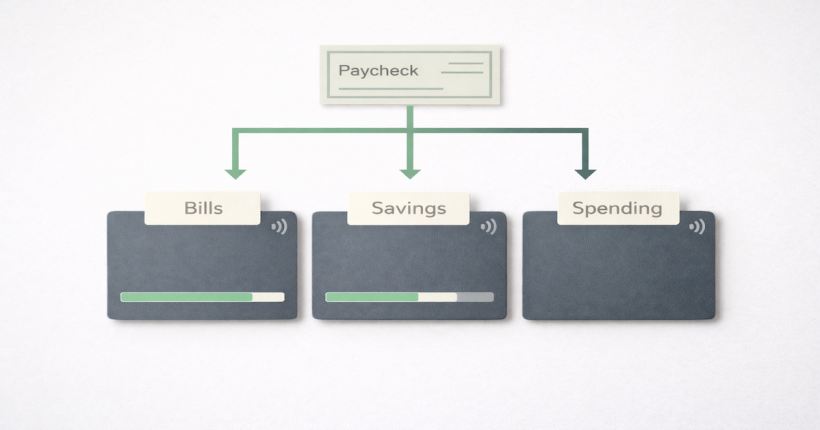
Online bank for deposits and savings: High-yield savings account at 4–5% APY, zero-fee checking for daily spending, automated transfers that move money on payday before it can be spent. This is where your savings grows fastest and where daily transactions happen without fees.
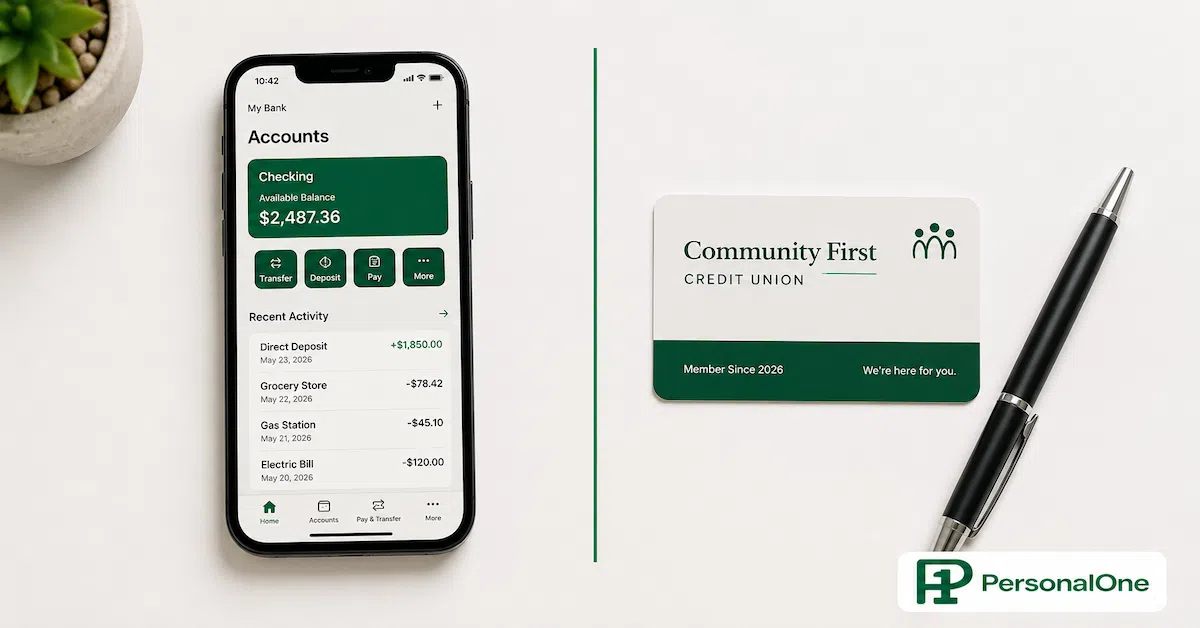
Credit union for lending: Auto loans, personal loans, and credit cards at rates 1–2% below what banks offer. Credit unions also provide in-person service when it is needed — for more complex transactions, notary services, or cash deposits.
The logic: You earn more on your savings by putting them in the institution optimized for deposits. You pay less on your borrowing by going to the institution optimized for lending. You do not have to compromise on either.
This two-institution approach does require managing accounts at separate places — which is where a tracking tool matters. A tool like Monarch Money connects to both your online bank and your credit union accounts and shows everything in one view: balances, cash flow, spending by category, and savings progress across all institutions. For people running a multi-institution setup, the visibility it provides makes the system easy to monitor without logging into multiple apps separately.
The alternative — keeping everything at a single institution for simplicity — typically means accepting worse rates on savings, worse rates on loans, or both. Specialization wins when the cost of managing two institutions is low, and with modern tools it is very low.
Which Institution Fits Which Role in Your System?
Online banks and credit unions each have a job to do. Matching each one to the right role in your financial setup — deposits here, borrowing there — is what the PersonalOne Online Banks vs Traditional Banks cluster covers in full. For the complete account structure framework, see the banking systems account structure guide.
Which One to Choose If You Can Only Pick One
If you are starting from scratch and need to pick one institution to anchor your banking, the decision comes down to what you are optimizing for right now.
Choose an Online Bank If:
— Building an emergency fund or savings toward a specific goal is the immediate priority
— You want zero fees with no conditions to meet
— You manage your finances primarily through a mobile app and prefer a polished digital experience
— You do not regularly deposit cash or need in-person service
— You are switching from a traditional bank that has been charging monthly fees
Choose a Credit Union If:
— You are financing a car, taking out a personal loan, or carrying credit card debt — the rate savings on loans are substantial
— You have imperfect credit and need a lender who evaluates more than just your score
— You regularly deposit cash or need access to in-person banking
— You want a long-term banking relationship with a community-focused institution
— Shared branching in your area gives you access to the in-person services you need
For most people who are in the savings-building phase of their financial life, an online bank is the right starting point. Once savings are established and borrowing needs emerge — a car, a home, debt consolidation — adding a credit union for lending is the natural next layer. If you want to switch from a traditional bank entirely before deciding between online banks and credit unions, the how to switch from a traditional bank to an online bank guide walks through the complete transition process without missing a single payment or autopay.
Official Sources
NCUA — How Credit Union Deposit Insurance Works
FDIC — Understanding Deposit Insurance for Banks
More From This Cluster
Return to Online Banks vs Traditional Banks for the full comparison — which institution belongs in which role, the hybrid setup most people need, and every article in this cluster.
Frequently Asked Questions
Is my money safe at a credit union?
Yes. The National Credit Union Administration (NCUA) insures deposits at federal credit unions and most state-chartered credit unions up to $250,000 per depositor per institution — the same coverage limit as FDIC insurance at banks. Credit unions have not had a systemic failure crisis; the NCUA has maintained deposit protection for members consistently. Verify any credit union's insurance status at NCUA.gov before opening an account.
Can I join any credit union, or do I have to qualify?
Most people can qualify for at least one credit union with minimal effort. Alliant Credit Union allows anyone to join by making a $5 donation to a qualifying charity. PenFed is open to all U.S. residents. Many regional credit unions accept anyone who lives, works, or worships in a specific geographic area. The era of strict employer-based membership is largely over for the largest credit unions with the best rates and services.
Do credit unions have good mobile apps?
It varies significantly by institution. The best credit unions — Alliant, PenFed, Navy Federal — have apps rated comparably to mid-tier online banks. Smaller regional credit unions often have less polished digital products. If technology is important to you, check the App Store rating for the specific credit union before committing. The CO-OP network provides some shared functionality, but individual app quality is institution-specific.
Why are credit union loan rates lower than banks?
Credit unions are not-for-profit cooperatives. They do not have external shareholders expecting profit distributions. The margin that a bank would pass to investors instead gets returned to members as lower loan rates and higher deposit rates. The structural difference is real and consistent — it is not a promotional rate that expires.
Can I use a credit union and an online bank at the same time?
Yes, and this is the setup most people benefit from most. Use the online bank for checking and high-yield savings — where their zero-fee structure and superior rates create the most value. Use the credit union for borrowing — where their not-for-profit model produces lower loan rates. Running both simultaneously requires managing two relationships, but modern financial tracking tools make the oversight straightforward.
What is the CO-OP Shared Branch network?
The CO-OP Shared Branch network allows members of participating credit unions to conduct transactions at any of approximately 6,000 shared branches nationwide, even if they are not a member of that specific credit union. This means a member of a credit union in Chicago can walk into a participating credit union in Miami and conduct in-person banking. For people concerned about in-person access when using a smaller or regional credit union, the shared branch network dramatically expands practical access. Check whether your credit union participates at co-opfs.org.
This content is for educational purposes only and does not constitute financial advice. PersonalOne is not a licensed financial advisor, broker, or investment professional. Individual financial situations vary — consult a qualified financial professional for personalized guidance. Rates, fees, and account terms are subject to change. Always verify current rates, FDIC insurance status, and NCUA insurance status directly with financial institutions before opening accounts. Some links on this page may be affiliate links — we may earn a commission if you open an account through them, at no additional cost to you.