Updated: June 1, 2026
Home › Credit Building & Protection › Credit Score Building Strategies
What You Need to Know
— Your credit score is built from five factors — payment history and utilization together make up 65% of your score.
— FICO scores drive over 90% of lending decisions. The free score you see on Credit Karma is VantageScore — useful for trends, not for decisions that matter.
— Building from no credit history to 700+ typically takes 12–24 months with consistent, strategic use of one or two accounts.
— Secured cards and credit builder loans are the right starting tools. Authorized user strategy is the fastest accelerator.
— The fastest legitimate score increases come from lowering utilization before statement close and ensuring nothing is reporting late.
Credit scores feel mysterious until you understand the mechanics behind them. Once you see exactly what goes into the calculation — and more importantly, what you can control — building a strong score becomes a systematic process rather than a waiting game.
This cluster hub covers the full credit score building framework: how scores are calculated, which tools actually work for building from scratch, how long the process realistically takes, and which strategies move the needle fastest at different starting points.
If you already have a score and want to optimize it, the Credit Building and Protection hub maps out the full system — utilization strategy, monitoring, authorized user tactics, and optimization for major loan approvals.
How Credit Scores Are Actually Calculated
FICO — the dominant scoring model used by over 90% of lenders — calculates your score from five weighted factors. Understanding each one tells you exactly where to focus your energy.
The Five FICO Factors
Payment History — 35%: Whether you pay on time, every time. A single 30-day late payment can drop a good score by 60–110 points. This is the single most important factor and the most damaging to get wrong.
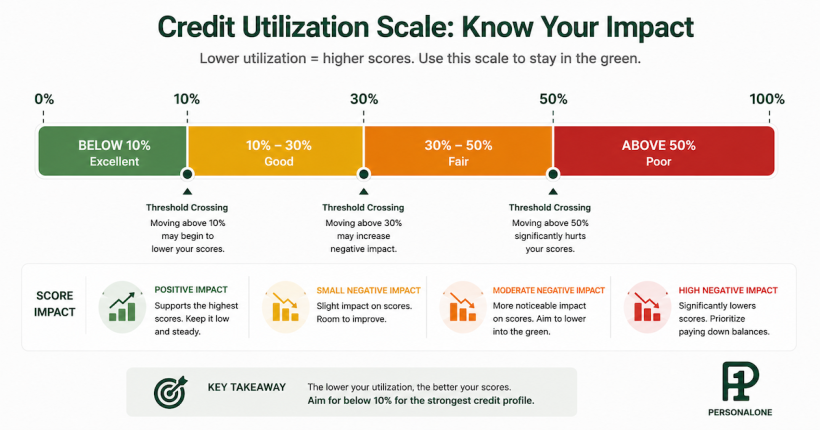
Credit Utilization — 30%: How much of your available revolving credit you are using. A $500 balance on a $1,000 limit card is 50% utilization — too high. Under 10% is the target for maximum score benefit.
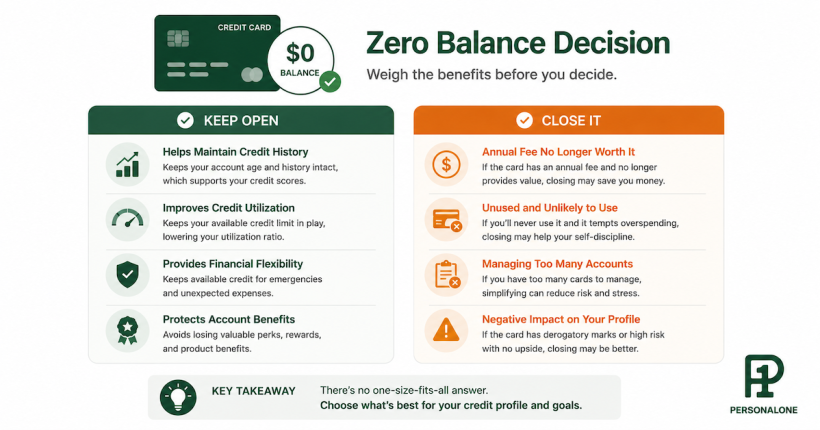
Length of Credit History — 15%: The age of your oldest account, newest account, and average age across all accounts. This is why you should never close your oldest credit card.
Credit Mix — 10%: Having both revolving credit (cards) and installment loans (auto, student, personal) demonstrates you can manage different debt types. You do not need to take on debt just for mix — but it matters when you have it.
New Credit — 10%: Recent hard inquiries and newly opened accounts. Each hard inquiry causes a small, temporary score dip. Multiple inquiries for the same loan type within a 14–45 day window are typically counted as one.
The practical implication: 65% of your score is controlled by just two behaviors — paying on time and keeping balances low. If you are just starting out, those two behaviors are where all your attention should go.
FICO vs. VantageScore: Which Score Actually Matters
Most free credit score apps — including Credit Karma and many bank portals — show VantageScore 3.0. FICO and VantageScore use the same underlying credit data but different algorithms, which produces different scores from the same credit file.
According to the CFPB, FICO scores are used in the vast majority of lending decisions in the United States. When a mortgage lender, auto dealer, or credit card issuer checks your credit, they are almost certainly pulling a FICO score — not VantageScore.
The Score Gap Problem
Your VantageScore on a free app might show 720 while your FICO score is 695. That 25-point gap can move you into a different rate tier on a mortgage — costing thousands in additional interest. Always check your actual FICO score before any major credit application. Many credit cards provide free FICO scores as a cardholder benefit. Use free VantageScore tools for ongoing trend monitoring. Use your FICO score for any decision that matters.
Hard vs. Soft Inquiries: What Actually Hurts Your Score
A hard inquiry occurs when a lender checks your credit as part of an application decision — credit cards, auto loans, mortgages, personal loans. Each hard inquiry causes a small, temporary score decrease, typically 2–5 points, that fades within 12 months and disappears from your report after two years.
A soft inquiry occurs when you check your own credit, when lenders pre-screen you for offers, or when employers run background checks. Soft inquiries are completely invisible to scoring models — they have zero impact on your score regardless of how often they occur.
The practical rule: do not apply for credit you do not need. When actively shopping for a mortgage or auto loan, complete all applications within a 14–45 day window — most scoring models treat multiple inquiries for the same loan type within that window as a single inquiry.
How Long It Actually Takes to Build a 700+ Score
Starting from no credit history, reaching a 700+ FICO score typically takes 12–24 months of consistent, strategic account management. The timeline depends on which tools you start with, how many on-time payments you accumulate, and whether you keep utilization low throughout.
Realistic Credit Building Timeline
Months 1–3: Open a secured card or credit builder loan. Use the card for one small recurring charge. Pay the full balance before the statement closes. Score may not appear yet — most models require at least one account reporting for 6 months before generating a score.
Months 3–6: Score generates in the 580–630 range for most people starting from zero with clean payment history. Continue paying on time, keeping utilization under 10%.
Months 6–12: Score typically moves into the 630–680 range with consistent on-time payments and low utilization. Consider adding a second account to improve credit mix once the first is well-established.
Months 12–24: Score reaches 700+ for most people who have maintained clean payment history, kept utilization low, and avoided unnecessary hard inquiries. Account age is beginning to work in your favor.
These timelines assume no negative marks. A single late payment resets progress significantly. The system rewards consistency above all else — there are no shortcuts that do not carry risk.
The Right Tools for Building Credit From Zero
Not all credit accounts are equally useful for building a score. The right starting tools report to all three major bureaus, carry manageable terms, and do not expose you to high-interest debt during the building phase.
Credit Building Tools Ranked by Effectiveness
Secured credit cards (best starting tool): You deposit cash as collateral — typically $200–$500 — which becomes your credit limit. The card reports to all three bureaus like a regular credit card. After 12–18 months of on-time payments, most issuers upgrade you to an unsecured card and return your deposit. Look for cards with no annual fee or a fee under $35.
Credit builder loans: Offered by credit unions and some online lenders. You make monthly payments into a locked savings account — when the loan term ends, you receive the funds. The payment history is reported to the bureaus. Effective for adding an installment account to your mix without taking on consumer debt.
Authorized user status: Being added to someone else's established credit card account can add their positive account history to your report. Most effective when the primary cardholder has a long history, low utilization, and a clean payment record.
Store cards and high-APR starter cards (avoid): Retail store cards are easy to get but carry APRs of 25–30% and limited reporting value. The debt risk outweighs the credit building benefit for most new builders.
Build Your Credit Score With a System That Works
Credit score building is one piece of the larger credit authority framework. The Credit Building and Protection hub maps out all six clusters — from score fundamentals to monitoring, utilization strategy, authorized user tactics, and optimization for mortgage and loan approvals.
Explore the Credit Building & Protection HubGo Deeper: Credit Score Building Strategies
This cluster hub covers the framework. For specific situations, starting points, and step-by-step execution, use these supporting guides:
How Long Does It Take to Build a 700 Credit Score?
Realistic timelines by starting point — from no credit history to the 600s — and the specific accelerators that compress each one.
Does Checking Your Credit Score Lower It?
Hard vs. soft inquiries explained clearly — why the myth persists, what actually hurts your score, and how to monitor confidently.
What Actually Moves Your Credit Score
All five FICO factors with weighted priorities, what common behaviors have zero impact, and what's changed in 2026.
How to Fix Your Credit in 90 Days
The three-action framework — dispute resolution, utilization reduction, and payment protection — and what each one realistically produces in 90 days.
How to Build Credit Fast Without a Credit Card
Credit builder loans, authorized user status, rent reporting, and the tools that build a scoreable file without a revolving account.
Building Good Credit Wisely
The behavioral framework for building a score that stays strong — the habits, timing, and structural decisions that produce lasting credit health.
How Your Credit Score Works: The Complete Guide
The full mechanical breakdown of FICO scoring — how each factor is calculated, how models differ, and what the numbers on your report actually mean.
The Power of Credit and Why You Should Fix Yours
The real dollar cost of a weak score across mortgages, auto loans, and insurance — and exactly where to start if your score is lower than it should be.
How to Increase Your Credit Score Quickly — Coming Soon
Utilization timing, dispute resolution, and the authorized user accelerator — the fastest legitimate levers at each starting point.
Frequently Asked Questions
What credit score do I start with if I have no credit history?
You do not start with a zero. You start with no score at all — what the industry calls being credit invisible. FICO requires at least one account that has been open for six months and reported to the bureau within the last six months before it generates a score. VantageScore can generate a score with as little as one month of history. Your first score, once generated, typically falls in the 580–630 range if you have had no negative marks.
How many credit cards should I have when building credit?
Start with one. One secured card managed well for 12 months does more for your score than three cards managed poorly. Once your first account is established and your score is generating consistently, consider adding a second account to improve credit mix. More accounts mean more opportunities for error — keep it simple until you have the system working reliably.
Does paying off a collection account improve my score?
Under FICO 9 and VantageScore 3.0, paid collections are ignored entirely. Under older FICO models — FICO 8 and earlier, which many lenders still use — paid collections still appear and can still affect your score. The benefit of paying depends on which scoring model your lender uses. Collection accounts require a different strategy than standard credit building and are covered in the Credit Recovery and Optimization cluster.
Can I build credit without a credit card?
Yes. Credit builder loans through credit unions or online lenders report payment history without requiring you to carry a credit card balance. Becoming an authorized user on someone else's account adds history without requiring your own card. Experian Boost also lets you add utility and streaming payment history to your Experian report — though this affects only one bureau and uses a different scoring model than most lenders pull.
What is the fastest way to raise a credit score?
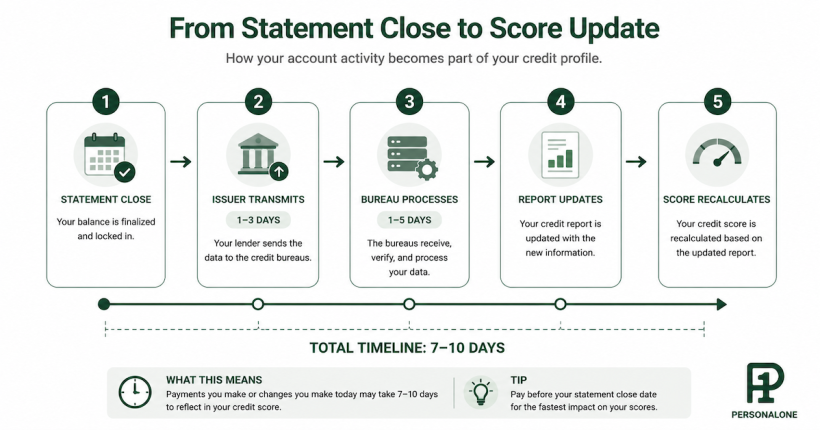
Two actions produce the fastest results for most people: paying down revolving balances to get utilization below 10%, and resolving any accounts currently reporting as past due. Utilization changes are reflected as soon as the new balance is reported to the bureaus — typically within 30 days of your statement closing. There is no faster lever than paying down a high-balance card before the statement close date.
Government Resources
CFPB — Credit Reports and Scores — Official guidance on credit rights, scoring models, and dispute processes.
AnnualCreditReport.com — The only federally authorized source for free credit reports from all three bureaus. Weekly free reports currently available.
CFPB — What Is a Credit Score? — Plain-language breakdown of scoring models and how lenders use them.
PersonalOne Money System
This content is researched, written, and owned by PersonalOne — a free financial education platform built to help Millennials and Gen Z build real financial systems.
This content is for educational purposes only and does not constitute financial or credit advice. Credit score outcomes vary based on individual credit profiles, scoring models, and financial circumstances. Always verify information with credit bureaus and financial institutions before making credit decisions.