Home › Credit Building & Protection › Credit Card Selection & Strategy
TL;DR
Most people choose a credit card based on an ad or a recommendation. Neither is a strategy. The card you select — and how you use it — directly affects your credit score, your cost of borrowing, and whether you are building financial infrastructure or just accumulating plastic. This cluster covers how credit cards actually work, how to choose the right card based on your current credit profile, when secured vs. unsecured cards make sense, how APR works in practice, and when 0% APR offers are a legitimate strategic tool rather than a trap.
A credit card is not just a payment method. It is the most accessible tool available for building a credit history — and if misused, one of the fastest ways to damage a score you spent months building.
The card selection decision matters more at the beginning of your credit journey than at any other point. The wrong first card can cost you an unnecessary hard inquiry, saddle you with fees that make the product worthless, or give you a credit limit so low that normal usage pushes you into damaging utilization territory.
The guides in this cluster explain how credit cards work mechanically, what distinguishes one product from another, and how to select and use the right card at each stage of your credit building journey. Card selection is most effective when paired with the utilization and payment strategy content — because choosing the right card and managing it correctly are two different skills that work together. See the Credit Building and Protection hub for the full framework.
Understanding How Credit Cards Work
Before selecting a card, you need to understand the mechanics. A credit card is a revolving line of credit extended by an issuer. You spend against that line, and at the end of each billing cycle you receive a statement showing what you owe. Pay the full balance by the due date and you owe nothing in interest. Carry any portion of that balance forward and interest accrues at your card's annual percentage rate — which for most cards runs between 20% and 30%.
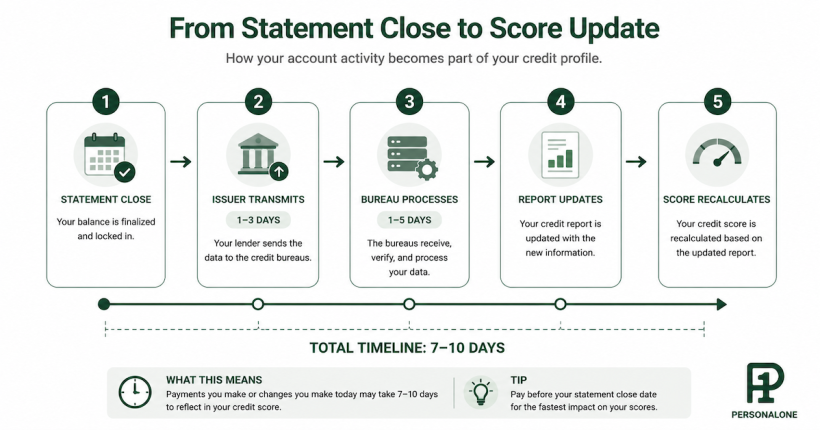
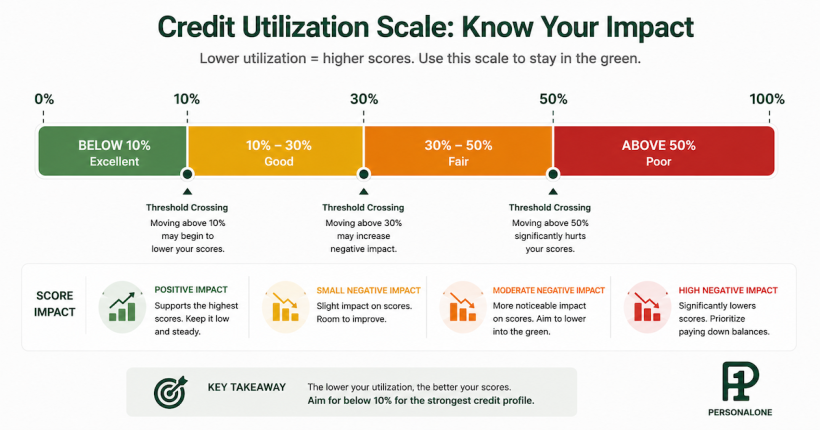
The card reports to the credit bureaus monthly. What it reports — your balance at statement close, whether your payment was on time, and your credit limit — feeds directly into the two factors that represent 65% of your FICO score: payment history and credit utilization. This is why card selection is not a cosmetic decision. The product you choose shapes the inputs that determine your credit score.
The guides in this cluster start with the fundamentals — how the credit card economy works, how cards differ from debit, and what APR actually means in practice — before moving into selection strategy and specific use cases.
How to Choose the Right Card for Your Credit Stage
Card selection is not one-size-fits-all. The right card depends on your current credit profile, whether you have any history at all, and what you are trying to accomplish in the next 12 months.
Card Selection by Credit Stage
No credit history: Secured credit card or credit builder loan. Look for cards with no annual fee, bureau reporting confirmed to all three, and a clear upgrade path to unsecured. Avoid store cards with 25–30% APR — the debt risk outweighs the credit building benefit.
Building (580–650 score): Continue with your secured card or consider a starter unsecured card with a low credit limit. Pre-qualification tools using soft inquiries let you check approval odds without triggering a score drop. Keep the total number of accounts to one or two until payment habits are consistent.
Established (650–700 score): Qualify for most unsecured cards. Focus on graduating from secured if you have not already. Begin evaluating cash back and rewards cards that serve your actual spending — but only if you are paying in full every month.
Optimizing (700+ score): Premium rewards cards, travel cards, and 0% APR balance transfer offers become available. Card selection at this stage is about matching rewards structure to spending patterns and using promotional APR offers strategically where appropriate.
Secured vs. Unsecured Cards: Which Is Right for You
The fundamental difference: a secured card requires a cash deposit as collateral, which becomes your credit limit. An unsecured card extends credit without collateral, based on your creditworthiness. Both report to the credit bureaus in the same way — a secured card with on-time payments builds your score identically to an unsecured card with on-time payments.
What to Look for in a Secured Card
Reports to all three bureaus: Non-negotiable. Some cards report to only one or two. Confirm three-bureau reporting before opening the account.
No annual fee or fee under $35: Secured cards with high annual fees eat into the deposit and reduce the net credit-building benefit. The deposit is already your capital at work — fees on top of that reduce the return.
Clear upgrade path: The best secured cards review your account after 12–18 months of on-time payments and automatically upgrade you to an unsecured product, returning your deposit. Confirm this upgrade path exists before opening.
Reasonable deposit minimum: Most secured cards require $200–$500. The deposit amount becomes your credit limit — a higher deposit gives you more available credit and reduces utilization for the same spending level.
How APR Works and Why Carrying a Balance Is Almost Never Worth It
APR — annual percentage rate — is the annualized cost of borrowing on your credit card. A 24% APR means that a balance carried for a full year accrues 24% in interest charges. In practice, interest is calculated daily and applied monthly, so the real cost depends on how much you carry and for how long.
The common myth that carrying a small balance helps your score is false. FICO does not reward interest payments. A $0 reported balance on an actively used card produces the same score benefit as a small carried balance — and costs nothing. Every dollar in interest paid on a credit card balance is a dollar not going toward debt payoff, savings, or investment.
The one legitimate exception is a 0% APR promotional period. If a card offers 0% APR on purchases or balance transfers for 12–18 months, that is a genuine window to pay down existing debt without accruing additional interest. The strategic use is well-defined: move a balance you are already carrying onto a 0% card, make consistent payments throughout the promotional period, and pay off the balance before the promotional rate expires. The trap version: use the 0% period to spend more, then face the full APR when the promotion ends with a larger balance than you started with.
Build the Full Credit Authority System
Credit card selection is one of six clusters in the credit authority framework. The Credit Building and Protection hub maps the complete system — score building from zero, monitoring and protection, utilization and payment strategy, authorized user tactics, and optimization for mortgage and loan approvals.
Deep Dive: Credit Card Selection & Strategy Guides
This cluster hub covers the framework. For specific card mechanics, selection decisions, and use case strategy, use these supporting guides:
Credit Card Economy: How Does It Work?
The business model behind credit cards — how issuers make money, why rewards programs exist, and what the card economy means for you as a consumer.
Debit Card vs. Credit Card: What's the Difference?
How debit and credit cards differ in protection, credit reporting, fraud liability, and practical use — and why relying on debit alone keeps your credit file thin.
Understanding APR and Its Impact on Your Finances
What APR actually means in dollar terms, how it is calculated on your balance, and how to evaluate APR when comparing cards at the same credit stage.
Why Your First Credit Card Matters More Than Your Credit Score
What to prioritize in a first card, what to avoid, and why the wrong first card can create problems that take years to undo.
Secured vs. Unsecured Credit Cards: What's Right for You?
When a secured card is the right starting point, what to look for in a secured card, and how to graduate to an unsecured product once your score improves.
0% APR Credit Cards: When They're a Strategy vs. a Trap
When a 0% APR promotional offer is a legitimate tool for paying down debt — and when the fine print turns it into a more expensive problem.
No-Hard-Pull Credit Cards: Check Approval Odds Without the Score Hit
Which issuers offer soft-pull prequalification, how it works, and how to use it to shop for the right card without risking a hard inquiry.
Best Credit Cards for Building Credit
A stage-by-stage comparison of secured, unsecured starter, student, and alternative credit-building products — with the key attributes that determine whether each is worth applying for.
How to Use Credit Strategically: Loans, Cards, and Smarter Borrowing
How to think about credit as a tool rather than a threat, and how card and loan decisions work together as part of one borrowing strategy.
Frequently Asked Questions
How many credit cards should I have when building credit?
One or two is sufficient when starting out. The goal is not card quantity — it is establishing consistent on-time payment history and keeping utilization low. Multiple cards can help utilization by increasing your total available credit, but only if you can manage each account correctly. Start with one, demonstrate responsible use for 6–12 months, then consider a second if your score and income support it.
Does applying for a credit card always hurt my score?
A hard inquiry from a formal application typically drops your score 5–10 points temporarily. Many issuers now offer pre-qualification tools that use soft inquiries — these show you your approval odds without affecting your score. Always use a pre-qualification tool before formally applying, especially when your score is in recovery.
Is a secured card worth it if I have to put down a deposit?
Yes, if it is the right secured card. The deposit is refundable when you close the account or graduate to an unsecured product. What you are buying with that deposit is access to a credit-building tool that reports to all three bureaus. Choose a secured card with no annual fee, a clear upgrade path to unsecured, and confirmed three-bureau reporting. Avoid secured cards with high fees that eat into the deposit's value.
Should I carry a small balance to build credit faster?
No. This is one of the most persistent myths in personal finance. Carrying a balance does not improve your score — it costs you interest. What the bureaus see is your balance at statement close relative to your limit. You can let a small charge post to your statement, pay it in full by the due date, and get the same reporting benefit with zero interest cost.
What is the difference between a credit card and a charge card?
A credit card lets you carry a balance forward with interest. A charge card requires the full balance to be paid each month and typically has no preset spending limit. Charge cards can help payment history but do not improve utilization the same way because they often do not report a credit limit to the bureaus. For most credit builders, a standard credit card with a defined limit is the better tool.
Resources
Related PersonalOne Guides
- Credit Building & Protection Hub — The complete credit authority system across all six clusters
- Credit Score Building Strategies — How scores are calculated and which tools build them fastest
- Credit Utilization & Payment Strategy — How to manage balances and payment timing for maximum score impact
- Credit Optimization for Approvals — How to prepare your credit profile for mortgage, auto, and loan applications
Official Sources
PersonalOne Money System
This content is researched, written, and owned by PersonalOne — a free financial education platform built to help Millennials and Gen Z build real financial systems.
Disclaimer: This content is for educational purposes only and does not constitute financial or credit advice. The right card for you depends on your current credit profile, income, spending habits, and financial goals. Before applying for any credit product, review the full terms and conditions including APR, fees, and credit limit policies.