August, 2026
Home › FinTech & Modern Money Tools › Neobanks & Digital Banking Platforms › Is My Money Safe in a Neobank?
What You Need to Know
-- Your money is safe in a neobank if -- and only if -- deposits are held at an FDIC-insured institution. Verifying this is a 2-minute step that must happen before you deposit
-- FDIC pass-through insurance is the mechanism that protects deposits at neobanks that use partner banks rather than holding their own charters
-- The $250,000 FDIC coverage limit applies per depositor per institution -- understanding how this works with partner banks matters if your deposits are significant
-- Payment apps like Venmo, Cash App, and PayPal are NOT the same as neobanks -- balances held in payment apps are generally not FDIC-insured
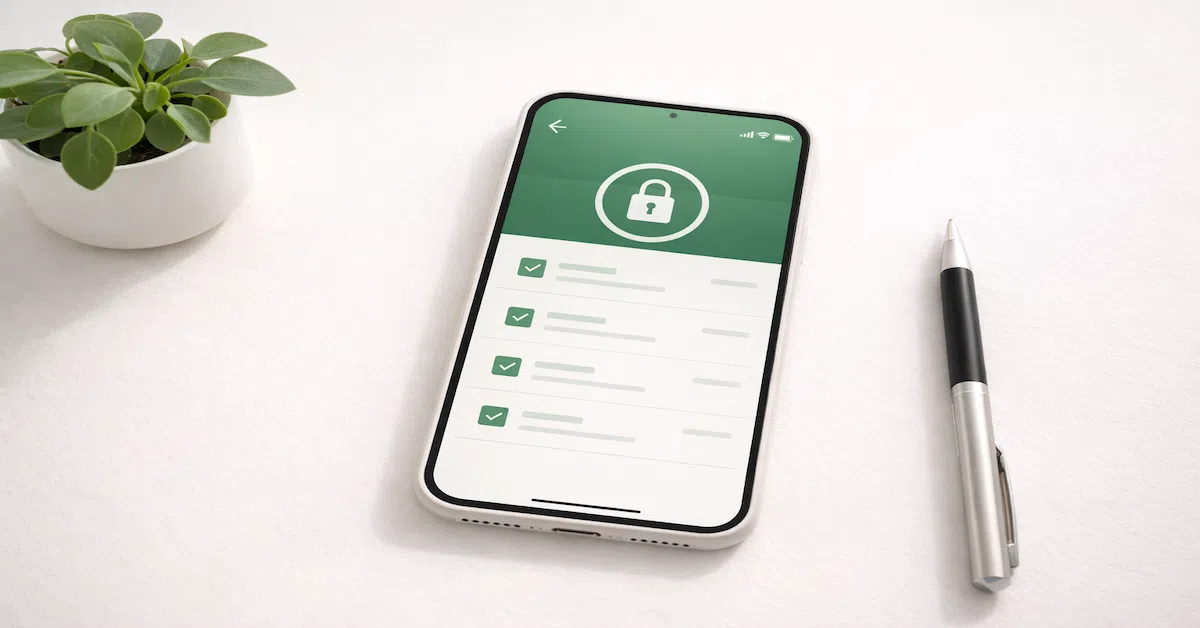
-- Three verified steps confirm safety before you deposit: find the partner bank disclosure, verify FDIC status at FDIC.gov, confirm pass-through insurance language in the account agreement
The Direct Answer: Yes, With One Condition
Is money safe in a neobank? Yes -- if the deposits are FDIC-insured. That condition is not a technicality or a footnote. It is the entire answer. Neobank deposits that are FDIC-insured receive identical federal protection to deposits at any traditional bank in the country. Neobank deposits that are not FDIC-insured receive no federal protection at all. The distinction between these two situations is absolute, and verifying which one applies to any specific account takes two minutes. The complete guide to evaluating digital banking platforms -- including what to look for beyond FDIC coverage -- is in the guide to the best neobanks and digital banking platforms.
How FDIC Insurance Works at Neobanks
The FDIC -- Federal Deposit Insurance Corporation -- is a U.S. government agency that insures deposits at member banks against bank failure. If an FDIC-member bank fails, the FDIC steps in and returns insured deposits to account holders up to the coverage limit. This guarantee has existed since 1933 and has never failed to pay a covered claim.
Most neobanks are not chartered banks themselves -- they are technology companies that partner with FDIC-member banks to hold customer deposits. The legal structure works like this: you open an account with the neobank app, but your money is actually deposited at the partner bank behind the scenes. Chime is a clear example of this structure -- its deposits are FDIC insured through partner banks rather than a charter it holds itself. Because the partner bank is an FDIC member, your deposits are insured through that institution -- not through the neobank app directly. This is called pass-through FDIC insurance, and it provides the same protection as depositing at the partner bank directly.
The critical phrase to look for in neobank disclosures is "FDIC insured through [Bank Name]" or "deposits held at [Bank Name], Member FDIC." That disclosure tells you which chartered institution holds your money and confirms that FDIC protection applies. If you cannot find this disclosure clearly stated in the app's legal documents, account agreement, or website footer, do not deposit until you have confirmed it directly with the neobank's customer service.
How to Verify FDIC Coverage in Three Steps
Step 1: Find the Partner Bank Disclosure
In the neobank's app, navigate to the account agreement, legal disclosures, or "About" section. Look for the name of the bank that holds your deposits and confirmation that it is FDIC-insured. This is typically disclosed in the account agreement that you accept when opening the account, and often in the website footer as well. For directly chartered neobanks like SoFi, Ally, and Varo, the institution itself is the FDIC member -- no partner bank is involved.
Step 2: Verify the Bank's FDIC Status Independently
Go to FDIC.gov and use the BankFind Suite to search for the partner bank by name. Confirm that the institution is listed as an active FDIC member. This step verifies the disclosure independently rather than relying solely on the neobank's marketing materials -- an important distinction given that some smaller FinTech apps have misrepresented their FDIC status in the past.
Step 3: Confirm Pass-Through Insurance Language
The account agreement should explicitly state that deposits are held at the partner bank and that FDIC pass-through insurance applies. If the language is ambiguous or absent, contact the neobank directly before depositing and request written confirmation of the insurance structure.
The $250,000 Coverage Limit: What It Means in Practice
FDIC insurance covers deposits up to $250,000 per depositor per institution. For most everyday banking customers, this limit is more than sufficient -- everyday checking and savings balances rarely approach $250,000. But understanding the per-institution aspect of the limit matters when deposits are held through partner bank arrangements.
If your neobank uses The Bancorp Bank as its partner and you also have a direct personal account at The Bancorp Bank, your combined deposits at that institution -- through both the neobank and directly -- are subject to the $250,000 combined limit, not two separate $250,000 limits. Current uses a different set of partner banks (Choice Financial Group and Cross River Bank), which is exactly the kind of detail worth checking before assuming your combined exposure across accounts. For most customers this is irrelevant. For anyone with balances that approach the coverage limit, it is worth understanding the partner bank structure and ensuring the combined exposure at any single institution stays within the insured limit.
Neobanks with multiple partner banks -- or customers who use multiple neobanks with different partner banks -- may have higher effective coverage because the $250,000 limit applies separately to each institution. This is one reason some neobanks explicitly work with multiple partner banks and structure deposit allocation to maximize per-depositor coverage.
Payment Apps Are Not Neobanks: A Critical Distinction
Venmo, Cash App, PayPal, Apple Cash, and Google Pay are payment apps, not neobanks. This distinction matters enormously for deposit safety. Balances held in payment apps are generally not FDIC-insured unless the app explicitly offers a separate banking product with disclosed FDIC coverage. Keeping significant cash in a payment app balance rather than a bank account is a meaningful risk that many users do not recognize.
Venmo and PayPal do offer FDIC-insured deposit accounts through partner banks as separate products -- but the default payment app balance is not the same as those banking products. Cash App's "Cash App Banking" product offers FDIC insurance through Sutton Bank; the standard Cash App balance does not. The rule: if money is sitting in an app primarily designed for payments rather than banking, verify FDIC status explicitly before treating it as a bank account.
What Happens If a Neobank Shuts Down
If a neobank closes, the outcome for your deposits depends entirely on the FDIC structure. For deposits at a chartered neobank (SoFi, Ally, Varo), the FDIC resolution process applies directly -- insured deposits are returned to account holders, typically within a few business days. For deposits at a neobank using a partner bank structure, the deposits remain at the partner bank regardless of what happens to the neobank app or company. The app going dark does not affect the money held at the chartered institution behind it.
The 2023-2024 period saw several smaller FinTech apps fail or suspend operations, creating account access delays even where underlying deposits were FDIC-insured. The lesson from those events: having deposits concentrated entirely in a single neobank with no fallback account can create access disruption even when the money is ultimately protected. Maintaining a traditional bank or credit union account alongside your neobank provides a fallback that eliminates this risk entirely without sacrificing the benefits of digital banking.
Verification takes 2 minutes. It is always worth doing.
The complete framework for evaluating and safely using digital banking platforms is in the FinTech & Modern Money Tools guide.
Explore the FinTech & Modern Money Tools Hub →Frequently Asked Questions
Is my money safe in a neobank? Yes, if the neobank is FDIC-insured or uses an FDIC-insured partner bank to hold deposits. Verify the specific FDIC status of any neobank using the FDIC BankFind tool before depositing. If FDIC coverage is confirmed, your deposits up to $250,000 are protected by the federal government exactly as they would be at any traditional bank.
What is FDIC pass-through insurance? Pass-through insurance is FDIC coverage that applies to deposits held at a chartered bank on behalf of another platform's customers. When a neobank says your deposits are "FDIC insured through [Bank Name]," the coverage passes through the neobank to the partner bank where the deposits are actually held. Your $250,000 per-depositor protection applies to those deposits at the partner bank -- not at the neobank app level.
What happens to my neobank account if the company goes out of business? If deposits are held at an FDIC-insured partner bank, your money remains at that institution regardless of what happens to the neobank app or company. For directly chartered neobanks, the FDIC resolution process returns insured deposits to account holders. Account access may be temporarily disrupted while the resolution process occurs, which is why maintaining a fallback traditional bank account alongside your neobank is worth doing.
Are Venmo and Cash App FDIC insured? Not by default. Standard Venmo, Cash App, and PayPal balances are generally not FDIC-insured -- they are payment app balances, not bank deposits. Some of these apps offer separate banking products with FDIC coverage through partner banks (Cash App Banking through Sutton Bank, for example), but these are distinct from the standard payment balance. Verify explicitly before treating any payment app balance as a bank deposit.
Does the FDIC $250,000 limit apply per neobank or per partner bank? Per institution -- meaning per the FDIC-member bank, not per neobank app. If multiple neobanks use the same partner bank, your combined deposits across all of them at that institution are subject to the single $250,000 limit. Check the partner bank disclosed by each neobank you use. If they share a partner bank, your combined balance at that institution is what matters for coverage calculations.
Resources
Official Sources
FDIC BankFind Suite -- The authoritative tool for verifying FDIC membership status for any bank or neobank partner institution. Use this before opening any digital banking account.
FDIC -- Deposit Insurance Overview -- Official FDIC explanation of how deposit insurance works, coverage limits, and how pass-through insurance applies to deposits held through intermediaries.
CFPB -- Bank Accounts and Consumer Rights -- Consumer Financial Protection Bureau guidance on digital bank accounts, your rights as a depositor, and how to file complaints about financial institutions.
Continue Building Your Understanding
FDIC verification is the safety foundation. The complete guide to choosing, using, and building a banking system around neobanks lives in the FinTech & Modern Money Tools guide.
Disclaimer: This article is for informational and educational purposes only and does not constitute financial or legal advice. FDIC coverage rules, partner bank arrangements, and neobank structures change -- always verify current FDIC status directly at FDIC.gov and review each institution's account agreement before depositing. PersonalOne does not guarantee the accuracy of any specific institution's FDIC status.