September 13, 2026
Home › FinTech & Modern Money Tools › Open Banking & AI FinTech › What Is Open Banking
What You Need to Know
-- Open banking is the regulatory and technical framework that lets you share your financial data with authorized apps -- it is the infrastructure behind every budgeting app, investment platform, and financial dashboard you connect to your bank
-- Reputable apps use read-only access -- they can see your transactions but cannot move money or change your accounts
-- The CFPB's 2024 Personal Financial Data Rights rule established your legal right to access and portably share the financial data your banks hold about you
-- You can audit and revoke every third-party app connection from your bank's connected apps settings
-- Most people are already using open banking every time they connect a financial app -- understanding how it works is what makes those connections safe rather than risky
Open Banking Is Already Running Your Financial Apps
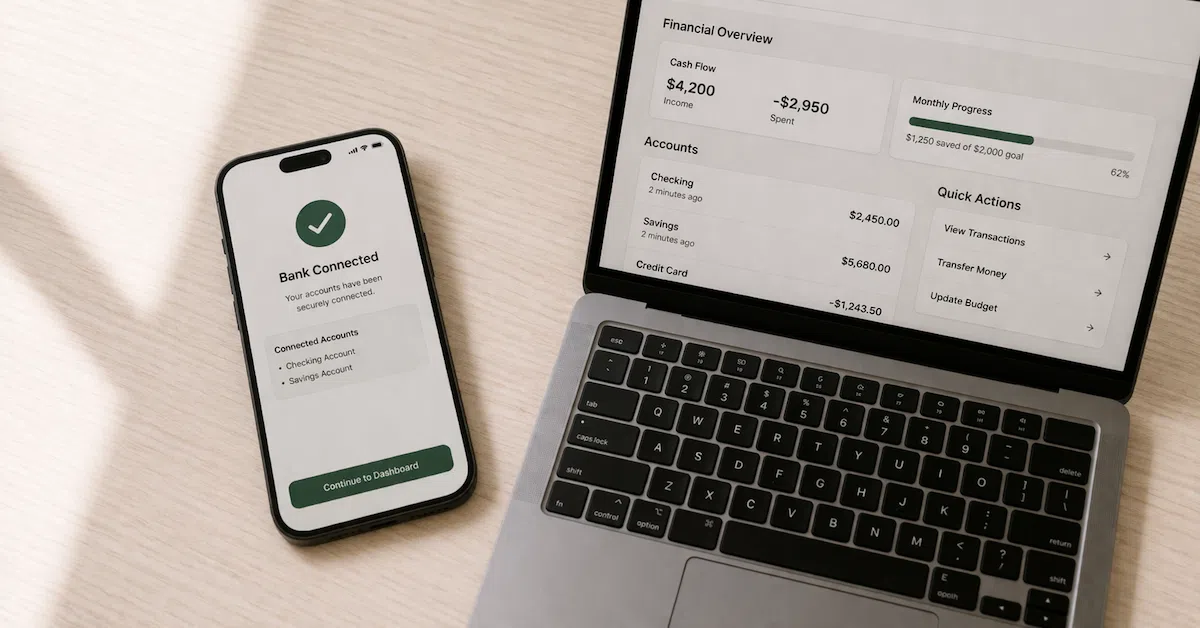
Open banking is the technology and regulatory infrastructure that makes it possible for third-party apps to access your financial data with your permission. Every time Monarch Money syncs your bank transactions, every time a robo-advisor pulls your account balance, every time a loan application uses your actual financial history instead of just a credit score -- that is open banking in operation. Understanding what open banking actually is and how it works is the foundation for understanding how open banking and AI are changing FinTech -- and how to use the tools that run on top of it safely. The full context for how open banking connects to the complete modern financial tool stack is covered in the Open Banking & AI FinTech guide.
The Consumer Financial Protection Bureau's Personal Financial Data Rights rule, finalized in October 2024, established a legal framework: consumers have the right to access the financial data their banks hold about them and the right to share that data portably with authorized third parties. Implementation is rolling out through 2026 across banks and financial institutions based on size. The rule makes the open banking infrastructure that has existed informally through data aggregators like Plaid a formal, enforceable consumer right. The broader picture of how this regulatory shift connects to the modern banking landscape is in the FinTech & Modern Money Tools guide.
How Open Banking Actually Works
The technical mechanism is straightforward: open banking uses APIs (Application Programming Interfaces) -- standardized connection protocols that allow one software system to request specific data from another in a controlled, permissioned way. When you connect your Chase account to Monarch Money, Monarch does not receive your Chase password. Instead, it connects through an aggregator (usually Plaid or MX) that handles the authentication securely and passes back only the transaction data you authorized -- typically read-only access to account balances and transaction history.
The aggregator layer is important to understand. Companies like Plaid, MX, and Finicity sit between the financial apps and your bank, handling the actual data request and the security architecture. This means the app you are using (Monarch Money, Betterment, Robinhood) never directly touches your bank login credentials. The aggregator manages the connection, the app receives the structured data output. When you see a list of connected institutions in Plaid's settings, that is the aggregator layer showing you every connection it manages on your behalf. Plaid is the aggregator most Americans interact with without realizing it -- our How Plaid Works guide breaks down exactly what happens technically in the seconds between clicking "connect your bank" and seeing your data appear in an app.
Read-Only Access vs. Write Access: The Critical Protection
The most important technical distinction in open banking is between read access and write access. Understanding which one an app is requesting -- and whether that request matches what the app actually needs to do its job -- is the single most useful skill for evaluating any financial app before you connect it.
Read Access: Look, But Don't Touch
Read access means an app can see your financial data -- balances, transactions, account numbers -- but cannot act on it. Reputable budgeting apps, account aggregators, and financial dashboards use read-only access. They have no ability to move your money, create transactions, or change anything about your accounts. If a budgeting app's entire function is showing you where your money went, read access is all it should ever request.
Write Access: The App Can Take Action
Write access means an app can initiate actions -- transfers, payments, account changes -- on your behalf. If an app requests write access, there must be a clear functional reason for it. A bill payment service needs write access by definition. A savings automation app like Digit uses write access to move small amounts into savings. A budgeting app that only shows you spending trends has no legitimate reason to request it. Understanding what access each app needs for its stated function is the framework for evaluating whether an access request is appropriate -- and it is the same framework our Is Open Banking Safe? guide walks through in more depth, including what to do if an app asks for more than it should need.
You Can Review and Revoke Open Banking Access
One of the most important features of open banking is that access is permissioned and revocable. Banks and data aggregators typically provide settings where you can review which apps are connected to your accounts and remove access when you no longer use them.
That ability to revoke access is part of what separates modern open banking from older connection methods. If you want the full process for reviewing bank connections, checking Plaid access, evaluating permissions, and reducing third-party data risk, see our Is Open Banking Safe?
How AI Is Building on Top of Open Banking
Open banking is the data layer. AI is increasingly the interpretation layer built on top of it. Once an app has permissioned, read-only access to your transaction history, that data becomes the raw material for AI tools that categorize spending automatically, flag unusual transactions, forecast cash flow, or answer plain-language questions about your finances instead of requiring you to dig through a dashboard yourself.
This is the layer where "AI financial assistant" products live -- tools that don't just show you data the way a traditional budgeting app does, but interpret it and respond to questions like "can I afford this" or "why did I spend more this month." None of that is possible without the open banking connection underneath it supplying clean, structured, permissioned data in the first place. Our AI Financial Assistants Explained guide covers how these tools actually work, what they can and can't reliably do yet, and how to evaluate one before connecting your accounts.
Open banking is the infrastructure. Now understand how it is used.
How open banking connects to AI, real-time payments, and the full modern financial tool stack is in the Open Banking & AI FinTech guide.
Explore Open Banking & AI FinTech →Frequently Asked Questions
What is open banking in simple terms? Open banking is the system that lets you share your bank account data with authorized apps -- with your permission, in a controlled, revocable way. It is the infrastructure behind every budgeting app, robo-advisor, and financial dashboard that connects to your bank.
Do I need to sign up for open banking? You are already using it if you have ever connected a financial app to your bank account. Open banking operates through the app connection process -- there is no separate sign-up. Your rights under the CFPB's 2024 rule apply automatically as your bank implements the requirements.
Can a connected app take money from my account? Only if it has write access and you have authorized it to do so. Standard budgeting and monitoring apps use read-only access and cannot initiate any transactions. Apps that move money (savings automation apps, bill payment services) require write access and explicit authorization for each action type. Review what access each app has in your bank's connected apps settings.
Is open banking actually safe to use? Yes, when the apps you connect use read-only access and reputable aggregators like Plaid or MX. The regulatory framework under the CFPB's 2024 rule adds formal consumer protections on top of the security practices aggregators already use. Our Is Open Banking Safe? guide covers the specific risks worth knowing about and how to minimize them.
What's the difference between open banking and an AI financial assistant? Open banking is the data connection -- the permissioned pipe that moves your transaction data from your bank to an app. An AI financial assistant is a tool built on top of that connection that interprets the data, rather than just displaying it. You cannot have one without the other, but they solve different problems.
Resources
Official Sources
CFPB -- Personal Financial Data Rights Rule -- The 2024 rule establishing your legal right to access and share financial data held by banks and financial institutions.
CFPB -- Bank Accounts -- Consumer guidance on bank account rights, data access, and protections when using third-party financial services.
Continue Building Your Understanding
The full framework lives in the FinTech & Modern Money Tools guide.
Disclaimer: This article is for informational and educational purposes only. Open banking regulations, app access policies, and aggregator capabilities change -- verify current terms directly with your bank and each app before connecting accounts.