September 01, 2026
Home › Credit Building & Protection › Credit Optimization for Approvals › Can You Remove a Collection Account From Your Report?
Part of Credit Optimization for Approvals — getting your credit profile lender-ready before you apply.
What You Need to Know
— There are only three legitimate ways a collection account leaves your report early: it's inaccurate and successfully disputed, the collector agrees to delete it in exchange for payment, or the 7-year reporting window runs out.
— Paying a valid collection does not remove it from your report on its own, and it doesn't restart the 7-year clock either.
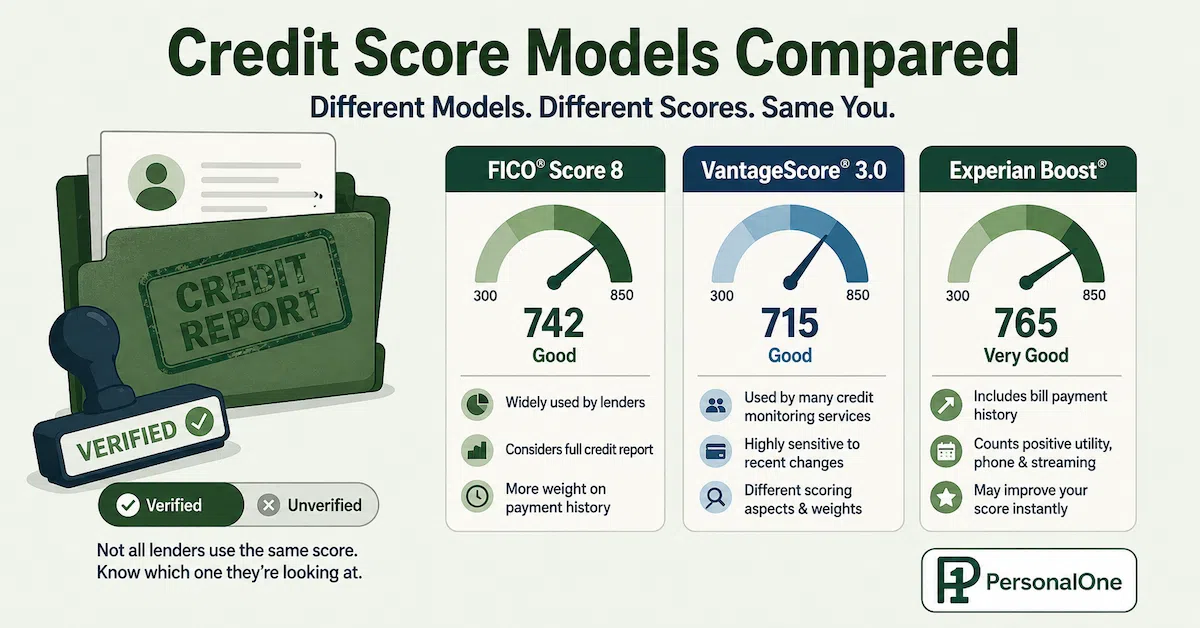
— The scoring model your lender actually uses matters more than most guides admit: FICO 9, FICO 10, and VantageScore 3.0/4.0 ignore paid collections entirely, while FICO 8, still the most widely used version, counts them the same whether paid or not.
— Mortgage lenders often pull older Classic FICO models that predate FICO 8, which give you no benefit for paying either — so the "just pay it off" advice can be true for one application and false for another.
— If a bureau can't verify a disputed item within 30 days (up to 45 if you submit more information mid-dispute), it must remove it, but this only works for genuine inaccuracies, not valid debts you'd simply prefer weren't there. And the 7-year clock for a collection account actually runs 7 years plus 180 days from your original delinquency date, not a flat 7 years — a detail most guides leave out.
Can you remove a collection account from your credit report? The honest answer is: sometimes, and it depends on something almost no guide mentions, which scoring model is actually pulling your file. Every article on this topic converges on the same three levers: dispute it if it's wrong, negotiate a pay-for-delete if it's valid, or wait out the clock. All three are real. None of them tell you the piece that actually determines whether paying a collection helps you at all.
That missing piece is the scoring model version. A collection account can be functionally invisible under one model and still dragging your score down under another, on the exact same day, from the exact same credit report.
Can You Actually Remove a Collection Account?
There are exactly three ways a collection account comes off your report before its time runs out on its own, and it's worth being direct about what each one actually requires.
It's inaccurate, and you dispute it successfully. If the debt isn't yours, the amount is wrong, or it's a duplicate of another listed account, you can dispute it with the credit bureau and have it corrected or removed. This only works when something is actually wrong.
The collector agrees to a pay-for-delete arrangement. You offer to pay some or all of a valid debt in exchange for the collector removing the tradeline entirely, rather than just marking it paid. This is a negotiated favor, not a right, and it isn't guaranteed.
The 7-year-plus-180-days reporting window expires. Under the Fair Credit Reporting Act, a collection account falls off your report 7 years and 180 days from the date of first delinquency, the original missed payment that led to the account never being brought current, whether or not you ever pay it. This happens automatically. You don't need to do anything except wait, and the extra 180 days is easy to miss if you're counting from the wrong date.
What trips people up is assuming there's a fourth option: asking nicely, or simply paying, and expecting the account to vanish as a courtesy. Outside of a documented pay-for-delete agreement, that doesn't happen. Collectors are generally required to report accurately, and "the debtor paid and asked us to remove it" isn't, on its own, a basis for deleting an otherwise accurate tradeline. Any collector willing to do that is making an exception, not following a standard process.
It's also worth being clear about what "the debt isn't yours" actually covers for dispute purposes. It includes genuine identity theft and mixed-file errors, where another consumer's debt lands on your report because of a similar name or transposed Social Security number. It does not include debts you legitimately owe but disagree with morally, or debts you forgot about and would prefer not to acknowledge. Bureaus and collectors distinguish between these, and treating a valid debt as a dispute candidate usually just delays the inevitable while adding a paper trail that can work against you later.
The Scoring Model Version Nobody Mentions
Here's what almost every guide on this topic skips entirely: whether paying a collection actually helps your score depends on which scoring model your lender pulls, and the differences between models are not small.
FICO 8 is still the most widely used credit-card and personal-loan scoring model in the country, and it treats paid and unpaid collections essentially the same way. Paying off a collection under FICO 8 gets you a mark that says "paid," but it typically does very little for your actual score.
FICO 9 and the FICO 10 suite, FICO's newer models, disregard collections reported as paid in full entirely. Under these models, paying a collection can meaningfully lift your score because the scoring formula stops counting it at all.
VantageScore 3.0 and 4.0 go even further, ignoring paid collections completely and excluding medical collections from scoring regardless of whether they're paid. Many free score-monitoring apps show a VantageScore, which is part of why people sometimes see their "free score" jump after paying a collection while a lender's pulled score barely moves.
| Scoring Model | Paid Collections | Medical Collections | Where You'll Encounter It |
|---|---|---|---|
| FICO 8 | Counted, same as unpaid | Counted normally | Most credit cards, many personal loans |
| Classic FICO (2, 4, 5) | Counted, same as unpaid | Counted normally | Most conventional mortgages (currently) |
| FICO 9 / FICO 10 suite | Ignored entirely | Reduced weight if unpaid | Some card issuers, growing lender adoption |
| VantageScore 3.0 / 4.0 | Ignored entirely | Ignored, paid or unpaid | Most free monitoring apps, some fintech lenders |
The practical result is that the same paid collection can help a lot, help a little, or do nothing at all, depending entirely on which model is being used to evaluate you, not on anything about your actual financial behavior.
This is also why two people can compare notes and walk away with completely contradictory advice. One person paid a collection, watched their score jump 40 points, and now swears by it. Another paid a similar collection, saw no movement at all, and concluded paying doesn't matter. Both are reporting an accurate experience. They were just being scored by different models.
Disputing Inaccurate Collection Accounts
If a collection account contains an error, wrong balance, wrong dates, an account that isn't yours, or one already reported elsewhere as a duplicate, you have a real path to removal through the dispute process, not a negotiation, a legal right.
You file a dispute with the credit bureau reporting the error. The bureau then has 30 days to investigate and verify the information with the original furnisher or the collection agency, extendable to 45 days if you submit additional relevant documentation during that window. If the collector cannot verify the disputed information as accurate within that period, the bureau is required to remove it.
This is the piece that gets misunderstood most often: the 30-day verification rule is a real and powerful tool, but it only removes information that's actually inaccurate or unverifiable. Disputing a collection you simply owe, hoping the collector doesn't respond in time, sometimes works by accident, but it isn't a legitimate strategy and the debt can reappear on your report if the collector verifies it later.
The actual dispute steps:
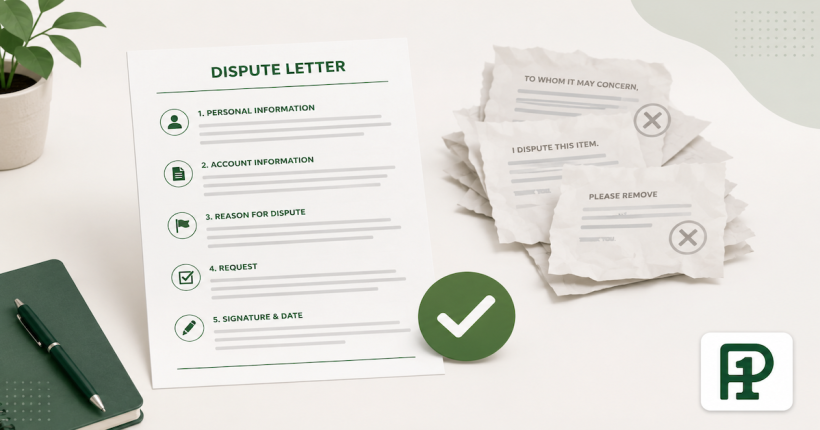
1. Pull your full report from all three bureaus and identify exactly what's wrong, the account number, the amount, the dates, or the fact that it isn't yours at all.
2. File the dispute directly with each bureau reporting the error, in writing where possible, describing the specific inaccuracy rather than a general objection to the account existing.
3. Keep copies of everything you submit and any reference or confirmation numbers the bureau provides.
4. Wait for the bureau's response, which is required within 30 days. They'll either confirm the correction or removal, or report that the item was verified as accurate.
5. If the item is verified but you still believe it's wrong, you can request the specific method of verification the collector used, and file a follow-up dispute or a complaint with the CFPB if that verification looks inadequate.
Pay-for-Delete: What It Is and Why It Isn't Guaranteed
Pay-for-delete means asking the collection agency to remove the tradeline from your credit report entirely in exchange for payment, rather than the standard outcome of the account simply being updated to "paid."
This isn't an official, sanctioned option. It's a negotiated favor some collectors will agree to and others flatly refuse, partly because it technically conflicts with their obligation to report accurately to the bureaus. Larger agencies and original creditors are often less willing than smaller, independent collection agencies.
How the request usually goes: you contact the collector, confirm the debt and the balance, and propose payment, often the full amount, sometimes a negotiated lower amount, contingent on the account being deleted rather than marked paid. Smaller, independent agencies are more likely to agree than large agencies working on behalf of major creditors, since bigger operations tend to have stricter internal policies about accurate reporting.
If you attempt it: get the agreement in writing before you send any payment. A verbal promise from a collections agent is not enforceable, and accounts have been known to remain on reports even after payment when the agreement wasn't documented. Ask for the deletion terms on official letterhead or in a written email confirmation, not just a note in their internal system.
Be realistic about the odds. Pay-for-delete requests are declined more often than they're accepted, particularly with larger agencies. Treat it as worth asking, since it costs nothing to try, but don't build your entire plan around it working.
If it doesn't work: paying the account still matters. Under FICO 9, FICO 10, and both current VantageScore models, a paid collection that stays on your report as "paid" is functionally similar to one that was deleted, since those models ignore it either way. The pay-for-delete outcome mostly matters for the models that don't forgive paid collections, since those are the only cases where deletion beats a simple paid status.
What This Means If You're Applying for a Mortgage
This is where the scoring model question stops being trivia and starts affecting real decisions. Conventional mortgages sold to Fannie Mae and Freddie Mac have historically relied on older Classic FICO models, versions that predate FICO 8, not newer ones. Those older models give you no credit for paying off a collection, the same way FICO 8 largely doesn't.
Regulators have been moving toward allowing newer models like FICO 10T and VantageScore 4.0 for conventional mortgage underwriting, but adoption is gradual and not universal. That means paying off a collection before a mortgage application might do nothing for the specific score your lender pulls, even though it would have helped meaningfully under a newer model.
The only way to know for certain is to ask your loan officer which scoring model and version they'll be using before you decide how much effort to put into disputing or paying down old collections. If you're not applying for a mortgage and the lender uses FICO 9, FICO 10, or VantageScore, paying a valid collection is one of the more reliably useful moves available to you.
This doesn't mean paying off collections before a mortgage application is a waste of time. Underwriters and automated underwriting systems look at more than the raw score, and a credit report showing recently resolved collections can read as lower risk even when the specific score used doesn't move. It also removes a potential point of friction during manual underwriting review, where a loan officer might otherwise ask for a letter of explanation about an open, unpaid collection.
If you have limited time and money before applying, prioritize based on what you're actually financing. A mortgage through a conventional lender means the older model matters most, so your energy may be better spent on utilization and on-time payments, factors that move every model, rather than chasing a scoring model dependent collection strategy. A credit card, personal loan, or fintech-underwritten product is more likely to be scored by a newer model where paying collections has a clearer, more direct payoff. Our mortgage credit readiness checklist walks through this sequencing decision in full.
Get Your Full Credit Profile Lender-Ready
Collection accounts are one factor among several lenders review before approving you. The Credit Optimization for Approvals hub covers the complete pre-application checklist — utilization, inquiries, report accuracy, and timing.
More From This Hub
Return to Credit Building & Protection for the complete system — score fundamentals, monitoring, utilization strategy, and approval optimization.
Frequently Asked Questions
Does paying off a collection remove it from my credit report?
No, not by default. Paying updates the account status to "paid," but the tradeline itself stays on your report for the full 7-year window unless the collector specifically agreed in writing to delete it, or unless the item was inaccurate and successfully disputed.
Is pay-for-delete legal?
It isn't illegal for you to ask, but it isn't an official, guaranteed process either. Some collectors agree because it's faster than pursuing the debt through other means; many refuse because it conflicts with their standard reporting obligations. Always get any agreement in writing before paying.
Why did my free credit score go up after I paid a collection, but my mortgage score didn't move?
You're likely seeing two different scoring models. Free monitoring apps commonly show a VantageScore, which ignores paid collections entirely. Mortgage lenders often pull older Classic FICO models that don't give the same benefit, so the same paid account can affect each score differently.
How long does a collection account stay on my report if I never pay it?
Seven years and 180 days from your date of first delinquency, the original missed payment that led to the collection, the same as if you had paid it. Not paying doesn't extend that window, but it does mean you get none of the potential benefit available under scoring models that ignore paid collections.
Can I dispute a collection just because I don't want to pay it?
You can file a dispute, but it should only be for information that's actually inaccurate, wrong amount, wrong dates, not your debt, or a duplicate. Disputing a valid debt you simply don't want to pay isn't a legitimate use of the process, and the item can be reinstated once the collector verifies it.
Should I pay off old collections before applying for a mortgage?
Ask your loan officer which scoring model they'll pull first. If it's an older Classic FICO model, paying may not move that specific score, though it's still generally good financial practice. If they're using FICO 9, FICO 10, or VantageScore, paying is more likely to help.
This content is for educational purposes only and does not constitute financial advice. PersonalOne is not a licensed financial advisor, broker, or investment professional. Individual financial situations vary — consult a qualified financial professional for personalized guidance.