Updated: May 8, 2026
Home › Credit Building & Protection › Credit Score Building Strategies › How to Fix Your Credit in 90 Days
Don Briscoe is a Financial Systems Strategist with 12+ years helping Millennials and Gen Z escape paycheck-to-paycheck cycles. He has worked with hundreds of people to build emergency funds, eliminate debt, and start investing using framework-first strategies that require less willpower and more infrastructure. He founded PersonalOne to provide the financial education he wished existed -- structured, honest, and free.
TL;DR -- Fixing your credit in 90 days is possible -- not through shortcuts or credit repair gimmicks, but through a structured three-phase system that addresses the factors that actually move your score.
Month 1 is audit and stop the bleeding -- Month 2 is attack the two highest-impact levers -- Month 3 is optimize, verify, and lock in. This guide covers what actually moves a credit score and by how much -- the exact actions to take in each 30-day phase -- how to dispute errors, lower utilization, and automate payment history -- what to do in Month 3 to protect the progress you made -- and how long realistic score improvements actually take.
Learning how to fix your credit in 90 days starts with understanding that the score responds to a small number of inputs -- and that you can systematically move those inputs in the right direction over three months. A 100-point improvement is real. Not a guarantee -- but entirely achievable if you start in the low-to-mid 500s and take targeted action on the factors that carry the most weight.
The problem with most credit fix advice is that it is either too vague to act on or framed as a secret hack that sidesteps how credit actually works. Neither helps you. What does help is understanding that your score is built from five specific inputs -- and that two of those inputs can be moved quickly with deliberate action.
This guide gives you a phase-by-phase system. No gimmicks, no credit repair services, no shortcuts that backfire. Just the repeatable framework that moves scores. For a full breakdown of every factor involved, the guide on how credit scores work and what is hurting yours is the right starting point before you begin Month 1.
Where This Fits in the Credit Building System -- The 90-day framework is an accelerated entry point into the broader credit score building strategy -- the full system for moving from damaged credit to a score that qualifies you for competitive rates on cards, auto loans, and eventually mortgages.
The 90-day timeline is achievable because the two highest-impact factors -- payment history (35%) and credit utilization (30%) -- can both be moved quickly with the right actions. The remaining factors take longer but start improving in the background as you work the system.
How Your Credit Score Is Actually Built
Your FICO score is calculated from five factors. Understanding the weight of each one tells you exactly where to focus your first 90 days.
The Five FICO Factors and Their Weight
Payment history -- 35%. Whether you pay on time. A single 30-day late payment can drop a good score 60-110 points. Conversely, a consistent on-time payment streak is the single most powerful score-builder available.
Credit utilization -- 30%. What percentage of your available revolving credit you are using. Above 30% hurts. Below 10% helps significantly. This factor responds immediately when you pay down balances -- often within one billing cycle.
Length of credit history -- 15%. The average age of your accounts. This improves passively over time. Do not close old accounts during your 90-day work -- it shortens your average history.
Credit mix -- 10%. Having both revolving credit (cards) and installment credit (loans) improves this factor. A credit-builder loan can help here if you only have cards.
New credit inquiries -- 10%. Hard inquiries from new credit applications stay on your report for two years and affect your score for one. During your 90-day push, apply for nothing new.
Payment history and utilization together represent 65% of your score. That is where the 90-day framework focuses its energy. And the decisions you make now about how to fix your credit will shape what financial opportunities become available to you -- something covered in depth in the guide on how credit impacts your financial opportunities long term.
Month 1: Audit and Stop the Bleeding
You cannot fix what you cannot see. Month 1 is entirely about getting a clear picture of your current situation and immediately stopping any ongoing damage.
Week 1-2: Pull All Three Reports and Read Them
Go to AnnualCreditReport.com -- the only federally authorized source for free credit reports -- and pull your report from all three bureaus: Equifax, Experian, and TransUnion. Do all three, not just one. Errors and negative items often appear on one bureau's report but not the others, and lenders may check any of them.
Read each report line by line. You are looking for four things: accounts you do not recognize (potential fraud or identity theft), late payments that you believe were actually on time, balances that are reported higher than they currently are, and collections accounts -- especially old ones that may be past the reporting window.
Week 2-3: File Disputes on Every Error You Find
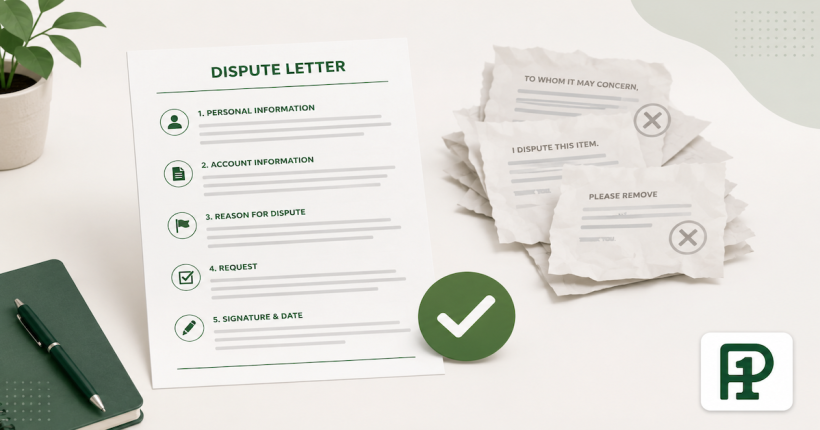
Under the Fair Credit Reporting Act, you have the right to dispute any inaccurate information on your credit report. The bureau must investigate and respond within 30 days. File disputes directly with each bureau that shows the error -- Equifax, Experian, and TransUnion each have online dispute portals.
When disputing a late payment you believe was on time, include any documentation you have: bank statements showing the payment cleared, confirmation emails from the creditor, or screenshots of autopay confirmation. The stronger your evidence, the faster the resolution.
A single successfully disputed late payment removal can move your score 15-40 points depending on how recent it was and what your current score is. This is the fastest single action available in Month 1.
Week 3-4: Stop All New Credit Applications
For the next 90 days, apply for nothing. No new cards, no financing offers, no buy now pay later accounts that run hard inquiries. Each hard inquiry drops your score 5-10 points and signals to lenders that you are seeking new credit -- which they view as risk. You are building, not borrowing. New applications pause the build.
Month 2: Attack the Two Highest-Impact Levers
With your audit complete and disputes filed, Month 2 focuses entirely on moving payment history and utilization -- the two factors that represent 65% of your score and respond the fastest to deliberate action.
Automate Every Payment Starting Now
Set every account -- every credit card, every loan, every bill that reports to the bureaus -- to autopay the minimum at minimum. This is not about paying off debt right now. It is about ensuring zero missed payments from this point forward. Payment history is built one on-time payment at a time, and automation removes the single biggest reason people miss payments: forgetting.
If you can afford more than the minimum, pay more. But the non-negotiable baseline is autopay on every account. Log into each creditor's website, find the autopay settings, and set it to at least the minimum due. Do this for every account in one sitting during Week 5. The guide on how to rebuild credit with better habits covers the full infrastructure setup -- autopay, consolidating due dates, and the card usage system that makes clean payment history run without willpower.
Drive Utilization Below 30% -- Then Below 10%
Credit utilization is calculated both per card and in total across all revolving accounts. A card sitting at 80% utilization is hurting your score significantly even if your other cards are empty. The goal is to get every individual card below 30% first, then push toward 10% or below on each one.
If you have multiple cards with balances, prioritize paying down the card closest to its limit first -- this moves your utilization percentage the most per dollar paid. Once that card is below 30%, move to the next highest. Do not close cards after paying them off. A paid-off card with a zero balance and available credit is actively helping your utilization ratio.
Utilization updates when your creditor reports your balance to the bureaus -- typically once per billing cycle. This means a paydown you make today will reflect in your score within 30-45 days. It is the fastest-moving factor in the entire FICO model.
Consider an Authorized User Addition
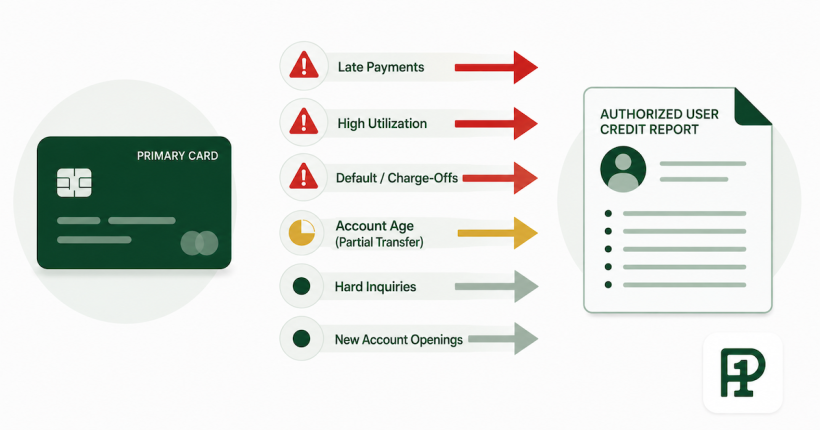
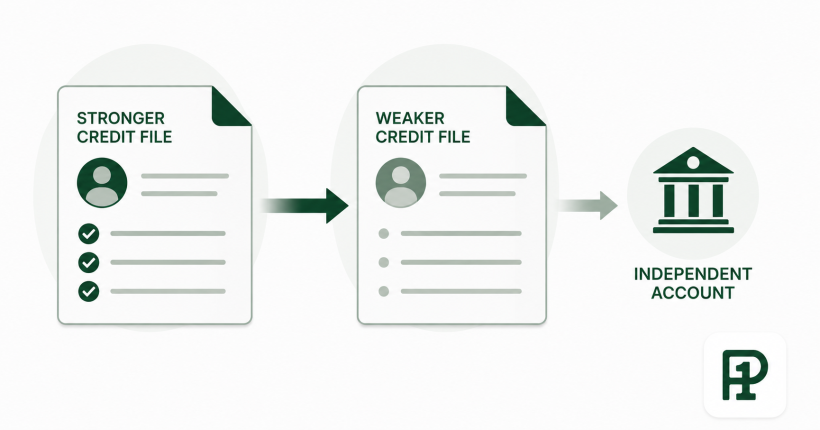
If you have a family member or close friend with a long-standing credit card in good standing -- low utilization, no late payments, account age of five years or more -- ask to be added as an authorized user. When you are added, that account's history typically appears on your credit report, which can immediately improve both your average account age and your reported payment history.
You do not need to use the card or even receive a card in the mail. The reporting benefit comes from the account appearing on your file, not from usage. Confirm with the primary cardholder that their account is in good standing before asking -- being added to a maxed-out or late-payment account will hurt rather than help.
Month 3: Optimize, Verify, and Lock In
By Month 3 your disputes should be resolved, your utilization should be falling, and you should have a clean streak of on-time payments building. Month 3 is about verifying that the work from Months 1 and 2 actually registered -- and starting the habits that protect your score going forward.
Verify That Disputes Were Resolved Correctly
Pull your reports again at the 60-day mark. Confirm that disputed items were either removed or corrected. If a bureau rejected your dispute and you believe they are wrong, you can file a secondary dispute with additional documentation, or file a complaint directly with the CFPB at consumerfinance.gov. Do not let a resolved dispute close without confirming the correction actually appears on your report.
Check Your Score Trajectory -- Not Just the Number
Use a free score monitoring tool to track movement. What you are looking for at 90 days is not a specific number but a clear upward trajectory. If your score has not moved despite correct actions, check whether your creditors are actually reporting to all three bureaus and whether your dispute removals are confirmed. Sometimes the work is done correctly but the reporting lag delays the visible score change by an additional billing cycle.
Add a Credit-Builder Loan If You Have No Installment History
If your credit file consists entirely of credit cards with no installment loan history, your credit mix is thin. A credit-builder loan from a credit union or Community Development Financial Institution addresses this. With a credit-builder loan the lender holds the loan amount in a secured account while you make monthly payments. At the end of the term you receive the funds. The on-time payment history reports to the bureaus throughout, strengthening both your payment history factor and your credit mix.
Only do this in Month 3 -- not Month 1 or 2. The application triggers a hard inquiry, and you want your utilization and payment history moving in the right direction before adding any new accounts to your file.
What to Realistically Expect at 90 Days
Starting in the low 500s with errors on your report, high utilization, and no recent on-time payment streak, a 60-100 point improvement over 90 days is achievable. The range depends on how many errors you successfully dispute, how aggressively you reduce utilization, and whether you have an authorized user addition working in your favor.
Starting in the mid-600s with no errors and already-managed utilization, 90 days may move your score 20-40 points. There is less low-hanging fruit, so improvement is more incremental. The same system applies -- it just compounds more slowly from a stronger starting position.
What 90 days will not do: fix a score dragged down primarily by recent collections, charge-offs, or a bankruptcy. Those negative items take time to age off regardless of other positive actions. The 90-day framework accelerates what is acceleratable -- it cannot compress the timeline on items that are subject to the seven-year reporting window.
Real Example: What Fixing Credit Actually Looks Like in 90 Days
I worked with Regina Myers, a 34-year-old in Austin, Texas, who came in thinking her credit problem was "just a low score." It wasn't. Her issue was structure. She had two maxed-out cards, one missed payment from six months prior, and no system for managing due dates.
We didn't do anything complicated. First, we set up automatic minimum payments to eliminate any chance of another late mark. Then we focused on utilization -- she paid one card down below 10% and left the other untouched temporarily to avoid spreading cash too thin. Within 45 days, her score started moving. By day 90, she was up 63 points.
What changed wasn't luck or a hack. It was installing a system that removed decision-making from the process. That's the difference most people miss -- credit doesn't improve because you try harder, it improves because your structure gets better.
Once your score has moved and you are ready to apply for new credit, the guide on how to improve your approval chances after fixing credit covers exactly how to position your file for the strongest possible outcome. And when you are ready to choose a card, the guide on how to choose the right credit card after rebuilding walks through the selection criteria that matter most at this stage.
Build the Full Credit Authority System
The 90-day framework gets your score moving. The Credit Building and Protection hub maps the full system -- from monitoring and protection to utilization strategy, authorized user tactics, and optimizing your score for mortgage and loan approvals.
Explore the Credit Building and Protection Hub →Frequently Asked Questions
Can I really improve my score 100 points in 90 days?
Yes, if you are starting in the low-to-mid 500s with errors on your report and high utilization. Successfully disputing a late payment removal and dropping utilization from 80% to under 10% can each contribute 30-60 points independently. Combined with a clean payment streak, 100 points over 90 days is within range. Starting from a higher score, the improvement will be smaller.
Do I need to pay a credit repair company to do this?
No. Every action in this framework is something you can do yourself for free. Dispute rights under the Fair Credit Reporting Act apply to you directly -- you do not need a third party to file them on your behalf. Credit repair companies charge monthly fees to do exactly what this guide walks you through. Save that money and use it to pay down balances instead.
Will closing old paid-off credit cards help my score?
No -- it will hurt it. Closing a card reduces your total available credit, which increases your utilization ratio. It also potentially shortens your average account age. Leave paid-off cards open. If there is an annual fee you want to eliminate, call the issuer and ask to downgrade to a no-fee version of the same card rather than closing the account entirely.
How often should I check my credit during the 90 days?
Check your reports at the start, at the 30-day mark to confirm disputes are in progress, and at 60 days to verify resolutions. Use a free score monitoring tool weekly to track movement without pulling hard inquiries. Checking your own credit never affects your score -- these are soft inquiries and are completely invisible to lenders.
What if a bureau rejects my dispute?
File again with additional documentation. If rejected a second time and you believe the information is still inaccurate, file a complaint with the CFPB at consumerfinance.gov. The bureau is required to respond to CFPB complaints. You can also contact the original creditor directly and ask them to update or remove the tradeline -- sometimes bypassing the bureau entirely is faster.
What happens after 90 days?
The same habits that built the score continue to build it. Keep utilization low, maintain your autopay system, avoid unnecessary new applications, and let your account age work passively in your favor. At the 6-month and 12-month marks your score should continue climbing if you hold the foundation you built in the first 90 days.
Resources
AnnualCreditReport.com -- Free Official Credit Reports from All Three Bureaus
CFPB -- Credit Reports and Scores
CFPB -- Submit a Complaint About a Credit Bureau
MyFICO -- Credit Education Center
FTC -- Fair Credit Reporting Act
Continue Building: This article is part of the Credit Score Building Strategies cluster inside the Credit Building and Protection authority hub.
Disclaimer: This guide provides general educational information about credit score improvement strategies. It is not personalized financial or legal advice. Individual results will vary based on your specific credit history, the accuracy of information on your reports, and how consistently you apply the framework. Before making significant financial decisions, consider consulting a qualified financial professional. PersonalOne provides educational content and does not offer personalized financial planning services.