Don Briscoe is a personal finance coach with over 12 years of experience helping people take control of their money. As the founder of PersonalOne.org, Don specializes in making complex financial concepts accessible and actionable for everyday Americans.
TL;DR – Quick Summary
- Index funds remain the #1 wealth builder with low fees and diversification
- High-yield savings accounts still offer competitive rates for emergency funds
- Bonds are attractive again, especially Treasuries and I-Bonds
- AI, automation, and clean energy sectors show strong growth potential
- Max out tax-advantaged accounts (Roth IRA, 401k) before chasing trends
December is always a turning point. The old year winds down, the new year starts calling, and the same question pops up for millions of Americans:
Where should I put my money next year?
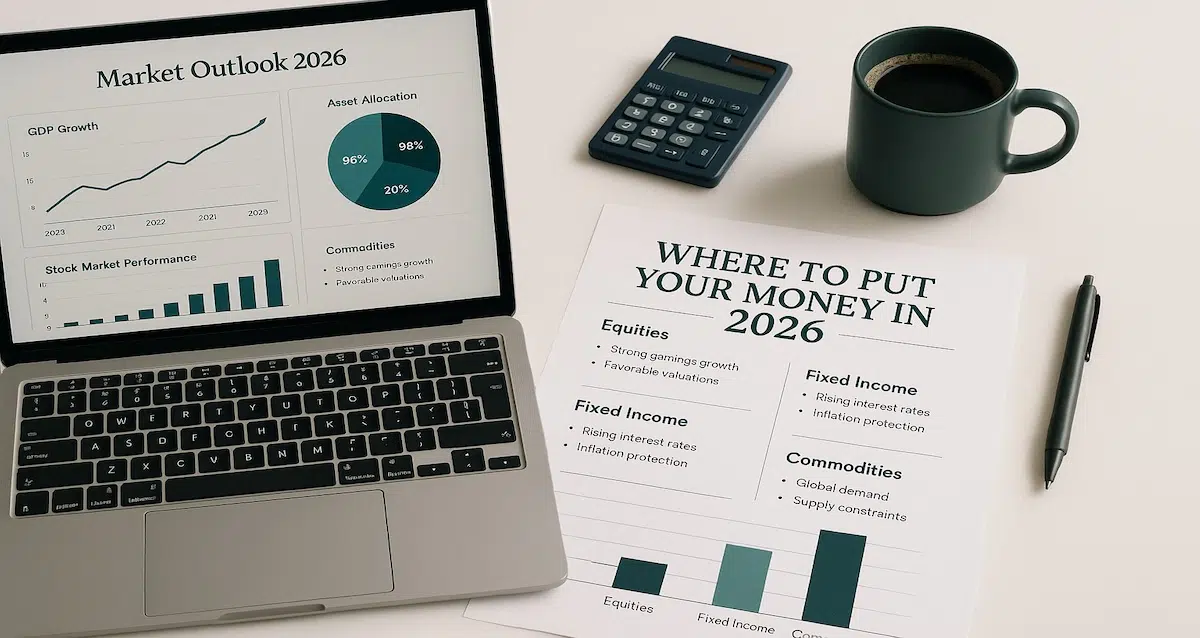
With markets shifting, inflation cooling, and interest rates stabilizing according to the Federal Reserve, 2026 is shaping up to be a year of careful optimism. This guide breaks down the smartest places to put your money — based on what economists, analysts, and financial institutions are expecting in the year ahead.
Let's make 2026 your best financial year yet.
1. Broad Market Index Funds (Still the #1 Wealth Builder)
When you zoom out over decades, index funds remain one of the most reliable ways to build wealth.
Why analysts still recommend them for 2026:
- Low fees
- Instant diversification
- Historically strong long-term returns
- Lower risk compared to picking individual stocks
The S&P 500 has averaged strong long-term growth, confirmed by Federal Reserve historical data.
2. High-Yield Savings Accounts (Rates Still Strong)
Even as inflation cools, many online banks keep offering competitive rates.
A high-yield savings account is best for:
- Emergency funds
- Short-term savings
- Sinking funds
- Money you'll need in under 2 years
The FDIC tracks national average savings rates. Rates are still far above brick-and-mortar banks as we enter 2026.
3. Bonds Are Back (Especially Treasuries)
For the first time in years, bonds are becoming attractive again.
Consider:
- 2-year Treasuries
- I-Bonds
- High-quality corporate bonds
- Intermediate bond funds
Treasury rates and yields can be checked at TreasuryDirect.gov.
Bonds add stability to a portfolio and help balance stock volatility.
4. AI, Automation, and Tech Infrastructure Funds
Tech isn't going anywhere — and 2026 is expected to be a massive year for AI infrastructure, automation tools, cloud services, and semiconductor growth.
Top reasons experts expect growth:
- Increased AI adoption
- Rising demand for data centers
- Expansion of 5G and edge computing
- Automation in logistics, manufacturing, and retail
Be careful with individual stocks unless you deeply understand the company. Funds reduce risk while keeping you exposed to upside.
5. Clean Energy and Climate Technology
Clean energy has become a long-term global investment theme.
2026 growth drivers include:
- Federal incentives
- State-level energy credits
- International climate commitments
- Advancements in battery storage and solar
Energy.gov breaks down U.S. clean energy incentives.
6. Real Estate (But Selectively)
Real estate remains a strong wealth builder, but 2026 will reward strategic buying — not random purchases.
Best opportunities:
- Multi-family rentals
- Growing mid-sized cities
- Areas with strong job pipelines
- Real estate investment trusts (REITs) if buying a property isn't realistic
The U.S. Census Bureau provides housing market trends.
7. Roth IRA and 401(k) Contributions (Tax Strategy Play)
No matter what happens in the markets, maximizing tax-advantaged accounts is one of the most reliable ways to grow wealth.
A Roth IRA shines in 2026 because:
- Tax-free growth
- Tax-free withdrawals
- No required minimum distributions
- Predictable future taxes
8. Your Emergency Fund (Before Anything Else)
If you're under three months of expenses, no investment matters more than strengthening your emergency fund.
The CFPB reports that Americans with even $500 saved are dramatically less likely to fall into high-interest debt during emergencies.
This buffer protects your entire financial life.
Closing Summary
You don't need to chase trends to build wealth in 2026. You need balance: a mix of safe savings, diversified investments, and long-term planning. Whether it's index funds, safer bonds, high-yield savings, or tax-advantaged accounts, the smartest moves are the ones aligned with your goals and risk tolerance.
The goal isn't predicting the exact future — it's preparing for it with a foundation that works in any market.
Frequently Asked Questions
A: High-yield savings and short-term Treasuries.
A: Broad-market index funds or ETFs.
A: Only if you understand the company; otherwise, stick to diversified funds.
Related Resources
Financial Disclaimer: This article is for educational purposes only and not financial advice.