Updated: April 11, 2026
Home › Investing & Wealth Growth › Investment Fundamentals for Beginners
Investment Fundamentals for Beginners: Where Long-Term Wealth Actually Starts
TL;DR
— Investing works best when it sits on top of a stable financial system, not in place of one.
— This cluster covers the beginner investing foundation: risk, return, diversification, time horizon, and how to start without overcomplicating the process.
— Most new investors do better with simple, diversified investing than with stock-picking, hype, or trying to time the market.
— The goal is not to become a market genius. The goal is to build a repeatable investing system that survives long enough to compound.
— Every article in this cluster helps beginners move from hesitation and confusion to structure, consistency, and long-term wealth-building.
Why Beginner Investors Need a Foundation Before They Need a Portfolio
A lot of investing advice starts in the wrong place. It jumps straight to what to buy, what app to use, or which fund is “best right now.” That skips the real issue. Before a beginner builds a portfolio, they need a foundation strong enough to hold one.
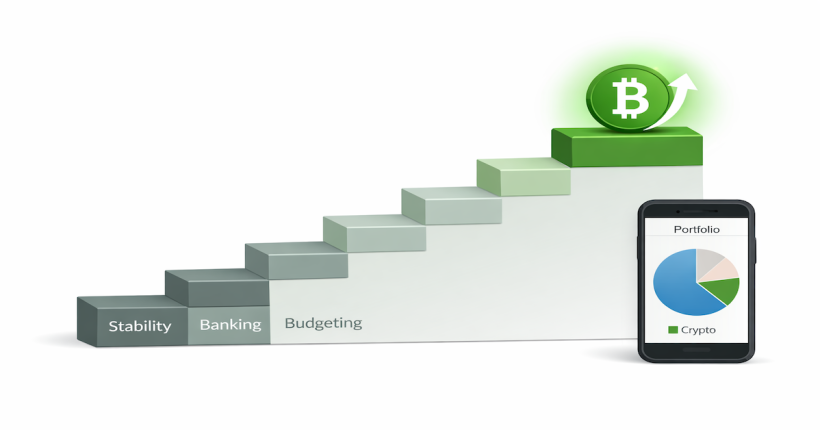
Investing works best when your basic financial systems are already functioning. That means your bills are under control, your emergency cushion exists, your banking setup makes sense, and you are not relying on high-interest debt just to get through the month. Without that structure, investing becomes fragile. The first emergency, income drop, or unexpected expense can force you to sell at the wrong time.
That is why this cluster sits inside the broader Investing & Wealth Growth system and not as a disconnected topic. Beginner investing is not about jumping into the market because you feel behind. It is about learning how wealth-building actually works so you can participate in it from a position of stability rather than panic.
This cluster is for people who are new to investing, people who know they should start but keep delaying, and people who have heard all the buzzwords but still do not feel clear on what matters most. If that is where you are, this is the right starting point.
What Investment Fundamentals Actually Covers
Investment fundamentals are the rules and concepts that matter before strategy gets complicated. This is where you learn what investing is, what it is not, and how long-term wealth is usually built in real life.
This cluster covers the topics most beginners need first: how risk and return work together, why diversification matters, why time horizon changes your investing choices, why dollar-cost averaging reduces the pressure to be “right,” and why simple investing often beats clever investing. It also explains the common mistakes that push beginners off course, including panic selling, hype chasing, and trying to build a portfolio before the rest of their finances are stable.
The purpose is not to turn you into a trader. It is to help you understand the mechanics well enough that you can build a portfolio you trust and actually keep. Most long-term investing success is behavioral. These fundamentals exist to make that behavior easier.
Once this foundation is clear, the rest of the investing system makes more sense: retirement accounts, index funds, wealth growth, and long-term patience stop feeling abstract and start feeling usable.
The Beginner Investing Sequence: What to Learn First and In What Order
Learning investing works best as a sequence, not a pile of random advice. Order matters because each step makes the next one easier to understand.
Step one is readiness. Before you invest, you need clarity on whether your financial base is stable enough to support it. That includes emergency reserves, debt context, and whether the money you plan to invest can truly stay invested.
Step two is understanding what investing actually is. Stocks, bonds, funds, and asset allocation are not the same thing. You need to know the difference between buying a single stock, buying a diversified fund, and saving cash for a short-term goal.
Step three is risk literacy. Beginners often want high returns without real downside. This step corrects that. Higher potential returns come with higher risk. The question is not how to eliminate risk. The question is which risks are reasonable for your time horizon and goals.
Step four is system design. Once you understand the basics, you need a simple, repeatable approach. That means account choice, contribution habit, diversification, and automation. Not predictions. Not market heroics. Just a structure you can maintain.
Ready to build an investing system that can actually last?
Investment Fundamentals is one part of a complete wealth-building system. See how beginner investing connects to retirement accounts, index funds, and long-term growth in the full framework.
Explore the Investing & Wealth Growth System →Common Beginner Investing Mistakes That Stall Growth
The most common mistake is believing investing starts with choosing a “winner.” That mindset pushes beginners toward individual stock picks, trend chasing, and unnecessary risk before they understand how wealth is usually built. Most people do better starting with broad diversification and consistency.
The second mistake is trying to time the market. Beginners often tell themselves they will invest once the market drops, once rates change, or once the news feels less chaotic. That almost always leads to delay. Delayed action feels strategic, but in practice it usually just reduces time in the market and increases hesitation.
The third mistake is panic selling. A beginner who invests without understanding volatility often interprets a market decline as proof they made a bad decision. That emotional reaction turns a temporary decline into a permanent loss. Investment fundamentals fix this by teaching what normal volatility looks like and why long-term investors need a framework before the first downturn happens.
This cluster slows down the beginner phase on purpose. The goal is not speed. The goal is competence. Once the basics are clear, staying invested becomes far easier.
What You Will Be Able to Do After This Cluster
After working through Investment Fundamentals for Beginners, you will understand the core mechanics that make long-term investing work. You will know how to think about risk, why diversification matters, how time horizon affects your decisions, and why steady contributions often outperform attempts to be clever.
You will also be able to separate real investing from speculation. That means distinguishing between building a long-term portfolio and reacting to hype, between saving and investing, and between short-term market noise and long-term wealth-building.
From there, the rest of the Investing & Wealth Growth system builds naturally. Retirement Accounts shows where to put your investments tax-efficiently. Index Funds & ETFs shows how to build the simplest version of a diversified portfolio. Wealth Growth and long-term strategy then connect those pieces into a broader system that compounds over decades.
None of those layers work without a clear beginner foundation. This cluster is where that foundation gets built.
Explore the Investing & Wealth Growth Clusters
You are here: Investment Fundamentals for Beginners — Where new investors learn what matters first
Retirement Accounts — Understand 401(k)s, IRAs, Roth IRAs, and where to invest first
Index Funds & ETFs — The simplest diversified investing path for most people
Investment Psychology — Avoid emotional mistakes that damage long-term returns
Diversification — Reduce avoidable risk without overcomplicating your portfolio
Long-Term Investing — Why patience is one of the most valuable investing skills
Resources
Official Sources
Investor.gov — Introduction to Investing — Beginner-friendly explanations of investing basics, market concepts, and long-term investing principles.
Investor.gov — Dollar-Cost Averaging — A clear explanation of why regular investing reduces the pressure to time the market.
IRS — Retirement Topics: Contributions — Current contribution rules for retirement accounts and tax-advantaged investing structures.
This cluster is part of the Investing & Wealth Growth system on PersonalOne — a complete framework for building wealth through structure, patience, and long-term investing principles.
Continue Learning — Investment Fundamentals for Beginners
How to Fearlessly Start Investing with Just $100 — A beginner-friendly guide to starting with a small amount, building confidence, and learning how investing works without waiting for “real money.”
Start Investing Small: Gain Knowledge, Experience, and Grow Big — Why small, consistent investing beats waiting for a perfect starting amount.
Why Starting Investments Early Makes a Lot of Cents — How time and compound growth create a long-term advantage for beginner investors.
First-Time Investor? Here’s How to Make Your Money Work Harder — A practical first-time investor guide to starting, simplifying, and staying consistent.
Frequently Asked Questions
Do I need to be debt-free before I start investing?
Not always, but context matters. High-interest debt usually deserves priority because its guaranteed cost is often higher than expected long-term investment returns. Lower-interest debt may coexist with investing depending on stability, cash flow, and financial goals. The key is not to invest while the rest of your finances are still structurally unstable.
What is the safest investment for beginners?
That depends on time horizon and goal. For long-term investing, many beginners are better served by diversified index funds or ETFs than by individual stocks. For short-term goals, investing in the market may not be appropriate at all. “Safe” changes depending on when you need the money and how much volatility you can tolerate.
How much do I need to start investing?
You do not need a huge amount to begin. Many beginners start with small monthly contributions. What matters most is that the amount is consistent, truly investable, and not money you will need to pull back out for emergencies or bills in the near term.
Should beginners buy individual stocks?
Most beginners are better off learning through diversified investing first. Individual stocks introduce concentration risk and require more research, emotional discipline, and tolerance for being wrong. For most new investors, diversification is a stronger teacher than speculation.
Why is time horizon such a big deal in investing?
Because time determines how much volatility you can afford to absorb. Long-term goals can usually handle more stock exposure because there is more time for recovery and compounding. Short-term goals often need lower-risk assets because there is not enough time to recover from a major market drop.
PersonalOne Money System
This content is researched, written, and owned by PersonalOne — a free financial education platform built to help Millennials and Gen Z build real financial systems that grow into long-term wealth.
Disclaimer: This content is for educational purposes only and does not constitute financial, tax, or investment advice. Individual financial situations vary — consult a qualified professional for personalized guidance.