May, 2026
Home › Financial Stability › Emergency Fund & Cash Reserves › Sinking Funds vs Emergency Funds
What You Need to Know
— Emergency funds cover unexpected, unpredictable expenses — sinking funds cover expected, predictable expenses you have not budgeted for yet
— Mixing the two accounts is the most common reason emergency funds get depleted by non-emergencies
— Sinking funds protect your emergency fund — when your car registration, annual insurance premium, and holiday spending are already saved for, your emergency fund stays untouched for actual emergencies
— You can maintain multiple sinking funds in a single high-yield savings account using the sub-account or bucket feature most online banks offer
— The correct sequence: build your $1,000 starter emergency fund first, then build sinking funds for your highest-impact predictable expenses, then build the emergency fund to its full target
The difference between sinking funds vs emergency funds is essential to building an emergency cash reserves strategy that actually holds when you need it. The two are often confused — both involve setting aside money in advance and both live in savings accounts — but they serve completely different purposes. An emergency fund covers expenses that are unexpected and unpredictable: you do not know when or whether they will happen. A sinking fund covers expenses that are expected and predictable: you know they are coming, you just have not saved for them yet. The complete emergency fund framework, including how to size and maintain your reserves, is in the Emergency Fund Strategy guide.
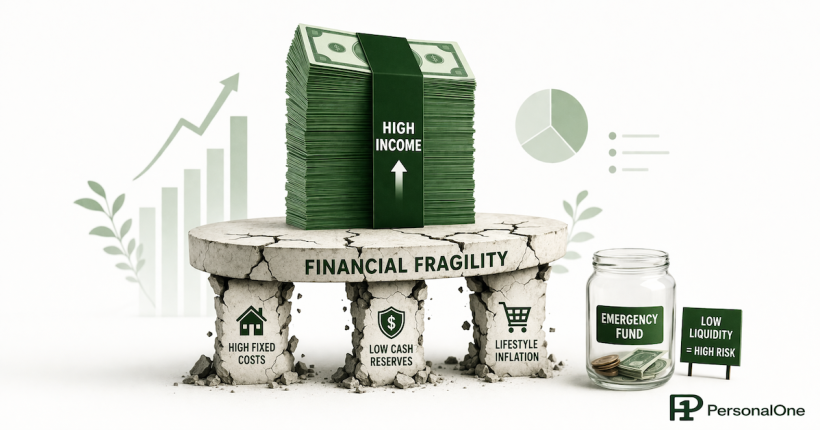
Most emergency funds that get depleted by “non-emergencies” are actually being depleted by predictable expenses that should have been in sinking funds. Car registration: predictable, should be a sinking fund. Annual insurance premium: predictable, should be a sinking fund. Holiday gifts: predictable, should be a sinking fund. Home maintenance: partially predictable, should be a mix. Job loss: unpredictable, should come from the emergency fund. Medical emergency: unpredictable, should come from the emergency fund. The moment you start running predictable expenses through your emergency fund, you erode the protective buffer that the emergency fund is designed to provide. This two-fund architecture is a core element of the financial stability system covered in the Financial Stability guide.
Side-by-Side Comparison
| Feature | Emergency Fund | Sinking Fund |
|---|---|---|
| Purpose | Unexpected, unpredictable expenses | Predictable, planned future expenses |
| Do you know it’s coming? | No | Yes |
| Target balance | 3–6 months of essential expenses | Specific expense amount divided by months until needed |
| Gets replenished after use? | Yes — rebuild to target immediately | Yes — starts building toward next occurrence |
| Example expenses | Job loss, medical emergency, car breakdown | Car registration, holidays, annual insurance |
| Best account type | HYSA at a separate bank — high friction | HYSA sub-accounts or buckets — organized but accessible |
How Sinking Funds Work
A sinking fund is a savings account designated for a specific planned future expense. You calculate the cost of the upcoming expense, divide it by the number of months until you need it, and save that amount each month. By the time the expense arrives, the money is already there. No debt. No scrambling. No emergency fund depletion.
For example: your car registration is $180 and due in 9 months. You open a sinking fund labeled “Car Registration” and contribute $20/month. In 9 months, the full $180 is there. Your car insurance renewal is $1,200 annually. Your “Insurance” sinking fund receives $100/month. Your holiday spending target is $600. Your “Holidays” sinking fund receives $50/month starting in January. None of these come from your emergency fund, because none of them are emergencies — they are expenses you planned for in advance.
The most common sinking fund categories for Millennials and Gen Z are car maintenance and registration, insurance renewals (auto, renter’s, health), annual subscriptions, holiday and gift spending, travel, home repairs and appliances, and medical out-of-pocket costs. Your specific list depends on your life structure, but the principle is the same: any expense that is predictable and recurring should have a dedicated sinking fund so it never touches your emergency reserves.
How to Set Up Sinking Funds Alongside Your Emergency Fund
Option 1: Sub-accounts at an online bank. Most online banks offering HYSAs also allow you to create named sub-accounts or “buckets” within a single savings account. You can label each sub-account by purpose (Car Maintenance, Insurance, Holidays) and set automatic contributions to each. The funds are technically in one FDIC-insured account but tracked separately. This is the simplest structure for most people managing 3–6 sinking funds alongside an emergency fund.
Option 2: Separate savings accounts by purpose. Some people prefer opening a distinct savings account for each sinking fund category. This provides maximum separation and clarity but adds account management complexity. Most online banks allow multiple free savings accounts, so this is a practical option if you prefer clear account boundaries over consolidated management.
The one rule that matters: your emergency fund and your sinking funds must be in separate accounts or clearly delineated sub-accounts that you treat as separate. Commingling them in a single undifferentiated savings balance is what allows “non-emergency” spending to quietly drain what you think is your emergency cushion. Separation — even if it is just labeled sub-accounts within one bank — is what preserves the integrity of both.
The Right Sequence: Emergency Fund First, Then Sinking Funds
The correct order of operations: build your $1,000 starter emergency fund first. Then begin funding sinking funds for your highest-impact predictable expenses in parallel with continuing to build the emergency fund toward its full target. Do not delay building the emergency fund to fund sinking funds first. The emergency fund is your protection against the unpredictable — which can happen at any time. Sinking funds cover the predictable — which you can manage with short-term debt if the fund is not yet fully built for that category.
Once both systems are running, the monthly cash flow structure looks like: automatic transfer to emergency fund HYSA + automatic transfers to each sinking fund sub-account, all executing on payday before discretionary spending. This architecture means every irregular future expense is already funded by the time it arrives, and the emergency fund is preserved exclusively for genuine emergencies.
Two accounts. Two purposes. One financial system that holds.
The complete framework for building and sizing your emergency cash reserves is in the Emergency Fund Strategy guide.
Explore Emergency Fund & Cash Reserves →Resources
Official Sources
CFPB — Savings Tools and Resources — Consumer Financial Protection Bureau guidance on savings account structures, how to build savings goals, and how to compare savings product options.
FDIC — Consumer Resource Center — FDIC guidance on insured savings products and how to verify coverage before opening accounts at any financial institution.
Continue Building Your Emergency Fund System
Where Should You Keep Your Emergency Fund? — The specific account types that work for emergency funds and sinking funds, and how to set up the behavioral separation that keeps both intact.
How to Build a $1,000 Starter Emergency Fund Fast — The step-by-step plan to reach your first savings milestone, including automation setup and one-time funding sources.
The full Financial Stability framework is in the Financial Stability guide.
Frequently Asked Questions
How many sinking funds should I have?
Start with the 2–3 predictable expenses that most frequently drain your emergency fund or land on a credit card. Common starting points: car maintenance/registration, insurance renewals, and holiday spending. Add categories incrementally as the system becomes automatic. Most people with a stable financial life run 4–8 sinking funds covering the irregular expenses their monthly budget misses.
Can I keep sinking funds and my emergency fund at the same bank?
Yes — with one condition: they must be clearly separated either as distinct accounts or clearly labeled sub-accounts that you treat as untouchable for the other purpose. The sinking fund for car registration is not available for emergencies. The emergency fund is not available for planned holiday spending. If you cannot maintain that mental and structural separation at the same institution, open the emergency fund at a separate bank with a transfer delay between it and your spending account.
What is the difference between a sinking fund and a savings goal?
They are functionally the same thing under different names. A sinking fund is a savings account dedicated to a specific planned expense with a defined monthly contribution. A savings goal is what most budgeting apps call the same structure. The terminology is less important than the practice: named, dedicated, and automatically funded for each predictable future expense.
Is car maintenance an emergency fund expense or a sinking fund expense?
It depends on the nature of the expense. Routine and semi-predictable maintenance — oil changes, tire rotation, brake pads at predictable mileage intervals — should be in a sinking fund. A sudden catastrophic failure — transmission failure, engine damage after an accident — is unpredictable and falls to the emergency fund. In practice, the line blurs and a well-funded car maintenance sinking fund reduces how often the emergency fund is needed for vehicle expenses at all.
Disclaimer: This article is for informational and educational purposes only. Financial product features and savings rates change — verify current terms directly with institutions before opening accounts. This content does not constitute financial advice.