Updated: April 6, 2026
Home › Budgeting & Savings › Savings Strategy & Wealth Growth › How to Build an Emergency Fund in 30 Days
TL;DR
-- You are not behind because surprises keep hitting -- a starter emergency fund reduces the need to borrow when life happens.
-- Start with $1,000 first, then build toward a larger cushion as your cash flow improves.
-- The week-by-week plan below covers finding leaks, adding quick income, cutting without misery, and locking it in with automation.
-- The goal is a repeatable system, not a magic number on a stopwatch -- consistency beats hero mode every time.
-- Once your fund is stable, that same discipline becomes the foundation for turning savings into long-term wealth.
If you have ever checked your bank app after an unexpected bill and felt your stomach drop, this is for you. The “please do not let my car make a weird noise today” lifestyle is one of the most common and most fixable financial situations there is.
Here is the plan: build a $1,000 emergency fund in 30 days using a week-by-week system that prioritizes clarity over perfection and momentum over heroics. Less chaos, more structure.
Why an Emergency Fund Changes Everything
An emergency fund is not extra money. It is the buffer between you and the expensive version of every problem: credit card interest, payday loans, late fees, and the financial stress of making reactive decisions under pressure.
The Federal Reserve’s Survey of Household Economics and Decisionmaking tracks how Americans handle unexpected expenses. In the most recent survey results, 63% of respondents said they could cover a $400 emergency using cash or its equivalent -- meaning more than a third could not without borrowing or selling something. That gap is exactly why a starter fund matters even before larger savings goals are in reach.
The CFPB is direct about what the emergency fund actually does: it reduces dependence on high-cost credit when something goes wrong. Every dollar in the fund is a dollar that does not generate interest charges, does not hit your credit utilization, and does not follow you into the next month as debt.
How Much Should You Save First?
The long-term target most financial frameworks point to is three to six months of essential expenses. But step one is simpler: get to $1,000. Why $1,000? Because it turns the most common “life happens” moments -- car repair, medical copay, phone replacement, missed shift -- into annoyances instead of financial disasters.
Once you have $1,000 consistently protected and untouched, the next goal is one month of essential expenses. Then two. Then three. Each milestone changes your financial fragility profile meaningfully. But none of those later milestones matter until the first one is reached and held. Start with $1,000. Hold it. Then build.
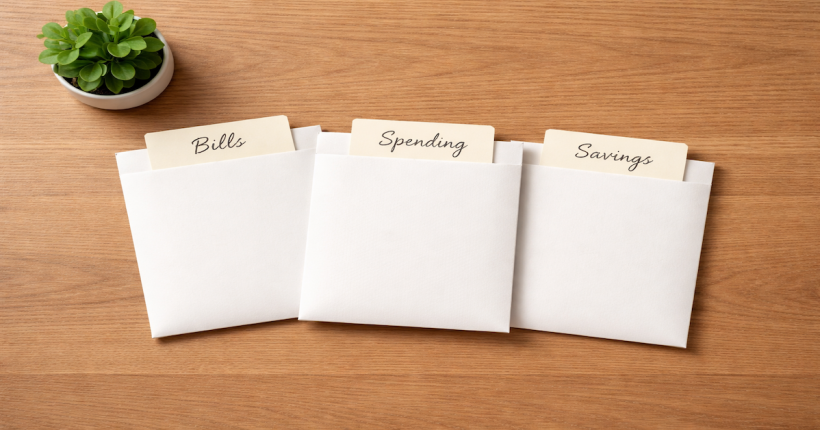
How quickly you can reach any of these milestones depends directly on how your money is actually flowing each month -- which accounts receive what, in what order, on which dates. Without a clear cash flow structure, savings contributions compete with bills and discretionary spending for the same dollars, and the emergency fund consistently loses.
Build a $1,000 Emergency Fund in 30 Days: The Week-by-Week Plan
Week 1: Get Organized and Find Your Leaks
Your job this week is not to be perfect. Your job is to get clarity and set a target you can actually hit.
Track your last 30 days of spending using your bank app, a budgeting app, or a quick notes list. You are looking for patterns, not punishment. Pause any unused subscriptions for one month -- you can bring them back later if you want them. Pick a weekly savings goal -- $250 is ideal for hitting $1,000 in 30 days, but choose a number you can actually hit rather than an aspirational one you will abandon. Open a dedicated savings account and label it “Emergency Fund” so it is psychologically separate from spending money.
The CFPB recommends setting a specific goal and creating a system for consistent contributions. The account separation is part of that system -- out of sight, out of the spending calculation.
Week 2: Add Quick Income Without Burning Out
This is where you get aggressive, but not chaotic. Pick one or two actions that fit your actual life and schedule, not an idealized version of it.
Sell unused items -- clothes, gadgets, furniture, old textbooks, anything collecting dust that someone else would pay for. Pick up a short-term gig if your schedule allows: delivery shifts, weekend work, one-off freelance tasks. Redirect every dollar of extra income straight to the emergency fund the same day it arrives. Do not let it sit in checking where it will blend into regular spending.
Goal for the week: another $250, or your best realistic number. Consistency beats a one-week sprint. A steady $150 per week for four weeks outperforms a frantic $400 week followed by three weeks of nothing.
If finding extra cash feels difficult, the structural approaches to saving money without drastic lifestyle changes -- subscription audits, bill renegotiation, and automated round-ups -- are the fastest ways to free up margin that already exists in your budget without adding work or removing anything you actually use.
Week 3: Cut Costs Without Feeling Punished
You do not need a no-fun month. You need a fewer-leaks month. The goal is targeted reduction, not deprivation.
Food reset: cook at home for five or six days this week rather than four. The difference between four and six home-cooked nights is meaningful on a grocery budget without feeling like a lifestyle overhaul. Transportation swaps: carpool, walk, bike, or cut rideshare use where it is genuinely optional. One spending boundary: pick a single category to cap for the week -- takeout, online shopping, convenience store runs -- and hold it for seven days. One boundary at a time is more sustainable than a full spending lockdown.
Goal for the week: another $250 stacked from cutbacks and redirected spending. There are also small changes that free up extra cash without requiring a complete lifestyle overhaul -- combining a few of these with the cutbacks above can meaningfully accelerate the weekly savings target.
The emergency fund is step one. The full savings system is what comes next.
Once your $1,000 fund is in place, the same discipline that built it becomes the foundation for increasing your savings rate, building sinking funds, and turning surplus into long-term momentum. See the complete framework.
Explore the Budgeting & Savings SystemWeek 4: Lock It In With Automation
This is where you stop relying on motivation and start relying on infrastructure. Motivation fades. Systems do not.
Review your month honestly: what worked, what did not, what surprised you. You are looking for the two or three patterns that will repeat if you do not address them. Set an automatic transfer to your emergency fund right after payday -- weekly or bi-weekly, timed so it moves before spending decisions are made. Keep the fund separate: it should not be in the same account as daily spending. Accessibility matters, but friction matters too -- it should take a deliberate action to touch it. Acknowledge the win: if you hit $700 instead of $1,000, you still built a habit, a system, and a buffer that did not exist 30 days ago.
End goal: $1,000 saved, or a strong starter amount with a clear automated path to get there. The system is more important than the exact number by day 30.
Emergency Fund Advice That Sounds Good But Fails in Practice
“Just invest everything -- cash is trash.” Investing money you might need next week can force you to sell at the worst possible time -- when markets are down and the emergency is up. Emergency savings are not an investment vehicle. They are a buffer that protects your actual investments from being liquidated under pressure. The CFPB is explicit: emergency savings should be kept liquid and separate. Build the fund first. Invest from surplus after.
“If you cannot save $1,000 in 30 days, you lack discipline.” Income level, rent, dependents, health, and work schedule all determine what is achievable in a given month. The win is building a repeatable system that compounds over time -- not hitting a single number on a stopwatch. Someone who saves $200 consistently every month for five months has outperformed someone who saved $1,000 once and then stopped entirely.
The System That Changes the Calculation
The emergency fund does not just protect you from financial shocks. It changes how you make decisions. When you know a $600 car repair will not wreck the month, you stop making fear-based financial choices -- carrying balances just in case, avoiding necessary purchases, or borrowing at high cost to cover predictable expenses.
The 30-day plan is a starting point. The automation you set up in Week 4 is what makes it permanent. The approach to turning short-term savings into long-term growth is the next layer -- where the habits built during these 30 days get converted into a structured savings system with rate targets, surplus allocation, and automated contributions that run without manual effort.
The savings strategy and wealth growth framework built on top of a stable emergency fund is what converts financial stability into long-term momentum. Start with $1,000. Hold it. Build from there. That is also the foundation of a complete budgeting and savings system -- where the emergency fund, savings rate, and wealth-building goals all connect into a single operating structure rather than competing for the same dollars.
Official Resources
CFPB -- An Essential Guide to Building an Emergency Fund -- Official government guidance on setting emergency fund targets, choosing accounts, and building consistent contribution habits.
Federal Reserve -- Economic Well-Being of U.S. Households: Savings and Investments -- Annual data on how American households build and draw down savings, including emergency fund coverage rates across income levels.
CFPB -- Save for Your Goals & Financial Wellness -- Tools and frameworks for setting savings goals, tracking progress, and building automated contribution systems.
Continue Learning About Budgeting & Savings
The emergency fund is the foundation. The complete framework for building every other savings goal on top of it is in the Budgeting & Savings guide.
Frequently Asked Questions
Can I use a credit card in an emergency instead of a fund?
You can, but it is usually the most expensive version of help available. Emergency savings keeps you from paying interest on a problem you did not ask for. A $600 car repair paid from savings costs $600. The same repair put on a high-interest credit card and paid off over three months costs significantly more -- and enters your utilization ratio, which affects your credit score.
Where should I keep my emergency fund?
Keep it liquid and separate from your everyday spending account. The CFPB recommends a dedicated savings account where the money is accessible when genuinely needed but not so frictionless that it gets dipped into casually. The separation -- even just a different account at the same bank -- creates a psychological boundary that matters in practice.
Is $1,000 actually enough?
It is a meaningful starter milestone, not a final destination. The $1,000 target covers the most common single-incident emergencies and breaks the borrowing cycle for most households. The longer-term goal, as the CFPB outlines, is building toward three to six months of essential expenses. But $1,000 held consistently changes your daily financial decision-making in ways that make every subsequent milestone easier to reach.
What if I cannot save $250 per week?
Save what you can and build the system regardless of the amount. Someone saving $75 per week consistently for 14 weeks reaches $1,050 -- the same destination on a different timeline. The weekly goal in this plan is a target, not a requirement. What matters more than the specific number is the automated transfer that runs whether you are paying attention or not.
Should I pay off debt or build an emergency fund first?
Both, in sequence. Most financial frameworks, including the CFPB’s guidance, recommend getting to a starter emergency fund before aggressively paying down debt -- because without the fund, unexpected expenses force you back into debt as fast as you pay it off. A $1,000 buffer breaks that cycle. Once the starter fund is in place, direct surplus toward high-interest debt first, then build the emergency fund further.
This content is for educational purposes only and does not constitute financial advice. PersonalOne is not a licensed financial advisor, broker, or investment professional. Individual financial situations vary -- consult a qualified financial professional for personalized guidance.