


November 17, 2025
Updated: March 18, 2026
Home › Budgeting & Savings › Budget Audit & Reset › Holiday Budgeting
This article is part of the Budget Audit & Reset cluster on PersonalOne. Use it to plan and fund holiday spending without accumulating debt that disrupts the following year’s financial plan.
Holiday Budgeting: How to Avoid a January Debt Hangover
Don Briscoe is a personal finance coach with 12+ years of experience helping people take control of their money. As the founder of PersonalOne.org, Don specializes in building financial systems for Millennials and Gen Z that work in real life, not just on paper.
TL;DR
— Set a firm total spending limit before any shopping begins — this single decision made in advance prevents the majority of holiday overspending.
— Cash and debit create payment awareness that credit cards structurally eliminate — the psychological distance of a card swipe is exactly what drives holiday overspending.
— Shopping early eliminates panic buying, which is the most expensive kind — retailers are specifically designed to exploit time pressure and emotional urgency.
— Holiday extras that will not be remembered in January should not be purchased — meaningful experiences produce more lasting value than most purchased items at any price.
— Starting a dedicated holiday sinking fund in January eliminates holiday financial stress permanently — $20 per week produces over $1,000 by the following December without any debt.
The holidays are supposed to be about connection and celebration. For many people they also produce overspending, buyer's remorse, and a January credit card statement that makes the season feel significantly less worth it in retrospect. The financial stress that follows holiday spending can linger for months — January and February payments on December purchases are a predictable pattern for anyone without a holiday spending plan.
The good news is that holiday budgeting is one of the most solvable financial problems because the expense is not a surprise. It happens every year on approximately the same schedule. The budget audit and reset process that this cluster covers is the natural entry point for holiday financial planning — reviewing where the previous year's holiday spending landed, understanding what that cost actually was, and building the sinking fund structure that ensures next year's holidays are fully funded before the season begins.
Set a Realistic Holiday Spending Limit First
Before any shopping begins, the total holiday budget needs to be a specific number calculated from actual income and expense data — not a rough estimate based on what feels like it should be enough. This number, set in advance when there is no shopping pressure, prevents the majority of holiday overspending because it establishes the constraint before the emotional triggers of the season activate.
How to calculate a realistic limit: review monthly take-home income and all fixed monthly obligations. Confirm the emergency fund is not being considered as available for gifts — it is not. Review upcoming January bills, particularly any annual obligations that renew in January, to ensure the holiday spending does not create a January cash flow problem. The amount left after all of these constraints is the realistic holiday budget ceiling. Set the number and do not revise it upward after shopping begins.
Sample Holiday Budget Breakdown at $1,000 Total
Gifts: $600 — list every recipient first, then divide the allocation rather than estimating per person and multiplying
Holiday meals and entertaining: $200 — groceries for special meals, hosting costs, potluck contributions
Travel or hosting expenses: $150 — transportation, accommodation, extra hosting supplies
Decorations and miscellaneous: $50 — anything that does not fit above
Adjust category percentages based on actual priorities. If gifts exceed their allocation, reduce another category — do not increase the total. The total is fixed before shopping begins.
The rule that prevents most holiday debt: if it is not in the budget, it does not go in the cart. No exceptions for "it's such a good deal" or "just one more thing." Those rationalizations are the mechanism that creates January debt. The budget was built with clear thinking before the season started. Honor it.
Cash and Debit Over Credit Cards
Credit cards create psychological distance between purchase and payment. That distance is structural — it is built into how cards work — and it reliably produces higher spending than cash or debit for the same purchases. Retailers understand this and design the shopping experience around it. Holiday shopping while primarily using credit cards is competing against a system specifically designed to make you spend more than planned.
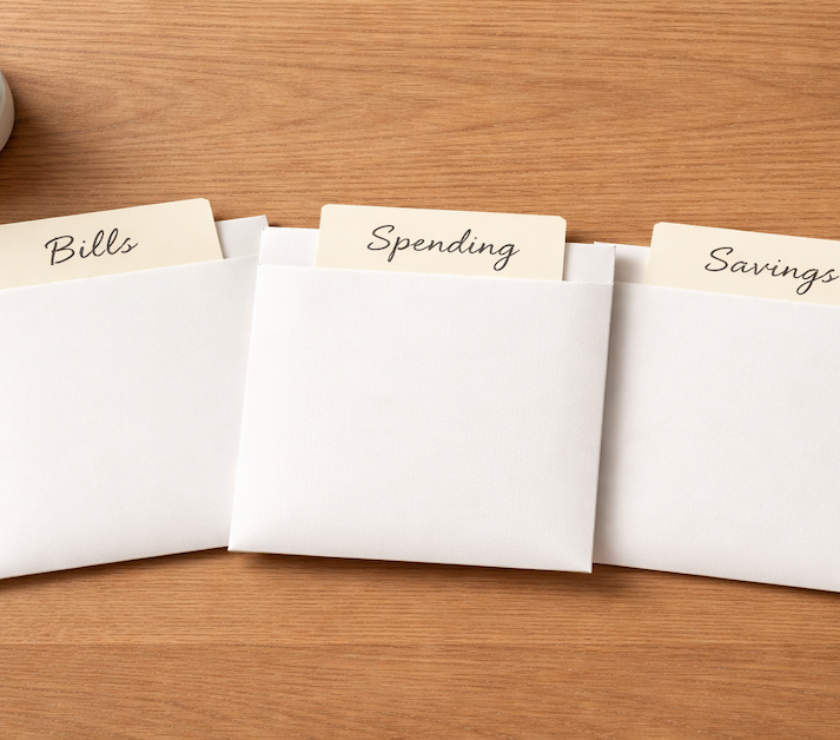
Better payment methods for holiday spending: cash envelopes by category, debit cards where the transaction registers against a real account balance in real time, or a prepaid card loaded with the exact budget amount — when it reaches zero, shopping is complete. The physical experience of watching money leave a wallet or seeing an account balance decrease activates spending awareness that a card swipe does not.
If credit cards are used for rewards or convenience: three rules that prevent the rewards from becoming a liability. Pay the full statement balance before the due date with no exceptions — the moment a balance is carried, interest costs exceed any rewards earned. Track the running balance daily during the shopping season, not monthly. Treat each credit purchase as a debit from the holiday budget in real time, not a charge that will be dealt with when the statement arrives.
On promotional financing: zero-percent APR offers that expire after a promotional period typically revert to 25 to 30 percent interest on the remaining balance, often retroactively. If the full balance cannot be paid from cash available today, the item is not affordable at zero percent — it is borrowed at a rate that will apply unless the balance is paid in full before the promotional period ends.
Shop Early and Strategically
Last-minute holiday shopping produces the worst financial outcomes of any shopping approach. Time pressure disables price comparison, eliminates patience, and activates the urgency that retailers design their promotions to exploit. The week before a major holiday is when the most expensive purchasing decisions happen — not because the prices are higher, but because the decision-making quality is lower.
Strategic shopping timeline: start the gift list in early November and begin watching prices on specific items before any major sale events. Complete at least 80 percent of shopping before mid-December. Finish remaining purchases in mid-December without the deadline pressure that drives panic buying. After the third week of December, only genuinely necessary purchases should be made — anything else can wait.
Tactics that produce actual savings: price comparison across multiple retailers before purchase, browser extensions that track price history and surface lower prices from competitors, cashback platforms that return a percentage of purchases already planned, and store alert lists that catch genuine promotions rather than manufactured urgency. The goal is to outsmart holiday marketing, not respond to it. Every "doorbuster" and "limited time offer" is designed to produce a purchase that would not have happened otherwise. Early, calm, strategic shopping produces significantly better financial outcomes than reactive shopping under time pressure.
Skip the Extras Nobody Will Remember
Holiday excess accumulates quickly: matching family items that were novel for one photo and are forgotten by January 2nd, elaborate decorations for surfaces that nobody looks at closely, themed purchases that seemed meaningful while scrolling late at night and feel different in daylight. Before checkout on any supplemental purchase, one question determines whether it belongs: will anyone remember this specifically in January?
If the honest answer is no, it does not go in the cart. The holiday budget is not unlimited. Every dollar spent on something that will not be remembered is a dollar not available for something that will be.
What Actually Creates Holiday Memories
Cooking a special meal together: the process and conversation outlast any gift in memory value
Volunteering as a group: creates shared experience and perspective that purchased items cannot produce
Low-cost recurring traditions: annual movie nights, neighborhood walks, game competitions — free or nearly free, remembered for years
Handmade or experience gifts: baked goods, photo compilations, committed time — cost low, value high
Potluck formats: distributed hosting cost, maintained social connection, reduced individual burden
When everyday expenses are already high, holiday spending pressure compounds the stress significantly. Managing money in high-cost environments — where rent and essentials consume most of income before discretionary spending begins — requires the same structural approach applied to the holiday category specifically. The city budgeting framework covers how to build spending structure when fixed costs leave minimal margin for seasonal fluctuations.
The Holiday Sinking Fund: Eliminate Holiday Stress Permanently
Holiday spending is not an unexpected expense. It happens every year on approximately the same schedule at approximately the same cost. Treating it as a surprise that requires credit card coverage is the financial equivalent of being unprepared for something that has happened every December for your entire life. The structural solution is a holiday sinking fund that accumulates throughout the year so the money exists before the shopping begins.
How to build the holiday fund: open a dedicated sub-account or labeled savings bucket specifically for holiday spending. Set an automatic weekly or biweekly transfer to start in January. $20 per week produces over $1,000 by the following December. $40 per week produces over $2,000. When the holiday season arrives, the fund is available in full and shopping happens with cash rather than credit. The January debt hangover disappears because there is no January debt.
Windfall acceleration: any unexpected income received during the year — tax refund, work bonus, cash gifts, side income — should direct a portion to the holiday fund before entering the general spending account. A $1,200 tax refund in April that partially funds the holiday account reduces the required weekly contribution for the rest of the year proportionally. The fund reaches its target faster and with less ongoing transfer burden.
Why automating the savings works when manual saving does not: holiday spending is driven by predictable emotional and social triggers that make restraint feel difficult in the moment. By automating the savings throughout the year, the willpower requirement is removed entirely. The money is already funded when the season arrives. The decision is already made. Shopping becomes a straightforward process of spending pre-existing funds rather than a stressful calculation about how much debt is acceptable to accumulate.
Take Control Before January's Bills Arrive
The worst time to address holiday overspending is January, when statements arrive and the financial damage is already recorded. The best time is before any seasonal spending begins — when the budget can be set clearly, the sinking fund can be confirmed or built, and the shopping plan can be structured without the emotional pressure of the season.
Holiday budgeting is not about restricting celebration or reducing generosity. It is about being intentional enough that the season produces positive memories rather than months of financial recovery. A planned $1,000 holiday spent on genuinely valued experiences and gifts is a better outcome than an unplanned $2,500 holiday that produces three months of minimum credit card payments and an equivalent amount of financial stress. The holidays will come and go. Financial stability does not have to go with them.
Holiday planning connects to the full annual budget system.
The Budgeting & Savings hub covers the complete framework — sinking funds, cash flow structure, annual budget resets, and the systems that make every season financially manageable.
Explore the Budgeting & Savings Hub →More From Budget Audit & Reset
Year-End Financial Mistakes — The errors that quietly undermine year-end reviews and how to audit your finances without repeating them
2026 Financial Game Plan — The three-phase framework for building financial stability and growth through the year
You are here: Holiday Budgeting
Reset Your Finances This Fall — The seasonal reset framework for auditing, recalibrating, and relaunching your financial plan before year-end
Back to School Budget Hacks — How to manage back-to-school spending without disrupting the broader annual budget plan
Resources
CFPB — Budget Worksheet and Planning Tools
CFPB — Saving Money: Tools and Guidance
BLS — Consumer Expenditure Surveys: How Americans Spend
This article is part of the Budgeting & Savings hub on PersonalOne — a complete framework for building cash flow control and long-term financial stability.
Frequently Asked Questions
How do I stick to a holiday budget when social pressure makes it hard?
Structural controls work better than willpower. Withdraw cash in labeled envelopes for each budget category or use a spending account funded to the exact budget amount. When the cash or account balance reaches zero, shopping stops. This removes the in-the-moment decision about whether to exceed the budget and replaces it with a physical constraint that holds regardless of social pressure or seasonal emotions.
How much should a holiday budget be?
The right amount is whatever can be spent without creating January debt or drawing from the emergency fund. Calculate monthly take-home income minus all fixed obligations, confirm January bills are accounted for, and set the holiday total at an amount that leaves those obligations met and savings intact. A $600 holiday that does not create debt is a better outcome than a $1,800 holiday that adds three months of credit card payments to the following year's budget.
What is the fastest way to build a holiday fund if starting from zero?
Open a dedicated savings account or labeled sub-account and set an automatic transfer immediately after the current holiday season ends. Even $15 to $20 per week starting in January accumulates to $800 to $1,000 before the next December. Direct any windfalls — tax refund, bonus, occasional side income — partially to the fund to accelerate it. The account should be at a separate institution with no debit card attached so the accumulation is protected from impulsive use throughout the year.
What if family or friends have spending expectations that exceed the budget?
The most effective approach is direct communication before the season rather than silent overspending followed by financial stress. Proposing a group spending limit, a gift exchange with a per-person cap, or experience-based alternatives to purchased gifts frequently produces genuine relief from others who have the same financial constraints but did not want to raise them first. Most people in a gift exchange are relieved when someone else establishes a reasonable ceiling. The person who says it out loud usually finds they were not alone in wanting to.
Should holiday spending come from savings or current monthly income?
Ideally neither — it should come from a holiday sinking fund built specifically for this purpose throughout the year. If a sinking fund does not yet exist, current month income is the correct source and the emergency fund is not. If neither current income nor a sinking fund covers the desired holiday spending level, the budget needs to be adjusted downward to match available cash rather than covered with credit or emergency savings withdrawal.
Disclaimer: This content is for educational purposes only and does not constitute financial advice. Holiday budgeting strategies should be adapted to your individual income, expenses, and circumstances. Always consider your complete financial picture before setting seasonal spending limits.

Great tips for staying on budget during the holidays. The advice here feels realistic and easy to follow.
This was a really helpful reminder going into the holidays. I like how you broke down simple ways to enjoy the season without waking up to a financial hangover in January.