Updated: May 17, 2026
Home › Debt Relief & Credit Repair › DIY Credit Recovery › How to Rebuild Damaged Credit Without Paying for Help
Part of DIY Credit Recovery — a guide to repairing your credit on your own terms, without paying for services you don't need.
What You Need to Know
— Damaged credit is repairable without lawyers, credit repair companies, or special services — the same tools available to them are available to you for free.
— Payment history is 35% of your FICO score. A single missed payment can drop your score 60–110 points. A single on-time payment will not fix that — but six consecutive on-time payments will begin to.
— Credit utilization is 30% of your score and can be improved faster than any other factor. Getting below 30% on each card makes a measurable difference. Getting below 10% makes a significant one.
— Most errors on credit reports are never disputed. The CFPB estimates that one in five Americans has an error on at least one of their three credit reports. Disputing errors costs nothing and can remove negative marks entirely.
— Rent reporting services can add 12–24 months of on-time payment history to your file without taking on any new debt.
— Credit repair companies charge $50–$150 per month for work you can do yourself in an afternoon using free government resources.
If your credit score dropped — whether from a missed payment, a collections account, a charge-off, or a period of financial hardship — rebuilding it is something you can do yourself. The process to rebuild credit is not complicated, but it is specific. Knowing which steps move the needle and which ones are just noise makes the difference between a two-year recovery and a five-year one.
This guide covers the complete rebuild process: what actually damaged your score, which actions produce the fastest improvement, the free tools most people skip, and how to stay on a trajectory that keeps your credit healthy once it recovers. If you want to understand the broader context of where credit repair fits in your financial recovery, the debt relief and credit repair framework covers the full picture from debt to recovery.
What Actually Damaged Your Score — and Why It Matters for Recovery
Before you can effectively rebuild credit, you need to know specifically what is hurting your score. The strategies that work for someone with high utilization are different from the strategies for someone with a charge-off, and different again for someone with errors on their report. Treating credit repair as a single generic process is the most common reason people spend months doing the right things in the wrong order.
Pull your credit reports from all three bureaus at AnnualCreditReport.com — the only federally authorized free source. You are entitled to free weekly reports. Print or save them. What you are looking for falls into four categories:
Late payments. Any payment 30 or more days late gets reported and stays on your credit report for seven years. The more recent the late payment, the more it hurts. A late payment from six months ago does more damage today than the same late payment from four years ago.
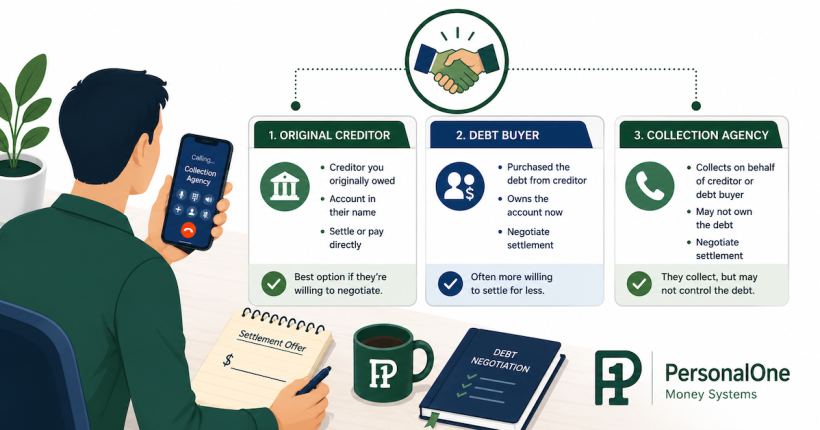
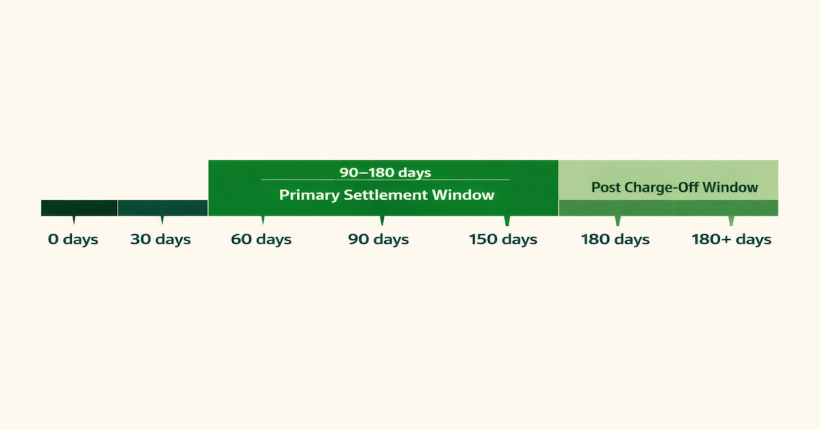
Collections and charge-offs. When a debt is sold to a collections agency or written off by the original creditor, it appears as a separate negative item. Charge-offs typically appear after 180 days of non-payment. These are severe marks, but their impact diminishes over time — especially when new positive history is added.
High credit utilization. This is how much of your available revolving credit you are using. If your credit card has a $3,000 limit and your balance is $2,400, your utilization on that card is 80% — and that alone can lower your score significantly, even with a perfect payment history.
Errors. Accounts that are not yours. Late payments that were actually paid on time. Balances that are reported higher than they should be. Duplicate accounts. These appear on credit reports regularly and do real damage until they are disputed and removed.
Disputing Errors: The Free Action Most People Never Take
Disputing errors on your credit report costs nothing, takes an afternoon, and can produce a score improvement faster than almost anything else — because removing a negative item that should not be there is an immediate correction, not a gradual improvement over months of on-time payments.
The dispute process is the same at all three bureaus — Experian, TransUnion, and Equifax — and all three offer online dispute portals. For each error you identify, you submit the disputed item, the reason for the dispute, and any supporting documentation if you have it. The bureau is required by law under the Fair Credit Reporting Act to investigate within 30 days and correct or remove items that cannot be verified.
Common errors worth disputing include: payments reported as late when you have bank records showing they were on time; accounts listed as open when they were closed; balances higher than the actual balance at the time of reporting; accounts belonging to someone with a similar name or Social Security number; and collections accounts that have already been paid or settled.
If you find the same error on multiple bureaus — which is common — you need to dispute it at each bureau separately. A correction at Experian does not automatically correct the same item at TransUnion or Equifax.
The Fastest Lever: Reducing Credit Utilization
Of all the factors that go into a credit score, utilization is the one that responds fastest to deliberate action. Payment history takes months to repair — each on-time payment is a single data point added to a long record. Utilization, by contrast, updates when your creditor reports your new balance, typically at the end of each billing cycle. Pay down a card, and your score reflects that improvement within 30–45 days.
The CFPB and most credit scoring guidance treats 30% utilization as the threshold that begins to hurt a score. But the biggest improvements tend to come when utilization drops below 10%. On a card with a $3,000 limit, that means keeping your balance at or below $300.
If you cannot pay down balances quickly, there is a secondary approach: request a credit limit increase on your existing cards. If your limit increases from $3,000 to $5,000 while your balance stays at $2,400, your utilization drops from 80% to 48%. That is still high, but it is a meaningful improvement without paying anything extra. Do this only if your account is in good standing and if the creditor uses a soft pull for the limit increase request — a hard inquiry for a limit increase is rarely worth it.
What I've Seen
One pattern I’ve seen repeatedly is people assuming their score is “permanently broken” when the biggest issue is actually utilization. I’ve worked with people carrying balances at 70%–90% usage across multiple cards who thought they needed credit repair services or years of waiting. In many cases, the first real score movement happened within one or two reporting cycles after balances dropped below 30%. The surprise for most people is that the score jump usually doesn’t happen the day they pay the card — it happens when the creditor reports the new lower balance to the bureaus. I’ve also seen renters gain meaningful traction after adding rent reporting because it finally gave the bureaus consistent positive payment history they weren’t seeing before.
Building New Positive History When You Have Almost None
Credit repair is not only about removing negative marks — it is also about adding positive history. If your report is thin, old, or dominated by negative accounts, adding new on-time payment data accelerates the recovery timeline significantly.
There are three ways to add positive history without taking on risky debt:
Secured credit cards. A secured card requires a cash deposit — typically $200 to $500 — that becomes your credit limit. It functions exactly like a standard credit card for reporting purposes: your on-time payments show up as on-time payments, and your utilization is calculated the same way. The deposit is refundable when you close or upgrade the account. Used correctly — small charges paid in full each month — a secured card begins building positive history immediately.
Credit-builder loans. A credit-builder loan works in reverse from a traditional loan: the lender holds the loan amount in a savings account, you make monthly payments, and at the end of the term you receive the funds. The payments are reported to the credit bureaus as on-time installment loan payments. Many credit unions and community development financial institutions offer these, typically in amounts of $300 to $1,000. The cost is the interest you pay over the loan term — usually modest — and the benefit is 12 to 24 months of perfect payment history on an installment account.
Becoming an authorized user. If someone in your life — a parent, partner, or sibling — has a credit card account with a long, clean payment history and low utilization, being added as an authorized user on that account can add that history to your credit file. You do not need to use the card, or even receive a physical card. The account's history appears on your report as if it were your own. This works best when the primary cardholder has an account that is several years old and has never carried a high balance.
Rent Reporting: The Credit Tool Most Renters Don't Know Exists
If you rent your home, you are likely making a payment every month that is larger than any other monthly expense you have — and it is not building your credit. Rent payments are not reported to the credit bureaus by default. Rent reporting services change that.
These services connect to your bank account or your property management platform, verify your on-time rent payments, and report them to one or more credit bureaus as positive payment history. Some services also report retroactively — adding up to 24 months of past rent payments to your file at once, which can produce a meaningful score improvement in a single reporting cycle.
Experian Boost is the most widely known free option and also picks up utility and streaming service payments. Other services like Rental Kharma and LevelCredit charge a small monthly fee but report to more bureaus. The right choice depends on which bureaus your lenders are likely to use — if you are rebuilding credit with a future auto loan or apartment application in mind, confirming that your target bureau receives the data matters.
Which Debts to Pay First When Money Is Limited
When you cannot pay everything at once, prioritization matters. Not all debts are equally important to your credit score, and not all debts are equally urgent from a financial risk standpoint. Understanding the difference between the two helps you allocate limited resources effectively.
Current revolving accounts. If you have credit cards that are currently open and in good standing but carrying high balances, paying these down is the highest-leverage credit action available to you. You are protecting your payment history (no future late payments) while simultaneously reducing utilization. Both factors improve simultaneously.
Accounts approaching 30 days late. A payment that becomes 30 days late triggers a credit bureau report. A payment that is 29 days late does not. If you have accounts that are behind but have not yet been reported as late, bringing them current before the reporting date is a credit emergency. One late payment reported can drop a score with no prior negative history by 60 to 110 points.
Collections accounts. Paying a collections account does not remove it from your credit report — the account will remain visible for seven years from the original delinquency date, though it will show as paid. The exception is a pay-for-delete agreement: some collections agencies will agree in writing to remove the account entirely upon payment. This is not a right you can demand, but it is worth requesting before you pay. Get any agreement in writing before sending any money.
Old charge-offs. A charge-off that is several years old has already done most of its damage. Paying it improves your financial standing — you no longer owe the debt — but it has limited additional credit score benefit unless you negotiate removal. Prioritizing a four-year-old charge-off over a current card that is approaching its credit limit is typically the wrong order of operations.
What Credit Repair Companies Do — and Why You Don't Need One
Credit repair companies charge $50 to $150 per month, sometimes more, to dispute errors on your credit report, negotiate with creditors, and advise you on score improvement strategies. Every single one of those actions is something you can do yourself using the same legal mechanisms they use — there is no service they have access to that you do not.
The FTC has published clear guidance on this: credit repair companies cannot do anything for your credit that you cannot do yourself for free. They cannot legally remove accurate negative information, regardless of what they advertise. The only things that can be removed from a credit report are inaccurate information (through disputes) and accurate negative information that has aged off the seven-year reporting window.
The legitimate services credit repair companies provide — pulling reports, filing disputes, following up on investigations — take a few hours to complete on your own. The Consumer Financial Protection Bureau offers free dispute guidance and sample letters. The credit bureaus are legally required to investigate disputes within 30 days. The process is not complicated.
There are situations where working with a nonprofit credit counseling agency makes sense — particularly for people managing multiple debts who benefit from a structured repayment plan through a debt management program. The key word is nonprofit. The National Foundation for Credit Counseling (NFCC) maintains a directory of accredited agencies that operate on a sliding-scale fee model or at no cost. That is a different category from for-profit credit repair companies.
Monitoring Your Progress Without Over-Checking
Tracking your credit score while rebuilding serves two purposes: it confirms that your actions are having the intended effect, and it alerts you quickly if something new and negative appears on your report — such as a collections account from a medical bill you were not aware of or an error introduced by a creditor update.
Free credit monitoring is available through Credit Karma, which reports scores from TransUnion and Equifax. Credit Karma also alerts you to new accounts, inquiries, and significant score changes as they happen. This is the monitoring level most people need during active credit repair — comprehensive enough to catch problems early, at no cost.
One important note: the scores shown on free monitoring platforms are typically VantageScore, not FICO. VantageScore and FICO use similar factors but can produce different numbers. Neither is wrong — they just weight factors slightly differently. What matters for monitoring purposes is the trajectory, not the exact number. If VantageScore is climbing over time, FICO is almost certainly improving as well.
How Long Rebuilding Actually Takes
The honest answer depends on what caused the damage and what you do about it. There is no single timeline, but there are reasonable expectations based on the type of negative items on your report.
High utilization with no negative marks can be addressed in 30 to 90 days once balances come down. This is the fastest category because utilization updates with each billing cycle and there are no negative items waiting to age off.
A single late payment with otherwise clean history typically sees most of its damage fade within 12 to 24 months, especially when new positive history is added consistently. The mark stays on the report for seven years, but its weight in scoring models decreases significantly after two years.
A collections account or charge-off takes longer. Expect 24 to 48 months before significant score recovery, depending on whether the account is paid and whether any other negative items exist simultaneously. Adding positive history aggressively through secured cards, rent reporting, or credit-builder loans during this period compresses the timeline.
Bankruptcy is the longest recovery — typically three to five years before scores recover meaningfully, and seven to ten years before the bankruptcy record fully disappears from reports. The recovery path is the same as any other damage, just longer: consistent on-time payments, low utilization, new positive accounts opened deliberately over time.
Understanding the full landscape of your options — from DIY repair to DIY credit recovery strategies — helps you choose the approach that matches your actual situation rather than a generic plan that may not fit your specific damage profile.
The Habits That Keep Credit Healthy Once It Recovers
Rebuilding credit is a one-time project. Maintaining it is a permanent system. The people who rebuild successfully and then watch their scores drop again typically share the same pattern: they focus intensely during the repair phase and then abandon the habits that produced the improvement once the crisis feels resolved.
The maintenance habits are simple but need to be structural rather than behavioral. Set up autopay for the minimum payment on every credit card — this eliminates the possibility of accidentally missing a payment. Use calendar reminders or a budgeting platform to review balances monthly. Keep at least one credit card open and in use with a small monthly charge, even after you have stopped carrying balances, to keep the account active and the utilization calculation working in your favor.
Check your credit reports at least twice per year — once in the middle of the year and once at the end. New errors appear without warning. Fraudulent accounts opened in your name show up the same way. Catching these early, when they are fresh and easier to dispute, matters more than catching them two years later when the damage has compounded.
Know Where Your Credit Stands Right Now
Credit Karma gives you free access to your TransUnion and Equifax scores, credit monitoring alerts, and a full view of what is helping or hurting your report — at no cost.
Check Your Credit FreeGovernment & Official Sources
AnnualCreditReport.com — The only federally authorized source for free weekly credit reports from all three bureaus. Required first step in any credit repair process.
CFPB — Credit Reports and Scores — The Consumer Financial Protection Bureau's complete resource on understanding credit reports, disputing errors, and your rights under the Fair Credit Reporting Act.
FTC — Credit Repair: How to Help Yourself — The Federal Trade Commission's plain-language guide explaining what credit repair companies can and cannot do — and how to do the same work yourself for free.
CFPB — How to Dispute a Credit Report Error — Step-by-step CFPB guidance on filing disputes with the credit bureaus, including sample dispute letters.
More From PersonalOne
Return to the Debt Relief & Credit Repair hub for a full overview of every recovery path — from settling debt to rebuilding credit to long-term financial stability.
Frequently Asked Questions
How long does it take to rebuild credit after a missed payment? A single late payment on an otherwise clean report typically takes 12 to 24 months to lose most of its impact, especially when new positive history is added consistently. The mark stays on the report for seven years but carries less weight as it ages and as more positive data is added around it.
Can I rebuild credit without a credit card? Yes. Credit-builder loans and rent reporting services add positive payment history to your file without requiring a credit card. That said, a secured credit card used responsibly — one small charge paid in full each month — is one of the most efficient tools available because it builds both payment history and a utilization track record simultaneously.
Should I pay old collections accounts? It depends on the account and whether you can negotiate removal. Paying a collections account does not automatically remove it from your credit report — it will still appear as a paid collection for up to seven years from the original delinquency date. Before paying, contact the collections agency and request a pay-for-delete agreement in writing. If they will not agree to deletion, consider whether payment makes sense for other financial reasons (avoiding lawsuit, settling the debt for peace of mind) rather than expecting a significant credit score improvement from it.
Will closing a credit card help my credit score? Generally no — and it can hurt. Closing a card reduces your total available credit, which raises your overall utilization ratio. It also removes the account's history from your active accounts, which can shorten your average account age over time. The exception is a card with a high annual fee that you are no longer using, where the cost outweighs the credit benefit of keeping it open.
Do credit repair companies actually work? They can produce results, but nothing they do is unavailable to you directly. They file disputes, follow up with creditors, and advise on score improvement strategies — all of which you can do yourself using free CFPB tools and the credit bureaus' dispute portals. The FTC has been explicit that credit repair companies cannot legally remove accurate negative information, regardless of what they advertise. For most people, the monthly fee is not worth it when the same work can be done in a few hours.
How many points will my credit score go up if I pay off a credit card? It depends on your current utilization and what your score was before payment. Paying off a card that was at 80% utilization on a $3,000 limit — dropping to near zero — can add 20 to 100 points depending on the rest of your credit profile. The improvement is faster than almost any other single action because utilization updates within a billing cycle. Paying off a card with very low utilization to begin with produces a smaller improvement.
Disclaimer: This article is for educational purposes only and does not constitute financial or credit advice. Credit scoring models vary and individual results depend on your specific credit profile. PersonalOne is not a licensed financial advisor, credit counselor, or attorney. Consult a qualified financial professional before making decisions about your credit. PersonalOne is not responsible for decisions made based on this content.