Updated: August 2026
Home › Debt Relief & Credit Repair › Rebuilding After Debt Relief › What to Do After Debt Settlement
Don Briscoe is a financial systems strategist with 12+ years of experience helping Millennials and Gen Z build income and financial stability. He founded PersonalOne to provide the financial education he wished existed — structured, honest, and free. Follow
What You Need to Know
— Forgiven debt over $600 is often reportable as taxable income via Form 1099-C. This is a tax-deadline issue, not a someday task.
— Your credit report needs to be checked for accurate settlement reporting before you do anything else with your credit.
— Rebuilding credit and rebuilding your cash cushion should start close to simultaneously, not one after the other.
— The habits that resolve debt are not automatically the habits that prevent it from coming back — that requires a deliberate structural change.
Settlement is done. The accounts are closed, the calls have stopped, and the balance you carried for years is gone. What to do after debt settlement isn't obvious, though — most people spend the first few months either doing nothing, or doing the right things in the wrong order. This is exactly the gap the Rebuilding After Debt Relief cluster is built to close.
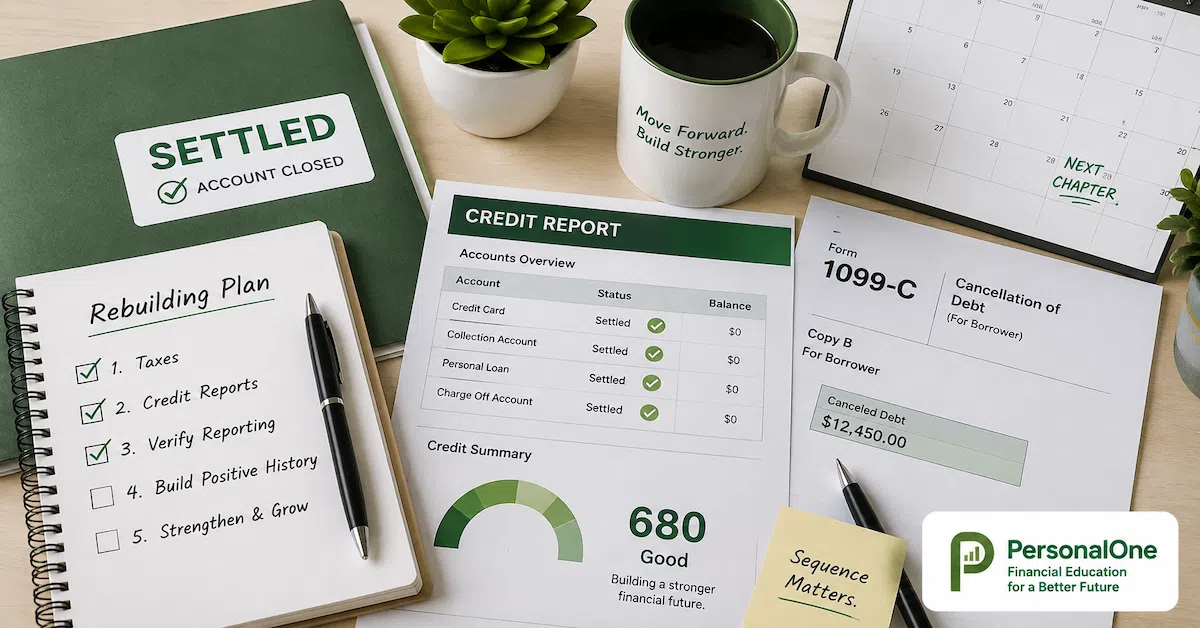
Sequence matters here more than effort does. Two of the five moves below have hard, easy-to-miss deadlines attached to them, and getting the order wrong can cost you money or delay your credit recovery by months.
Step 1: Handle the Tax Situation First
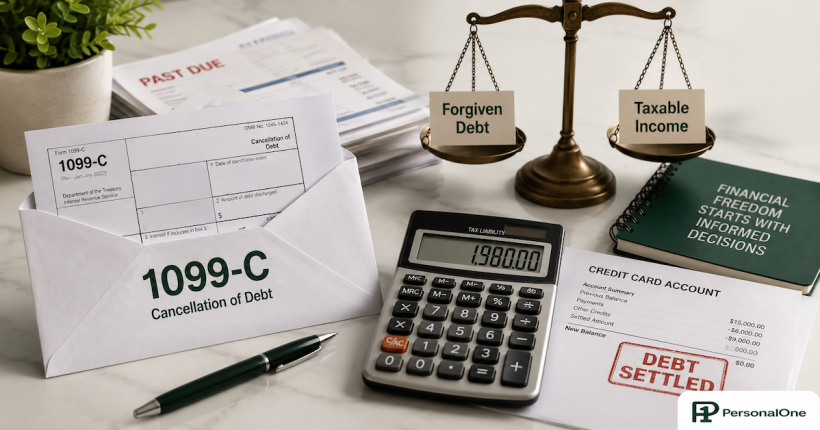
This is the step most people don't know exists, and it's the one with an actual deadline. When a creditor forgives $600 or more of debt, the IRS generally treats that forgiven amount as taxable income, reported to you on a Form 1099-C. If you settled multiple accounts, you may receive one of these for each account. Skipping this step doesn't make it disappear — it turns into a surprise tax bill and potential penalties the following spring.
Before you file, check whether the insolvency exclusion applies to your situation. If your total debts exceeded your total assets at the time of settlement, some or all of the forgiven amount may not be taxable — but this requires documentation and, in most cases, a conversation with a tax professional. Don't guess on this one.
Step 2: Confirm Your Accounts Are Reported Correctly
Pull your credit reports from all three bureaus and check that each settled account shows accurately — balance at zero, status marked as "settled" or "paid for less than full amount." The exact wording varies by creditor, so don't assume they all say the same thing.
Errors here are common enough to be worth checking every time, not just once: a creditor that fails to update a status, or reports a settled account as still delinquent, can quietly suppress your score recovery for months without you knowing why.
If you find an inaccuracy, file a dispute with the bureau directly. This is a factual correction, not a negotiation — you're not disputing that the debt existed, only how it's being reported now that it's resolved.
From My Experience
One mistake I've seen people make after settling debt is assuming the hardest part is over. Emotionally, it feels like crossing the finish line. Financially, it's actually the starting line for rebuilding.
When I was developing the PersonalOne Money System, I noticed that many people focused entirely on getting balances to zero but never verified how those accounts were reported afterward. Months later they were frustrated that their credit wasn't improving, only to discover an account still showed a balance or the wrong status. By then, valuable time had already been lost.
That's why I encourage treating debt settlement like closing a business transaction instead of celebrating and moving on. Keep copies of every settlement agreement, verify each account reports correctly with all three credit bureaus, and don't assume every creditor updates your file accurately. Spending an hour checking your reports can save months of unnecessary credit recovery.
Step 3: Begin Credit Rebuilding — But Not Before a Small Buffer Exists
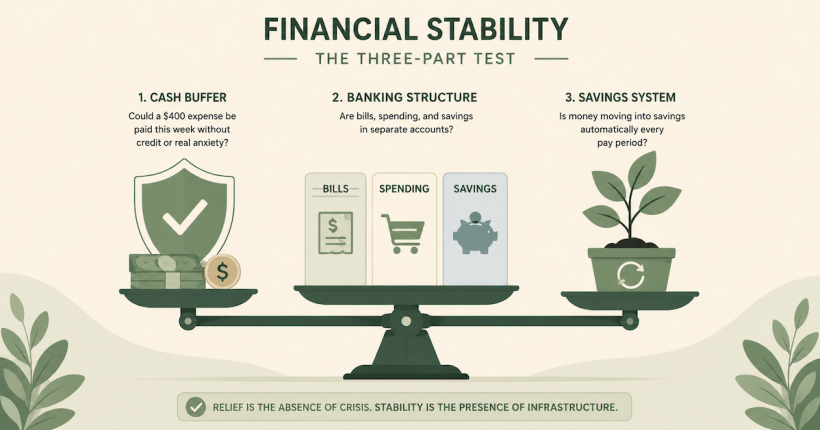
The instinct after settlement is to jump straight into credit repair. Resist opening new credit before you have at least a small cash buffer in place — even $500 to $1,000 changes the entire equation. Without it, the first unexpected expense after settlement becomes the reason you reach for a new credit account, and the cycle that led to the original debt starts to repeat itself with a cleaner credit report.
Once that small buffer exists, a secured credit card or credit-builder loan is the standard, well-documented path back to a healthy score. Use it for one predictable, recurring charge — a streaming subscription or a utility bill — and pay it in full every single month. Payment history is 35% of your FICO score, the single largest factor, and this is how you start rebuilding it without taking on new debt risk.
A tool like Credit Karma is built for exactly this phase — tracking your score as new positive history accumulates, so you can see the rebuilding actually working month over month instead of wondering whether it's helping.
How Long Does This Actually Take?
Secured cards are typically available almost immediately. Unsecured cards with reasonable terms tend to open up 12 to 24 months out, once you've built a consistent positive payment history. This is faster than most people expect — the delay isn't usually the calendar, it's not starting the process at all.
Step 4: Build the Banking Structure That Prevents This From Happening Again
This is the step almost none of the debt-settlement guides talk about, because it's not their product. A settled debt and a rebuilt credit score do not, by themselves, prevent the next debt cycle. What prevents it is a banking structure that separates your bills, your spending, and your savings by design — so overspending requires deliberately breaking the system, not just having a bad month.
This step sits inside the broader Debt Relief & Credit Repair approach: relief creates breathing room, and the structure you build next is what makes that breathing room permanent instead of temporary.
Structure does the work that willpower can't sustain long-term. This is the piece that turns "I got out of debt" into "I'm not going back."
Step 5: Grow the Emergency Fund to a Real Cushion
Once your banking structure is in place and credit rebuilding is underway, direct your focus toward growing that starter buffer into a genuine emergency fund — three to six months of expenses. This is the point where most financial disruptions stop being a crisis and start being an inconvenience you can absorb without touching credit at all. This is the actual finish line of the recovery phase, not the settlement itself.
Rebuilding takes more than a checklist — it takes a system.
Get the step-by-step tools for turning this sequence into an automatic system you don't have to think about every month.
Explore the 7-Stage Money System →Frequently Asked Questions
Do I have to pay taxes on debt that was settled? Often, yes — forgiven amounts of $600 or more are generally reportable as income on Form 1099-C, though the insolvency exclusion may reduce or eliminate that if your debts exceeded your assets at settlement.
How soon after settlement can I open a new credit card? Secured cards are typically available almost immediately; unsecured cards with reasonable terms usually open up 12 to 24 months out with consistent on-time payments.
Should I check my credit report even if I think everything settled correctly? Yes — reporting errors on settled accounts are common enough that a quick check is worth doing regardless of how the settlement felt at the time.
This sequence is one piece of a larger system. See how post-settlement recovery fits into the full recovery path in the Rebuilding After Debt Relief cluster guide. Government source: IRS Topic 431 — Canceled Debt.