July, 2026
Home › Debt Relief & Credit Repair › DIY Credit Recovery › DIY Credit Repair Checklist
Part of the DIY credit recovery guide — what a credit repair company does in month one, and how to do the same thing yourself this weekend.
About the Author
Don Briscoe has spent 20 years in banking and finance, the last 12+ of which have been focused on helping Millennials and Gen Z build income and financial stability. He founded PersonalOne to provide the financial education he wished existed — structured, honest, and free.
What You Need to Know
— A standard credit repair company's entire first month is pulling reports, identifying problems, and submitting disputes — all of which you can do yourself in a weekend
— Not everything on your credit report is disputable, and wasting time disputing accurate negatives while ignoring fast utilization wins is the most common mistake
— Some actions move your score within 30 days, some take 90 days, and some take 6 to 12 months — knowing which is which matters if you're on a real timeline
— There are specific signals that tell you whether DIY is working or whether your situation has complexity worth paying for help with
— This is a weekend action plan with 30- and 90-day follow-through, not a months-long process you have to wait to start
If you're researching a DIY credit repair checklist, here's what nobody tells you up front: a standard credit repair company's entire first month consists of pulling your reports from all three bureaus, identifying negative and disputed items, sending dispute letters, and waiting 30 to 45 days for a response. That's it. That's month one of a paid engagement, and every part of it is something you can do yourself, starting this weekend, for free.
This isn't a months-long process guide. It's a weekend action plan — what to do in the next 48 hours, what to follow up on in 30 days, and what to monitor over 90 days — organized by how fast each action actually moves your score, not by some arbitrary process order. The companies charging $80 to $150 a month for this exact sequence are charging for convenience and time, not for access to some hidden mechanism you can't reach yourself.
First, Triage: Not Everything on Your Report Needs the Same Response
Every checklist starts with "pull your reports." Almost none of them teach you how to read what you find once you have them, which is why so many people waste weeks disputing things that were never disputable in the first place while ignoring the moves that would actually help fastest. Before doing anything else, sort what you find into three categories. This triage step is the single most valuable thing this checklist offers, and it's the part every Page 1 result skips entirely in favor of jumping straight to "submit your disputes."
Disputable errors. Accounts that aren't yours, balances that are wrong, payments marked late when they weren't, accounts listed as open when they're closed. These are the only items worth formally disputing, and they're often a small fraction of what's actually on the report. A misreported balance is worth disputing with your most recent statement attached as proof. An account that genuinely isn't yours — sometimes a sign of identity theft, sometimes simply a bureau data error — is worth disputing with a clear, factual statement of the mismatch rather than an emotional appeal.
Accurate negatives. A genuine late payment, a real collection, an actual charge-off. These are accurate, which means disputing them is unlikely to succeed and can waste weeks of the 30-to-45-day investigation window better spent elsewhere. These items age out over time and respond to consistent positive behavior going forward, not to a dispute letter.
Score-drag items. Credit utilization that's too high, a thin credit file, an old account you let go inactive. None of these are errors — they're behavioral and structural factors that respond immediately to specific changes, often faster than a dispute resolves. A thin file with only one or two accounts responds well to becoming an authorized user on someone else's well-established account. An old account sitting unused and at risk of closure for inactivity responds to a single small recurring charge that keeps it active without requiring you to carry a balance on it.
This three-way sort is enough to get through the weekend plan below. If you want the fuller decision matrix — including the specific situations where the correct move is to leave an item alone entirely, and the realistic timeline for each type of fix — what to fix first on your credit report covers that in depth.
What I've Seen
A client once spent six weeks disputing a genuine, accurate late payment from two years earlier, convinced that persistence would eventually get it removed. It never did, because it was correct. Meanwhile, their credit utilization sat at 78% the entire time — a score-drag item that would have moved the needle within a single billing cycle, sitting completely untouched because all the attention had gone toward a dispute that was never going to succeed. Triage first would have caught this in the first ten minutes.
The takeaway: the fastest credit repair mistake to make is treating every negative item as equally worth fighting. Sort first. Act second.
The Weekend Action Plan: What to Do in the Next 48 Hours
This is the part a credit repair company charges for. None of it requires anything you don't already have access to.
Saturday: Pull and Triage
Pull your full report from all three bureaus through AnnualCreditReport.com, the only source that doesn't try to upsell a paid product alongside the free report. Go through each account and sort it into the three triage categories above. By the end of this step, you should have a specific list of disputable errors, separate from everything else. Set aside two to three hours for this — rushing the triage step is how disputable errors get missed and accurate negatives end up disputed by mistake, which wastes the time advantage this entire weekend plan is built around.
Sunday: Submit Disputes and Start the Fast Wins
Submit a dispute for each genuinely disputable error directly with the bureau reporting it, in writing, with any supporting documentation you have. At the same time, identify your single highest-utilization revolving account and make a payment toward it today if you're able to — this is the score-drag move that starts working before the dispute investigation even begins.
For example, if you're carrying $1,800 on a card with a $2,000 limit, that's a 90% utilization ratio on that single account, which weighs heavily on your score regardless of how your other accounts look. Paying that balance down to $400 before your statement closing date — not just the due date — drops that ratio to 20%, and the lower figure is what actually gets reported to the bureaus and reflected in your score. This single move, done correctly and with the right timing, can outperform weeks of dispute correspondence on items that were never going to resolve in your favor anyway.
Sequenced by Score Impact, Not Process Order
Paying down a credit card balance can raise your score within a single billing cycle. Disputing a late payment can take 30 to 45 days and may not succeed at all. Almost no checklist sequences actions by how fast they actually move your score — which matters enormously if you have a mortgage application, a car loan, or a rental application on a real timeline. Knowing which bucket each action falls into changes how you spend the next 90 days, especially if a hard deadline is part of why you're doing this work right now.
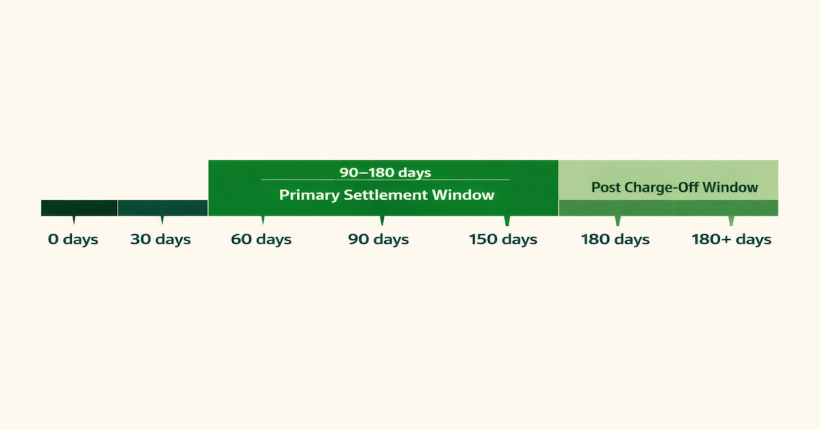
Within 30 Days
Reducing credit utilization is the fastest lever available — paying down balances before your statement closing date, not just before the due date, is what actually changes what gets reported. Becoming an authorized user on a long-standing account with a strong payment history can also move quickly, since the account's age and history often reflect onto your report within one to two billing cycles. If you don't have a family member or partner willing to add you as an authorized user, a secured credit card used lightly and paid in full monthly can begin contributing positive history within this same window, though its impact builds more gradually than the utilization move above.
Within 90 Days
Dispute investigations resolve within this window, with bureaus required to respond within 30 to 45 days. Establishing a track record of on-time payments on every active account also starts showing up meaningfully in this timeframe, since payment history is the single largest component of your score. For more tactics specifically aimed at this window, debt repair hacks that actually move your score covers additional moves worth layering on top of the dispute and utilization work above.
Within 6 to 12 Months
Building a longer track record, letting negative items age further from their original date, and diversifying your credit mix if relevant all fall into this slower category. There's no shortcut here — this is the patient, compounding work that the faster moves above can't replace.
Track your score through all three windows.
Credit Karma gives you free, ongoing access to your score, so you can actually see which moves are working as you go.
Check Your Score Free (affiliate)The Handoff Decision: When DIY Is Working vs. When It Isn't
Most checklists end with a vague "if this doesn't work, consider professional help" footnote. After completing the weekend triage and initial dispute process, here's how to actually tell which situation you're in.
Signals that DIY is working — keep going: your disputes are getting clear responses within the standard window, your utilization paydown is visibly moving your score, and the number of negative items on your report is small enough to track individually without losing the thread. If all three of these are true, there's little a paid service would add beyond what you're already doing yourself, and continuing to self-manage the process is the more cost-effective path forward.
Signals that your situation has real complexity: disputes are being rejected without clear explanation across multiple bureaus, you're dealing with identity theft or fraud rather than ordinary negative history, or the sheer number of accounts involved has become genuinely difficult to track and follow up on manually. Identity theft in particular changes the calculation, since it often involves a more complex chain of disputes, police reports, and identity verification steps that benefit from someone experienced in navigating that specific process. If you're in this second category, evaluating the best credit repair services and what they can do that you genuinely can't is a more efficient next step than continuing to DIY a situation that's outgrown a weekend project.
If You're Working Toward a Bigger Goal
This checklist focuses narrowly on the credit report itself, but for many readers, damaged credit and unmanageable debt are the same underlying problem viewed from two angles. If this checklist is one part of a broader effort to fix your credit and escape debt at the same time, that piece covers how credit repair and debt elimination work together rather than as two separate projects.
And if you want a more structured, day-by-day version of this same weekend energy stretched across a full month, the 30-day debt detox challenge turns this into a sustained reset rather than a single weekend, which can be the better fit if a single weekend's worth of momentum tends to fade before it becomes a lasting habit for you.
Government Resources
CFPB: Credit Reports and Scores — federal guidance on accessing and understanding your credit report.
CFPB: How to Dispute an Error on Your Credit Report — official dispute process guidance.
For the complete picture on resolving unmanageable debt and damaged credit, visit the debt relief and credit repair guide.
Frequently Asked Questions
How is this different from what a credit repair company actually does?
Almost nothing, mechanically — they pull reports, identify issues, and submit disputes, exactly like this checklist. What they offer beyond that is time, and in some cases, experience handling unusually complex disputes. For most straightforward situations, there's nothing in their first month you can't replicate yourself.
Can I really see score movement within 30 days?
For utilization-driven changes, often yes, since reduced balances reported to the bureaus can reflect in your score within a billing cycle. Dispute-driven changes take longer, since bureaus have 30 to 45 days to investigate, and not every dispute succeeds even within that window.
What if I don't have time for the full weekend plan?
The single highest-leverage move if time is genuinely limited is paying down your highest-utilization account, since it's the fastest-moving lever and requires no waiting period. Pulling your reports and triaging can happen in under an hour if you're working from all three at once rather than spacing it out.
Should I dispute everything negative just in case?
No. Disputing accurate items wastes the investigation window and can make your dispute history look less credible if you ever need to escalate a genuine error later. Triage first, and only dispute what's actually wrong.
What if my dispute gets rejected?
A rejection isn't necessarily the end of the road — you can request the bureau's method of verification, escalate directly to the company that furnished the information, or file a complaint with the CFPB if you believe the rejection was made in error. This is also one of the signals worth weighing in the handoff decision above if it happens repeatedly across multiple items.
Does checking my own credit report hurt my score?
No. Pulling your own report through AnnualCreditReport.com or a service like Credit Karma is a soft inquiry and has no effect on your score. Only hard inquiries, the kind triggered when a lender checks your credit as part of an application you're submitting, have any impact, and even that impact is typically small and temporary.
Disclaimer: This content is for educational purposes only and does not constitute financial or legal advice. PersonalOne is not a licensed financial advisor, credit counselor, or attorney. Individual credit situations vary — consult a qualified professional for personalized guidance.