June, 2026
Home › Debt Relief & Credit Repair › Debt Settlement Options › When Debt Settlement Makes Sense
Part of the debt settlement options cluster — a scorecard, not a warnings list.
About the Author
Don Briscoe is a financial systems strategist with 12+ years of experience helping Millennials and Gen Z build income and financial stability. He founded PersonalOne to provide the financial education he wished existed — structured, honest, and free.
What You Need to Know
— Four specific variables determine whether settlement is right for you: debt load relative to income, current delinquency status, lump sum availability, and debt type
— If you can realistically repay your debt in full within five years on your current income, settlement is probably the wrong move
— Settlement only works on unsecured debt — credit cards, personal loans, medical debt — not mortgages or auto loans
— The insolvency exception can eliminate the tax bill on forgiven debt entirely, and most genuine settlement candidates qualify for it
— You can negotiate settlements yourself without paying a company 15 to 25% of your enrolled debt in fees
Most articles on this topic answer a different question than the one you're actually asking. They tell you when debt settlement makes sense by listing every risk and calling settlement a last resort, as if the goal is to talk you out of it entirely. That's not a wrong instinct exactly, but it skips the part that actually matters: settlement isn't a last resort for everyone. For a specific kind of financial situation, it's the mathematically correct answer, and the honest job of this article is to help you figure out whether you're in that situation, not to scare you away from a tool that might genuinely be the right one. Four variables determine this, and once you run your own numbers through them, the answer tends to be clear rather than a vague "it depends."
The Four Variables That Actually Decide This
Every general warning about settlement risk matters less than these four specific facts about your own situation. Work through each one honestly before moving to the scorecard below.
1. Debt load relative to income. Is full repayment realistically achievable within five years on your current income, making at least the minimum payments plus a reasonable extra amount? If yes, settlement is probably the wrong move — you have a repayment problem, not a settlement problem, and a structured payoff plan or debt management plan likely serves you better. If no — if the math genuinely doesn't work even with disciplined budgeting — the conversation changes entirely, and settlement becomes a legitimate option rather than a last resort.
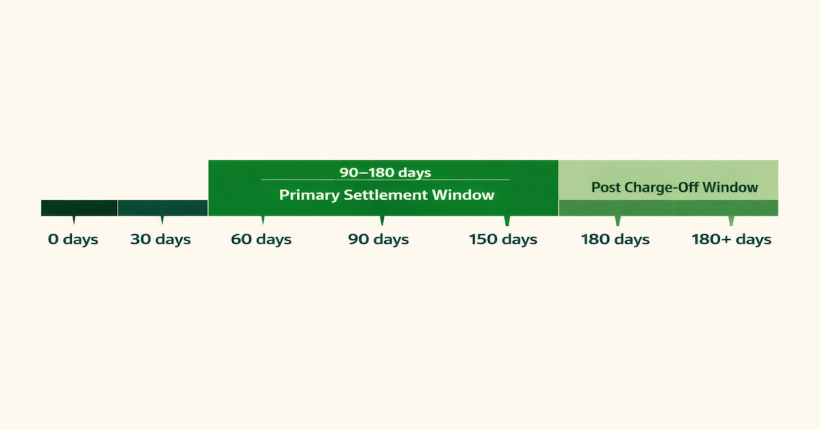
2. Current delinquency status. Are you already 90 or more days behind on the debt in question? If so, your credit has already absorbed most of the damage that settlement gets blamed for, and the credit-damage argument against settling loses most of its force — you're choosing between ongoing damage with no resolution and a settlement that starts your recovery clock. If you're still current, settlement requires deliberately falling behind to even qualify for negotiation, which is a much higher cost to pay and a much weaker case for settling proactively.
3. Lump sum availability. Settlement requires cash, usually a meaningful percentage of the original balance, paid in a lump sum or over a short structured period. Without a realistic path to that cash — a tax refund, the sale of an asset, a family loan, savings set aside for exactly this purpose — settlement isn't actually available to you right now, regardless of how appealing it sounds on paper. This variable alone disqualifies a lot of people who would otherwise be strong settlement candidates on every other variable.
4. Debt type. Settlement only works on unsecured debt — credit cards, personal loans, medical debt, and similar obligations with no collateral attached. If your debt is primarily secured, like a mortgage or auto loan, settlement isn't on the table for that debt at all, and a different strategy entirely is needed. This is the variable that ends the conversation fastest for some readers, and it's worth confirming early, before spending time and energy working through the other three.
The Settlement Decision Scorecard
Score each variable honestly against your own numbers, then read the verdict below. There's no benefit to rounding favorably toward the answer you're hoping for — the scorecard only works if the inputs are accurate.
- Debt-to-income test: Score YES if full repayment within five years is not realistically achievable on your current income, even with disciplined budgeting. Score NO if it is.
- Delinquency test: Score YES if you're already 90+ days delinquent on the debt. Score CONDITIONAL if you're current but the debt-to-income test scored YES. Score NO if you're current and the debt-to-income test scored NO.
- Lump sum test: Score YES if you have a realistic, identifiable path to a settlement lump sum within the next several months. Score NO if you don't.
- Debt type test: Score YES if the debt is unsecured. Score NO if it's secured.
The verdict:
- YES on all four: Settlement is very likely the right answer for this debt. You're not in a position to repay it fully, your credit is already absorbing the damage, you have the cash to actually settle, and the debt type qualifies. This is the profile settlement was built for.
- YES on debt-to-income and debt type, NO on lump sum: Settlement is the right direction, but not yet available to you. Focus on building toward the lump sum before pursuing this path, and revisit once you have it.
- NO on debt-to-income, YES on the others: Settlement is probably the wrong move. You can realistically repay this debt — a structured payoff plan or a debt management plan likely costs you less overall than settlement fees and credit damage combined.
- NO on debt type: Settlement isn't available for this specific debt regardless of how the other three score. Look at refinancing, loan modification, or other secured-debt-specific options instead.
What I've Seen
A client once spent nearly a year agonizing over whether settlement was "giving up" on $38,000 in credit card debt at 26% APR. Running the actual numbers, full repayment on their income would have taken over 17 years and cost more than double the original balance in interest alone. They were already three months behind. They had a small inheritance that covered a lump sum settlement offer. Every variable pointed the same direction, but the framing of settlement as a moral failure kept them stuck for months longer than necessary, accumulating more damage the whole time they hesitated.
The takeaway: the guilt attached to settlement is often louder than the math. When all four variables point the same direction, the math is the part worth trusting.
The Insolvency Exception Nobody Pairs With the Tax Warning
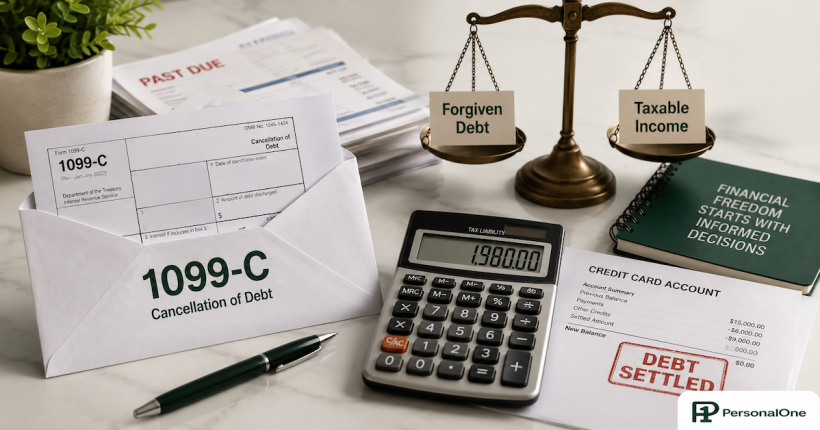
Every article on this topic mentions that forgiven debt can be treated as taxable income — the IRS generally considers the difference between what you owed and what you actually paid as income in the year it's forgiven. This is accurate, and it's worth planning for. What almost nobody pairs with that warning is the exception that applies to most genuine settlement candidates.
If your total debts exceed your total assets at the time the debt is forgiven — a condition called insolvency — you may owe little to no tax on the forgiven amount, up to the extent of your insolvency. For someone who's genuinely a strong settlement candidate under the four variables above, this exception is more likely to apply than not, since being unable to realistically repay debt on your current income is closely related to having debts that exceed your assets. Leading with the tax warning alone, without mentioning this exception, creates fear in exactly the reader who's least likely to actually owe much in taxes. If you settle a debt, calculating your insolvency at the time of forgiveness — using IRS Form 982 — is worth doing before assuming a tax bill is coming.
The Comparison Nobody Runs Honestly
Most settlement warnings compare settlement to paying the debt in full — which isn't a realistic alternative for most people who are actually considering settlement. The honest comparison is settlement against your actual realistic alternatives: continuing minimum payments for over a decade at high interest, a debt management plan over three to five years, or bankruptcy.
Consider $40,000 in unsecured debt at 24% APR, paying only the minimum each month. The total repayment cost over the life of that debt, in interest alone, can exceed the original balance several times over and stretch well beyond a decade. Compare that to a settlement reaching an agreement around 40 to 60 cents on the dollar, plus any settlement company fees if you use one, plus any tax owed after accounting for the insolvency exception. For a debt load this size with no realistic full-repayment path, the settlement total — even with fees and a partial tax bill — often comes in meaningfully lower than the true cost of minimum payments stretched out for years. Nobody runs this comparison plainly because affiliate publishers and debt management companies both have a financial interest in steering you toward an alternative.
Putting rough numbers on that $40,000 example: minimum payments at 24% APR, paying only the required minimum each month, can take well over 15 years to clear and cost upward of $60,000 to $70,000 in total payments once interest is factored in. A settlement reaching 50 cents on the dollar lands at $20,000, negotiated and paid off in months rather than years. Even adding a settlement company fee at 20% of the enrolled debt — roughly $8,000 — and a worst-case tax bill on the forgiven $20,000 with no insolvency exception applied, the total still typically lands well under half of what minimum payments would have cost over the long run. The math isn't subtle once it's actually laid out side by side.
DIY Debt Settlement: You Don't Need to Hire a Company
Almost every article on this topic frames settlement as something you hire a company to do for you, with that company taking 15% to 25% of your enrolled debt as a fee. The CFPB itself notes that you can negotiate settlements directly with your creditors, but this option gets buried under pages of warnings about settlement companies specifically.
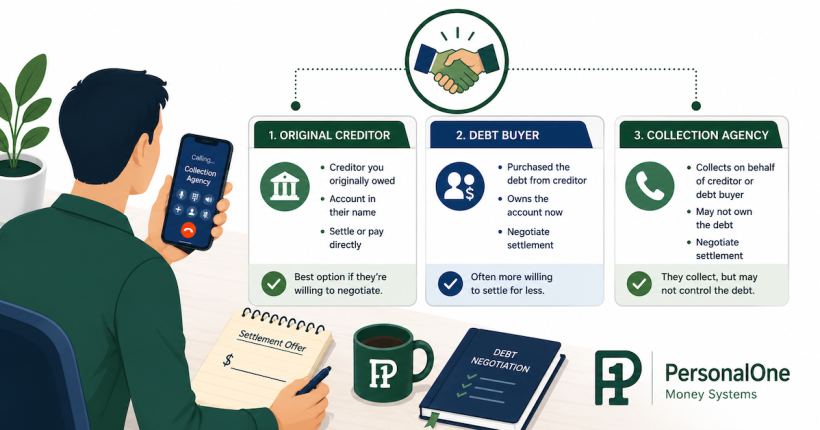
Negotiating directly means calling your creditor or collector, explaining your financial hardship honestly, and proposing a lump sum settlement at a percentage of the balance — often starting low and negotiating up from there. This avoids the settlement company fee entirely, and it moves faster, since you're not waiting for a third-party escrow account to accumulate enough funds before a settlement offer can even be made. It requires more comfort with direct negotiation and more of your own time, but for someone with the lump sum already available, DIY settlement is worth attempting before paying a company a meaningful percentage of your debt to do something you can do yourself.
A few practical notes if you negotiate directly: start by offering less than you're willing to pay, since most creditors expect a counteroffer and rarely accept the first number. Get any agreement in writing before sending payment — a verbal agreement over the phone is not enforceable if the creditor doesn't honor it. Specify in writing exactly how the account will report to the credit bureaus as part of the agreement, since this isn't automatic. And keep records of every call, including the date, the representative's name, and what was discussed, in case a dispute arises later about what was actually agreed to.
Know exactly where settlement would leave your score.
Credit Karma gives you free, ongoing access to your score so you can track the trajectory before and after a settlement decision.
Check Your Score Free (affiliate)Where to Go Once You Have Your Verdict
If the scorecard points toward settlement, the next real question is what it actually does to your credit, and how that compares to the path you're already on if you don't settle. How debt settlement affects your credit score walks through that full comparison in detail, including the timeline most people get wrong about when the damage actually started.
If you're settling without a company and want the script and structure for negotiating directly, the DIY approach deserves its own dedicated walkthrough — and once a settlement is behind you, rebuilding after debt relief covers exactly what comes next.
Government Resources
CFPB: What Is Debt Settlement? — Federal guidance on how settlement works, including the option to negotiate directly.
IRS Form 982: Reduction of Tax Attributes — The form used to calculate and claim the insolvency exclusion on forgiven debt.
For the complete picture on resolving unmanageable debt, visit the debt relief and credit repair guide.
Frequently Asked Questions
Is debt settlement always a bad idea financially?
No. For someone who genuinely cannot repay their debt in full within a reasonable timeframe, settlement can cost significantly less than the alternative of minimum payments stretched out over many years at high interest. The right answer depends on your specific numbers, not a blanket rule.
Do I have to stop making payments to qualify for settlement?
In most cases, yes, since creditors are typically unwilling to negotiate a settlement on an account that's current. This is part of why settlement makes the most sense for readers who are already delinquent rather than those considering it proactively while still current.
Will I definitely owe taxes on the forgiven amount?
Not necessarily. If your total debts exceeded your total assets at the time of forgiveness, the insolvency exception can eliminate or reduce the taxable amount. This exception is commonly overlooked, and many genuine settlement candidates qualify for at least partial relief under it.
Can I settle secured debt like a car loan or mortgage?
No. Settlement as discussed here applies specifically to unsecured debt — credit cards, personal loans, medical bills. Secured debt has collateral attached, and lenders generally pursue repossession or foreclosure rather than negotiating a reduced settlement.
Is it worth paying a settlement company instead of negotiating myself?
Not automatically. Settlement companies charge 15% to 25% of your enrolled debt and aren't always successful — only about half of accounts in formal settlement programs actually get settled. If you have the time and comfort level to negotiate directly, doing it yourself avoids that fee entirely and often moves faster.
What happens if a creditor refuses to settle?
Some creditors are simply less willing to negotiate, particularly if the account is still relatively current or the balance is small. If one creditor declines, you can wait and try again later as the account ages further into delinquency, or shift focus to other debts where settlement is more likely to succeed in the meantime.
Disclaimer: This content is for educational purposes only and does not constitute financial advice. PersonalOne is not a licensed financial advisor, broker, or investment professional. Individual financial situations vary — consult a qualified financial professional for personalized guidance.