Updated: April 8, 2026
Home › Fixing Money Mistakes › Money Mindset & Financial Psychology › Why You Keep Making the Same Money Mistakes
Why You Keep Making the Same Money Mistakes
What You Need to Know
— Repeated money mistakes are usually not random — they follow a pattern involving a trigger, an emotional reaction, a familiar behavior, and short-term relief
— Most people do not keep making the same financial mistakes because they are lazy or incapable — they do it because the pattern is faster than their conscious decision-making in the moment
— Common repeating patterns include avoidance, emotional spending, all-or-nothing resets, and reacting to stress instead of working from a stable financial system
— The goal is not to become perfect — it is to recognize the pattern earlier, interrupt it sooner, and build structure so the same mistake becomes harder to repeat
— If you can identify what happens before the mistake, not just after it, you can start fixing the real cause instead of apologizing to your bank account every month
Why You Keep Making the Same Money Mistakes: The Pattern Usually Starts Earlier Than You Think
If you keep making the same money mistakes, the frustrating part is not just the mistake itself. It is the feeling that you already knew better. You knew you should not put the purchase on the credit card. You knew you should have checked the account sooner. You knew you were supposed to save part of the paycheck instead of waiting to see what was left. That gap between what you know and what you keep doing is exactly what money mindset and financial psychology is meant to explain.
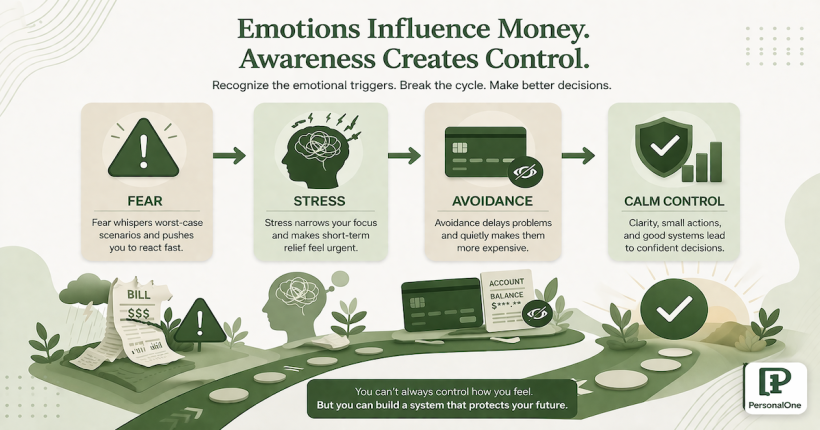
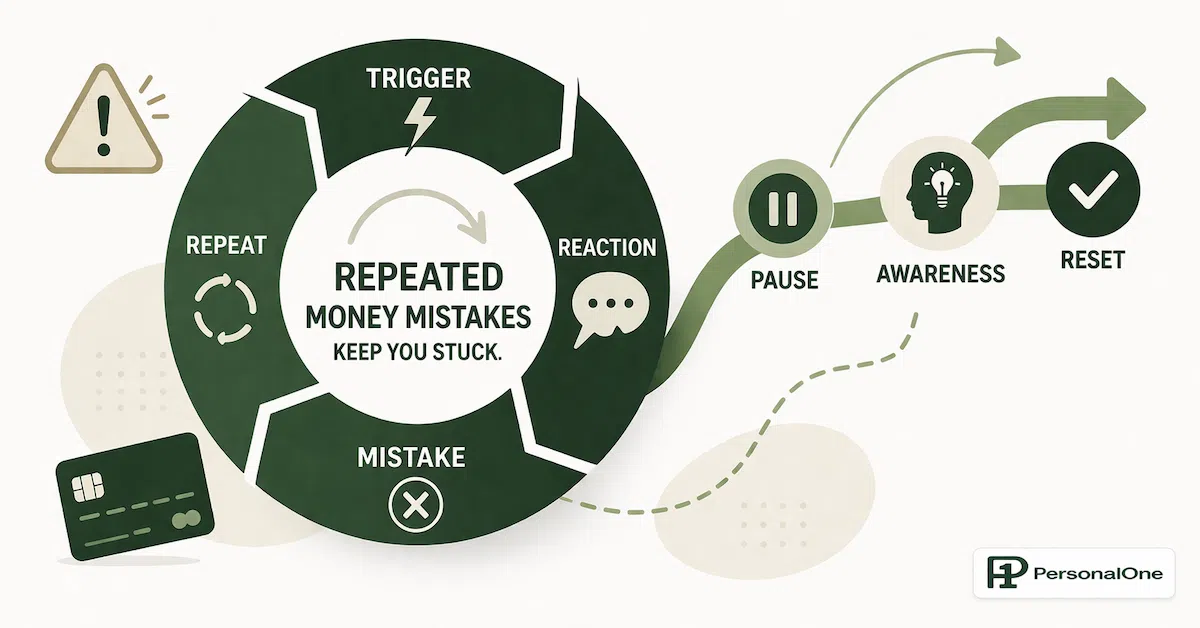
The truth is that repeated money mistakes are usually not isolated decisions. They are recurring behavior loops. Something triggers stress, avoidance, urgency, or emotional discomfort. A familiar financial behavior follows. Then comes short-term relief, even if the long-term outcome is worse. That is why so much of fixing money mistakes is really about learning the pattern underneath the mistake, not just correcting the latest version of it.
This article is a pattern-recognition guide. It breaks down why repeated financial errors happen, what keeps them alive, and how to interrupt them earlier so you are not always trying to recover after the damage is already done. The goal is not shame. It is earlier awareness, better structure, and fewer expensive reruns.
The Real Reason Repeated Money Mistakes Feel So Personal
Money mistakes feel more personal than many other mistakes because money touches security, identity, and survival all at once. A missed transfer is not just a missed transfer. It can feel like proof that you are irresponsible. A drained savings account is not just a cash problem. It can feel like evidence that you never get ahead. That emotional weight is part of what makes the pattern harder to break. People do not just react to the numbers. They react to what the numbers seem to say about them.
That reaction often creates a second layer of damage. Instead of responding with analysis, people respond with shame, avoidance, or panic. They stop checking the account, overspend for relief, or try a dramatic reset they cannot sustain. The mistake becomes a story, and the story becomes a habit. Once that happens, the same financial behavior can replay even when circumstances change.
The Four-Part Loop Behind Most Repeated Financial Errors
Most repeated money mistakes follow a simple structure. The details vary, but the sequence usually stays familiar.
The Repeating Money Mistake Loop
Trigger: Stress, low cash, payday excitement, shame, boredom, or an unexpected expense activates the pattern.
Reaction: You feel urgency, discomfort, fear, or the need for immediate relief.
Behavior: You avoid, spend, delay, borrow, rationalize, or promise to fix it later.
Relief: The behavior lowers emotional pressure temporarily, which teaches the pattern to repeat next time.
That last piece is the one people miss. The behavior survives because it works emotionally, at least for a moment. Avoiding the account makes the anxiety drop for an hour. Buying something gives relief for the evening. Waiting until next paycheck lets you avoid the discomfort of making the tradeoff now. The problem is that emotional relief and financial improvement are not the same thing. In fact, they often move in opposite directions.
The Most Common Money Mistake Patterns
Not everybody repeats the same exact pattern. But a few show up over and over because they are rooted in common emotional and behavioral responses.
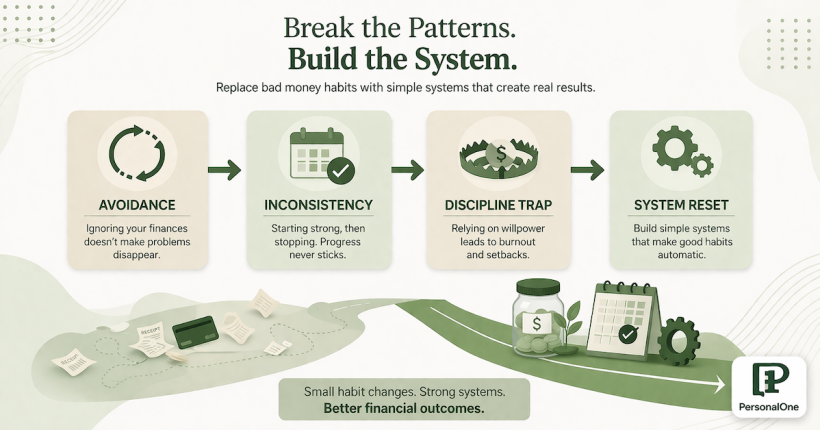
Avoidance pattern: You know something is wrong, but checking feels too heavy. So you wait. The late fee, overdraft, or surprise bill that appears later is not really the first problem. The first problem was the delay.
Emotional spending pattern: You feel stress, disappointment, boredom, or deprivation. Spending creates a quick mood shift. The item is rarely the real goal. The emotional change is.
All-or-nothing pattern: One slip becomes a full collapse. You miss a savings transfer, overspend one weekend, or forget one bill and decide the whole month is ruined anyway.
Hope-based cash flow pattern: Instead of working from a system, you work from optimism. You assume there will be enough, assume next month will be calmer, or assume the next check will clean it up.
The common thread is that each pattern makes sense in the moment and creates damage over time. That is what makes repeated money mistakes feel so confusing. They are not irrational. They are just expensive forms of emotional problem-solving.
Why Information Alone Usually Does Not Fix the Pattern
A lot of people assume they keep making money mistakes because they still need more knowledge. Sometimes that is true. But often the person already understands the basics. They know they should save, review spending, avoid overdrafts, and stop carrying the balance. The problem is that the information arrives too late in the sequence. By the time logic speaks up, the emotional reaction already has momentum.
This is one reason why financial well-being research focuses on more than knowledge alone. The CFPB’s financial well-being framework centers security, freedom of choice, and the practical ability to manage money under real conditions. The Federal Reserve’s household well-being reporting also shows that financial stress and fragility remain widespread, even when people understand the basics of what they should be doing. In other words, the issue is often not ignorance. It is whether your system can hold up when pressure shows up.
How to Interrupt the Pattern Earlier
If you want to stop making the same money mistakes, the goal is not just better recovery. It is earlier interruption. You want to catch the loop before the behavior gets fully underway.
How to Interrupt the Loop Earlier
Name the trigger: Ask what tends to happen right before the mistake. Stress? Low cash? Payday? Conflict? Embarrassment?
Shrink the response window: Put a pause between the emotion and the action. Even ten minutes can weaken an automatic reaction.
Make the good action easier: Scheduled reviews, separate accounts, automatic transfers, and simple rules reduce the burden on memory and discipline.
Plan your failure points: Build for the moments you usually slip instead of pretending they will not happen again.
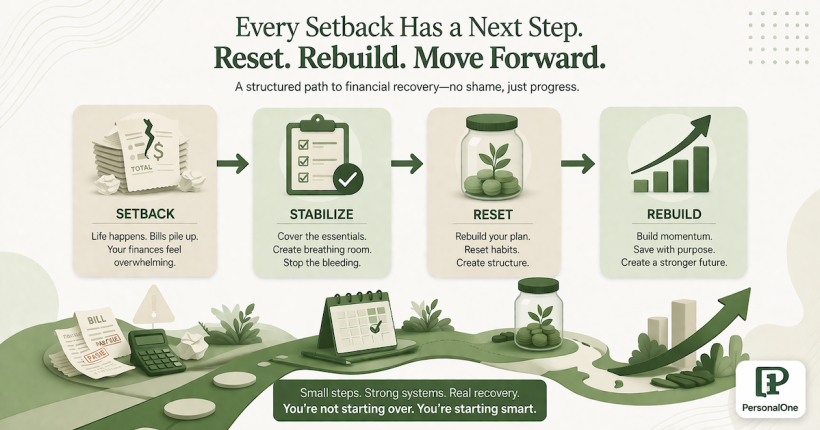
Recover faster: Do not turn one mistake into a multi-week spiral. Reset the pattern quickly before it hardens again.
That is where real change starts. Not in proving you are disciplined now, but in reducing how often discipline has to save you. The more the system catches you earlier, the less expensive your emotional habits become.
The Pattern You Need to Study Is the One Right Before the Mistake
Most people over-focus on the visible mistake. They analyze the charge, the missed transfer, the overdraft, or the late payment. But the useful question is often one step earlier. What was happening in your head and in your day before that moment? Were you tired? Avoiding numbers? Trying to feel better? Feeling behind already? Relying on a mental estimate instead of checking the real balance?
That earlier moment is where the real leverage lives. If you can identify the trigger phase, you can build better friction, better rules, and better support there. That is how you stop treating money mistakes like bad luck and start treating them like patterns that can be redesigned.
When Repeated Money Mistakes Mean You Need More Structure, Not More Shame
One of the worst conclusions people draw from repeated financial errors is that they are just bad with money. That conclusion is emotionally understandable and strategically useless. It turns a behavior problem into an identity problem. Once that happens, every future mistake feels like confirmation instead of information.
A better conclusion is this: if the same mistake keeps repeating, the system is underbuilt at that stress point. Maybe the reviews are too irregular. Maybe the spending account and bill money are mixed together. Maybe saving still depends on leftover money. Maybe the plan is relying on self-control in the exact moments when self-control is weakest. Those are fixable problems. Shame is not a strategy. Structure is.
The mistake is not the whole story.
If the same financial error keeps repeating, there is usually a deeper loop underneath it. Explore the full Money Mindset & Financial Psychology guide to understand the behavior layer, then return to the complete Fixing Money Mistakes framework to rebuild the system around it.
Explore Money Mindset & Financial Psychology →Resources
Official Sources
CFPB — A Guide to Using the CFPB Financial Well-Being Scale — Research-backed framework explaining financial well-being as more than income alone and helping show why repeated mistakes often relate to confidence, control, and stability.
CFPB — Financial Habits and Norms — A practical explanation of how routine financial behaviors and norms shape day-to-day money decisions over time.
Federal Reserve — Economic Well-Being of U.S. Households — Ongoing reporting on household financial stress, savings, and economic fragility that helps explain why repeated money mistakes often happen under pressure rather than in calm conditions.
Continue Rebuilding the Pattern
The full framework for the behavior layer behind repeated financial errors is in the Money Mindset & Financial Psychology guide.
For the complete recovery system that turns insight into structural change, visit the Fixing Money Mistakes guide.
Frequently Asked Questions
Why do I keep making the same money mistakes even when I know better?
Because repeated money mistakes are often driven by emotional patterns, stress responses, and habits that move faster than deliberate reasoning. Knowing better helps, but it does not always interrupt the loop unless the trigger and system around it also change.
Are repeated money mistakes a sign that I am bad with money?
No. Repeated mistakes usually point to a recurring pattern or weak system point, not a permanent character flaw. The useful question is not “What is wrong with me?” but “What keeps happening right before this mistake?”
What are the most common repeating money mistake patterns?
The most common patterns include account avoidance, emotional spending, all-or-nothing resets, and hope-based cash flow management. These tend to repeat because they reduce emotional pressure temporarily even while making the financial outcome worse.
How do I stop repeating the same financial mistakes?
Start by identifying the trigger, then build interruption points and stronger structure around it. Scheduled reviews, automation, account separation, and smaller recovery loops all make it easier to change the pattern before the visible mistake happens again.
Why does one money mistake often turn into several more?
Because shame, panic, and all-or-nothing thinking can turn one event into a bigger spiral. A fast reset is more effective than a dramatic self-criticism cycle because it prevents the original mistake from becoming a pattern cascade.
Can better habits really fix repeated money problems?
Yes, especially when habits are supported by structure. Better habits matter most when they are made easier through automation, clear rules, and account design instead of depending only on motivation and memory.
Disclaimer: This article is for informational and educational purposes only and does not constitute financial, legal, or mental health advice. Financial behavior patterns, emotional responses, and household circumstances vary. Consult a qualified financial or mental health professional for guidance specific to your situation when needed.