April, 2026
Home › Fixing Money Mistakes › Breaking Bad Financial Habits
Breaking Bad Financial Habits: The Complete Framework for Replacing Willpower With Infrastructure
What You Need to Know
— Poor financial outcomes usually come from repeated habits, not one dramatic mistake
— Inconsistent saving, spending without review, avoidance, and relying on discipline alone are some of the most common bad money habits
— Many people are not failing because they do not care — they are failing because their money system depends too much on mood, memory, and motivation
— Financial habits improve fastest when the environment changes — separate accounts, automation, and routine check-ins beat heroic self-control almost every time
— This cluster covers the practical behavior layer underneath financial progress so readers can stop repeating small mistakes that quietly create big damage
Why Financial Habits Matter More Than Most People Realize
Most money problems do not begin with one huge catastrophe. They build quietly through repeated habits. Not saving this week. Ignoring the account again. Rounding up spending in your head instead of checking the real number. Skipping the transfer because this month feels busy. Buying something small to relieve stress. Telling yourself you will reset next payday. None of that feels dramatic in the moment. Over time, it becomes your financial reality.
That is why this cluster exists. Breaking bad financial habits is not about becoming a different person overnight. It is about understanding which repeated patterns are keeping you stuck and designing a money system that does not depend on daily perfection. For the bigger recovery framework that helps readers rebuild from repeated mistakes, start with the Fixing Money Mistakes guide.
This cluster covers the complete behavior layer underneath repeated financial struggle: why saving feels hard, why discipline breaks down, how small money mistakes add up, and what it takes to build reliable financial habits that survive real life. The supporting articles below go deeper into the most common sticking points so readers can replace guilt with structure.
The Habit Loop That Keeps People Financially Stuck
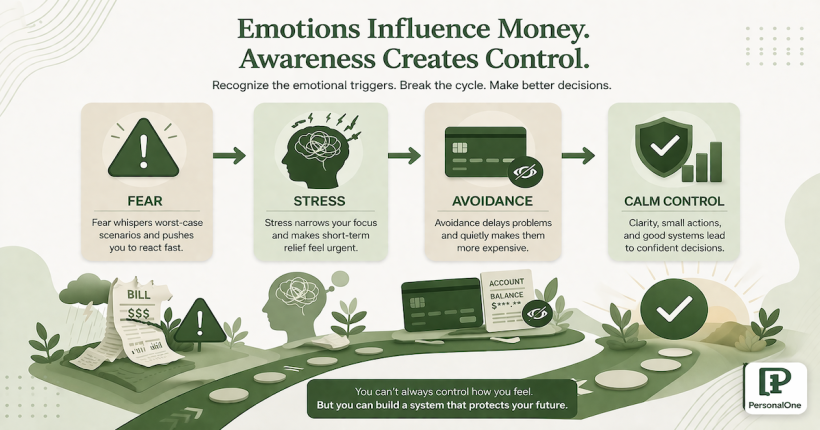
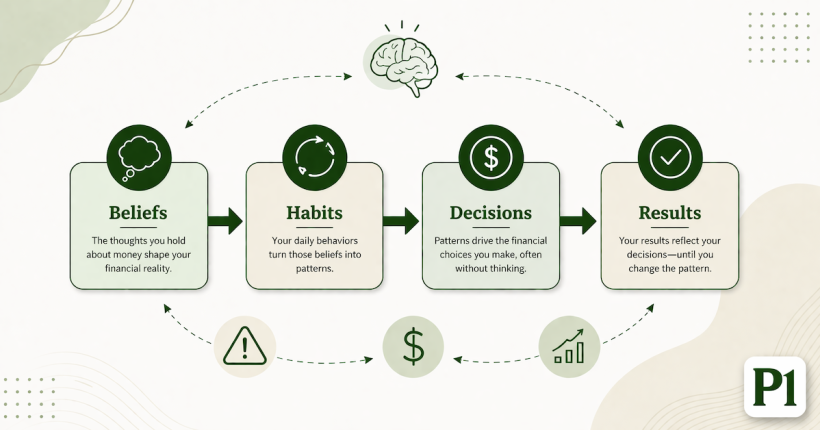
A bad financial habit is usually a loop. A trigger happens — stress, low energy, payday excitement, a surprise bill, or the simple discomfort of looking at your account. Then the behavior follows: avoidance, overspending, delaying, borrowing, or skipping the transfer. Then comes the short-term relief. That relief is what trains the habit to repeat. The problem is that what feels better in the moment usually makes the situation worse later.
This is why people can understand money and still struggle with it. Knowledge explains what to do. Habits control what happens under pressure. If your system collapses every time your week gets stressful or your routine gets disrupted, the issue is not only information. It is the loop itself.
The Four Bad Financial Habits That Quietly Do the Most Damage
Common Financial Habit Traps
Inconsistent saving: Saving only when it feels easy instead of making it part of the system.
Avoidance: Delaying account reviews, bill checks, or plan adjustments because the numbers feel stressful.
The discipline trap: Expecting perfect self-control to do the work that structure should be doing.
Small repeated leaks: Tiny financial mistakes that feel harmless alone but compound over months and years.
These are the habits that make people feel like they are trying hard without moving. Progress stays inconsistent because the behavior is inconsistent. And once someone starts thinking they just are not disciplined enough, the habit problem gets mislabeled as a personality problem.
Why Saving Money Feels So Hard for So Many People
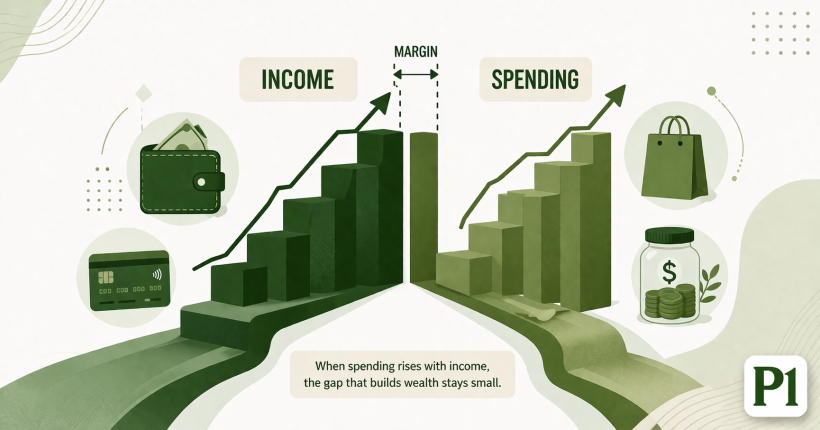
Saving feels hard because it competes with immediate needs, visible bills, emotional relief spending, and the simple human desire to enjoy some of your life right now. It also feels hard when saving is treated like whatever is left over at the end of the month. For many people, that number is either tiny or nonexistent. The result is not that they never wanted to save. The result is that saving never had a protected lane.
Official research and consumer guidance consistently point back to habits and visibility. People build savings more successfully when the process is regular, small, and tied to routine rather than willpower. That is why saving each payday, automating transfers, and creating a separate place for savings work so much better than hoping good intentions survive the month.
The Discipline Trap Is Real
The discipline trap happens when someone keeps trying to fix a structural problem with more effort. They promise themselves they will just be stricter next month. They will check the budget more. They will stop forgetting transfers. They will avoid spending temptations. Then life gets busy, stressful, or emotionally expensive, and the plan breaks again. That cycle creates shame, but the real issue is usually not weak character. It is weak infrastructure.
Good financial habits last longer when they are supported by design. A dedicated savings account reduces temptation. An automatic transfer removes the memory burden. A short weekly review catches drift early. A separated bills account lowers decision fatigue. Systems do not remove personal responsibility. They make responsibility easier to carry consistently.
How to Replace Bad Financial Habits With Systems That Stick
Habit Reset Framework
Make the habit visible: Identify the exact repeated behavior that causes the problem instead of using vague labels like “bad with money.”
Reduce reliance on memory: Use autopay, scheduled transfers, and recurring review times so good behavior is not optional each week.
Create protected lanes: Separate bills, savings, and spending so one weak moment does not wipe out the whole plan.
Start smaller than your ego wants: Tiny consistent wins beat dramatic resets that vanish after ten days.
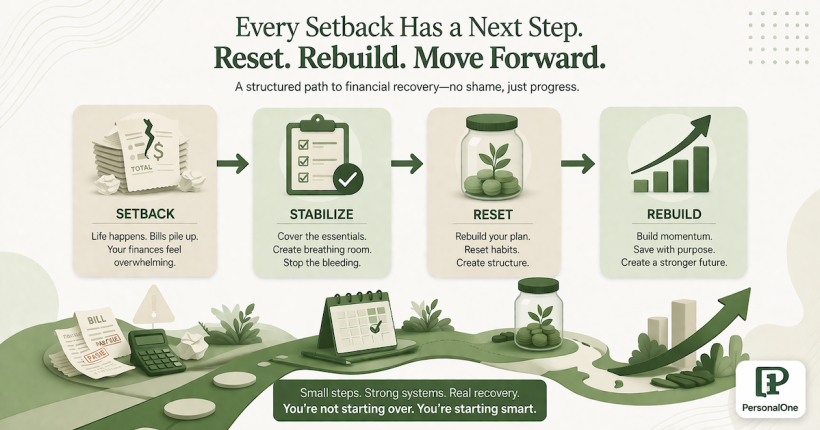
Recover fast: A broken streak is not a broken identity. Reset quickly and keep the loop from becoming a spiral.
The best habit system is the one that keeps working when life is ordinary, messy, and slightly annoying. Readers do not need a financial personality transplant. They need a structure that can survive a bad week without falling apart.
Why This Cluster Belongs Under Fixing Money Mistakes
This cluster belongs under Fixing Money Mistakes because repeated financial mistakes are usually repeated habits in disguise. People search for help after feeling inconsistent, behind, frustrated, or confused about why progress never sticks. This cluster helps explain that the issue is often not one bad call. It is the pattern that keeps generating similar outcomes.
It also creates a practical bridge to the next layer of change. Once readers understand which habits are breaking the system, they can move into budgeting, automation, account structure, savings systems, or stability work with much better odds of success. That is the point: not more guilt, just better design.
Stop Depending on Motivation Alone
Bad financial habits are rarely fixed by trying harder. See how PersonalOne connects behavior, systems, and recovery in the full Fixing Money Mistakes guide.
Explore the Fixing Money Mistakes Guide →Frequently Asked Questions
What are bad financial habits?
Bad financial habits are repeated money behaviors that quietly create poor outcomes over time. Examples include inconsistent saving, avoidance, impulse spending, skipping reviews, relying on memory, and delaying action until the situation gets worse.
Why is it so hard to save money consistently?
Saving is hard when it depends on what is left over, competes with daily spending, or has no protected system around it. It becomes easier when saving is small, automatic, and separated from everyday spending.
How do I reset my financial habits?
Start by identifying one repeated pattern, reducing the friction around a better behavior, and creating a system that makes the new habit easier to repeat. Resetting habits works better through structure than through motivation alone.
Are small money mistakes really that dangerous?
Yes. Small mistakes become dangerous when they repeat. A tiny leak every week or every payday can do more long-term damage than one obvious large mistake because it becomes part of the background and rarely gets corrected.
What is the discipline trap in personal finance?
The discipline trap is believing that stronger willpower will solve a problem that actually needs better structure. If your system requires daily perfect self-control, it will usually break under stress.
Can financial habits really change in 30 days?
Yes, a meaningful reset can begin in 30 days, especially if the focus is on building systems and routines rather than trying to become perfect. The goal is not total transformation in one month. It is creating momentum and a more stable pattern.
Resources
Official Sources
CFPB — Financial Habits and Norms — Consumer Financial Protection Bureau guidance explaining how routine financial practices and social patterns shape day-to-day money behavior.
CFPB — Perceived Financial Preparedness, Saving Habits, and Financial Security — Research on how saving habits connect to a sense of preparedness, control, and household financial security.
Federal Reserve — Economic Well-Being of U.S. Households: Savings and Investments — National data on emergency savings, household resilience, and why so many people still struggle to build consistent financial cushions.
Related PersonalOne Guides
Fixing Money Mistakes — The full recovery framework for correcting repeated money patterns and building systems that make better decisions easier to sustain.
Budgeting & Savings Guide — Use this when you are ready to turn better habits into stronger cash flow structure and more consistent saving behavior.
Financial Automation Guide — Automation is one of the strongest ways to move good intentions out of your head and into a repeatable system.
Continue Learning: Breaking Bad Financial Habits
Each article in this cluster focuses on one repeated behavior pattern that keeps people stuck — from inconsistent saving to small money mistakes that quietly damage long-term progress.
The Financial Habits That Keep People StuckComing Soon
A practical breakdown of the most common repeated habits that block financial progress and why they are so easy to normalize.
Why Saving Money Feels So HardComing Soon
Why saving often feels impossible in real life and how to create a system that protects saving before the month disappears.
How to Reset Your Financial Habits in 30 DaysComing Soon
A 30-day reset plan for replacing fragile motivation with routines, automation, and faster recovery from setbacks.
The Small Money Mistakes That Destroy WealthComing Soon
How tiny repeated money errors quietly compound into lost savings, stalled investing, and long-term financial drag.
PersonalOne Money System
This content is researched, written, and owned by PersonalOne — a free financial education platform built to help Millennials and Gen Z build real financial systems.
Disclaimer: This content is for informational and educational purposes only and does not constitute financial advice. Financial behavior, habits, and outcomes vary by person and household. Consult qualified financial professionals before making major financial decisions. PersonalOne is not responsible for decisions made based on this content.