August 2026
Home › Debt Relief & Credit Repair › Rebuilding After Debt Relief › How to Rebuild Credit After Debt Relief
What You Need to Know
— How to rebuild credit after debt relief depends on which path you took — bankruptcy and settlement leave different marks and different timelines.
— The tools are almost always the same: secured cards, credit-builder loans, and authorized user status — what matters is the order and timing you use them in.
— Payment history is 35% of your FICO score, the single largest factor, and it's the one variable entirely within your control starting today.
— Most people recover faster than they expect once they stop guessing and start following a sequence.
Settlement or bankruptcy resolved the debt. Neither one rebuilds your score — that's a separate process, and how to rebuild credit after debt relief isn't something either process explains on its way out the door. Search this topic and you'll find the same scattered ingredients everywhere: get a secured card, keep utilization low, pay your bills on time, maybe add a credit-builder loan. All true. None of it sequenced. This guide, part of the Rebuilding After Debt Relief cluster, lays out an actual month-by-month system instead — including the one branch point most guides skip entirely: bankruptcy and settlement don't rebuild the same way, and starting from the wrong assumption costs you time.
Start Here: Which Path Applies to You
Before the sequence, a fork. Bankruptcy and settlement report differently, recover on different timelines, and open different doors at different points. Skipping this step and following a generic checklist is exactly how people end up applying for the wrong product at the wrong time and getting an unnecessary denial on their file.
If You Came From Bankruptcy
A Chapter 7 discharge is a single event — every included debt is wiped at once, and the bankruptcy itself stays on your report for up to 10 years, though its negative weight decreases steadily well before then. Secured cards are often available almost immediately after discharge, and some issuers specifically market to post-bankruptcy consumers because the discharge means you can't file again for years, making you a lower near-term risk than your score alone suggests. FHA mortgage eligibility typically opens around 2 years post-discharge for Chapter 7, sometimes sooner with documented extenuating circumstances.
If You Came From Debt Settlement
Settlement resolves accounts individually, over time, and each one gets its own "settled" or "paid for less than full amount" notation — a mark that reads differently to lenders than a bankruptcy discharge does, and stays on the report for up to seven years from the date of first delinquency on that account, not from the settlement date. Because settlement doesn't reset your entire file at once the way bankruptcy does, your existing open accounts — the ones you didn't settle — matter more here. Positive history on those accelerates recovery in a way bankruptcy filers don't get to use, since bankruptcy typically closes most or all accounts.
The practical difference: bankruptcy filers usually start rebuilding from a cleaner, more uniform slate; settlement filers are usually rebuilding around a mix of settled and still-open accounts, which means reviewing what's still open is itself part of the rebuilding plan, not a separate step.
If you settled through a debt management or settlement company, also confirm in writing that each account was actually resolved as agreed — not just that payments to the company stopped. Miscommunication between a settlement company and a creditor is one of the more common reasons someone believes an account is closed when their credit report still shows it open and delinquent months later.
From My Experience
One pattern I've noticed is that people often think debt relief puts everyone back at the same starting line. It doesn't. I've talked with people who settled their debts and immediately followed advice written for someone coming out of bankruptcy, while others filed bankruptcy but tried rebuilding as though they still had active accounts to work with. Both groups were working hard—they were just following the wrong roadmap.
That observation became one of the reasons I separated these rebuilding paths inside the PersonalOne Money System. Before recommending a secured card, a credit-builder loan, or any other rebuilding step, I first identify how the debt was resolved. That single decision changes what should happen next, what accounts deserve attention, and which opportunities are likely to produce the fastest recovery.
I've learned that credit rebuilding isn't simply about doing more positive things—it's about doing the right things for the path you're actually on. Once people understand that distinction, the rest of the rebuilding process becomes much more straightforward and far less frustrating.
The Credit Rebuild Sequence, Month by Month
This is the part almost nobody else lays out as a sequence. The tools below aren't new — what changes is the order, and knowing what to layer in once the previous step is actually working rather than adding everything on day one.
Months 1–2: Foundation
Pull your credit reports from all three bureaus and confirm every account — settled, discharged, or still open — is reporting accurately. This is non-negotiable before anything else, because building new positive history on top of an inaccurate report just means fixing two problems later instead of one now. Look specifically for accounts still showing a balance after settlement, a status that says "delinquent" instead of "settled," or a discharged account that a creditor hasn't updated on their end — all three happen more often than people expect, and none of them fix themselves without a dispute.
Open one secured credit card. A secured card requires a refundable deposit that typically becomes your credit limit, which is exactly why it's available to people whose score alone wouldn't qualify them for an unsecured card. Use it for a single small, predictable, recurring charge — a streaming subscription is the classic example because it's the same amount every month, which makes "pay it off in full" a habit rather than a decision you have to remember to make. Set up autopay for the full statement balance if your issuer allows it — this removes the single most common way people accidentally damage the exact recovery they're trying to build, a missed payment on the very card meant to fix things.
Resist the urge to open more than one account in these first two months. The instinct after a long period of financial restriction is to move fast once options reopen, but recovery rewards patience here — one account reporting cleanly for eight weeks straight is worth more to your file than three accounts opened at once with no track record on any of them yet. Think of these first two months as proving the system works before scaling it, the same principle that applies to any new financial habit.
Months 3–4: Layer In
Once the secured card has reported two or three on-time payments, add a second tool rather than a second card. A credit-builder loan works differently than a card — you borrow a small amount that sits in a locked savings account while you make fixed monthly payments, and you receive the funds only once the loan is paid off. It reports as an installment loan, which diversifies your credit mix beyond revolving credit, a factor that matters more than people expect once your file starts to fill back in.
If someone you trust has a long-standing account with excellent payment history, ask about authorized user status here too — but read the section below before you do, since it only helps under specific conditions.
Months 5–12: Scale
By month five or six, most people see measurable movement if the first two steps have been consistent. This is the point to evaluate whether you're ready for an unsecured card — usually 12 to 24 months post-bankruptcy discharge, sometimes sooner post-settlement if your open accounts stayed strong throughout. Keep the secured card and credit-builder loan running rather than closing them the moment you qualify for something new; length of credit history is its own scoring factor, and closing your oldest positive accounts the moment they've done their job works against you.
Secured Card vs. Credit-Builder Loan: Which One First
Both matter, but if you can only start one this month, the secured card usually wins for a simple reason: it reports faster, typically within your first full billing cycle, while some credit-builder loans take longer to appear depending on the lender's reporting schedule. The credit-builder loan's real value shows up in month three or four, once you need a second, different kind of account reporting rather than a second card. Treat them as sequential tools, not competing options.
There's also a cost difference worth knowing upfront. A secured card ties up a refundable deposit for as long as you hold the account — money you get back when you close it or it converts to unsecured, but money that's inaccessible in the meantime. A credit-builder loan works the opposite way: you make payments into it and receive the funds only at the end, meaning it functions less like available credit and more like a forced savings account that happens to report as a loan. Neither is objectively better — they solve different problems, which is exactly why the sequence above layers them in rather than asking you to pick just one permanently.
Authorized User Status — When It Helps and When It Doesn't
Being added as an authorized user on someone else's account can import their positive payment history onto your report — but only under real conditions. The primary account holder needs a genuinely long, clean payment history; a new or inconsistently-paid account being used to "help" you often does nothing or actively hurts. Confirm the card issuer actually reports authorized users to the bureaus — not all of them do — before treating this as part of your plan.
This tool works best as a supplement to the sequence above, not a replacement for it. Being added to someone else's account gives you a borrowed history; it doesn't teach your own file to carry positive information on its own. Treat it as an accelerant alongside your own secured card and credit-builder loan, not a shortcut that lets you skip them.
The Non-Negotiable: On-Time Payment History
Every tool above is a delivery mechanism for the same underlying thing: consistent, on-time payment history. It's 35% of your FICO score, by far the largest single factor, and it's the one variable that responds directly and predictably to what you actually do each month. A tool like Credit Karma is useful specifically here — tracking your score as this history accumulates month over month makes the sequence above feel real instead of theoretical, since you can watch the exact tools above translate into movement.
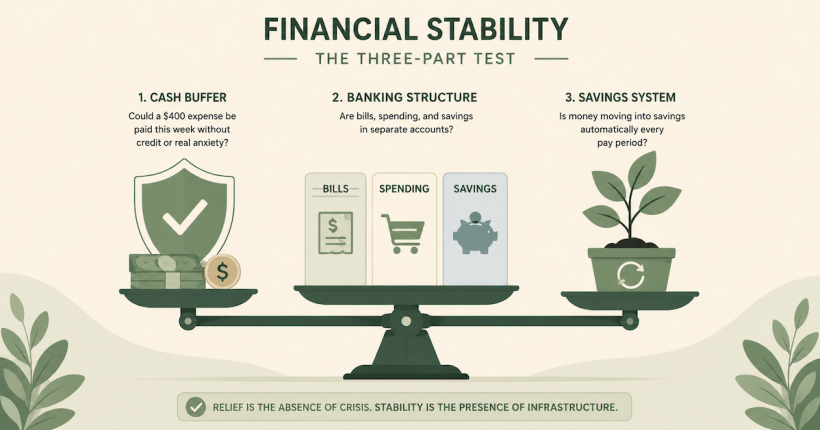
None of this works, though, without the structural piece sitting underneath it. A rebuilt score on top of an unstable banking setup is fragile — the next disruption tests both at once. Read the full Credit, Banking & Cash Flow guide for how these three pieces are meant to reinforce each other rather than operate as separate problems.
Common Mistakes That Slow Down Recovery
A few patterns show up often enough to name directly, since avoiding them matters more than any single tool above.
Applying for Too Much, Too Soon
Every credit application generates a hard inquiry, and multiple inquiries in a short window signal risk to lenders regardless of your actual behavior. Chasing several "chances" at once — a secured card here, a retail card there, a loan offer that showed up in your inbox — often does more damage than the rejection of any single application would. One deliberate account at a time, reporting cleanly, beats several scattered attempts.
Closing Old Accounts That Are Actually Helping
If you have any account that survived bankruptcy or settlement — even one with a small limit — closing it once you feel embarrassed by its history is usually a mistake. Length of credit history is its own scoring factor, and an old account in good standing is quietly doing work for you even if it feels like a relic of a harder time.
Treating the Score as the Whole Story
A number climbing back up feels like progress, and it is — but a credit score recovering on top of an unstable banking structure is recovery built on sand. If the same pattern that led to the original debt is still in place underneath the improving number, the next disruption tests both at once. This is exactly why Step 4 of the broader recovery sequence is banking structure, not another credit tool — see What to Do After Debt Settlement for how that step fits into the full picture.
Expecting a Straight Line
Recovery isn't always a smooth monthly climb. A reporting lag, a bureau data glitch, or a temporary dip when a new account first appears are all normal and typically self-correct within a cycle or two. Judge progress over a quarter, not week to week — checking daily tends to create anxiety about noise that doesn't reflect the actual trend.
A sequence works better than a checklist.
Get the full month-by-month system, plus the tools to track it, inside the 7-Stage Money System.
Explore the 7-Stage Money System →Frequently Asked Questions
How long does it actually take to rebuild credit after debt relief? Most people see measurable movement within 5 to 6 months of consistent on-time payments, with unsecured credit access typically opening 12 to 24 months out — faster than most expect, since the delay is usually not starting rather than the calendar itself.
Should I open a secured card and a credit-builder loan at the same time? Sequential is better than simultaneous — start with the secured card, confirm two or three on-time payments are reporting, then add the credit-builder loan around month three or four.
Does bankruptcy or settlement rebuild faster? Neither is universally faster — bankruptcy filers typically start from a cleaner, more uniform slate; settlement filers can accelerate recovery using whatever open accounts survived the settlement process, if those accounts have strong payment history.
Will becoming an authorized user actually help my score? Only if the primary account holder has a long, clean payment history and their card issuer reports authorized users to the credit bureaus — confirm both before relying on this.
What's the single biggest mistake people make right after debt relief? Applying for too many new accounts at once. Each application generates a hard inquiry, and several in a short window can slow recovery more than the rejection of any one application would — one deliberate account reporting cleanly beats several scattered attempts.
This sequence is one piece of the full recovery path. See where it fits inside the Rebuilding After Debt Relief cluster guide, or explore the complete Debt Relief & Credit Repair hub. Government sources: CFPB — Credit Reports and Scores, U.S. Courts — Bankruptcy Basics.