June 20, 2026
Home › Debt Relief & Credit Repair › Debt Settlement Options › Debt Relief Options: The Decision Framework
Part of the debt settlement options cluster — before deciding whether settlement is right for you, see how it compares to the other four ways out of unmanageable debt.
What You Need to Know
— "Debt relief" isn't one strategy — it's five genuinely different paths, and most people land on the wrong one because they pick based on how the debt feels rather than what their actual numbers say
— Five questions about your debt, income, and credit status point toward a specific path, not a vague spectrum of options
— DIY payoff and consolidation work when full repayment is realistic; settlement, debt management, and bankruptcy exist for when it isn't
— The debt relief industry is full of predatory companies, and knowing the red flags matters regardless of which path you choose
— Each path below has its own dedicated guide with the full mechanics, math, and decision criteria — this framework tells you which one to read next
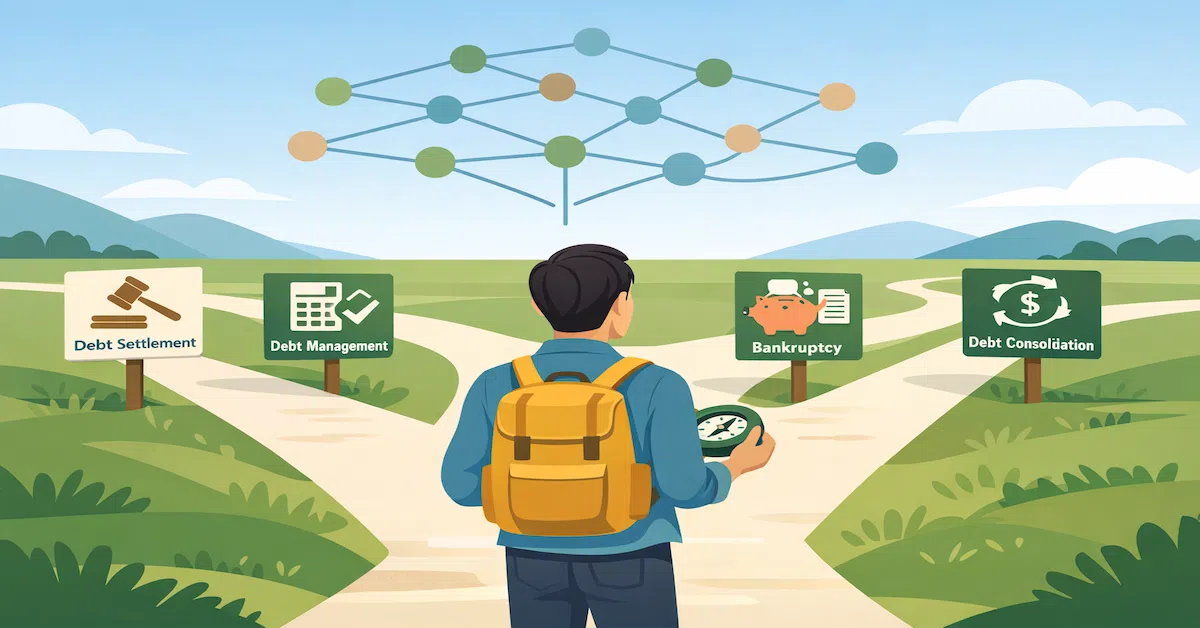
If you're researching debt relief options, you've probably noticed that every guide treats this as one continuous spectrum — a little overwhelmed, do this; very overwhelmed, do that. That framing is part of why people choose the wrong strategy. Debt relief isn't a spectrum. It's five genuinely different tools, each built for a specific financial situation, each with its own costs, timeline, and credit impact. Choosing among them isn't about how stressed you feel about the debt — it's about a small number of concrete facts: how much you owe, what your income actually supports, whether anything is already in collections, and whether you have assets at risk. This framework walks through those five paths, tells you which one your specific situation points toward, and routes you to the full, detailed guide for whichever one applies.
The Five Paths, and the Question Each One Answers
Before the decision criteria, it helps to see all five paths side by side, since each one is really an answer to a different underlying question about your situation.
DIY debt payoff answers: "I can realistically pay this off myself, I just need a system." No fees, full control, and it actively builds credit while you do it.
Debt consolidation answers: "I can pay this off, but the interest rates are working against me." One loan, one lower rate, same full repayment.
A debt management plan answers: "I can't keep up with payments as structured, but I can repay in full if the terms change." A nonprofit counselor negotiates reduced rates and a structured plan; you still pay the full balance.
Debt settlement answers: "Full repayment isn't realistic on my income." You negotiate paying a reduced amount in exchange for the creditor writing off the rest.
Bankruptcy answers: "Even reduced payments don't work, and I need legal protection from creditors." A court process that discharges debt entirely (Chapter 7) or restructures it under court supervision (Chapter 13).
Five Questions That Point to the Right Debt Relief Option
Work through these in order. Most people find their answer within the first two or three questions.
1. What's your total unsecured debt? Under roughly $10,000 with steady income generally points to DIY payoff. $10,000 to $50,000 with decent credit often points to consolidation. $50,000 and up, where minimum payments are a genuine struggle, starts pointing toward debt management or settlement. Debt that's overwhelming relative to income, especially with assets at risk, points toward a bankruptcy consultation.
2. Can you make more than the minimum payment each month? Comfortably yes, with room to spare — DIY payoff or consolidation. Barely making minimums, or falling short some months — debt management or settlement territory. Can't make minimums at all — settlement or bankruptcy.
3. What's your credit score? 680 or above generally qualifies for consolidation at competitive rates. Below that, consolidation rates get steep fast, and DIY payoff or a debt management plan often makes more sense. If your score is already significantly damaged, that's actually relevant information for the settlement decision specifically — when debt settlement makes sense covers why an already-damaged file changes the math in settlement's favor.
4. Is any of this debt already in collections? Nothing in collections, everything current — DIY payoff or consolidation are both fully available to you. Some accounts in collections — debt management or settlement become more relevant, and how charge-offs, collections, and late payments actually work is worth reading to understand what's already happened to your file before deciding what to do next. Most or all of it in collections, with lawsuits already filed — settlement or bankruptcy.
5. Do you have assets genuinely at risk? A home facing foreclosure or wages already being garnished changes the calculus significantly, since bankruptcy carries legal protections — an automatic stay halting collection actions — that none of the other four paths offer. If nothing is currently at risk, the other paths remain fully on the table.
What I've Seen
A client once spent months trying to DIY-payoff $38,000 in credit card debt at 24% APR on an income that simply couldn't sustain it, treating consolidation and settlement as admissions of failure rather than tools. The math told a different story the entire time: at their actual income, full repayment would have taken over a decade and cost more than double the principal in interest. Once we ran the five questions honestly instead of by feel, settlement was the clear answer — not because they'd failed at DIY payoff, but because DIY payoff was never the right tool for that specific debt-to-income ratio in the first place.
The takeaway: the guilt attached to "needing help" is almost always louder than what the numbers actually say. Run the five questions before deciding how you feel about the answer.
DIY Debt Payoff: Avalanche vs. Snowball
If the five questions point here, the mechanics are genuinely simple, and the only real decision is which payoff order to use.
Avalanche targets your highest-interest debt first, regardless of balance, then rolls that payment into the next-highest rate once it's gone. This is the mathematically optimal order — it minimizes total interest paid across every scenario.
Snowball targets your smallest balance first, regardless of rate, then rolls that payment into the next-smallest balance. It costs slightly more in total interest, but the faster string of fully-paid-off accounts keeps many people more consistent over the full payoff period.
Neither order is wrong. The method that keeps you actually making the extra payments every month beats the mathematically perfect method you abandon after four months. List every debt with its balance, rate, and minimum payment, pick one order, automate the extra payment so it doesn't depend on willpower, and track the declining balances monthly.
Debt Consolidation: When Combining Debts Actually Saves Money
Consolidation replaces several debts with one loan, ideally at a meaningfully lower rate than your current average. Consider $25,000 spread across several cards averaging close to 20% APR, generating roughly $400 a month in interest alone. Consolidated into a single loan at 11%, that drops to around $230 a month — over $2,000 a year back in your pocket, assuming the rate difference holds.
Credit unions typically offer the most competitive consolidation rates for members in good standing; online lenders are worth comparing across several before committing, since rates vary meaningfully between them.
The real risk with consolidation isn't the loan itself — it's what happens to the now-empty credit cards. A meaningful share of people who consolidate end up back in debt within a couple of years specifically because they keep the paid-off cards open and active. Closing or freezing them, redirecting the interest savings toward extra principal, and starting an emergency fund alongside the payoff are what actually make consolidation work rather than just delay the same problem.
Debt Management Plans and Debt Settlement
These two paths get confused constantly, and the difference matters enormously: a debt management plan repays your full balance at a reduced interest rate through a nonprofit credit counselor, typically over three to five years. Debt settlement reduces the actual balance owed, typically to 40 to 60 cents on the dollar, through a for-profit company or direct negotiation, usually over two to four years.
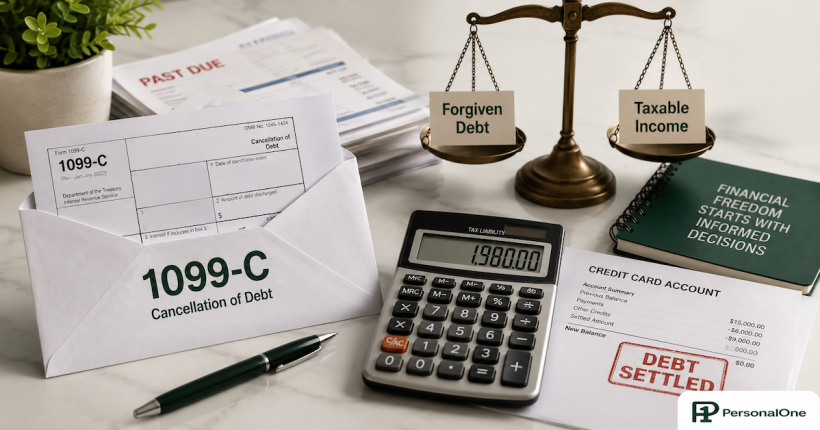
A debt management plan costs far less in fees — typically under $1,000 total across the program — but doesn't reduce what you ultimately pay back. Settlement reduces the principal substantially but comes with steeper fees if you use a company, more credit damage, and potential tax consequences on the forgiven amount.
Running the actual cost comparison for your specific numbers matters more than a general rule here, since the cheaper-sounding option isn't always the cheaper one. Debt settlement vs. debt management plan: which one actually costs less walks through the full side-by-side math for both paths.
If settlement is the path your numbers point toward, how debt settlement affects your credit score covers the credit trajectory in detail — including the comparison most guides skip, between settling and the alternative of continuing to miss payments.
Know your numbers before you choose a path.
Credit Karma gives you free, ongoing access to your score, which is one of the five questions this framework depends on.
Check Your Score Free (affiliate)Bankruptcy: Chapter 7 vs. Chapter 13
Bankruptcy is the path for situations where even a reduced-payment plan doesn't work, where legal protection from creditors — an automatic stay that halts collection calls, lawsuits, and garnishment — is itself the thing you need most.
Chapter 7 discharges most unsecured debt entirely — credit cards, medical bills, personal loans — typically within three to six months. It doesn't discharge most student loans, recent taxes, child support, or alimony, and it requires passing a means test based on your income relative to your state's median. Most state exemptions protect a meaningful amount of home equity, one vehicle, and retirement accounts, so "losing everything" is largely a myth for most filers.
Chapter 13 is a court-supervised repayment plan over three to five years, used by people with regular income who want to keep assets like a home or car while restructuring what they owe. Eligibility depends on staying under specific debt ceilings set by federal law, which are adjusted periodically — confirm the current figures with a bankruptcy attorney rather than relying on a number from an older article, since they do change.
Chapter 7 stays on a credit report for 10 years, Chapter 13 for 7, but many filers see meaningful score recovery within two to three years once the underlying debt-to-income problem is actually resolved rather than continuing to compound. If your situation includes filed lawsuits, garnishment, or a home at real risk of foreclosure, a consultation with a bankruptcy attorney — many offer free initial consultations — is worth doing early rather than after exhausting every other option first.
How to Avoid Predatory Debt Relief Companies
Whichever path you land on, if it involves hiring a company — a settlement firm, a credit repair service, a consolidation lender — the same red flags apply across all of them. Walk away immediately from any company that asks for fees before performing any service (illegal under federal law for debt settlement specifically), guarantees a specific percentage of debt eliminated, tells you to stop communicating with your creditors entirely, or uses high-pressure urgency language like an offer that expires today.
Verify any company through the CFPB's complaint database and your state attorney general's office before signing anything. If the help you need is specifically credit repair rather than debt resolution, evaluating credit repair companies applies this same vetting lens to that specific category of service, where the scam rate is particularly high.
Once the Debt Is Resolved
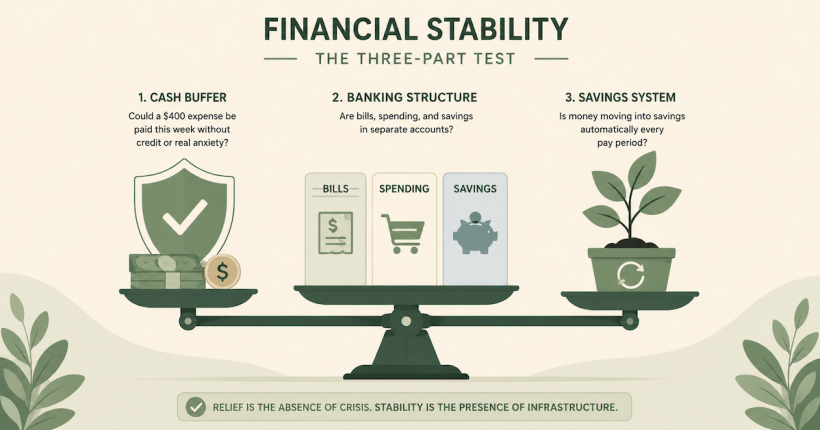
Whichever path you take, resolving the debt is the first stage, not the last one. Without a deliberate plan for what comes next, the same patterns that created the original debt tend to reassert themselves within a few years — a pattern common enough that it's worth planning against from the start rather than discovering it the hard way.
If you've found the page that matches your specific situation — DIY payoff, settlement, a management plan, or bankruptcy — and you're already thinking ahead to what rebuilding looks like once the immediate crisis is resolved, rebuilding after debt relief covers the credit-rebuilding sequence and the financial infrastructure that makes the next potential crisis survivable without repeating the same cycle.
If the credit side of your situation specifically involves errors or damage you want to address yourself first, the complete DIY credit recovery process covers what you can legally do for free before paying anyone for credit repair.
Government Resources
FTC: Settling Credit Card Debt and Avoiding Scams — Federal guidance on debt settlement risks and red flags.
IRS Topic 431: Canceled Debt — Tax implications of forgiven debt and the insolvency exception.
U.S. Courts: Bankruptcy Basics — Official federal guidance on the bankruptcy process and eligibility.
This article is part of the debt settlement options cluster, within the complete debt relief and credit repair guide — explore the dedicated clusters for credit repair vetting, negative mark recovery, DIY credit repair, and post-relief rebuilding.
Frequently Asked Questions
Will debt relief ruin my credit score?
It depends entirely on which path you choose. DIY payoff and consolidation can actually improve your score over time through on-time payments and lower utilization. Settlement and bankruptcy cause more significant damage, but if your credit is already substantially harmed by missed payments, much of that damage has often already occurred before you even start either path.
How do I know if I should consolidate or just pay things off myself?
If your interest rates are high enough that consolidation would meaningfully lower your total cost, and your credit qualifies you for a competitive rate, consolidation usually saves more money. If your rates are already reasonable or your credit doesn't qualify for a meaningfully better rate, DIY payoff with the avalanche method captures most of the same benefit without an additional loan.
Can I switch paths if the one I chose isn't working?
In many cases, yes, though switching usually means losing some progress already made. It's better to run the five questions honestly before committing than to choose based on urgency and switch later, but circumstances change, and no path here is permanently irreversible except in the sense that time and fees already spent don't come back.
Do I need a lawyer for debt settlement or just bankruptcy?
Bankruptcy generally requires or strongly benefits from an attorney, given the legal complexity and court process involved. Debt settlement can be negotiated directly without a lawyer or settlement company, though some people choose professional help for complex, multi-creditor situations.
What if none of these five questions clearly points to one path?
That's common, and it usually means your situation sits near a boundary between two paths — for example, barely able to make minimums but not yet in collections. In that case, the more detailed guide for the path you're leaning toward, along with a conversation with a nonprofit credit counselor or bankruptcy attorney, can help resolve the remaining ambiguity with your specific numbers.
Disclaimer: This content is for educational purposes only and does not constitute financial, legal, or tax advice. PersonalOne is not a licensed financial advisor, attorney, credit counselor, or debt relief service provider. Debt relief strategies carry varying costs, credit impacts, tax consequences, and legal implications depending on your individual circumstances. Consult a qualified financial professional, bankruptcy attorney, or NFCC-accredited credit counselor before making decisions about your specific situation.