Updated: May 8, 2026
Home › Credit Building & Protection › Credit Score Building Strategies › Building Good Credit Wisely
Don Briscoe is a Financial Systems Strategist with 12+ years helping Millennials and Gen Z escape paycheck-to-paycheck cycles. He has worked with hundreds of people to build emergency funds, eliminate debt, and start investing using framework-first strategies that require less willpower and more infrastructure. He founded PersonalOne to provide the financial education he wished existed -- structured, honest, and free.
TL;DR -- Building credit is not about gaming a number -- it is about installing the right habits and accounts so your score builds on autopilot. Payment history (35%) and utilization (30%) control 65% of your FICO score. Automate both, keep utilization below 10% if possible, and do not close old accounts. The fastest path to excellent credit is boring infrastructure, not credit card tricks.
Building good credit wisely starts with understanding what the score is actually measuring -- and what it is not. Your FICO score is a three-digit number between 300 and 850 that lenders use to predict how likely you are to repay debt on time. It is not a measure of your financial health, your net worth, or your intelligence. It is a statistical estimate of repayment risk based on your credit file history -- nothing more.
Understanding that framing matters because it tells you exactly what to optimize for. The score is built from five factors weighted by their predictive power: payment history at 35%, credit utilization at 30%, length of credit history at 15%, credit mix at 10%, and new credit inquiries at 10%. Two factors control nearly two-thirds of your score. Everything else is secondary.
Most credit advice gets distracted by the 35% that is not payment history or utilization -- the tips about opening new cards to boost your mix or removing inquiries through dispute letters. Those tactics produce marginal gains. The real leverage is in the two factors most people neglect to systematize: paying on time without thinking about it, and keeping the balance low relative to the limit. If you want to go deeper on how those factors interact, the full guide on understanding how credit scores work and what affects them most covers every factor in detail.
Build the Full System -- This article covers the foundational strategies for building credit wisely. For the complete framework -- including how to use secured cards, dispute errors, optimize utilization timing, and protect your score long term -- visit the Credit Score Building Strategies cluster.
Score Ranges and What They Mean in Practice
Score ranges matter most when you are about to borrow money or apply for housing. Lenders use tier-based pricing, meaning your interest rate changes depending on which bracket your score falls into -- not just whether you are approved or denied.
A score of 800 to 850 is exceptional and gets you the best available rates on nearly every product. Scores between 740 and 799 are very good -- you will qualify for most products at competitive rates, though not always the absolute lowest advertised. The 670 to 739 range is considered good and is where most approvals happen, but you will start to notice rate differences on auto loans and mortgages. Scores between 580 and 669 are fair -- approvals become selective and rates climb. Below 580, most conventional credit products are either denied or priced with interest rates that make them expensive to carry.
The jump from fair to good credit is the most financially meaningful move you can make in your 20s and early 30s. It is the threshold that unlocks standard mortgage approval, favorable auto loan rates, and credit cards with real rewards rather than predatory terms. Understanding why fixing your credit matters beyond just your score gives you the full picture of what is at stake at each of these thresholds.
The Starting Points That Actually Work
If you are starting with no credit history, you have three reliable entry points: a secured credit card, a credit-builder loan, or becoming an authorized user on a responsible person's account. Each one creates the account history and payment data your file needs to generate a score.
A secured card requires a cash deposit -- typically $200 to $500 -- which becomes your credit limit. You use the card for small, planned purchases, pay the balance in full each month, and the issuer reports your payment activity to the bureaus just like any other card. After six to twelve months of clean payment history, most secured card issuers will upgrade you to an unsecured card and return your deposit. The Discover it Secured and Capital One Platinum Secured are among the most recommended options for this path because both upgrade paths are well-established and the fees are minimal. Before choosing a card, it is worth reading the full guide on how to choose your first credit card correctly -- the wrong card at this stage can cost you in fees and limit your upgrade path.
A credit-builder loan works differently. You do not receive the loan funds upfront. Instead, the lender holds the money in a savings account while you make monthly payments. Once you have paid the full amount, you receive the funds. The value is entirely in the payment history it creates -- twelve months of on-time payments reported to all three bureaus. Credit unions and community banks are the most common sources, and Self is a widely available online option for those who do not have access to local programs.
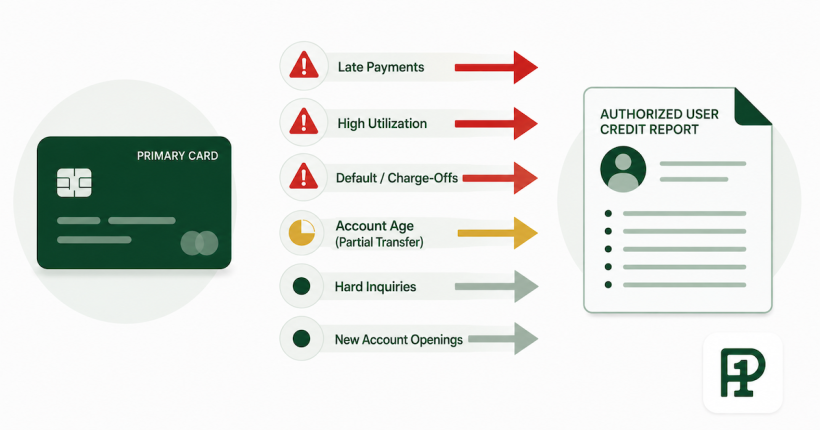
Becoming an authorized user means being added to someone else's credit card account. If that account has a long history of on-time payments and low utilization, that history often gets added to your credit file immediately. The catch is that you are entirely dependent on the primary cardholder's behavior -- if they miss a payment or max out the card, your score can drop through no fault of your own. This strategy works best when you have a parent, spouse, or close family member with excellent credit habits and you have a clear understanding of how the account is managed.
The Payment Automation Imperative
Payment history is the single largest factor in your FICO score, and a single missed payment can drop a good score by 60 to 110 points overnight. The problem is that most missed payments are not the result of financial hardship -- they are the result of forgetting. Someone gets busy, misses the due date by a few days, and takes a significant credit hit that takes 12 to 24 months to fully recover from. If that has already happened to you, the guide on how to fix credit mistakes quickly covers the recovery sequence step by step.
The solution is infrastructure, not vigilance. Set up autopay for at least the minimum payment on every credit account you carry. This protects your payment history even in a chaotic month. Then separately, set a calendar reminder or use your bank's bill pay system to pay the full balance on a consistent date each month -- not the minimum, the full balance. The autopay minimum is your safety net. The full balance payment is your actual habit.
If you have multiple cards, consolidate your payment due dates. Most issuers allow you to change your due date by calling or through the app. Pick one date -- the 15th or the 1st works well for most people -- and move all accounts to that date. One review day per month is far easier to maintain as a habit than tracking five different due dates on a rolling basis.
Utilization: The Lever Most People Ignore
Credit utilization is the ratio of your current balance to your total available credit limit, expressed as a percentage. If you have a $5,000 limit and a $1,500 balance, your utilization is 30%. FICO calculates this both per-card and across all cards combined, and both figures affect your score.
The widely cited advice is to keep utilization below 30%. That is the floor, not the target. Research consistently shows that people with the highest FICO scores tend to carry utilization below 10%. Dropping from 28% utilization to 8% can add 20 to 40 points to a good-standing score with no other changes made.
One important nuance: utilization is calculated based on the balance your issuer reports to the bureaus, which is typically the statement balance -- the balance at the end of your billing cycle. This means even if you pay in full every month, a high statement balance can hurt your score. To keep reported utilization low, pay down your balance before the statement closes, not just before the due date. These are two different dates, and the distinction matters. The full breakdown of how to time payments and manage limits strategically is covered in the guide on how to manage your credit utilization over time.
The other lever for utilization is increasing your credit limit. A higher limit with the same spending means lower utilization. Most issuers allow you to request a limit increase every six to twelve months online without a hard inquiry. If your account is in good standing and your income has increased since you opened the card, this is worth doing. It costs nothing and immediately improves your utilization ratio on that card.
Length of History and the Case Against Closing Cards
Length of credit history accounts for 15% of your FICO score and is measured in two ways: the age of your oldest account and the average age of all your accounts. Both are hurt when you close old accounts, because closed accounts eventually drop off your credit file -- usually after 10 years for accounts in good standing.
The most common mistake people make with length of history is closing a credit card after paying it off because they feel it is responsible to do so. The opposite is true from a credit perspective. Keeping old accounts open -- even if you use them only once every few months for a small purchase -- preserves your history length and keeps your overall available credit higher, which also helps utilization.
If an old card carries an annual fee you cannot justify, it is worth calling the issuer and asking to downgrade to a no-fee version of the card rather than closing it outright. Most major issuers have a product change path that lets you switch card tiers without closing the account or triggering a new hard inquiry. The account stays open, your history length is preserved, and you are not paying for a card you do not use.
Credit Mix, New Inquiries, and the Minor Factors
Credit mix -- the variety of account types in your file, such as credit cards, auto loans, student loans, and mortgages -- accounts for 10% of your score. This factor is worth understanding but rarely worth optimizing directly. Taking out a loan you do not need to improve your credit mix is not a sound strategy. The mix improves naturally as your financial life develops and you take on different types of credit for legitimate reasons.
New credit inquiries account for the final 10% and represent a category that is often overstated in credit advice. A single hard inquiry typically reduces your score by 5 to 10 points and the impact fades within 12 months. The real concern is applying for multiple new accounts in a short period, which signals risk to lenders. Rate shopping for auto loans or mortgages within a 14 to 45 day window is treated as a single inquiry by most scoring models, so consolidating those searches is worth doing.
The general rule is to apply for new credit only when you have a genuine need, space out applications by at least six months when possible, and do not open several new accounts in a short period. New accounts also lower your average account age, which creates a secondary effect on the length of history factor.
Building Credit Without Building Debt
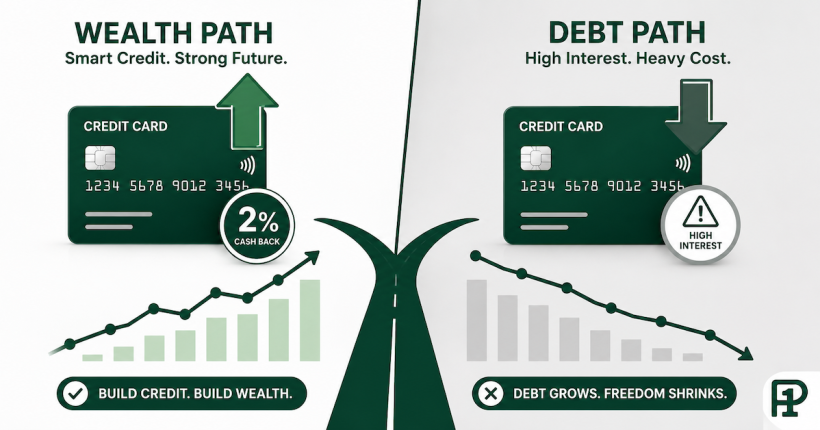
The most sustainable approach to credit building treats credit cards as payment infrastructure rather than access to money you do not have. This means using your card for purchases you would make anyway -- groceries, gas, a recurring subscription -- and paying the full statement balance each month. You build payment history and keep utilization low without carrying debt or paying interest.
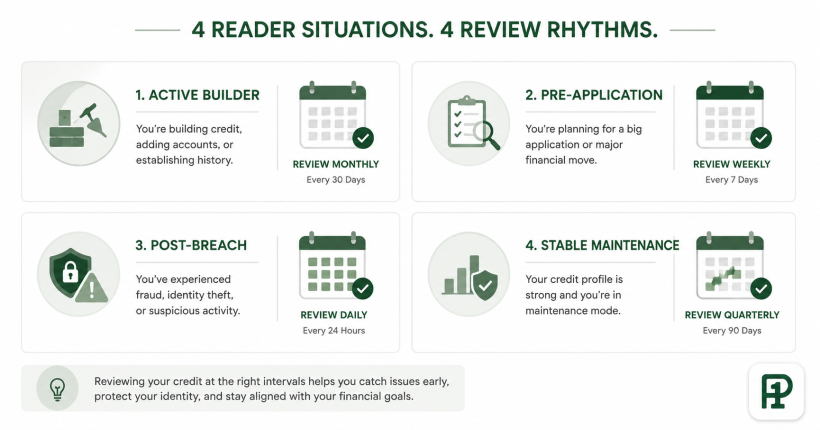
The practical system looks like this: pick one or two cards, use them for fixed monthly spending categories, automate the full balance payment on the same date each month, and review the statement once a month to catch any errors or unauthorized charges. That is the entire system. It runs without requiring willpower once it is set up, and it produces consistent positive payment history over time.
If you currently carry a balance and are paying interest, the credit score concern is secondary to the debt cost concern. A balance at 20% APR is more expensive than the credit score benefit is worth. Pay down the balance before optimizing for score -- the lower utilization will improve your score as a byproduct, and you will no longer be paying hundreds or thousands in interest to maintain that credit activity.
Ready to Build a Full Credit System?
Credit score strategies are one piece of a larger financial infrastructure. The Credit Building and Protection hub covers how to monitor your credit, dispute errors, optimize for approvals, and use credit as a tool rather than a trap -- all in one place.
Explore the Credit Building and Protection Hub →Frequently Asked Questions
How long does it take to build a good credit score from scratch?
You need at least six months of account history before FICO can generate a score at all. After that initial period, a score in the good range (670+) is typically achievable within 12 to 18 months with clean payment history and low utilization. Reaching excellent credit (750+) generally takes two to three years of consistent on-time payments across multiple account types. The timeline is largely determined by how well you manage payment history and utilization from day one.
What is the fastest way to raise my credit score?
The fastest lever most people have access to is paying down credit card balances before the statement closing date to lower reported utilization. If you currently have high utilization and pay it down significantly, the score impact can show up within one to two billing cycles. Disputing and successfully removing inaccurate negative items from your credit report is the other high-speed move, though results depend on what is on your report and how quickly the bureaus process disputes.
Does checking my own credit score hurt it?
No. Checking your own credit through any bureau, monitoring service, or credit card dashboard is a soft inquiry and has no effect on your FICO score. Only hard inquiries -- triggered when you apply for new credit -- affect your score. You can and should check your score and full credit reports regularly without any concern about impact.
Is a 700 credit score good enough?
A 700 score gets you approved for most credit products, but it does not get you the best rates. On a 30-year mortgage, the difference between a 700 score and a 760 score can mean a rate that is 0.5% to 1% higher -- which translates to tens of thousands of dollars in additional interest over the life of the loan. Whether 700 is "good enough" depends on what you are trying to accomplish. For everyday credit access, yes. For a large purchase like a home where rates compound over decades, pushing toward 750+ is worth the effort.
Can I build credit without a credit card?
Yes. Credit-builder loans from credit unions are specifically designed for this purpose and are available without any prior credit history. Experian Boost allows you to add utility, phone, and streaming subscription payment history to your Experian file, which can help generate an initial score or increase an existing one. Some rent reporting services also allow on-time rent payments to be reported to one or more bureaus, though coverage varies by service and bureau.
What happens to my credit score if I miss one payment?
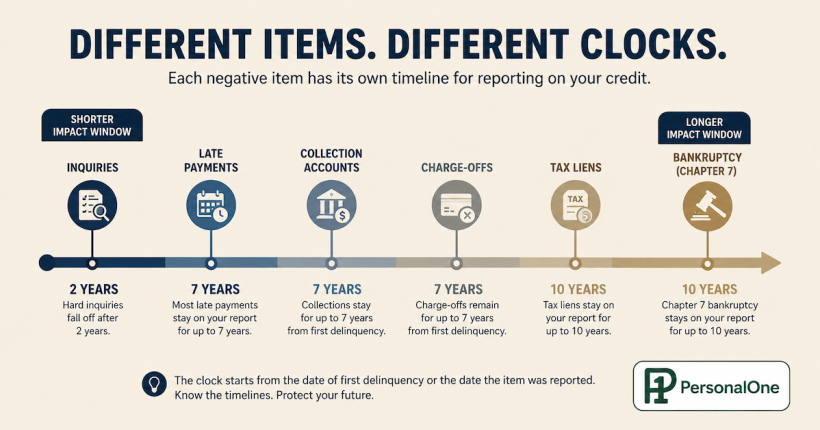
A missed payment is not reported to the bureaus until it is at least 30 days past due. If you catch a missed payment within that 30-day window and bring the account current, there is typically no credit score impact -- though you may owe a late fee to the creditor. Once a payment is reported as 30 days late, the impact depends on your current score: a score in the 700s can drop 60 to 80 points, while a score in the 800s can drop even more because the impact is proportional to how clean the record was before. The negative mark stays on your report for seven years, though its influence on your score diminishes significantly after the first two years as newer positive history accumulates.
Resources
AnnualCreditReport.com -- Free Official Credit Reports from All Three Bureaus
CFPB -- Credit Reports and Scores
FTC -- Credit Monitoring Guide
myFICO -- What's In Your Credit Score
Continue Building: This article is part of the Credit Score Building Strategies cluster inside the Credit Building and Protection authority hub.
Disclaimer: The content on PersonalOne.org is for informational and educational purposes only and does not constitute financial, legal, or credit advice. Credit scoring models and lender criteria vary and change over time. Always review your own credit reports and consult with a licensed financial professional before making significant credit or borrowing decisions. PersonalOne is not a credit repair organization and does not offer credit repair services.