Updated: March 18, 2026
Home › Budgeting & Savings › Budget Structure & Cash Flow › Spending Habits Keeping You Broke
Why Your Spending Habits Are Keeping You Broke (And How to Fix Them)
TL;DR
— Spending habits — not income level — are the primary driver of financial instability for most people across all income brackets.
— The patterns that drain budgets most consistently are lifestyle inflation, silent subscription accumulation, reactive spending, and housing costs that exceed sustainable thresholds.
— Fixing spending habits requires systems that make better decisions automatic — not willpower applied repeatedly to the same behavioral patterns.
— Small daily spending choices compound into major financial limitations over time; the reverse is equally true once the pattern is identified and redirected.
— How spending connects to saving, credit, and long-term financial access is what makes spending habit change more consequential than it initially appears.
Even with a full-time job, money disappears. The paycheck hits, the week passes, and by the following Thursday the account is thin again. The standard explanation is that income is insufficient. The more accurate explanation, in the majority of cases, is that spending does not have a structure that protects it from accumulating in the wrong places.
This is not a character issue. It is a system issue. The spending patterns that drain accounts do not announce themselves as problems. They arrive as convenience, as small treats, as services that seemed worth it when first signed up for. They accumulate quietly and collectively produce a gap between what people earn and what they have left at the end of the month. The budget structure and cash flow system that closes that gap is not built on restriction — it is built on identifying where the leaks are and installing structural barriers before spending decisions can undo good intentions.
This article covers the specific spending patterns that most reliably keep people financially stuck, why they persist across income levels, and the structural changes that address each one.
The Spending Trap: Why Income Is Rarely the Real Problem
The most common assumption about financial instability is that the income is too low. For some people that is genuinely true — there are circumstances where expenses exceed what any reasonable budget adjustment can address and income must increase before stability is possible. But for the majority of people experiencing paycheck-to-paycheck stress, the income is sufficient. The issue is where it goes.
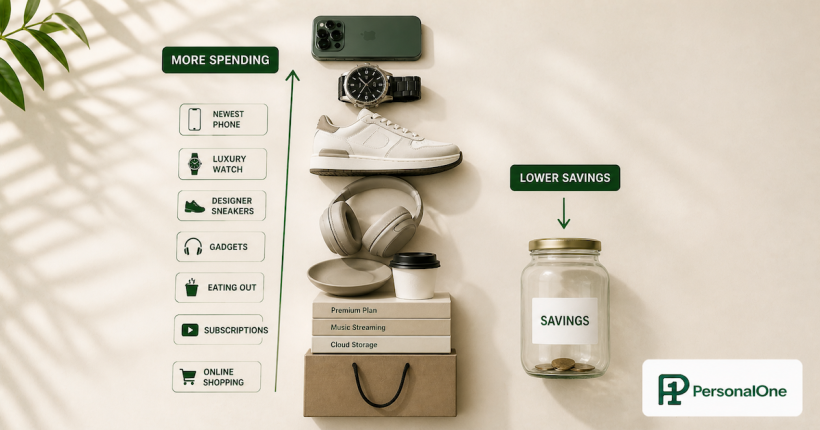
Lifestyle inflation is the mechanism most responsible for this pattern. As income increases, spending tends to increase at a similar or faster rate. A raise produces a nicer apartment, a newer car, more frequent restaurant visits, more subscriptions, more convenience purchases. The income grows but the margin — the difference between what is earned and what is spent — stays the same or shrinks. People making significantly more than they were five years ago feel the same financial pressure they felt then because their spending expanded to fill the available income before savings or debt payoff could capture any of it.
The implication is that raises alone do not solve the problem. Only a structural change in how income is allocated — one that happens before spending decisions are made — produces a different outcome when income increases.
What Overspending Actually Looks Like
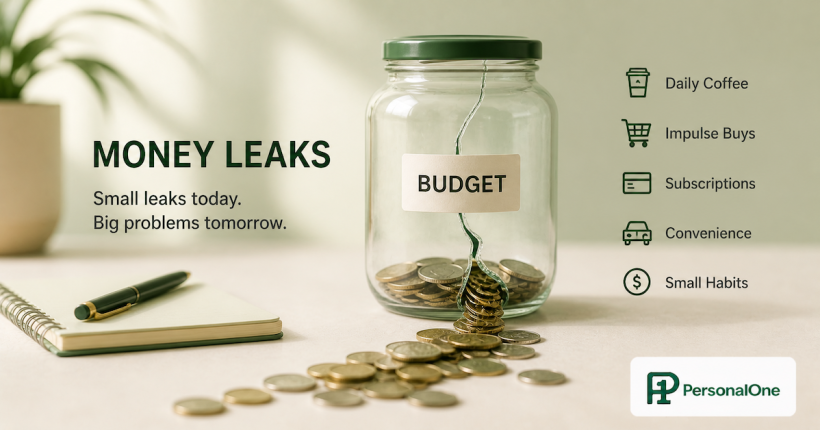
Overspending rarely looks like extravagance. It looks like accumulated convenience. The individual charges are small and seem reasonable in isolation. The subscription to a streaming service is $15 per month. The delivery app fee is $4 per order plus tip. The premium version of an app that rarely gets used is $9.99 per month. The gym membership that gets visited four times per year is $45 per month. None of these is a significant expenditure. Together, with five or ten similar accumulations, they represent $150 to $300 per month flowing out of the budget toward services that provide minimal active value.
The most reliable categories for invisible spending accumulation: subscriptions signed up for and forgotten, impulse online purchases that happen late at night or during work breaks, food delivery fees that inflate the actual cost of convenience significantly above what the meal cost would have been, and upgrade cycles on technology and clothing that happen on a schedule driven by marketing rather than genuine need.
The reason these patterns persist is not that people want to waste money. It is that each individual charge is small enough to be rationalized, and the cumulative total is never visible because no single purchase reveals the pattern. Visibility is the prerequisite for change — tracking your daily spending decisions is the diagnostic foundation that makes the aggregate cost of these patterns visible for the first time and is what makes every structural fix in this article actionable rather than theoretical.
The Five Habits That Keep People Broke Regardless of Income
Habit 1: Living paycheck to paycheck without a buffer
Every unexpected expense becomes a crisis because there is no financial shock absorber between income and obligations. A $300 car repair that would be a minor inconvenience with a funded emergency account becomes a balance-transfer decision or a borrowing event that adds interest cost and resets debt payoff timelines.
Fix: Build a $500 starter emergency fund before addressing anything else. Even this small buffer eliminates the most common cash flow crises and stops the cycle of using credit for emergencies that then accumulates into persistent debt. For readers who need the full structured path beyond the starter fund, the 90-day framework for escaping the broke cycle covers the complete sequencing from awareness through automation.
Habit 2: Ignoring small recurring charges
Subscriptions and recurring charges are invisible in a single transaction view but devastating in aggregate. Most people significantly underestimate the number of active paid subscriptions on their accounts and the combined monthly cost they represent.
Fix: Quarterly subscription audit — pull 90 days of statements, identify every recurring charge, and apply the 30-day rule: if it was not actively used in the past 30 days, cancel it before closing the browser.
Habit 3: Using credit cards as income extensions
A credit card used to cover spending that the checking account cannot support is borrowed income at 20 to 25 percent annual interest. Each month's minimum payment primarily covers interest, leaving the principal nearly unchanged and compounding the cost of every purchase made on the card.
Fix: The rule that changes the relationship with credit cards: if the full balance cannot be paid from the checking account this month, the purchase cannot be afforded this month. Credit cards used only for purchases that can be paid in full convert them from debt instruments into convenience tools.
Habit 4: Skipping regular budget reviews
A budget reviewed only at month-end reveals what happened but provides no opportunity to adjust what is still happening. By the time the last day arrives, the pattern has fully played out. Checking the budget weekly — when there are still 10 to 14 days remaining in the period — allows course correction before the outcome is locked in.
Fix: One 10-minute weekly budget check-in: review variable category spending against the monthly allocation, identify any category running ahead of pace, and make one deliberate adjustment to the remaining week's spending in that category.
Habit 5: Not connecting spending to future financial access
Spending decisions feel independent of the financial future because the connection is not visible. Missing a payment, carrying high credit utilization, or failing to build savings does not produce an immediate consequence. The consequences appear months or years later when a loan application is reviewed, an apartment application is evaluated, or an emergency reveals there is nothing to draw on.
Fix: Understanding how credit, banking, and cash flow work together makes the delayed consequences of spending decisions visible before they arrive. Every cash flow choice either builds or erodes the financial access that determines what options are available when it matters most.
How to Fix Spending Habits Without Feeling Deprived
The most important distinction in changing spending behavior is the difference between behavioral approaches and structural approaches. Behavioral approaches rely on making better individual decisions repeatedly — resisting the impulse purchase at the checkout, remembering not to add the item to the cart, choosing not to open the food delivery app. These work sometimes and fail most times because they require active resistance applied to every individual decision across hundreds of opportunities per month.
Structural approaches change the conditions under which decisions are made. Separating spending money into a dedicated account with a visible balance eliminates the ambiguity about whether the money is available. Automating savings transfers on payday removes the decision about whether to save this month. Moving the subscription audit to the calendar as a quarterly recurring event transforms it from an intention into a scheduled action. The decision that needed to be made repeatedly becomes a system that executes without repeated decisions.
Four structural changes that produce the most consistent results:
Weekly expense audit. Review transactions every Sunday. The goal is not to feel bad about what was spent — it is to see the pattern. Patterns that are not visible cannot be changed. Patterns that are visible can be evaluated and adjusted. This one habit produces more behavioral change than any amount of motivation because it makes the aggregate cost of individual decisions visible before those decisions have accumulated into another full month of unexamined spending.
Designated no-spend days. Choose one or two days per week with a zero discretionary spending rule. No coffee run, no lunch pickup, no online browsing that ends in a purchase. This is not about restriction — it is about interrupting the habit of treating every day as a spending opportunity. Two no-spend days per week reduces the total number of discretionary spending occasions by 25 to 30 percent per month without requiring any individual purchase decision to be different.
Sinking funds for irregular expenses. Car repairs, annual insurance premiums, holiday gifts, and clothing replacements are predictable in category even when unpredictable in exact timing. Without a sinking fund, each one arrives as a crisis that gets handled with credit. With a sinking fund — a small monthly contribution to a dedicated savings bucket for each category — the money is waiting when the expense arrives. A $1,200 annual car maintenance estimate requires $100 per month in a sinking fund. The car repair stops being an emergency and becomes a scheduled withdrawal from a pre-funded account.
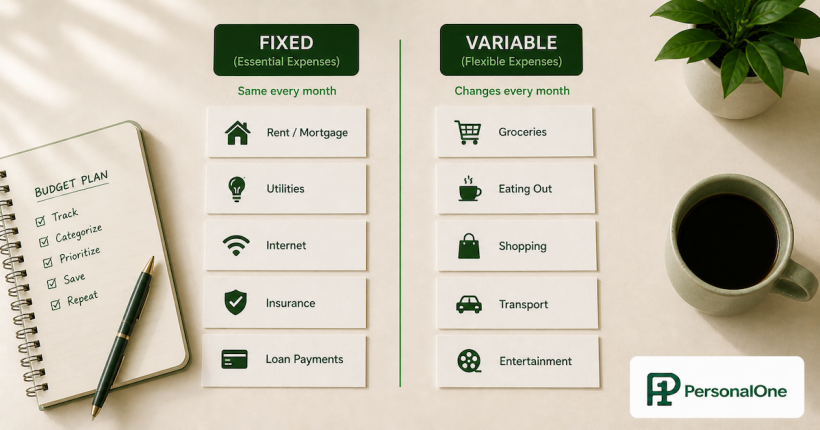
Housing cost alignment. Housing is typically the single largest spending category, and when it exceeds a sustainable threshold relative to income, it compresses every other budget category. A housing cost above 35 to 40 percent of take-home pay leaves insufficient room for savings, debt payoff, and genuine discretionary spending simultaneously. When housing is the constraint, the structural fix is either income growth, roommate arrangement, or a housing decision that brings the ratio back into range. No amount of subscription cancellation closes a gap created by housing that is fundamentally misaligned with income.
Why Systems Beat Willpower Every Time
The people who successfully change their spending habits are not the ones with the most motivation. They are the ones who build systems that make the right behavior the default rather than the effortful choice. Motivation fluctuates. Systems execute regardless of how the day is going.
A savings transfer that fires automatically on payday does not require motivation on the morning after a difficult week. A bills account that handles autopayments does not require remembering to pay rent when life is chaotic. A spending account that shows only genuinely available money does not require mental math about what is committed before a purchase decision can be made.
The spending habits keeping most people broke are not products of bad values or low motivation. They are products of a financial structure that does not protect good intentions from being gradually eroded by the accumulated weight of small decisions made without context. Changing that structure is the intervention. Everything else follows from it. The simple systems that improve your spending behavior — account separation, automated transfers, and alert configurations — are the concrete implementation of the structural approach described throughout this article.
Spending habit change is one layer. The complete framework builds from here.
The Budgeting & Savings hub covers the complete system — from identifying spending patterns through cash flow structure, savings automation, and long-term wealth building.
Explore the Budgeting & Savings Hub →Resources
CFPB — Budget Worksheet and Planning Tools
CFPB — Saving Money: Tools and Guidance
BLS — Consumer Expenditure Surveys: How Americans Spend
This article is part of the Budgeting & Savings hub on PersonalOne — a complete framework for building cash flow control and long-term financial stability.
Frequently Asked Questions
How can I track spending effectively without a complicated system?
Start with 90 days of bank and credit card statements pulled into a single view. Most banking apps provide spending category breakdowns automatically. The goal in the first month is not to change anything — it is to see the pattern accurately. Most people find that the act of seeing the actual numbers changes behavior without any additional intervention, because the gap between assumed spending and actual spending is larger than expected and immediately motivating.
Can spending habits be fixed without earning more money?
Yes, in most cases. The majority of spending problems are allocation problems, not income problems. The same income handled through a structured system — automatic savings transfers, account separation, scheduled expense audits — produces substantially different outcomes than the same income handled reactively. The exception is when housing plus essential expenses genuinely exceeds income, at which point structural spending changes cannot close a gap that only income growth can address.
How much of my take-home pay should go to housing?
The traditional guideline is 30 percent of gross income, but take-home pay is the more useful denominator. When housing consistently exceeds 35 to 40 percent of take-home pay, it leaves insufficient room for savings, debt payoff, and discretionary spending to coexist at sustainable levels. In that range, spending cuts in other categories produce marginal improvement because the structural problem is in the fixed cost, not the variable spending.
What is the single most impactful first step?
Awareness. Review the last 30 days of actual spending against any estimate of what it was. The gap between the estimate and the reality is where the behavioral change begins. Almost universally, seeing the actual aggregate cost of a spending category — dining out total for the month, subscription total, delivery fee total — produces immediate motivation to change it in a way that no general advice about spending habits ever does. The number is the intervention.
Why do spending habits persist even when people know they are a problem?
Because awareness without structure produces intention without execution. Knowing that a habit is problematic does not change the conditions that produce it. The food delivery habit persists not because the person has poor values but because the app is on the phone, the decision happens at a moment of genuine hunger and time pressure, and there is no structural friction between the impulse and the purchase. Removing the app, having meal prep available, or imposing a 10-minute delay before delivery orders addresses the structure rather than relying on the same willpower that has already failed repeatedly in the same conditions.
Disclaimer: This content is for educational purposes only and does not constitute financial advice. Individual financial situations vary significantly. Spending strategies should be adapted to your specific income, expenses, and obligations. Before implementing significant changes to your financial management approach, consider consulting with a qualified financial professional.