Updated: March 18, 2026
Home › Budgeting & Savings › Budget Structure & Cash Flow › Break the Broke Cycle
Break the Broke Cycle in 90 Days: A Proven Paycheck Reset Plan
TL;DR
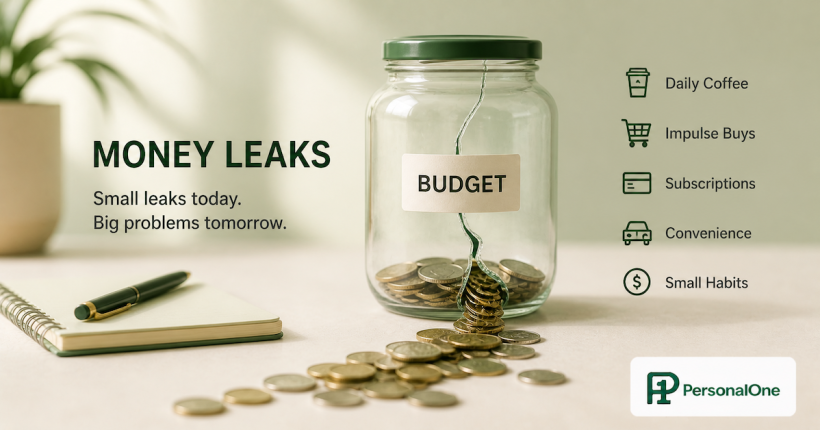
— The broke cycle is not a low-income problem — it is a cash leak problem driven by subscriptions, lifestyle creep, and reactive spending that consumes income faster than it arrives.
— Month 1 is about awareness without shame — tracking every dollar for 30 days to see actual spending patterns rather than estimates.
— Month 2 eliminates cash leaks systematically — canceling subscriptions, negotiating bills, and immediately reallocating recovered money to debt, savings, or sinking funds.
— Month 3 locks in progress through automation — auto-savings transfers and a $500 to $1,000 starter emergency fund that breaks the credit card dependence cycle permanently.
— No income increase required — the framework works by strategically reallocating existing cash flow, not by earning more.
The broke cycle is a specific financial pattern: money arrives, money disappears, scrambling begins, the next paycheck provides temporary relief, and the cycle resets. Income level barely determines who gets trapped in it. People earning $35,000 and people earning $85,000 describe the same experience — paycheck to paycheck, one unexpected expense away from crisis, perpetually behind.
The problem almost never lies in how much is being earned. It lies in how what is being earned gets assigned. Money that lands in checking without a predetermined destination waits to be spent reactively. A dollar without a job becomes a dollar available for impulse purchases, forgotten subscriptions, and convenience spending that accumulates into the monthly deficit creating the stress.
This 90-day framework addresses the broke cycle at its structural root. The budget structure and cash flow system that ends the cycle does not require earning more. It requires seeing clearly where current money goes, eliminating what provides no real value, and automating the behaviors that create financial stability before spending decisions can undo them.
What the Broke Cycle Actually Is (And Why Income Does Not Fix It)
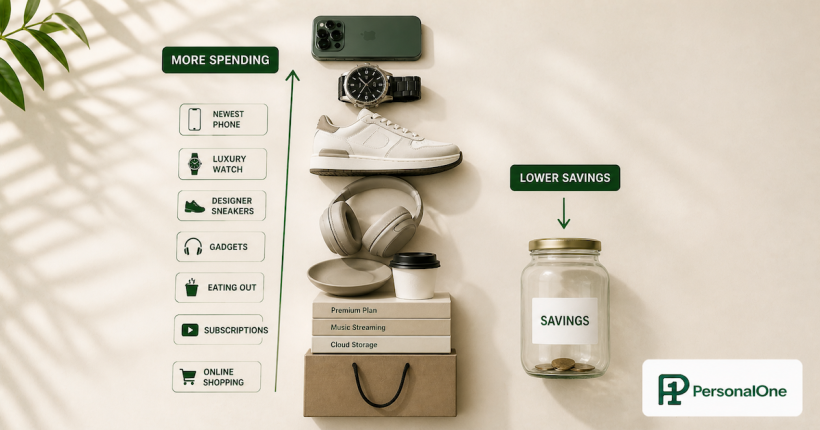
The broke cycle is not about insufficient income. It is about the gap between what is earned and what is structurally protected before spending begins. The pattern is predictable: paychecks disappear within days, credit cards cover genuine emergencies because there is no cash buffer, a $200 unexpected expense derails the entire month, and raises produce no meaningful improvement because they get absorbed by the same spending patterns at a higher dollar amount.
The four system failures that perpetuate it regardless of income level are consistently the same. No real visibility into actual spending — most people estimate their food spending at half or less of what it actually is. Silent cash leaks through forgotten subscriptions that collectively drain $100 to $200 per month without producing any noticed value. Reactive spending that costs 30 to 50 percent more than planned purchasing because decisions are made under time pressure rather than in advance. And everything sitting in one checking account where the entire balance registers psychologically as available to spend, even when most of it is committed to obligations posting within days. These are not just structural failures — they are the spending patterns that keep you stuck at the behavioral level, operating beneath the surface of any budget system until they are specifically identified and addressed.
The Core Problem
The broke cycle is not broken by raises — it is broken by reallocation. The money already exists. It is just assigned to the wrong things, or not assigned at all before spending absorbs it.
Understanding how cash flow actually moves — how banking structure, spending patterns, and credit behavior interact — is what makes the fix permanent rather than temporary. The Credit-Banking-Cash Flow hub covers that relationship between credit, banking, and cash flow for anyone whose broke cycle involves credit as a recurring patch for cash shortfalls.
The 90-Day Framework: Three Phases, One Outcome
The framework operates in three sequential phases, each building on the previous. Skipping Phase 1 to get to Phase 2 is the error that causes most previous attempts at breaking the cycle to fail — without accurate data on actual spending, the changes made in Phase 2 are guesses rather than targeted interventions.
The three phases map to three core actions: visibility (see where money actually goes), elimination (cut what provides no real value), and reallocation (immediately direct recovered money before it gets absorbed). No income increase at any stage. No extreme deprivation at any stage. Just intentional control over money that already exists.
Month 1: Awareness Without Shame
The first 30 days are purely diagnostic. The commitment to tracking every dollar for 30 days — not judging it, not changing it yet, just seeing it accurately — is the single step that makes everything else in this framework possible. This step gets skipped because tracking feels tedious. That is precisely why the cycle continues. Decisions made without data are made against a fictional budget that bears no relationship to actual behavior.
What to track: every purchase regardless of size, all bills including irregular annual charges, debt payments, cash withdrawals, and peer-to-peer payment apps. The medium does not matter — banking app transaction history, a notes document, a spreadsheet. Consistency does matter. Thirty days of complete data is the prerequisite for Phase 2 to work. The article on tracking every dollar without spreadsheets covers how to make this process sustainable rather than overwhelming.
The Three Questions to Answer at the End of Month 1
Where did more money go than expected? Most people discover food and entertainment spending is 40 to 60 percent higher than estimated. Seeing the actual number removes the guesswork from Phase 2 targeting.
Which purchases cannot be recalled? A charge that does not register in memory is unconscious spending — spending that happened automatically rather than deliberately. These are the highest-value targets for elimination.
Which categories could shrink 20 to 30 percent without affecting quality of life? The goal is not cutting things that matter. It is cutting things that do not get noticed.
Month 2: Cancel, Negotiate, Reallocate
Month 2 is where the data from Month 1 becomes action. Three specific tactics free up meaningful cash flow without requiring lifestyle changes that will not last.
Tactic 1: The Subscription Purge. Cancel every subscription not actively used in the past 30 days. Not might use someday. Not it is only ten dollars. If it did not get used in the tracking month just completed, it is gone. The average person recovers $100 to $200 per month from subscription cuts alone — $1,200 to $2,400 annually from charges that produced no noticed value. Streaming services the household has but does not watch, gym memberships visited twice in three months, premium app features never accessed, monthly box subscriptions that accumulate unopened — all of it goes.
Tactic 2: The Bill Negotiation Blitz. Call every service provider and request a lower rate. Car insurance, internet service, phone plan, and any credit card with a high APR and a decent payment history are all negotiable. The approach is straightforward: identify the current rate, obtain competitor quotes where relevant, call the retention line, and ask directly. Most companies have retention pricing unavailable to customers who do not ask for it. Average monthly recovery from successful negotiations runs $50 to $150.
Tactic 3: Immediate Reallocation. Every dollar recovered from cancellations and negotiations gets assigned the same day it is identified — before it gets absorbed back into undirected spending. Three buckets in priority order: high-interest debt above 20 percent APR absorbs 50 percent of recovered money if it exists, because no investment consistently outperforms eliminating a 22 percent debt cost. A $500 to $1,000 starter emergency fund absorbs 30 to 40 percent until the target is reached. Sinking funds for predictable irregular expenses — car maintenance, annual insurance renewals, gifts — absorb the remainder.
Example Reallocation
$80 in subscriptions canceled + $60 in bill negotiations = $140 recovered monthly
$70 to high-interest debt payoff — $50 to emergency starter fund — $20 to sinking funds
All three allocations set as automated transfers the same day the decision is made.
Tactic 4: No-Spend Days. Designate two to three days per week where zero discretionary spending occurs — no coffee runs, no online orders, no convenience purchases. This is not deprivation. It is intentionality training that breaks the habit of treating every day as a spending opportunity. The behavioral change compounds quickly: two no-spend days per week produces four to eight fewer discretionary spending occasions per month, each of which would otherwise have been reactive rather than planned.
Month 3: Build the Automation That Makes It Permanent
Month 3 converts temporary behavioral changes into permanent structural ones. Willpower is finite and unreliable over long periods. Systems execute consistently without requiring recommitment. This month's job is to make the financial behaviors established in Months 1 and 2 automatic — default actions that happen without ongoing decision-making.
Auto-transfer to savings on payday. Configure a recurring transfer from checking to a separate high-yield savings account timed to execute one business day after each paycheck deposits. Start at whatever amount is sustainable — $25 per paycheck if that is all that is available. Money that leaves checking before spending decisions are made is money that cannot be accidentally spent. The checking account balance adjusts psychologically to reflect the lower post-transfer number, and spending scales accordingly. The full mechanics of automating your financial system — account structure, transfer sequencing, and alert configuration — are covered in detail in the companion article for this cluster.
Build the starter emergency fund. The 90-day target is $500 to $1,000 in a dedicated savings account at a separate institution with no debit card attached. This is not the complete emergency fund — three to six months of expenses is the eventual goal. This is the broke-cycle-breaking buffer: enough to cover a car repair, medical copay, or appliance failure without reaching for a credit card. Every time a credit card gets used for an emergency that cash could have covered, it adds interest cost and resets the debt payoff clock. The starter emergency fund breaks that pattern permanently.
Emergency Fund Timeline by Weekly Savings Amount
$50 per week: $500 in 10 weeks — $1,000 in 20 weeks
$75 per week: $500 in 7 weeks — $1,000 in 13 weeks
$100 per week: $500 in 5 weeks — $1,000 in 10 weeks
Even $300 to $400 by day 90 represents a buffer that did not exist before and changes the experience of financial stress immediately.
Separate spending from savings at the account level. Open a second account specifically for savings if one does not already exist at a separate institution. When all money sits in one account, the entire balance registers as available regardless of how much is mentally committed to upcoming obligations. Physical separation eliminates that cognitive error. The checking account holds spending money. The savings account holds protected money. The balance in checking is always accurate.
What the 90-Day Reset Looks Like in Practice
Two illustrative examples from the same framework applied to different starting situations:
Example 1: $42,000 salary, $0 savings, $8,200 in credit card debt
Month 1 findings: $180 per month in food delivery not consciously tracked, three streaming services used once combined per month, $140 gym membership visited twice in 90 days.
Month 2 actions: Canceled two streaming services ($26 saved), canceled gym ($140 saved), reduced food delivery ($120 saved), negotiated car insurance ($38 saved). Total recovered: $324 per month.
Month 3 results: $200 per month to emergency fund, $124 to credit card. After 90 days: $600 emergency fund built, $372 extra paid toward debt.
Example 2: $35,000 salary, $150 savings, $3,400 in student loan debt
Month 1 findings: $150 per month in food delivery (estimated at $50 to $60), $47 in monthly overdraft fees from bill timing, four monthly subscription boxes totaling $73.
Month 2 actions: No-spend weekdays ($110 saved in impulse purchases), canceled subscription boxes ($73 saved), set bill payment dates to eliminate overdrafts ($47 saved). Total recovered: $230 per month.
Month 3 results: $150 per month automated to high-yield savings, $80 to student loan extra payments. After 90 days: $600 total in emergency fund, overdraft fees eliminated entirely.
Both examples follow the same pattern: visibility, elimination, reallocation. No income increase. No extreme restriction. Unconscious spending identified and redirected toward financial stability.
The 90-day reset builds momentum. The complete framework builds lasting stability.
The Budgeting & Savings hub covers the complete system — from breaking the broke cycle through cash flow structure, savings automation, and long-term wealth building.
Explore the Budgeting & Savings Hub →Resources
CFPB — Budget Worksheet and Planning Tools
CFPB — Saving Money: Tools and Guidance
FDIC — Money Smart Financial Education Program
This article is part of the Budgeting & Savings hub on PersonalOne — a complete framework for building cash flow control and long-term financial stability.
Frequently Asked Questions
What is the minimum needed to start this plan?
Nothing. Month 1 costs zero dollars — it is purely observation. Month 2 is about eliminating expenses, not adding them. By Month 3, the reallocations come entirely from money recovered in Month 2. No extra income is required to begin. The only requirement is the decision to see clearly where current money actually goes.
What if significant debt is already part of the situation?
The plan works better with debt present because it reveals how to free up cash for accelerated payments without feeling deprived. The broke cycle and high-interest debt reinforce each other — debt creates cash flow pressure that drives reactive spending, which prevents debt payoff. Breaking the spending pattern first creates the cash flow margin that makes consistent debt payoff possible for the first time.
Can normal social and entertainment spending continue during the 90 days?
Yes. The framework targets waste, not value. Entertainment and social spending that is deliberately chosen and genuinely enjoyed stays. Subscriptions not being used, impulse purchases not remembered making, and convenience spending that happens reflexively rather than intentionally goes. The distinction is between planned spending that aligns with real preferences and unplanned spending that happens automatically without producing satisfaction.
What if expenses still exceed income after cutting everything?
At that point the problem is genuinely an income gap rather than a spending structure problem. The framework still produces value by maximizing what is available while income solutions are pursued — additional income sources, job transitions, housing adjustments, or access to assistance programs. Most people who complete Month 1 tracking discover the gap is smaller than assumed because actual spending includes significant amounts they would not consciously choose to keep.
How are irregular expenses like car repairs and annual premiums handled?
Sinking funds, covered in the Month 2 reallocation section. Estimate total annual irregular expenses, divide by 12, and set that amount aside monthly into a dedicated sub-account. When the expense arrives, cash is already waiting. A $1,200 annual insurance premium requires $100 per month into a sinking fund starting 12 months before the renewal. The expense stops being a crisis and becomes a planned withdrawal from a pre-funded account.
What happens after the 90 days end?
The automated systems continue running without active management. The spending tracking that consumed daily attention in Month 1 becomes a 10 to 15 minute monthly review. The no-spend days and intentional spending habits established in Month 2 become the default rather than a deliberate effort. The emergency fund continues growing via automated contribution. The broke cycle does not return because the structural conditions that created it — no spending visibility, silent cash leaks, no savings buffer, everything in one account — have been permanently replaced with a system that protects money before spending decisions can undo it.
Disclaimer: This content is for educational purposes only and does not constitute financial advice. Individual financial situations vary significantly. Results will vary based on income, expenses, and consistency of implementation. Before making significant financial decisions, consult with a qualified financial professional. PersonalOne provides educational content only and does not offer personalized financial planning services.