2026
Home › Financial Automation › Banking Infrastructure Automation › When Automation Fails: How to Build a Backup Plan
Part of Banking Infrastructure Automation — building the money-flow system that runs itself.
What You Need to Know
— Automation fails for a handful of predictable reasons: an expired card, a payroll delay, a bank system outage, or a timing race between competing transfers.
— A backup plan built in advance, before anything breaks, is far more effective than figuring out a response in the moment a payment actually fails.
— Balance alerts set well above zero give you a warning window most people never set up, catching a problem before it becomes a missed payment.
— Knowing your grace periods, most billers don't report a payment as late immediately, buys real time to fix a failure before it does lasting damage.
— A simple written record of every automated payment, where it comes from and where it goes, turns a stressful troubleshooting moment into a quick checklist.
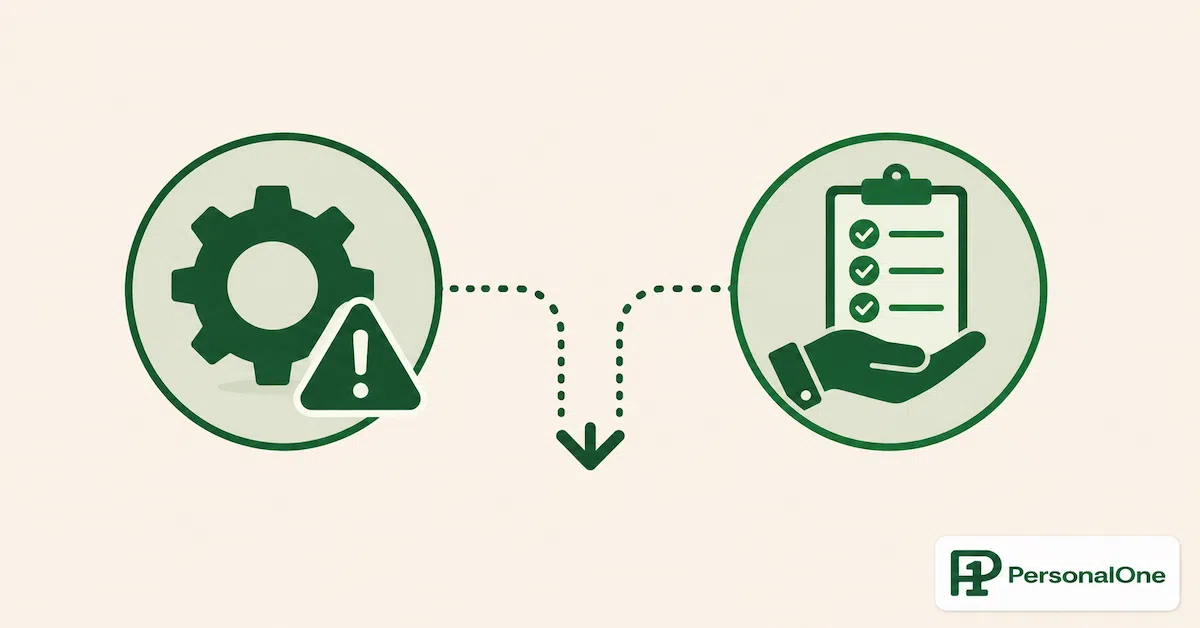
When automation fails, most of what's written about it is reactive: forum threads, support chat transcripts, and troubleshooting FAQs written by people already dealing with a missed payment. What's missing is a plan built in advance, before anything actually breaks, covering the real failure modes and the specific safeguards that catch each one early, well before a late fee or a declined transaction forces the issue.
Automation is genuinely reliable most of the time, which is exactly why a backup plan tends to get skipped. But "most of the time" isn't "always," and the rare failure is far less stressful, and far less costly, when there's already a plan waiting rather than a scramble to figure one out in the moment, often while also dealing with whatever unrelated stress prompted the underlying disruption in the first place. A few minutes of setup now buys real peace of mind later.
The Real Ways Automation Fails
Automated payments don't fail randomly. They fail for a specific, recurring set of reasons, and knowing them in advance makes each one far easier to catch before it becomes a real problem, rather than an unpredictable event that seems to strike without warning.
An expired or replaced card on file. A card that expires, or gets replaced after fraud, breaks every automated payment linked to it simultaneously, often without warning until a payment actually declines. This is arguably the single most common failure mode, since a compromised card can be reissued with little notice, and the new card number invalidates every automation still pointing at the old one.
A paycheck that arrives late. Payroll errors, bank holidays, and processing delays can all push a deposit later than expected, which can cascade into every automation scheduled against it. A single federal holiday landing on what would normally be a payday is enough to shift the entire schedule by a day or more.
Insufficient funds from a timing mismatch. Two automations scheduled too close together can each check a balance the other hasn't accounted for yet, covered in more depth in our guide to setting up transfers without overdrafts.
A bank system outage or processing error. Rare, but real. Banks occasionally experience technical outages that delay or fail to process scheduled transactions, entirely outside your control, sometimes affecting an entire region or institution at once rather than a single account or customer.
A changed biller amount that exceeds what's available. A utility bill or insurance premium that increases without much notice can turn a previously reliable automation into a shortfall, simply because the amount being withdrawn changed while the funding schedule and buffer sizing behind it did not. Our guide to what to automate and what to keep manual covers which categories are worth this level of ongoing attention in the first place.
Building the Backup Plan Before You Need It
The core idea behind a good backup plan is simple: catch the failure as early as possible, ideally before it happens at all, rather than discovering it after a late fee or a declined payment has already occurred and the damage, however small, is already done.
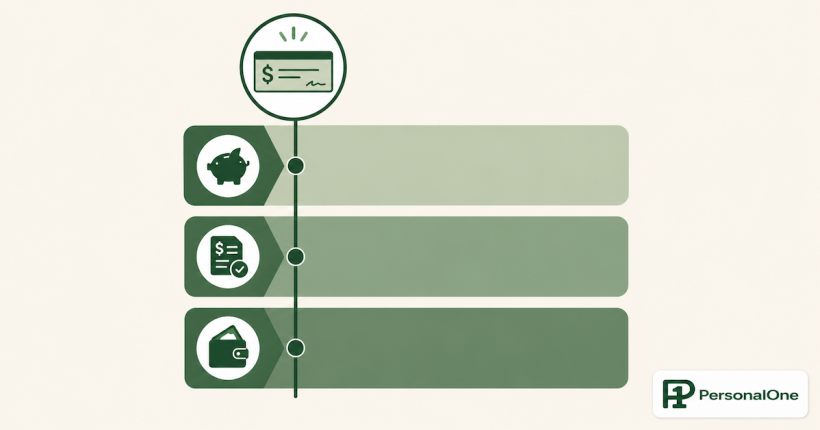
Three Layers of Protection
Layer one: balance alerts. Set a low-balance alert well above zero, not just at the point of an actual overdraft, so you have real advance warning, ideally several days before any scheduled automation is due to run.
Layer two: a buffer that absorbs normal variance. A properly sized buffer, covered in our sequencing guide, gives automation room to survive a late paycheck or a small timing mismatch without any visible disruption to the accounts depending on it.
Layer three: a manual fallback you can execute quickly. Knowing exactly how to make a manual payment, bookmarked login, saved payment portal, phone number for each biller, if an automation genuinely fails despite the first two layers.
Most people have none of these three layers actively in place, relying entirely on automation working correctly every single time, year after year, without ever testing what happens if it doesn't. Building even one layer meaningfully reduces the odds of a failure turning into real damage, and having all three is genuinely comprehensive protection against the realistic failure modes covered above.
Preventing the Card Expiration Cascade
Since an expired or replaced card is the most common single point of failure, it deserves a specific prevention strategy of its own rather than just a general backup plan. Many card issuers now automatically update the card number on file with major billers when a card is reissued, a service sometimes called account updater, but this coverage isn't universal and doesn't extend to every merchant or automation, particularly smaller billers or less common payment processors.
A more reliable habit: whenever a new card arrives, whether from a routine reissue or after fraud, treat updating every automated payment as part of the replacement process itself, not an afterthought. This is exactly where the written record from later in this guide earns its keep, turning what could be a scattered, multi-week discovery process into a single afternoon of systematically working through a known list.
Some banks also offer virtual card numbers specifically for recurring subscriptions, a separate number tied to the same account that can be frozen or regenerated independently of your primary card. This isolates subscription automations from the disruption of a full card replacement, though it adds a layer of setup complexity that isn't necessary for everyone. For someone with a large number of small recurring subscriptions specifically, this extra setup can be worth the tradeoff, since it means a single compromised primary card no longer takes down every automated subscription at once.
Know Your Grace Periods Before You Need Them
A missed automated payment isn't usually an instant crisis, even though it can feel like one in the moment. Most billers, credit cards, loans, utilities, have a grace period before a payment is reported as late to credit bureaus or triggers a serious penalty, and knowing that window in advance changes how urgently you need to react.
Credit card payments, for example, generally aren't reported as late to the credit bureaus until they're 30 days past due, even though a late fee may apply much sooner. Utility shutoffs typically require multiple missed cycles and formal notice before service is actually interrupted. Knowing these specific windows for your own accounts means a caught-early automation failure rarely needs to be treated as an emergency.
Mortgage and auto loan payments tend to follow a similar pattern, with a short grace period, often 10 to 15 days, before a late fee applies, and a longer window before it's reported to credit bureaus or triggers more serious consequences like a formal delinquency notice. Insurance policies vary more widely, with some allowing a full grace period before lapsing coverage and others requiring immediate payment to avoid a gap, so this is worth confirming directly with each specific insurer rather than assuming a standard timeline applies uniformly across every type of policy you hold.
This isn't a reason to be careless about missed automations. It's a reason to respond with an appropriate level of urgency rather than panic, since most failures caught within a few days have real time to be corrected before any lasting consequence occurs, and knowing that in advance makes the moment of discovering a failed payment considerably less stressful.
Keeping a Simple Record of What's Automated
One of the most useful, least glamorous pieces of a backup plan is a simple written record: every automated payment, which account it draws from, which account or biller it goes to, and roughly when it processes each cycle.
This doesn't need to be elaborate, a spreadsheet or even a note in your phone works fine. What it provides is a fast reference in exactly the moment you need one: when a payment fails and you need to quickly identify which card is on file, which account funds it, and how to reach the biller directly, rather than piecing that together under pressure from memory or digging through old statements while a due date approaches.
A useful format includes, for each automated payment: the biller name, the amount and typical date it processes, the funding account, the card or account number it draws from, and a direct contact number or portal link for that biller. Organizing it this way means the record doubles as a troubleshooting checklist, not just a reference list, the moment something actually goes wrong and quick action matters most.
Update this record whenever you add a new automated payment or change a card or account, which takes a minute at setup and saves considerably more time during an actual failure, when clear thinking is often harder to come by than it would be under ordinary, unstressed circumstances.
What to Do When a Payment Actually Fails
Confirm what actually happened before assuming the worst. Check whether the payment failed entirely, was delayed, or processed against a different date than expected. Your record from the previous section makes this quick to verify rather than a source of additional confusion.
Make the payment manually right away if funds are now available, rather than waiting for automation to retry on its own schedule, which can take longer than a manual payment would and leaves the account technically past due in the meantime.
Call the biller if you're within a grace period but want certainty, explaining the situation. Many billers will waive a one-time late fee for an account with an otherwise clean history, particularly when the cause was a bank-side or automation issue rather than genuine nonpayment.
Diagnose the root cause before considering it resolved. An expired card, a timing conflict, an insufficient buffer, each has a different fix, and simply making the missed payment manually doesn't prevent the same failure from happening again next cycle if the underlying cause is never actually addressed.
Build a Banking System That Runs Itself
A backup plan is the final piece of a complete automation system. The Banking Infrastructure Automation hub covers income routing, sequencing, and overdraft-proofing your transfers.
More From This Hub
Return to Financial Automation for the complete system — banking infrastructure, budget automation, savings automation, debt automation, and investment automation.
Frequently Asked Questions
Will a single missed automated payment hurt my credit score?
Usually not, if it's caught and corrected within the standard grace period, generally 30 days for most credit accounts before it's reported as late. A payment made a few days late but within that window typically doesn't reach your credit report at all, since furnishers generally only report delinquencies once they cross that 30-day threshold.
How do I update every automation at once if my card expires?
There's no universal one-click fix, since each biller manages payment methods independently. Your written record of automated payments becomes essential here, giving you a checklist to work through systematically rather than discovering missed ones over the following weeks as each payment individually fails, one at a time, in whatever order each biller's own cycle happens to fall.
Should I keep a small amount of cash as a backup in case digital systems fail entirely?
For most people, this isn't strictly necessary given how reliable digital banking infrastructure generally is, but a modest cash reserve can provide peace of mind for the rare, genuine bank outage scenario, separate from the account-level backup plan covered here, particularly for anyone in an area prone to extended power or connectivity outages.
What's the difference between a failed payment and a declined payment?
A failed payment typically means the transaction didn't process at all, often due to insufficient funds or an expired card. A declined payment usually means it was attempted and actively rejected, sometimes for fraud-prevention reasons that have nothing to do with available balance. Both require similar troubleshooting, but a decline is worth a quick call to confirm it wasn't a security flag on the account rather than a genuine funding issue.
How often should I review and update my backup plan?
Whenever you add a new automated payment, change a bank or card, or experience an actual failure worth learning from. Outside of that, a check once or twice a year, alongside a broader financial review, keeps the record accurate without requiring constant ongoing attention throughout the rest of the year.
What if a merchant's automatic payment system itself has an outage, not my bank?
This happens more often than bank-side outages, since many billers use third-party payment processors that can experience their own technical issues, entirely separate from your bank's systems. If a payment fails and your bank shows no record of an attempted transaction, checking directly with the biller, rather than assuming it's a banking problem, is usually the faster path to a resolution.
Should I set up automation differently if I travel frequently or live abroad part of the year?
International travel can introduce additional failure points, fraud holds triggered by unusual location activity, time zone differences affecting when transactions process, so a slightly wider buffer and more frequent balance checks during travel periods are worth considering, even if your automation otherwise runs reliably at home.
Is it worth notifying my bank in advance when I know I'll be traveling?
Many banks still offer this option, and while modern fraud detection has gotten better at recognizing legitimate travel patterns without a manual notice, a quick heads-up costs little and can prevent an inconvenient card freeze at exactly the wrong moment, particularly for a trip somewhere your usual spending pattern doesn't typically reach.
This content is for educational purposes only and does not constitute financial advice. PersonalOne is not a licensed financial advisor, broker, or investment professional. Individual financial situations vary — consult a qualified financial professional for personalized guidance.