2026
Home › Financial Automation › Banking Infrastructure Automation › What to Automate and What to Keep Manual
Part of Banking Infrastructure Automation — building the money-flow system that runs itself.
What You Need to Know
— "Automate everything" is incomplete advice. Behavioral research shows that removing the moment of paying can quietly increase spending in categories that were never meant to run on autopilot.
— Fixed, predictable costs, rent, loan payments, insurance, are ideal for automation. There's no decision to protect, only a payment to guarantee happens on time.
— Discretionary, variable spending is where automation can backfire, since the small moment of friction before a purchase is often what keeps that spending in check.
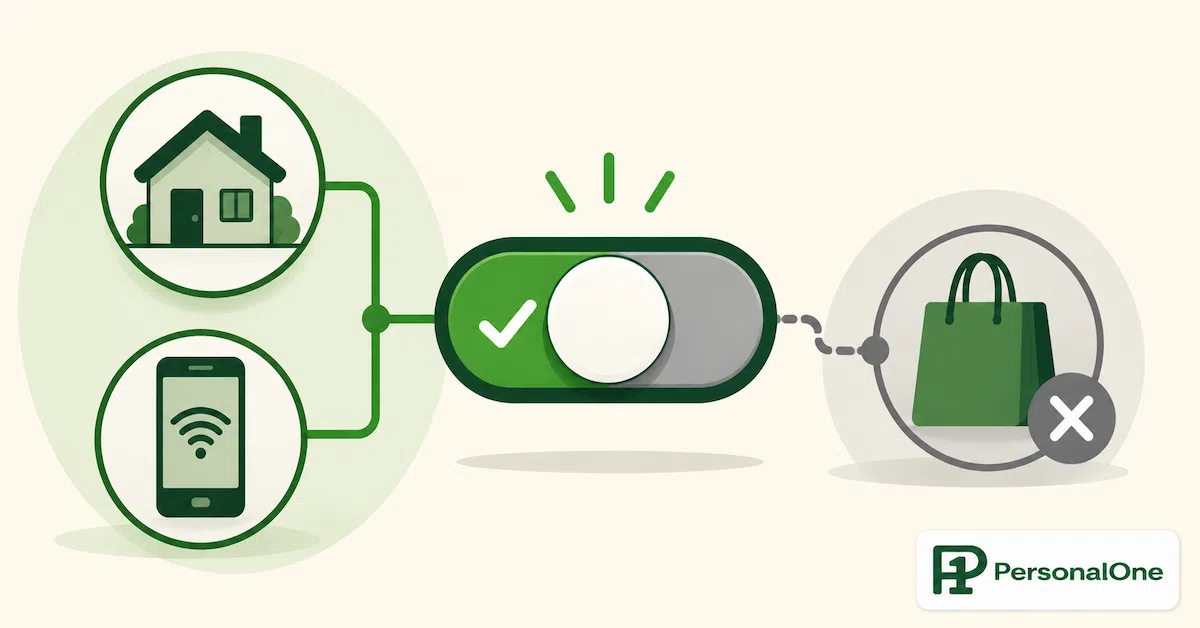
— The right split isn't all-or-nothing. Most people benefit from automating the fixed side completely while keeping a visible, capped structure around the flexible side.
— If you automate a category and notice spending creeping up with no clear cause, that category is a strong candidate to bring back into view.
What to automate and what to keep manual isn't just a matter of convenience. It's a real behavioral question with research behind it, and the common advice, "automate everything, save your willpower for what matters," gets it only half right. Automating the wrong category doesn't just fail to help. It can quietly increase how much you spend.
The distinction that matters is between fixed obligations, which benefit enormously from automation, and discretionary spending, which can lose an important psychological check the moment it's removed from active decision-making entirely. Understanding which side of that line a given expense falls on changes how it should be set up from the very beginning.
The "Automate Everything" Advice Is Incomplete
The dominant advice in personal finance content is straightforward: automate as much as possible, since willpower is a limited resource better spent elsewhere. This is true for a specific category of financial decisions, ones that don't actually require a decision at all, and badly incomplete for another category where the decision itself is doing real work, quietly and consistently, every time it happens.
Paying rent doesn't benefit from a moment of deliberation each month. The amount is fixed, the obligation is non-negotiable, and the only value active attention adds is the risk of forgetting or being late on a payment that was always going to be the same amount regardless. Automating it removes pure downside with essentially no upside lost in the process.
Discretionary spending is a different kind of decision entirely. Each purchase in that category represents a real choice about whether something is worth the money, and that choice is exactly where a small amount of friction can serve a genuinely useful function rather than an obstacle to remove.
The Behavioral Research Behind Why This Matters
Behavioral economist Dan Ariely and others have researched a concept often called the "pain of paying," the small, real psychological discomfort that accompanies spending money, particularly spending that feels tangible, cash, a visible balance dropping, an active decision to authorize a charge. That discomfort isn't a flaw in human psychology to be engineered away. It's a functioning brake on spending.
When a purchase becomes fully automatic, a subscription renewal, a recurring charge nobody actively reauthorizes each time, that pain of paying signal weakens or disappears entirely. The purchase still happens, the money still leaves your account, but the moment that would normally prompt a "is this still worth it?" evaluation never occurs at all. Research on payment friction consistently finds that easier, more automatic, more abstracted payment methods correlate with higher spending than more effortful, more visible ones, even when the underlying cost is identical.
This is precisely why the standard automation advice works well for fixed obligations and can backfire for discretionary ones. A fixed bill was never subject to a "is this worth it" evaluation each month anyway, so removing that friction costs nothing at all. A discretionary purchase was supposed to go through exactly that evaluation, and automation quietly skips it every single time.
Two Versions of the Same Subscription
Manually renewed: Once a year, a streaming service asks you to confirm your subscription and enter payment details again. Each time, there's a brief moment to ask whether it's still worth it. Some years the answer is no, and the subscription gets canceled.
Fully automated: The same service renews silently every year on a saved card, with no prompt, no confirmation, no moment of reconsideration. Three years later, it's still charging, even though usage dropped to nearly zero after the first six months.
Neither version differs in the actual service provided. What differs entirely is whether a natural checkpoint exists for the decision to keep paying, and that difference alone can be worth hundreds of dollars over several years for a single forgotten subscription.
What Belongs on Full Automation
Rent or mortgage payments. Fixed, non-negotiable, and carrying real consequences for being late. There's no ongoing decision to protect here, and a late payment can cost far more in fees and stress than any theoretical benefit of manually confirming the payment each month.
Loan and debt minimum payments. Same logic: fixed obligations where the only risk of manual handling is a missed or late payment doing real damage to your credit.
Insurance premiums. Predictable, recurring, and a lapse in coverage from a missed manual payment carries disproportionate risk relative to the minimal benefit of paying it by hand each cycle.
Savings and retirement contributions. This is the one exception where automation deliberately works against a spending impulse in a good way. The whole point is removing the temptation to skip a contribution in favor of spending the money instead, which is exactly the opposite failure mode from discretionary automation.
Utilities and other genuinely fixed monthly costs. Predictable enough that automation adds convenience without removing a meaningful decision point. If these fixed obligations aren't yet funded automatically at the source, our income routing guide covers setting that up before deciding what to automate downstream.
What Benefits From Staying Manual, or Semi-Manual
Discretionary spending, dining out, entertainment, shopping, hobbies, is where full automation tends to work against you. This doesn't mean tracking every purchase manually forever; that approach fails for its own reasons, mostly friction and abandonment over time.
The better middle ground is structural rather than fully manual: a capped spending account with a known, visible balance, funded on a schedule but not automated at the point of purchase. You still make a real decision every time you spend, since the account can run dry, but you're not manually tracking or categorizing each transaction either.
This preserves the pain-of-paying signal in a lightweight way. Watching a visible balance shrink with each purchase, even without logging anything, keeps the "is this worth it" evaluation alive in a way that a card charged automatically against an unlimited checking account does not.
This is the same structural principle behind separating spending money into its own account rather than tracking every discretionary purchase manually. The account balance itself becomes the friction mechanism, doing the job that manual logging used to do, without requiring the ongoing effort that makes manual tracking fail for most people after a few weeks of good intentions.
The distinction worth holding onto: automating the *funding* of a category and automating the *spending within* a category are two different decisions. Funding a discretionary account on a schedule is genuinely useful automation, since it guarantees the money is set aside before it can be spent elsewhere. Removing all friction from each individual purchase inside that account is where the pain-of-paying research suggests caution, since that's the layer where a real decision was supposed to keep happening.
Revisiting the Split as Income and Life Change
The right automation split isn't static. As fixed costs grow relative to income, or as income grows relative to fixed costs, the balance between what genuinely needs automation and what benefits from friction shifts too. A raise, for example, often expands the discretionary side of a budget faster than the fixed side, which means the friction-preserving structure around discretionary spending matters more, not less, after an increase in income.
Major life changes are a natural trigger to revisit the whole split rather than adding new categories piecemeal without reconsidering the framework. A new dependent, a move to a more expensive area, a shift from salaried to variable income, all change which categories are genuinely fixed versus which ones now carry more discretionary weight than they used to.
Treating the automate-versus-manual decision as a one-time setup rather than something worth revisiting periodically is itself a version of the same mistake this guide has been describing throughout: removing the ongoing evaluation entirely, rather than keeping just enough friction in the system to catch a decision that's quietly stopped making sense.
The distinction worth holding onto: automating the *funding* of a category and automating the *spending within* a category are two different decisions. Funding a discretionary account on a schedule is genuinely useful automation. Removing all friction from each individual purchase inside that account is where the pain-of-paying research suggests caution.
Signs a Category Should Come Back Into View
If you've automated a category and later notice spending in it creeping upward without a clear, deliberate reason, that's a signal worth taking seriously rather than dismissing. It's exactly the pattern the pain-of-paying research predicts: automation removed the natural checkpoint, and spending expanded quietly in its absence.
Subscription services are a particularly common example. A single subscription automated at signup rarely gets revisited unless something forces the question, a price increase notice, an annual expense audit, a moment of noticing the charge on a statement. Left alone, an automated subscription can run for years past the point it stopped being worth the money, precisely because automation removed every natural opportunity to reconsider it.
Dining out and food delivery apps show a similar pattern for a different reason: a saved payment method with one-tap ordering removes nearly all friction from a purchase decision that used to involve at least walking to a restaurant or dialing a phone number to place an order. The convenience is real, but so is the research showing that reduced friction correlates with increased frequency and spend, independent of whether the person consciously decided to order more often.
The fix isn't necessarily reverting to full manual tracking. It's periodically pulling a category back into view, a quarterly review, an annual audit, rather than trusting automation to run indefinitely without ever checking whether the original decision still holds.
A Tiered Approach Instead of a Binary One
Rather than treating automation as a single on-off switch, it helps to think in three tiers based on how much a category benefits from removing friction versus how much it depends on friction to function well.
Tier one: fully automate, no review needed. Rent, loan payments, insurance, retirement contributions. Set once, revisit only when the underlying obligation itself changes.
Tier two: automate the funding, keep the spending visible. Groceries, discretionary spending, categories that benefit from a capped account funded automatically but not charged automatically, preserving a visible balance as the natural checkpoint.
Tier three: automate cautiously, review regularly. Subscriptions and recurring memberships. Automating the payment is fine, but pair it with a scheduled review, since this tier is where "set and forget" most often becomes "forgot entirely."
This tiered framework matters more than a simple checklist of individual categories, since new financial commitments come up constantly and won't always fit neatly into an existing list. Asking which tier a new subscription or bill belongs to, rather than defaulting to full automation for everything, keeps the underlying principle applied consistently as your financial life changes over time.
Build a Banking System That Runs Itself
Knowing what to automate is one piece of a complete system. The Banking Infrastructure Automation hub covers income routing, sequencing, and what to do when automation fails.
More From This Hub
Return to Financial Automation for the complete system — banking infrastructure, budget automation, savings automation, debt automation, and investment automation.
Frequently Asked Questions
Does this mean automation is bad for spending overall?
No. Automation is genuinely valuable for fixed, predictable obligations, where the risk of manual handling, a forgotten payment, is far more costly than any benefit from active attention. The concern applies specifically to discretionary categories where the decision itself was doing useful work, not to automation as a general concept.
Should I automate grocery spending?
Groceries sit in a gray area between fixed and discretionary. A capped account with a known balance, funded automatically but not charged automatically at checkout, works well here, preserving some friction without requiring manual tracking of every trip to the store.
What about automated savings? Doesn't that remove a decision too?
Yes, deliberately, and that's exactly why it works well. Automated savings removes the temptation to skip a contribution in favor of spending, which is the opposite problem from discretionary spending automation. Here, removing the decision protects a good outcome rather than undermining a useful check on spending.
How do I know if a specific subscription should stay automated or get reviewed?
Genuinely essential, heavily used subscriptions are fine to leave automated indefinitely. Anything uncertain, or anything you can't immediately justify the value of if asked, is a candidate for periodic review rather than permanent autopilot, and a quarterly or annual check is usually enough to catch it before too much money has quietly gone to waste.
Is there research specifically on subscriptions and the pain of paying?
The broader payment-friction research applies directly to subscriptions, which are essentially the most automated, most frictionless form of recurring payment available. This is part of why subscription spending is so commonly underestimated by the people paying for it.
Should I automate bill payments even if I like reviewing my spending manually?
Yes, for genuinely fixed obligations. Manual review is valuable for discretionary categories where a real decision is being made each time. For a fixed bill, there's no decision to make, only a risk of forgetting, so automation adds safety without removing anything of value even for someone who otherwise prefers hands-on money management day to day.
What if I already automated everything and want to add friction back to discretionary spending?
Start by moving discretionary purchases off a saved card on file and onto a dedicated debit card or account with a visible, capped balance. This single change reintroduces a natural checkpoint without requiring you to manually log every transaction going forward, and it tends to be far more sustainable long-term than trying to rebuild the habit of manual tracking from scratch.
This content is for educational purposes only and does not constitute financial advice. PersonalOne is not a licensed financial advisor, broker, or investment professional. Individual financial situations vary — consult a qualified financial professional for personalized guidance.