June, 2026
Home › Financial Stability › Long-Term Resilience › How to Build a Financially Resilient Life
How to Build a Financially Resilient Life That Holds Through Any Life Disruption
What You Need to Know
— A financially resilient life is not about avoiding disruption — it is about building a system that absorbs disruption without collapsing
— Life disruptions that threaten financial stability fall into three categories: income disruption, expense shocks, and life transition costs — each requires a different protective layer
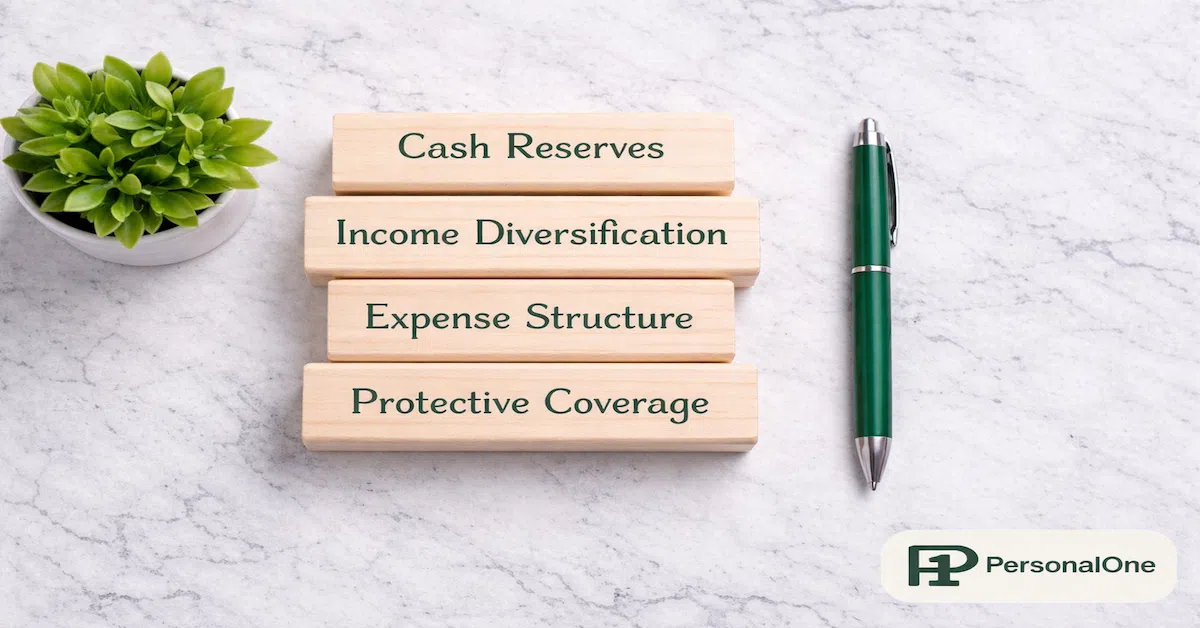
— Financial durability is built through four structural commitments: adequate cash reserves, income that does not depend on a single source, fixed obligations that stay below 50% of income, and protective coverage for catastrophic risks
— The financially resilient life is not achieved at a single milestone — it is maintained through consistent behavior and periodic structural reviews
— Building financial durability is a long-term project with compounding returns — each structural improvement makes subsequent improvements easier and faster
How to Build a Financially Resilient Life: The Complete Framework
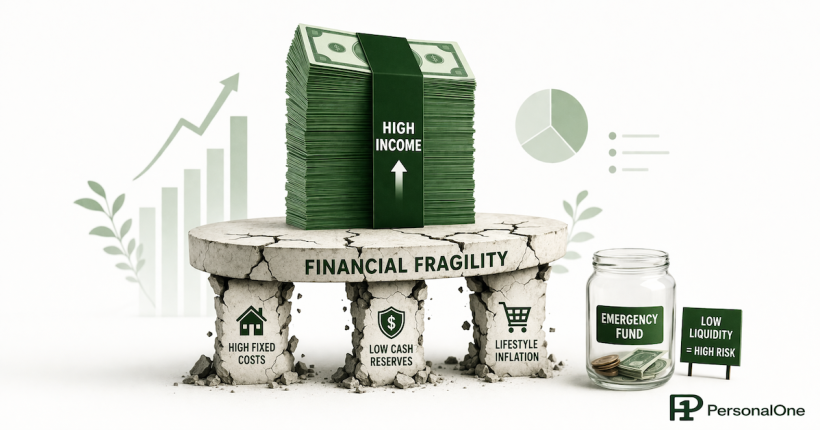
Building a financially resilient life that holds through any life disruption — whether income disruption, financial life that survives disruption from an expense shock, or the need to build financial durability through a major life transition — requires understanding that financial durability and long-term financial resilience are system properties, not a balance property. It is not primarily about having a specific amount of money — it is about how your financial life is structured so that when disruption arrives (and it always does), the system bends rather than breaks. The complete long-term resilience framework for building this system is in the Long-Term Resilience guide.
The three categories of life disruption that threaten financial stability are income disruption (job loss, disability, reduced hours, business failure), expense shocks (medical events, major repairs, legal costs, family emergencies), and life transition costs (divorce, relocation, career change, family expansion). A financially resilient life requires protective structures for all three categories because they are largely independent — the same event that causes income disruption (a serious illness) can simultaneously create a large expense shock. The financial stability guide covers the complete system this resilience framework is part of.
Layer 1: Cash Reserves for Every Disruption Category
Cash reserves are the universal absorber of financial disruption. They cover income gaps during job loss, fund unexpected expenses without debt, and provide the liquidity to manage transition costs without liquidating investments at unfavorable prices. A financially resilient life requires three distinct cash layers operating simultaneously: the buffer account (one month of fixed expenses for timing protection), the emergency fund (3–6 months of essential expenses for income and expense disruption), and if feasible, an extended reserve (6–12 months for recession preparation or high-income-risk situations).
These reserves must be in separate, clearly labeled accounts at FDIC-insured institutions. Commingling them in a single savings account eliminates the functional distinction between them. The Buffer Account Systems guide and the Emergency Fund Strategy guide cover how to build and maintain each layer with the right structure and right account placement.
Layer 2: Income That Survives a Single Source Failure
A single income source is a single point of failure. A financially resilient life has income distributed across at least two sources so that disruption to one creates a gap rather than a complete income collapse. The secondary income source does not need to replace the primary — it needs to provide enough partial coverage to extend financial runway and reduce pressure during the primary income disruption period.
Building income resilience also includes optimizing your primary income source for stability: developing skills that are in demand across multiple employers and industries, maintaining professional networks that provide access to employment opportunities, and avoiding over-specialization that makes you vulnerable to industry-specific downturns. The Side Hustles and Entrepreneurship guide covers the frameworks for building secondary income streams alongside a primary career.
Layer 3: A Fixed Expense Structure That Survives Income Reduction
Your fixed expense ratio — the percentage of take-home income committed to non-negotiable monthly obligations — determines how much income reduction your household can absorb before survival expenses become unmanageable. A household with a 40% fixed expense ratio can survive a 30% income reduction on reduced discretionary spending. A household with a 75% fixed expense ratio cannot survive the same reduction without missing fixed obligations.
Building financial durability through expense structure means making deliberate decisions about fixed obligation commitments, particularly housing and vehicle choices, that preserve flexibility rather than maximizing consumption. The guideline: total fixed obligations below 50% of take-home income at all times. This is not a sacrifice — it is the structural decision that makes every other resilience layer easier to build and maintain. The Budgeting and Savings guide covers the frameworks for managing your expense structure intentionally as income grows.
Layer 4: Protective Coverage for Catastrophic Risk
Some life disruptions are too large for cash reserves alone to absorb. A serious disability, a major medical event, a significant liability claim, or the death of an income-earner can create financial damage that exceeds any reasonable emergency fund balance. Insurance is the protective layer that covers these catastrophic risk categories at a fixed monthly cost that is typically a fraction of the potential loss.
A financially resilient life maintains adequate coverage in four categories: health insurance with manageable out-of-pocket maximums, disability insurance covering at least 60% of income for long-term disability, life insurance covering dependents during the income-replacement period, and liability coverage through homeowners, renters, and umbrella policies. Coverage gaps in any of these categories represent structural vulnerabilities in an otherwise well-built financial system. The complete coverage framework is in the Insurance and Financial Protection guide.
Maintaining Financial Resilience Through Life Transitions
Life transitions — marriage, children, divorce, relocation, career change, aging parents — are among the most common triggers for financial disruption because they change income, expenses, and risk profile simultaneously. A financially resilient life includes a trigger-based review process: whenever a significant life transition occurs, review all four layers of the resilience framework and adjust accordingly. The Money Through Life Stages guide covers how financial decisions evolve across each major life stage and transition.
Four layers. Maintained consistently. A financial life that holds.
The complete Long-Term Resilience framework covers every structural layer of building a financially durable life — from cash reserves through income diversification, expense structure, and protective coverage.
Explore Long-Term Resilience →Resources
Official Sources
CFPB — Consumer Tools — Consumer Financial Protection Bureau tools covering savings, credit, debt, and financial planning — the full range of resources needed to build and maintain each resilience layer.
DOL — Life Changes and Your Benefits — Department of Labor guidance on how major life transitions affect insurance coverage, benefits elections, and COBRA continuation rights.
Return to the financial stability guide for the complete system this cluster is part of.
Frequently Asked Questions
At what point is a financial life genuinely resilient?
A financial life is genuinely resilient when all four layers are in place and maintained: a funded multi-layer cash reserve, at least one functioning secondary income source, fixed obligations below 50% of income, and adequate coverage in all four insurance categories. Most people building from scratch reach this state in 3–5 years of consistent focused work. Partial resilience — three of four layers functioning well — is meaningfully better than no resilience and is worth building even if the fourth layer takes longer.
Is financial resilience the same as financial independence?
No. Financial resilience means your financial system can absorb disruption without collapsing. Financial independence means your assets generate enough income that work is optional. Resilience is achievable at any income level and does not require significant invested assets. Independence requires substantial accumulated wealth. Resilience is the prerequisite for independence — you cannot build wealth reliably without first building the stability that prevents wealth-building efforts from being repeatedly disrupted.
How do I maintain resilience as my life circumstances change?
Use life transitions as review triggers rather than waiting for an annual review date. Marriage: review income diversification and insurance coverage. New child: review life insurance, disability coverage, and emergency fund target. Home purchase: review fixed expense ratio and property coverage. Career change: review income concentration and benefits coverage. Each transition changes one or more resilience layers and requires a corresponding structural adjustment to maintain the protection level you have built.
Disclaimer: This article is for informational and educational purposes only and does not constitute financial, legal, or insurance advice. Individual circumstances vary significantly.