Updated: May 31, 2026
Home › Side Hustles & Entrepreneurship › Freelancing Systems
What You Need to Know
— The difference between inconsistent freelance gigs and a stable income is a system. This cluster is built around how to build a freelancing system that pays consistently — the client pipeline, rate structure, and delivery process that makes freelance income predictable.
— Most freelancers who earn inconsistently have a systems problem, not a skills problem. The fix is structural, not motivational.
— Platform selection — Upwork vs Fiverr vs direct outreach — matters less than building the repeatable system that generates work regardless of channel.
— Rate setting, financial structure, and understanding why freelancers fail are as important as client acquisition — this cluster covers all of them.
— Consistent freelance income is the bridge between the first side hustle dollar and the business structure and scaling strategies covered in the next clusters.
Building a freelancing system that pays consistently requires more than finding clients — it requires a repeatable client acquisition process, a standardized delivery system, and a financial structure that prevents the tax and cash flow problems that derail most freelance practices before they reach their income potential. This cluster covers all three dimensions of freelance system design and connects directly to the broader side hustles and entrepreneurship framework that supports scaling beyond what solo freelancing can produce.
Freelancing is where most side hustles graduate to once the foundation layer produces reliable first income. The leap from gig work to a real freelance practice is a systems leap — and this cluster is the roadmap for making it.
The Platform Decision
The Upwork vs Fiverr decision is less about which platform is objectively better and more about which model matches the service being offered. Fiverr works for clearly productized, defined deliverables where buyers browse rather than post jobs. Upwork works for project-based work where clients describe requirements and freelancers apply. Both reward profile completion and early reviews above all else. Neither replaces direct outreach for premium-rate work, which bypasses platform fees and competition entirely.
For freelancers starting on Fiverr specifically, the mechanics that distinguish profiles that generate consistent orders from those that sit dormant despite technically sound service offerings come down to offer positioning, search optimization, and the first-review acquisition strategy — all covered in the Go Deeper guides below.
Rate Setting and Financial Structure
Chronic undercharging is the most common income ceiling in freelancing. The rate setting framework covers how to calculate the rate your income target requires — accounting for self-employment taxes, non-billable hours, and the absence of employer-provided benefits that most freelancers fail to price in when setting competitive rates. Getting this calculation right from the start prevents the compounding problem of underpriced clients who come to expect below-market rates and resist increases.
The financial structure behind the freelance practice — the business account, tax reserve, and expense tracking that every freelancer needs — prevents the two most common financial crises: spending income owed to the IRS, and being unable to substantiate deductions at tax time.
Why Freelancers Fail and How to Build Differently
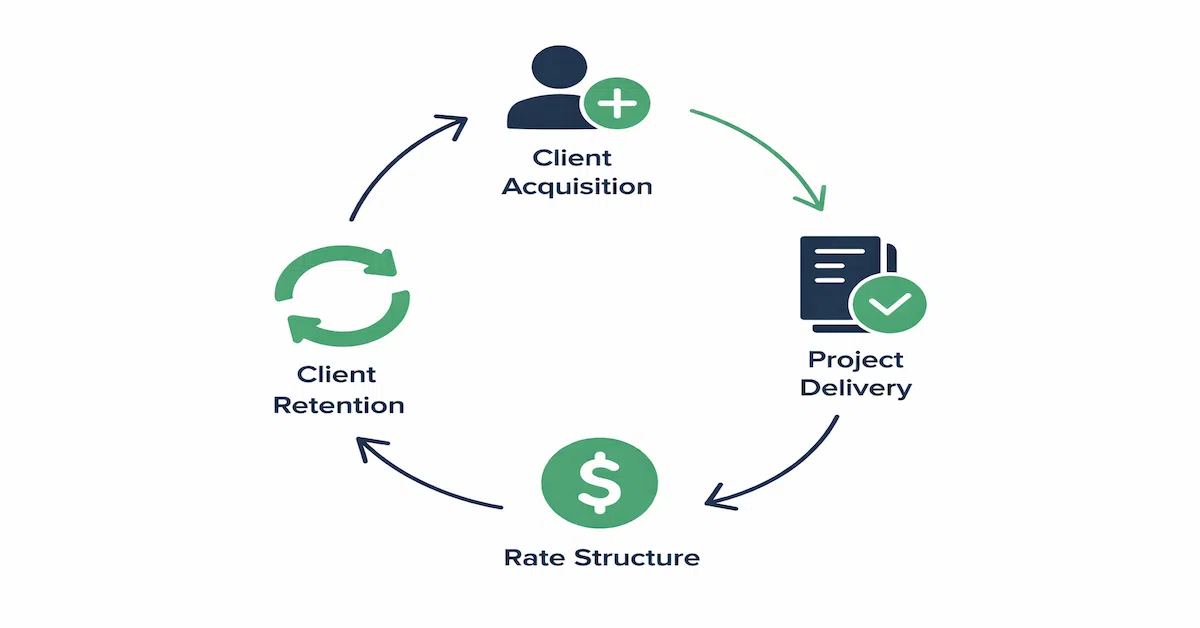
Why freelancers fail financially is not primarily a story about bad luck or weak markets. It is almost always a story about missing systems: no defined client pipeline that runs continuously alongside delivery, no standard delivery process that produces consistent quality without reinventing the wheel on every project, and no client retention mechanism that converts one-time buyers into repeat revenue.
The comparison between freelancing and the 9-to-5 provides the financial reality check that most freelancing content avoids — the full comparison of income, benefits, taxes, and stability that makes the decision to pursue freelancing as a primary or secondary income source an informed one rather than an aspirational one.
Go Deeper: Freelancing Systems Guides
How Much Should I Charge as a Freelancer
The rate calculation framework that accounts for self-employment taxes, non-billable time, and the real cost of self-employment. The formula that prevents the chronic undercharging that caps most freelance income before it reaches its potential.
Fiverr Income: How to Actually Make Money
The specific profile and offer mechanics that generate consistent Fiverr orders — what distinguishes profiles that earn from profiles that sit dormant despite technically sound service offerings.
Upwork vs Fiverr: Which Platform Pays Freelancers
Which freelance platform fits your service type, client target, and income timeline — and why the platform decision matters less than the system built on top of it.
How to Make Your First $500 from Freelance Writing
The exact steps from zero to first paid writing client — the outreach sequence, offer structure, and delivery process that produces the first check before the portfolio is built.
Freelancing vs 9-to-5: Which Makes You More Money
The full financial comparison covering income, taxes, benefits, and stability — the reality check that makes the freelancing decision an informed one rather than an aspirational one.
Why Freelancers Fail Financially
The specific systems gaps — no client pipeline, no standard delivery process, no retention mechanism — that cause most freelance practices to stall, with the structural fix for each one.
How to set up the business account, tax reserve, and expense tracking every freelancer needs — the financial structure that prevents spending money owed to the IRS and keeps the books clean at tax time.
Inconsistent Gigs Become Consistent Income When the System Is Built Correctly.
The complete framework for building income outside your primary job at every stage — from first freelance client through business structure, income scaling, and career income strategy — is in Side Hustles & Entrepreneurship.
Frequently Asked Questions
How long does it take to get the first freelance client?
Direct outreach to warm professional contacts can produce a first client within one to two weeks if the outreach is immediate and targeted. Platform-based freelancing on Upwork or Fiverr typically takes two to four weeks to secure the first paid project after profile setup and optimization. Cold outreach to ideal clients with no existing relationship takes longer — expect four to eight weeks for the first conversion. Warm outreach to people who already know your work is the fastest path regardless of the service or platform.
What taxes do I owe as a freelancer?
Self-employed freelancers pay the full 15.3% self-employment tax on net income plus federal and state income tax. Once annual net self-employment income exceeds $400, quarterly estimated payments are required. Set aside 25 to 30 percent of every payment received in a dedicated tax reserve account. The IRS Self-Employed Tax Center covers the specific forms and deadlines.
Should I use a contract for every freelance project?
Yes — for every project regardless of size or how well you know the client. A contract defines scope, payment terms, revision limits, and ownership of deliverables. It prevents the most common freelance disputes — scope creep, late payment, and disagreement about what was agreed — by documenting the agreement before work begins. Platform-based projects are partially protected by platform terms of service, but direct client work has no protection at all without a written agreement.
Official Sources
IRS — Self-Employed Individuals Tax Center
FTC — Gig Economy Guidance for Workers
Bureau of Labor Statistics — Occupational Employment and Wage Statistics
SBA — 10 Steps to Start Your Business
More From This Hub
This cluster is part of the Side Hustles & Entrepreneurship system on PersonalOne — a complete framework for building income outside your primary job at every stage.
PersonalOne Money System
This content is researched, written, and owned by PersonalOne — a free financial education platform built to help Millennials and Gen Z build real financial systems.
Disclaimer: This content is for educational purposes only and does not constitute financial advice. Individual financial situations vary — consult a qualified financial professional for personalized guidance.