June 2026
Home › Credit Building & Protection › Credit Score Building Strategies › How Long Does It Take to Build a 700 Credit Score?
What You Need to Know
— Building a 700 credit score from scratch typically takes 12 to 24 months — but starting point matters more than effort.
— Someone with a thin file and someone recovering from a late payment face entirely different timelines, even if both are doing everything right.
— The five FICO factors don't move at the same speed — knowing which ones are holding you back lets you focus where it actually matters.
— There are legitimate accelerators — authorized user accounts, credit utilization drops, and dispute resolution — that can compress months of progress.
— A 700 is not a finish line. It is the score that opens access to better products, better rates, and more financial leverage.
Your Timeline Isn't About Effort — It's About What's Working Against You
If you've searched for how long it takes to build a 700 credit score, you've probably found the same answer everywhere: six months to two years. That answer is technically correct and practically useless. It's the equivalent of telling someone who asks how long it takes to drive across the country "somewhere between 40 hours and two weeks." True. Not helpful.
The real answer depends on a single question almost no article actually asks: what is your current credit situation? A 22-year-old with no credit history is in a completely different position than a 31-year-old with a 580 score and a late payment from three years ago. Both of them can reach 700. But they'll get there differently, and the strategies that help one person move faster won't necessarily help the other at all.
This guide breaks down the timeline by starting point — not by stage of progress, which the general credit building timeline already covers in detail. Here, the lens is your situation right now: no history, a damaged score, a thin file, or recovery from a major event. It explains which of the five FICO factors are speed-limiting in each situation, and lays out the specific actions that compress the timeline without shortcuts that damage your score later. Understanding what actually moves your credit score at a mechanical level is the foundation for everything that follows — because you can't build toward 700 efficiently if you don't know which factors are currently working against you.
What 700 Actually Means and Why It's the Right Target
FICO scores range from 300 to 850. A 700 sits at the low end of the "good" tier, which runs from 670 to 739. It's not an elite score — you won't get the best rates on a mortgage with a 700. But it is the threshold score that changes your financial options in a real and immediate way.
Below 670, you're in subprime territory. That means higher interest rates on auto loans, rejection from most rewards credit cards, and landlords who either decline your application or require a co-signer. Above 700, those doors open. Most conventional lenders will approve you. The rates you receive are still not optimal, but they are workable. Credit card issuers will offer you cards with actual rewards and reasonable credit limits rather than secured products with annual fees and 29% APR.
The Federal Reserve's consumer credit surveys consistently show that the difference between a 620 and a 720 score on a 30-year fixed mortgage can represent tens of thousands of dollars over the life of the loan in interest costs alone. A 700 score isn't about bragging rights — it's about the cost of borrowing money for the rest of your financial life. Getting there faster means accessing those lower costs sooner.
For most people in their 20s and early 30s, 700 is also achievable within a reasonable timeframe using deliberate strategy rather than just waiting for time to pass. That distinction matters. Passive credit building — opening a card, paying it, and hoping — works eventually. Strategic credit building compresses that timeline significantly. The difference is understanding which factors have the most leverage in your specific situation.
Timeline by Starting Point: The Framework That Actually Answers the Question
The most useful way to frame this is to segment by starting point rather than giving a single average that fits almost no one. There are four common situations people searching this question are actually in.
Starting from no credit history at all. This is the thin-file situation. You have no credit accounts, no payment history, and potentially no score at all. The FICO model requires at least one account that has been open for six months and has been reported to the bureaus in the past six months to generate a score. If you're at zero, your first goal is simply generating a scoreable file — and that alone takes six months from the date you open your first account. From there, reaching 700 typically takes another six to twelve months of consistent behavior. Total timeline from zero credit: roughly 12 to 18 months under good conditions.
Starting with a score in the 500s. A score in the 500s almost always means negative items — late payments, collections, or charge-offs. These are the hardest situations because time is the only full cure for derogatory marks. A 30-day late payment stays on your report for seven years, though its impact fades significantly after the first two years. Someone at 540 with an active collection account is looking at 18 to 36 months to reach 700, depending on how recently the damage occurred and whether they can resolve the collection. The strategy here is two-track: build positive history aggressively while waiting for negative items to age and lose weight.
Starting with a score in the 600s. This is the most common situation — you have some credit history, maybe one or two cards, and a few years of on-time payments, but your score is stuck in the 620 to 660 range. Here the limiting factor is usually a combination of thin file (not enough accounts or age), high utilization, or a single older negative item. Someone at 640 with no negative items and low utilization can reach 700 in as little as six to nine months by addressing the specific limiting factor. This is also the situation where authorized user strategy can provide the fastest leverage.
Rebuilding after a significant credit event. Bankruptcy, foreclosure, or multiple collections represent the longest timeline. Chapter 7 bankruptcy stays on your report for ten years. Foreclosure for seven. If you've been through one of these, the path to 700 is real but long — typically three to five years from the event date, assuming you begin building positive history immediately. The good news is that scores are forward-looking in their weighting; recent positive history carries more weight than old negative history as the months accumulate.
What I've Seen
The clients who reach 700 fastest from a damaged-credit starting point almost never get there through one big fix. One client came to me at 560 with a single collection account from a medical bill — the kind of negative item that feels permanent. We didn't dispute it; it was accurate. Instead we opened a secured card, kept utilization under 5%, and let the collection's weight fade on its own timeline while the new positive history accumulated in parallel. Eighteen months later, the collection was still on the report — and the score had climbed to 705. The collection didn't disappear. It just stopped being the only thing the score saw.
The Five FICO Factors and Which Ones You Can Actually Move
FICO scores are calculated from five factors, and not all of them are equally actionable. Understanding which ones you can influence immediately versus which ones require patience is the key to building a realistic timeline.
Payment history (35% of your score) is the most heavily weighted factor and the most binary. You either paid on time or you didn't. Going forward, on-time payments build this category steadily. A single missed payment can set it back significantly. The strategic implication: once you're building credit, protecting payment history is non-negotiable. Set up autopay for minimums on every account. One missed payment at the wrong time can cost you six months of progress.
Credit utilization (30% of your score) is the most immediately actionable factor. Unlike payment history, which is a rolling record of behavior over time, utilization is calculated from your current balances at statement close. If you pay down a high-balance card today, that improvement reflects in your score as soon as the new balance is reported — typically within one to two billing cycles. This is the fastest legitimate lever you have. Keeping every card below 30% is the standard guidance. Keeping individual cards below 10% is where the real score gains live, particularly for anyone stuck in the high 600s.
Length of credit history (15% of your score) is largely a waiting game. The two key sub-factors are the age of your oldest account and the average age of all accounts. Opening new accounts lowers your average age temporarily. This is why opening multiple new accounts quickly — a common mistake for people who are trying to build credit fast — can actually suppress your score in the short term even when the intent is to build it. The practical guidance: don't close your oldest account, even if you're not using it. Age is cumulative and irreplaceable.
Credit mix (10% of your score) rewards having both revolving accounts (credit cards) and installment accounts (auto loans, personal loans, student loans). You don't need to open a loan just to improve your mix — the impact is modest. But if you have only credit cards and you're trying to move from 680 to 700, adding a credit builder loan through a credit union can provide both mix credit and a positive payment history record simultaneously.
New credit inquiries (10% of your score) are the factor most people overestimate in terms of damage. A single hard inquiry typically reduces a score by five points or fewer, and the impact fades within twelve months. Rate shopping for the same type of loan within a 14 to 45-day window counts as a single inquiry under FICO's deduplication logic. The real risk with new accounts isn't the inquiry — it's the reduction in average account age and the temptation to spend on new available credit.
The complete guide to how your credit score works covers the full mechanical breakdown of these five factors, including how FICO 8, FICO 9, and VantageScore weight them differently. If you're making decisions about which strategy to prioritize, that distinction matters.
Build Your Score the Right Way
The Credit Score Building Strategies hub covers every factor, every accelerator, and every mistake to avoid — organized as a system, not a list of tips.
Explore the Full StrategyLegitimate Accelerators That Actually Compress the Timeline
There's no genuine shortcut to a 700 score. Anyone telling you otherwise is selling something. But there are legitimate strategies that compress the timeline by addressing the right limiting factors at the right time — and the difference between building credit passively and building it deliberately can be a year or more.
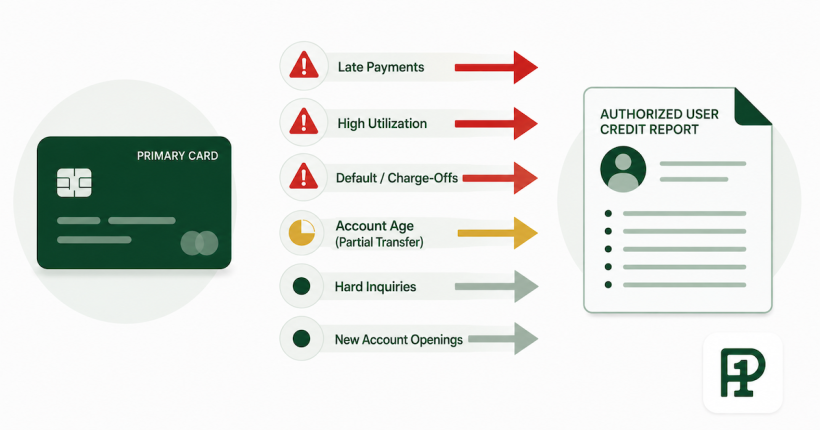
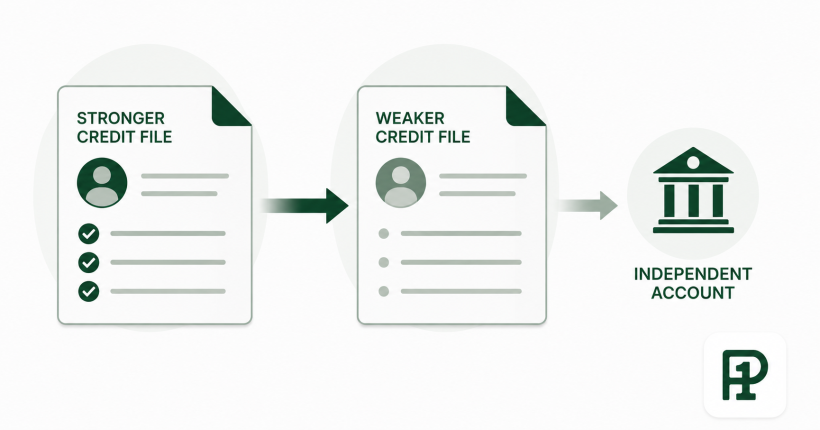
Authorized user strategy is one of the most underused tools available to people in the thin-file or early-600s situation. When you're added as an authorized user on someone else's account — ideally an account with a long history, low utilization, and no negative marks — that account's history appears on your credit report as if it were your own. This is legitimate, FICO-recognized behavior. It doesn't require you to use the card or even receive a physical card. The primary cardholder's utilization and payment behavior on that account will affect your score, so the relationship and the account need to be in good standing. Done correctly, this strategy can add years to your average credit age and substantially reduce your utilization ratio in a single reporting cycle.
Utilization management timing goes beyond just paying down balances. Most people don't realize that your score reflects the balance at your statement close date, not your payment due date. If you pay your card down to near zero two weeks before your statement closes, the low balance is what gets reported to the bureaus. Then your score improves, even if you use the card again after the statement closes. This technique — sometimes called the statement balance method — requires no additional money. It only requires paying attention to timing. Combining this with a review of how credit card payments affect your credit score will help you understand exactly when and how to time these payments for maximum score impact.
Dispute resolution is the accelerator most people underutilize. The CFPB reports that one in five consumers has an error on at least one of their credit reports. These errors range from accounts that don't belong to them to incorrect late payment notations to accounts reported as delinquent after being paid and closed. A successfully resolved dispute that removes an erroneous negative item can move a score 20 to 50 points almost immediately. This is not credit repair in the predatory sense — it's correcting factual inaccuracies on your own file using a federally mandated process. You can initiate disputes directly with each bureau at no cost using the CFPB's resources listed below.
Credit builder loans serve a specific purpose for people at zero or near zero. A credit builder loan works in reverse from a standard loan: you make the payments, and the money is held in a savings account until the loan is paid off. The payments are reported to the bureaus the entire time. This builds both payment history and credit mix simultaneously, with no upfront creditworthiness required. Credit unions and community banks typically offer these at low or no cost. Combined with a secured card, a credit builder loan lets someone with no credit history build a scoreable file and a positive track record within the same 12-month window.
If your path to 700 runs through a specific strategy for increasing your credit score quickly, the key is matching the strategy to your actual limiting factor. Utilization tactics won't help someone whose score is held down by derogatory marks. And disputing errors won't help someone whose file is simply too thin. The strategy follows the diagnosis, not the other way around.
Matching Your Situation to a Realistic Plan
Rather than repeating a single month-by-month roadmap — the general credit building timeline breaks that down stage by stage in detail — here's how the four starting-point situations from Section 2 actually play out in practice.
Zero credit history: The first six months are spent establishing a scoreable file. There's no shortcut around the FICO minimum account-age requirement, but the authorized user strategy can put a usable score in place within 30 to 45 days instead of six months, which then puts you on the 600s timeline below rather than waiting from true zero.
500s with negative marks: The plan is two-track from day one — open a secured card or credit builder loan immediately while the negative item ages in the background. Don't wait for the negative mark to clear before starting; the positive history needs the same 18 to 36 months to build regardless, so the clock should start now.
600s, thin file or high utilization: Diagnose the specific limiting factor before choosing a strategy. If utilization is the issue, the statement-balance timing method above can show results within one to two billing cycles. If the file is simply thin, authorized user status or a second account adds the missing data points faster than time alone would.
Post-bankruptcy or major event: Begin building positive history immediately rather than waiting out the reporting period. The math doesn't reward delay — every month without new positive history is a month the old negative item gets to dominate the file alone.
The Mistakes That Add Months to Your Timeline
Understanding what accelerates progress is only half the equation. The other half is avoiding the behaviors that quietly undo it. These are the most common mistakes that extend timelines, often without the person realizing what's happening until months of work have been lost.
Closing old accounts is the most frequent mistake made by people who think they're being financially responsible. Paying off and closing a credit card feels clean and tidy. But when you close an account, you lose its credit limit — which raises your overall utilization — and eventually lose its age from your average account history. The old card you paid off three years ago and put in a drawer is doing quiet, valuable work for your score simply by existing. Leave it open. Use it for one small purchase every few months to keep it active, and pay it off immediately.
Opening multiple accounts in a short window is the opposite mistake. People who feel behind on building credit sometimes try to accelerate by opening three or four new accounts in quick succession. Every new account lowers the average age of your accounts. The short-term result is often a score drop, not an increase. New accounts should be opened deliberately, with spacing, and only when they serve a specific strategic purpose.
Carrying balances because you think it helps is a persistent myth. There is no benefit to carrying a balance on a credit card from month to month. The "shows you're using credit" logic is false. What FICO measures is that the account is being used — and that's captured by the statement balance, whether you pay it in full or not. Carrying a balance costs you interest and raises your utilization. Pay in full, every month, before the due date.
Ignoring your credit report for extended periods allows errors to compound unaddressed. The CFPB recommends reviewing your reports from all three bureaus regularly. AnnualCreditReport.com provides free access to all three. An error that appears in month two of your credit building journey, left unaddressed for a year, has been suppressing your score for twelve months unnecessarily. Regular review is maintenance, not optional.
Government Resources
CFPB — Credit Reports and Scores — Free tools and guidance for reviewing your credit report and disputing errors.
AnnualCreditReport.com — The federally mandated source for free credit reports from all three bureaus.
Federal Reserve — Consumer Information — Credit scoring context and consumer rights overview.
FTC — Free Credit Reports — Guidance on accessing your reports and protecting against errors.
Return to the full credit building and protection guide for a complete overview of every credit strategy covered on PersonalOne. For the general stage-by-stage timeline, see how long it takes to build credit from scratch.
Frequently Asked Questions
How long does it realistically take to go from no credit to a 700 credit score?
From a completely blank file, the realistic timeline is 12 to 18 months under deliberate strategy. The first six months are spent generating a scoreable file — FICO requires at least one account open for six months and reporting to the bureaus before it will produce a score at all. The following six to twelve months are where the score builds from the initial 620 to 650 range up toward 700. Being added as an authorized user on an established account with good history can accelerate the initial score and compress this timeline somewhat. No legitimate method bypasses the foundational account-age requirements entirely.
Does my starting score affect how fast I can reach 700?
Yes, significantly. Someone at 640 with a clean file is often 6 to 9 months from 700. Someone at 540 with recent negative marks is likely 18 to 36 months away, regardless of how aggressively they build positive history going forward. The negative items themselves don't disappear faster because you're being responsible now — they age and lose weight over time. The strategy for someone at 540 is to build a strong positive history in parallel with the aging process, not to try to erase the past. Understanding this distinction saves a lot of frustration and prevents people from chasing strategies that apply to a different situation than theirs.
What's the fastest way to get from 650 to 700 specifically?
The answer depends on what's limiting your score at 650. If high utilization is the primary factor, paying cards down below 10% before statement close dates is the fastest legitimate lever — results often appear within one to two billing cycles. If the issue is a thin file with few accounts, being added as an authorized user on an established account provides immediate positive history and can add significant points within one reporting cycle. If the issue is a single negative item, disputing any errors on that item or waiting for it to age past the two-year mark where its impact fades most significantly are the primary options. There is no universal answer — the strategy follows the specific limiting factor.
How is this different from the general "how long does it take to build credit" timeline?
That guide organizes the timeline by stage of progress — first score, good credit, very good, exceptional — and is the better starting point if you want the full roadmap from zero to 800+. This guide organizes the same general territory by starting situation instead, since "how long to reach 700" gets a very different answer depending on whether you're starting from no history, a damaged score, a thin file, or a major credit event. If you're not sure which starting situation applies to you, the general timeline is the better first read.
Can disputing credit report errors really move my score toward 700 faster than building positive history?
In the right situation, yes, and faster than almost any other accelerator. A resolved dispute that removes an inaccurate negative item can move a score 20 to 50 points within a single reporting cycle — months of positive-history building compressed into one correction. This only applies if there's an actual error on the report, which the CFPB estimates affects roughly one in five consumers. It's worth checking before assuming the only path forward is time and positive behavior.
This article is for educational purposes only and does not constitute financial or legal advice. Credit timelines vary based on individual circumstances. PersonalOne is a free financial education platform. We do not offer credit repair services.