Published: May 09, 2025
By PersonalOne Team
TL;DR
Scammers are everywhere, from shady texts to fake DMs that sound like your grandma got hacked. This survival guide will teach you how to spot a scam before you click, avoid online scams, and stay one step ahead. Trust no link. Click with caution.
Is That Link Legit… or Your Bank Account’s Worst Enemy?
Ever gotten a text saying, “Your package is stuck, click here”? That’s not FedEx—it’s a fraud fiesta waiting to happen. Sometimes we forget there are a multitude of scammers and hackers out there waiting to pounce. In 2024 alone, Americans lost over $10 billion to online scams, according to the FTC. Yeah, billion—with a B. If you’ve got a phone, an email, or an internet connection, congratulations—you’re a target.
So here’s your digital street smarts bootcamp: how to spot a scam before you click. Whether it’s a fishy Instagram DM or a too-good-to-be-true email offer, this survival guide breaks down the signs, shields, and smart moves to help you dodge disaster.
The Classic Signs of an Online Scam
Red Flags You Should Never Ignore
Learning how to spot a scam is about knowing the playbook. Scammers love urgency, fake authority, and links that scream “click me.”
Watch for these warning signs:
-
- Too juicy to be true: “You’ve won a $500 gift card!” (You didn’t.)
- Pressure tactics: “Act now or your account will be suspended.”
-
- Weird senders: Look at that email—“support@bank-alert.ru”? Nope.
-
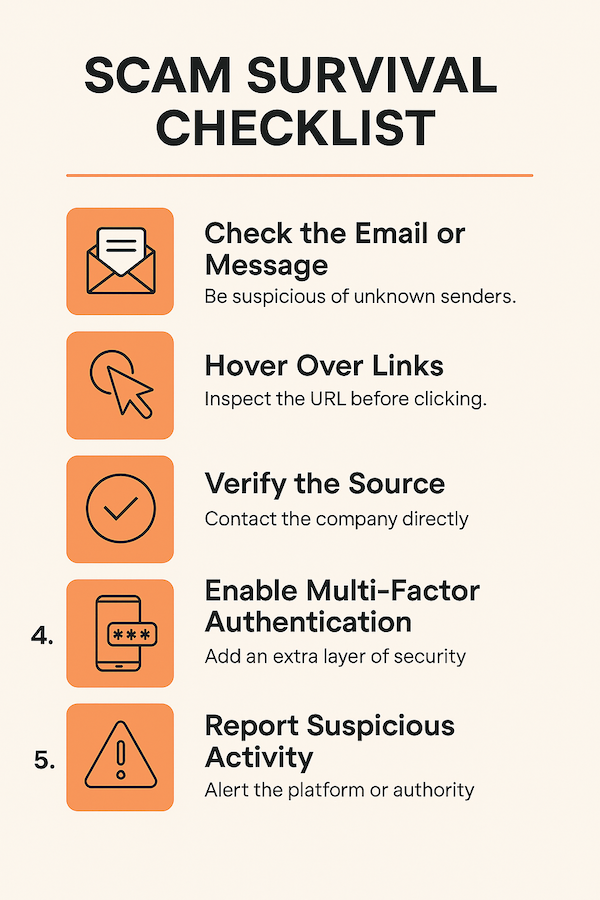
- Sketchy links: Hover before clicking. Better yet, just don’t.
-
- Typos and grammar fails: Scammers don’t proofread.
Pro tip: Never trust a message that uses “Dear user” and ends with “Have a blessed day” in Comic Sans.
How to Avoid Online Scams Like a Pro
Smart Habits That Keep You Safe
Avoiding online scams isn’t just common sense—it’s a lifestyle. Here’s how to stay scam-proof:
- Verify before you click – Contact the sender via a trusted method.
- Don’t trust caller ID – Spoofing is real. Your “bank” might be a scammer in a basement.
- Use multi-factor authentication – Extra security = fewer headaches.
- Report sketchy stuff – To the FTC, FBI’s IC3, or your platform’s fraud team.
- Educate yourself – Sites like consumer.ftc.gov offer great tips.
The Psychology Behind the Click
Scammers prey on emotion: fear, excitement, urgency. It’s not just shady links—it’s manipulation.
According to cybersecurity expert Rachel Tobac, “Scammers don’t hack computers. They hack people.” That’s why education is your best defense.
Real Talk: What Gen Z Needs to Know
We’re digital natives, but that doesn’t make us invincible. Gen Z is actually more likely to fall for online scams than Boomers, says a 2023 report from Social Catfish. Why? We’re always online, always clicking—and sometimes too trusting of aesthetics.
If it looks clean and modern, it doesn’t mean it’s real.
How to Spot a Scam Before You Click
 Take Action: Don’t Just Scroll—Stay Safe
Liked this guide?
Smash that like button,
Share it with your friends,
And drop a comment with your weirdest scam story (we won’t judge).
And hey, if you’ve ever clicked a sketchy link… same. Let’s learn from it and move smarter.
Closing Summary
Knowing how to spot a scam before you click could save your identity, your money, and your mental health. Online scams are getting sneakier, but with some digital street smarts and a little humor, you can stay safe and scroll with confidence.
FAQs
Q: What’s the most common type of online scam right now?
A: Phishing emails and text scams pretending to be delivery updates or bank alerts.
Q: What should I do if I clicked a scam link?
A: Disconnect from the internet, run a virus scan, change your passwords, and report it to the FTC or FBI.
Q: How can I teach my friends and family to spot scams?
A: Share this guide and talk about recent scam tactics—it’s all about awareness.
Sources:
How to Master Personal Finance in a Day
Financial Disclaimer
This article is for informational purposes only and does not constitute financial or cybersecurity advice. Please consult a professional for personal security concerns.